

Dsigngo is a Graphic Design and Digital Marketing Company.
Write what you are looking for and press enter to begin your search!

Key takeaways
- White tea grades are Silver Tips and Golden Tips, both made from unopened buds.
- Silver Tips are silver-white; Golden Tips are gold-white, dried naturally, with an amber liquor.
- Buds are hand-plucked, withered slowly, dried gently and sorted by hand.
- Brew at 75–85°C for 4–5 minutes and re-brew two or three times.
- Hakgala white tea is classic Ceylon Silver Tips.
Introduction
Of all the grades in Ceylon tea, two stand apart: Silver Tips and Golden Tips. They are not made from leaves at all, but from the unopened buds of the tea plant, plucked by hand and dried with almost no processing. They are the rarest, most delicate and most highly valued teas Sri Lanka produces, and they are the only two grades in the white tea family of the Tea Exporters Association Sri Lanka’s grade nomenclature.
This article explains these two grades in depth: what they are, how they are plucked, dried and sorted, how they differ, how buyers judge them, how to brew and store them, and how they are packed and exported. It is the fifth article in the Ceylon Tea Grade series from Hakgala, the Ceylon tea brand of Raiden (Pvt) Ltd, written with Dsigngo Marketing. Ceylon White Tea: Silver Tips, Golden Tips and How to Brew Them introduces Ceylon white tea for everyday drinkers; this article focuses on the grades themselves.
What the nomenclature says
The Tea Exporters Association describes the two white tea grades as follows, here summarised in our own words:
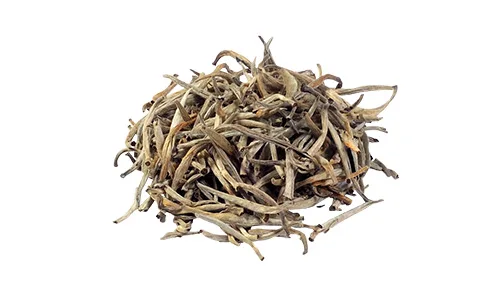
- Silver Tips (ST): small, unopened leaves of the tea plant. They are commonly called “buds”, although they do not grow into flowers. In appearance they are silver mixed with white.
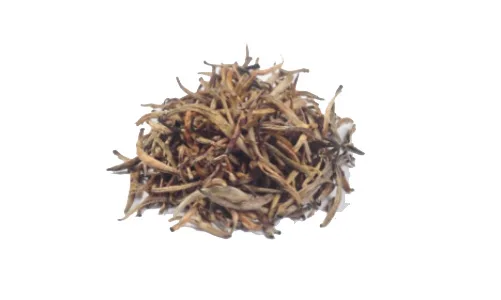
- Golden Tips (GT): similar to Silver Tips, but gold mixed with white in colour. The association notes that its Golden Tips are dried naturally, that the tea has a lingering sweetness with hints of honey and pine, that it brews a light amber liquor, and it describes the tea as high in antioxidants.
Both grades are made from the same part of the plant, the tip of the shoot before it opens. Their difference lies in colour, processing and character.
What is a "tip"?
A tea shoot grows from a bud at its tip. Before it opens, the bud is tightly folded and covered with fine, silvery hairs, sometimes called “down”. When the bud opens, it becomes a new leaf. In tea language, an unopened bud is a tip.
Tips appear in many Ceylon grades. In black tea, the “flowery” grades such as FBOP and FBOPF Special contain tips that turn golden during manufacture (see Small-Leaf Ceylon Black Tea Grades: BOP, BOPF, FBOP, the Flowery Fannings and Dust). In white tea, the tips are the whole tea: nothing else is plucked.
Because each shoot carries only one bud at a time, and buds must be plucked at exactly the right moment, tips are scarce. Thousands of buds are needed to make a single kilogram of white tea.
How Silver Tips and Golden Tips are made
White tea process
- 1Hand-pluckingUnopened buds only
- 2Slow witheringHours to days, in shade or soft sun
- 3Gentle dryingLow heat keeps the delicate aroma
- 4Hand-sortingBroken buds and stalks removed
1. Plucking at dawn
Skilled pluckers pick only the unopened buds, one by one, usually in the early morning while the air is cool. The buds are placed gently in small baskets to avoid bruising. A bruised bud oxidises and turns brown, which spoils its appearance.
2. Withering
The buds are spread thinly on trays in a clean, shaded and well-ventilated room, or in soft sunlight. Over many hours, sometimes up to two or three days, they slowly lose moisture. A little natural oxidation takes place, which develops the sweet, mellow flavour.
3. Drying
The buds are then dried gently, in the sun, in warm air or in a low-heat dryer, until they are dry enough to store. The association describes its Golden Tips as dried naturally. The aim is to keep each bud whole, with its down intact and its delicate aroma preserved.
4. Hand-sorting
Finally, workers sort the tips by hand. They remove broken buds, opened leaves, stalks and discoloured pieces, and they separate the tips by colour and size. Silver Tips and Golden Tips are often sorted from separate batches, depending on how the buds dried.
Silver Tips and Golden Tips compared
| Feature | Silver Tips (ST) | Golden Tips (GT) |
|---|---|---|
| Part of the plant | Unopened buds | Unopened buds |
| Colour of dry tea | Silver mixed with white | Gold mixed with white |
| Processing | Withered and gently dried | Withered and dried naturally, developing a golden colour |
| Liquor | Very pale gold | Light amber |
| Flavour | Delicate, sweet, floral, honeyed | Lingering sweetness, with hints of honey and pine |
| Body | Very light | Light, a little fuller than Silver Tips |
| Best enjoyed | Plain, in glass, re-brewed | Plain, re-brewed; also cold-brewed |
Why are some tips golden?
Tips can turn golden for several reasons, including the plant variety, the time of plucking, the weather during withering and how long and how gently the buds are dried. Slow, natural drying and a little more oxidation tend to give a warmer, golden colour and a slightly deeper, honeyed flavour. Each producer has its own method, which is part of what makes these teas so individual.
Golden Tips in white tea and black tea
The word “golden tips” is also used for the golden buds found in tippy black teas, and some producers make golden tip teas that are closer to black tea. In the TEA nomenclature, Golden Tips are listed as a white tea grade: naturally dried buds with a light amber liquor.
A short history of tips in Ceylon tea
Tips have always been a sign of fine plucking in Ceylon tea. In the early days of the industry, planters took pride in “tippy” teas, whose golden buds showed that only the youngest shoots had been plucked. Teas with plenty of tips were displayed at exhibitions and sold at a premium in London.
Pure white tea, made only from buds, became a recognised speciality much later. As interest in rare and artisanal teas grew around the world, some Sri Lankan producers began to make silver tips in small, dedicated batches, inspired by the white teas of China’s Fujian province but using Ceylon’s own tea bushes and climate. Over time, Ceylon Silver Tips earned an international reputation, and special lots have sometimes made headlines at auction.
Today, Silver Tips and Golden Tips are a small but prestigious part of Sri Lanka’s tea industry, and they appear in the official grade nomenclature alongside the much larger black and green tea grades.
Tips in white tea and in black tea
It helps to understand how tips appear across the Ceylon grade system:
| Where tips appear | How they are made | Example grades | Appearance |
|---|---|---|---|
| White tea | Only buds are plucked, withered and dried, with no rolling | Silver Tips, Golden Tips | Whole, downy buds |
| Tippy black tea | Buds are plucked with leaves, rolled and oxidised with them | FBOP, FBOP1, FBOPF Special, FBOPF Extra Special | Golden tips among black leaf |
| Tippy green tea | Buds are plucked with leaves and fixed, rolled and dried with them | GTFF | Pale tips among green particles |
In black and green tea, tips add sweetness and beauty. In white tea, the tips are the whole product.
Where white tea tips are grown
Ceylon white tea is produced mainly in the high-grown districts, especially Nuwara Eliya, and in parts of Uva and Dimbula, where cool nights and slow growth give buds concentrated aroma. Some low-grown estates also make white tea, often with a fuller body. As with all Ceylon teas, the estate, the season and the skill of the maker matter as much as the region.
Why tips are so highly valued
- Very low yield: only buds are plucked, and each shoot gives only one at a time.
- Hand work at every stage: plucking, spreading, turning and sorting are all done by hand.
- Risk: humidity, rain or a small mistake in drying can spoil a whole batch.
- Small production: few estates make white tea, and in small quantities.
- Beauty: the whole, downy buds make a striking product for gifts and luxury tea service.
How to judge Silver Tips and Golden Tips
| What to check | What good looks like |
|---|---|
| Wholeness | Whole, unbroken buds of even size |
| Down | Plenty of fine silver or golden down on each bud |
| Colour | Bright silver-white or gold-white; no brown, black or green pieces |
| Purity | Only buds: no opened leaves, stalks or dust |
| Aroma | Sweet, fresh, floral or honeyed; never musty or smoky |
| Liquor | Pale gold (Silver Tips) or light amber (Golden Tips), clear and bright; some down floating is normal |
| Taste | Soft, sweet, smooth, with no bitterness and a lingering finish |
Beware of imitations
Because tips are valuable, buyers should be careful. Low-quality “tips” may contain broken buds, opened leaves or buds from poor plucking. Buy from trusted producers who can tell you where and how the tea was made, and taste a sample before ordering in quantity.
How to brew Silver Tips and Golden Tips
- Water: heat fresh water to about 75–85°C. Boiling water scalds the buds and flattens their sweetness.
- Amount: use 2–3 grams of tips per 200–250ml cup. Tips are light and bulky, so this may be two heaped teaspoons.
- Time: brew for 4–5 minutes. Tips are whole and unrolled, so they need longer than green tea.
- Re-brew: brew the same tips two or three times, adding a minute each time.
- Serve plain. Milk, sugar and lemon hide the delicate flavour.
Cold brew: steep 6–8 grams of tips in a litre of cold water in the fridge for 8–12 hours. Golden Tips make an especially sweet, smooth cold brew.
Presentation: brew tips in a glass teapot or a clear cup, so guests can watch the buds slowly sink and open.
Buying tips: a short checklist
Before buying Silver Tips or Golden Tips, ask the supplier for the producing region and the date of manufacture, a sample to taste, and a description of how the buds were dried. Check that the pack protects the buds from crushing and moisture. For larger orders, agree the colour, bud size and acceptable level of broken buds in writing, and keep a reference sample so that future deliveries can be compared with it.
Caffeine and wellbeing
White tea tips are not caffeine-free. Young buds can contain plenty of caffeine, although cooler water extracts less. The Tea Exporters Association describes its Golden Tips as high in antioxidants, and white tea is widely studied for its natural polyphenols. Hakgala does not make medical claims for any tea; white tea is best enjoyed for its delicate flavour.
Storing white tea tips
- Keep tips in an airtight, opaque container, away from light, heat, moisture and strong smells.
- Do not crush the pack: whole buds are part of the value.
- Avoid the fridge, where condensation can form.
- Use opened packs within a few months for the freshest flavour, and always check the best-before date.
White tea tips in gifts, hospitality and food
Because they are rare and beautiful, Silver Tips and Golden Tips suit special occasions:
- Gift tins and boxes, ideally with a window or photograph that shows the buds.
- Corporate gifts, where a small pack of tips tells a story of craftsmanship and Sri Lankan origin.
- Luxury hotel service, brewed in glass at the table or offered as a welcome drink.
- Tea tasting menus, served first, before green, oolong and black tea, so guests experience the lightest tea before stronger ones.
- Alcohol-free pairings, where cold-brewed Golden Tips accompany light dishes, fruit and desserts.
- Food and pastry, where an infusion of tips can flavour syrups, creams and sorbets with a delicate, honeyed note.
When white tea is used in hospitality, staff training matters. A short briefing on the story of the buds, the correct water temperature and how to re-brew them makes a big difference to the guest’s experience.
Packing and exporting white tea
White tea needs special care in packing and shipping:
- Rigid, protective packs: tins, rigid boxes or cartons protect the fragile buds.
- Small pack sizes: white tea is often sold in 25g, 50g or 100g packs, because a little goes a long way.
- Moisture barriers: inner liners or sealed pouches keep humidity out.
- Air freight: high-value white tea is often shipped by air, especially for samples and small orders.
- Clear labelling: grade name, origin, brewing instructions and best-before date.
Raiden (Pvt) Ltd packs white tea for export and private label clients, and Dsigngo designs gift-quality packaging that shows the beauty of the buds. Our Ceylon Tea Import and Export guide explains the export process.
Hakgala Silver Tips
Hakgala white tea is a classic Ceylon Silver Tips, made only from hand-plucked buds from Raiden’s own plantations in Sri Lanka. Each lot is checked for whole buds, bright colour and a sweet, delicate cup before it is packed. For gift buyers, hotels and importers, Raiden can also supply Golden Tips and present both grades in premium gift packs.
An example in practice
The following example is illustrative and does not describe a real client.
A luxury hotel in Dubai wants a signature white tea service for its lounge. It wants something rare, beautiful and clearly Ceylon.
Raiden proposes a tasting of Silver Tips and Golden Tips, brewed in glass at 80°C. The hotel’s tea team chooses to offer both: Silver Tips for guests who prefer a delicate, floral cup, and Golden Tips for those who like a sweeter, honeyed flavour. Dsigngo designs a menu card that explains the two grades and how the buds are plucked at dawn, plus a small gift tin for the hotel’s boutique. The white tea service becomes one of the lounge’s signature experiences.
Frequently asked questions
What is the difference between Silver Tips and Golden Tips?
Both are unopened tea buds. Silver Tips are silver mixed with white and brew a very pale, delicate cup. Golden Tips are gold mixed with white, dried naturally, and brew a light amber cup with hints of honey and pine.
Are tea tips the same as flowers?
No. Tips are often called buds, but they do not grow into flowers. They are young shoots that would open into new leaves.
Why is white tea so expensive?
Only buds are plucked, by hand, in small quantities, and they must be withered and dried with great care. Yields are very low.
Can I brew Silver Tips with boiling water?
It is better not to. Use water at about 75–85°C to keep the flavour sweet and delicate.
How many times can I brew white tea tips?
Usually two or three times, adding a minute to each brew.
Does Hakgala sell Golden Tips?
Hakgala’s white tea is Silver Tips. Raiden (Pvt) Ltd can also supply Golden Tips for importers, hotels and gift buyers.
Conclusion
Silver Tips and Golden Tips are the jewels of Ceylon tea: unopened buds, plucked by hand at dawn, withered slowly and dried gently, then sorted bud by bud. Silver Tips are silver-white and delicate; Golden Tips are gold-white, naturally dried, with a light amber cup and hints of honey and pine. Both are rare, beautiful and best enjoyed slowly.
Hakgala, the Ceylon tea brand of Raiden (Pvt) Ltd, offers classic Silver Tips from its own plantations, and Dsigngo Marketing presents them in packaging worthy of the tea. Continue with Ceylon Tea Off Grades Explained: BOP1A, Broken Mix, Fannings and Broken Pekoe to learn about off grades.
Looking for Silver Tips or Golden Tips for gifts, hotels or retail? Contact Raiden (Pvt) Ltd and Dsigngo Marketing for samples and specifications.
Related reading
- Ceylon Tea Grade Nomenclature: The Complete Guide to Every Tea Grade
- Small-Leaf Ceylon Black Tea Grades: BOP, BOPF, FBOP, the Flowery Fannings and Dust
- Leafy Ceylon Black Tea Grades: OP, OP1, OPA, BOP1, Pekoe and Flowery Pekoe
- CTC Tea Grades Explained: BPS, BP1, BPL, PF1 and PD in Ceylon Tea
- Ceylon Tea Off Grades Explained: BOP1A, Broken Mix, Fannings and Broken Pekoe
- Ceylon Green Tea Grades: Chunmee, Gunpowder, Young Hyson, Sencha and More
- Ceylon Black Tea: Regions, Grades, Flavour and How to Brew
- Arabica Coffee: Flavour, Growing Conditions and Why It Leads the World
- English Breakfast Tea: History, Flavour and the Hakgala Ceylon Blend
- Ceylon Tea Import and Export: How Raiden (Pvt) Ltd and Dsigngo Bring Pure Ceylon Tea to the World
Sources
- Tea Exporters Association Sri Lanka, Tea Grade Nomenclature (text and grade photographs): https://teasrilanka.org/tea-grade
- Sri Lanka Export Development Board, Ceylon white tea: https://srilankabusiness.com/tea/white-tea.html
- Raiden (Pvt) Ltd company profile: https://www.raiden.lk
Related News

What is Lapsang Souchong? The story of the world's famous smoked tea, how smoking works, how to brew and cook with it, and Hakgala's Lapsang...
A complete guide to Ceylon black tea: Sri Lanka's seven regions, orthodox processing, leaf grades, flavour, quality marks and brewing, from Hakgala by Raiden.
What is masala tea? The history of masala chai, the spices that make it, why Sri Lanka's spices are special, and how to brew Hakgala...













