

Dsigngo is a Graphic Design and Digital Marketing Company.
Write what you are looking for and press enter to begin your search!

Key takeaways
- Off grades are fractions that fall outside the main grade specifications.
- They are BOP1A, BM, FNGS, FNGS1, PFNGS, PFNGS1 and BP.
- BOP1A is clean, flaky leaf; BP is broken stems and hard leaf.
- Off grades are valued lower but are used in blending, catering and extracts.
- They must meet the same food safety rules as all tea.
Introduction
Every tea factory produces its main grades, the BOPs, OPs and fannings that buyers know by name. But sifting a batch of tea also produces fractions that do not fit neatly into those grades: light, flaky pieces, mixed broken leaf, small fannings and pieces of stem. These are the off grades.
Off grades are not waste. They are genuine Ceylon tea, sold through the same channels as other grades, and they play a useful role in blending, value packs, catering and some instant and extract products. Understanding them helps buyers make full use of the Ceylon tea range and avoid confusion when they see these names in a catalogue.
The Tea Exporters Association Sri Lanka lists seven off grades in its nomenclature: BOP1A, BM, FNGS, FNGS1, PFNGS, PFNGS1 and BP. This article explains each one, how off grades are produced, what they are used for, and how to judge them. It is the sixth article in the Ceylon Tea Grade series from Hakgala, the Ceylon tea brand of Raiden (Pvt) Ltd, written with Dsigngo Marketing.
What is an off grade?
An off grade is a fraction of made tea that falls outside the specification of the main grades. It may be too light, too flaky, too mixed, too stalky or simply of a size that does not match the main grade list. Off grades are produced because sifting is never perfect: whenever a batch of tea is sorted, some pieces end up between the main grades.
Off grades usually:
- Have less even appearance than main grades.
- Contain more flaky leaf, mixed sizes or stem.
- Brew a plainer cup, with less character than the main grades from the same factory.
- Are valued lower than main grades.
However, off grades from good factories can still brew a sound, honest cup, and they help factories make full use of every kilogram of leaf.
Where off grades come from, and where they go
Light, flaky leaf · blending, value packs
BOP1A
Mixed broken pieces · blending
BM
Small fractions · value tea bags, catering
FNGSFNGS1PFNGSPFNGS1
Stem and hard leaf · low-cost blends
BP
How off grades are produced
Off grades come from several points in the factory:
- Flaky leaf: light, flat pieces that did not roll well, often from coarse or over-withered leaf, are separated by winnowing.
- Mixed fractions: pieces that fall between two mesh sizes are collected as mixed grades.
- Fannings fractions: small particles that are not clean or even enough for the main fannings grades.
- Stem and fibre: pieces of stalk and stem removed from the main grades.
Factories aim to keep off grades to a minimum, because main grades are worth more. Fine plucking, good withering and well-maintained rollers and sifters all reduce the share of off grades.
The seven off grades
Broken Orange Pekoe One “A” (BOP1A)
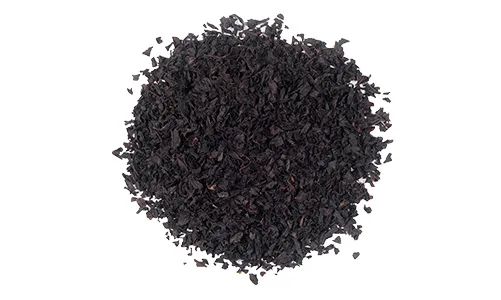
BOP1A consists of light, large leaves: the nomenclature calls it weightless large leaves and describes it as flaky leaf without stalk and fibre, in other words, a clean tea. The flakes are pieces of leaf that did not twist during rolling, so they look flat rather than curled.
In the cup: light and plain, but clean.
Typical uses: blending, value packs and catering.
Broken Mix (BM)
BM is a broken mix, made of pieces smaller than BOP1A. As its name suggests, it contains a mixture of broken particle sizes that do not belong to one main grade.
In the cup: a plain, average cup that depends on the mix.
Typical uses: blending and low-cost packs.
Fannings (FNGS)
FNGS are broken leaf particles slightly larger than dust. They are similar in size to the main fannings grades, but less even or clean.
In the cup: quick and fairly strong.
Typical uses: tea bags in value ranges, catering and blending.
Fannings One (FNGS1)
FNGS1 are broken leaf particles slightly larger than FNGS. They give a slightly slower, rounder brew than FNGS.
Typical uses: blending and tea bags.
Pekoe Fannings (PFNGS, also written PFGS)
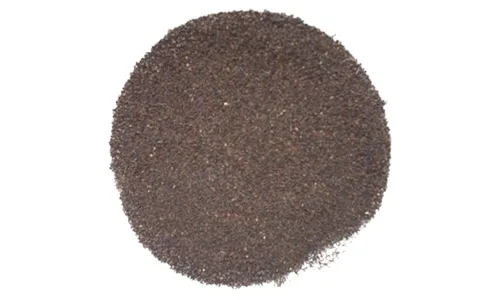
PFNGS, also written PFGS, are fannings-sized broken leaf, slightly larger than dust. They come from the Pekoe style of leaf, which gives them a slightly coarser texture.
Typical uses: tea bags, catering and blending.
Pekoe Fannings One (PFNGS1)
PFNGS1 are slightly larger than PFNGS: the larger fraction of the Pekoe fannings.
Typical uses: blending.
Broken Pekoe (BP)
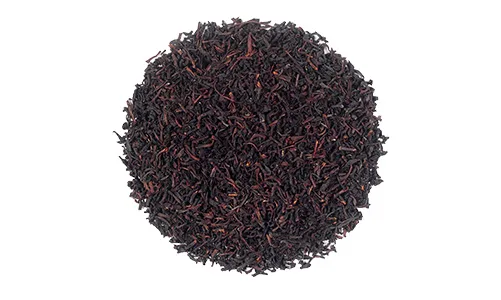
BP, or Broken Pekoe, consists of broken stems and choppy, hard leaf. It is the off grade with the most stem and the least leaf.
In the cup: thin and plain, sometimes with a woody note.
Typical uses: low-cost blends and industrial uses.
Note: in the CTC nomenclature, similar abbreviations such as BP1 and BPS refer to main CTC grades (see CTC Tea Grades Explained: BPS, BP1, BPL, PF1 and PD in Ceylon Tea). The off grade “BP” is different: it describes broken stems and hard leaf from orthodox manufacture.
Inside the sorting room
To understand off grades, it helps to picture a Ceylon tea factory’s sorting room. After the tea leaves the drier, it is still warm and full of particles of every size. It is carried to a line of machines:
- Sifters with stacked, vibrating meshes separate the tea by size. Each mesh has a different hole size, so the tea is divided into fractions as it moves down the stack.
- Fibre extractors use rollers charged with static electricity to lift light fibres and hairs out of the tea.
- Winnowers blow air across falling tea, carrying away light, flaky pieces and leaving heavier, well-rolled particles behind.
- Cutters break larger pieces when the factory wants to make more broken grades.
- Colour sorters, in some factories, use cameras to reject stalk and discoloured pieces.
The main grades emerge from this process clean and even. The lighter, flakier or more mixed fractions that the winnowers and sifters separate become the off grades. A skilled factory officer adjusts the machines throughout the day to keep as much tea as possible in the main grades.
Off grades at the Colombo Tea Auction
Off grades are sold through the same system as main grades. Factories send them to brokers, who taste and value them and list them in the auction catalogue alongside the factory’s main grades. Buyers who need off grades, for example packers of value tea, catering suppliers and extract manufacturers, bid for them in the weekly sales.
Because off grades are listed by factory and grade, buyers can choose off grades from factories they trust. A clean BOP1A from a well-run factory is a very different product from a stalky Broken Pekoe from a poorly run one.
Common myths about off grades
- “Off grades are dust and sweepings.” Not true. Off grades are sifted, graded tea, sold under defined names. Factory sweepings are not sold as tea.
- “Off grades are unsafe.” Not true. Off grades must meet the same food safety rules as all tea.
- “Off grades taste bad.” Not necessarily. They are plainer, but good off grades brew a sound cup, especially in blends.
- “Only cheap brands use off grades.” Many blenders use small amounts of clean off grades to manage cost while keeping a blend’s character.
Off grades at a glance
| Abbreviation | Full name | Description | Typical use |
|---|---|---|---|
| BOP1A | Broken Orange Pekoe One “A” | Light, large, flaky leaf; clean, without stalk or fibre | Blending, value packs |
| BM | Broken Mix | Mixed broken pieces, smaller than BOP1A | Blending |
| FNGS | Fannings | Broken leaf slightly larger than dust | Value tea bags, catering |
| FNGS1 | Fannings One | Slightly larger than FNGS | Blending, tea bags |
| PFNGS (PFGS) | Pekoe Fannings | Broken leaf slightly larger than dust | Tea bags, catering |
| PFNGS1 | Pekoe Fannings One | Slightly larger than PFNGS | Blending |
| BP | Broken Pekoe | Broken stems; choppy, hard leaf | Low-cost blends |
What are off grades used for?
Blending
Blenders use small amounts of off grades to balance the cost of a blend without changing its character much, especially in value ranges. A clean off grade such as BOP1A can add volume to a blend with very little effect on taste.
Value packs and catering
Off grades are used in economy packs and catering teas, where price and strength matter more than appearance.
Tea bags
Fannings-sized off grades, such as FNGS and PFNGS, can be used in value tea bags, often blended with main fannings and dust.
Instant tea and extracts
Some off grades are used to make tea extracts, ready-to-drink teas and instant tea, where the leaf is extracted and its appearance does not matter.
How to judge off grades
Even though off grades are valued lower, quality still varies:
| What to check | Good off grade | Poor off grade |
|---|---|---|
| Cleanliness | Clean, as with a good BOP1A | Excess stalk, fibre or dust |
| Colour | Black or blackish | Brown, grey or reddish |
| Aroma | Clean tea aroma | Smoky, burnt, musty or sour notes |
| Liquor | Clear, reasonable colour | Dull, thin or cloudy |
| Taste | Plain but sound | Harsh, woody, flat or tainted |
Always taste off grades before buying in quantity, and ask for the factory and elevation, because off grades from good factories are much better than those from poor ones.
Tasting off grades beside main grades
A useful exercise for buyers is to taste off grades next to the main grades from the same factory. The table shows the differences you can expect.
| Main grade | Related off grade | What you notice |
|---|---|---|
| BOP | BOP1A | BOP1A looks flat and flaky rather than curled; the cup is lighter and plainer |
| BOP or BOPF | BM | BM is uneven in size; the cup is less consistent |
| BOPF | FNGS and FNGS1 | The off grades are less even and clean; the cup is strong but less bright |
| BOPF | PFNGS and PFNGS1 | Slightly coarser texture; a plainer, robust cup |
| Pekoe | BP | BP contains broken stems; the cup is thin, sometimes woody |
Tasting side by side trains the eye and palate, and it helps buyers decide where off grades can be used without affecting the quality customers expect.
Labelling and describing off grades
When off grades are used in packed tea, the pack should describe the product honestly. A blend containing off grades is still “100% pure Ceylon tea” if it contains only Sri Lankan tea, but it should not be described with main grade names it does not contain. Catering and bulk labels should show the grade or blend name, origin, net weight, batch code and best-before date. Clear, honest labelling protects both the buyer’s brand and the reputation of Ceylon tea.
Storing off grades
Off grades often contain lighter, flakier particles that absorb moisture and odours more readily than dense main grades. Store them in sealed bags in a cool, dry warehouse, off the floor and away from strong-smelling goods, and use the oldest stock first. In catering, reseal opened bags after every use and keep scoops dry.
Off grades and food safety
Off grades must meet the same food safety and quality rules as any other tea. They must be clean, free from foreign matter, within pesticide residue limits and properly stored. Exporters must also meet the Sri Lanka Tea Board’s quality requirements for every shipment, whichever grades it contains.
Off grades in the economics of a tea factory
For a tea factory, off grades are part of the economics of every batch. A factory’s income depends on the value of all the grades it sells, and off grades are valued below the main grades. Factories therefore work to reduce the share of off grades through:
- Better plucking: fine plucking of two leaves and a bud gives better rolling and fewer flaky pieces.
- Correct withering: under- or over-withered leaf breaks badly or makes flat, flaky tea.
- Well-maintained rollers and sifters: worn equipment produces uneven particles.
- Careful sorting: good sifting puts as much tea as possible into the main grades.
Still, no factory can eliminate off grades completely, and selling them through the auction ensures that every part of the harvest finds a use.
How buyers can use off grades responsibly
Off grades can be a sensible part of a supply plan, but buyers should:
- Be transparent: do not present off grades as main grades on packs or menus.
- Taste and test: check every lot for cleanliness and taste.
- Blend with care: use off grades in proportions that keep the blend’s character.
- Match the product: use off grades in products where appearance is less important, such as catering tea, value tea bags or extracts.
Hakgala and off grades
Hakgala’s own packs use main Ceylon grades: BOP and OP for loose tea, BOPF and Dust 1 for tea bags, Chunmee-style green tea and Silver Tips white tea, all from Raiden’s own plantations. For importers who need catering or value-tier products, Raiden (Pvt) Ltd can advise on suitable grades, including clean off grades where appropriate, and Dsigngo can design the packaging and labels. Our Ceylon Tea Import and Export guide explains how we supply overseas buyers.
An example in practice
The following example is illustrative and does not describe a real client.
A catering supplier serves tea in large urns at events and canteens. It needs a strong, clean tea at a sensible cost, and appearance does not matter because the tea is brewed in bulk.
Raiden suggests tasting a blend of main fannings with a share of clean FNGS and PFNGS. Brewed in an urn, the blend gives a strong, bright cup that matches the supplier’s current tea. The supplier adopts it for its catering range, while keeping a main-grade BOPF tea bag for its premium corporate clients. Dsigngo designs simple bulk-bag labels with clear brewing instructions for urn service.
Frequently asked questions
Are off grades bad tea?
No. They are genuine Ceylon tea, but less even or clean than the main grades and usually plainer in the cup. Off grades from good factories can brew a sound, honest cup.
What does BOP1A mean?
Broken Orange Pekoe One “A”: light, large, flaky leaf, without stalk or fibre. It is a clean off grade.
What is the difference between FNGS and PFNGS?
Both are fannings-sized broken leaf, slightly larger than dust. PFNGS come from the Pekoe style of leaf and are slightly coarser.
Is Broken Pekoe (BP) the same as BP1?
No. The off grade BP describes broken stems and hard, choppy leaf from orthodox tea. BP1 is a main CTC grade with bold, round granules.
What are off grades used for?
Blending, value packs, catering, value tea bags and tea extracts.
Does Hakgala use off grades?
Hakgala’s own packs use main grades. Raiden (Pvt) Ltd can advise importers on off grades for catering or value products where appropriate.
Conclusion
Off grades are the fractions of made tea that fall between or outside the main grades: flaky BOP1A, mixed BM, fannings-sized FNGS, FNGS1, PFNGS and PFNGS1, and stalky Broken Pekoe. They are valued lower than main grades, but they are genuine Ceylon tea with a useful place in blending, catering, value packs and extracts.
Hakgala, the Ceylon tea brand of Raiden (Pvt) Ltd, uses main grades in its own packs, while Raiden and Dsigngo Marketing help importers choose the right grade for every product. Continue with Ceylon Green Tea Grades: Chunmee, Gunpowder, Young Hyson, Sencha and More to discover the green tea grades.
Need tea for catering, value ranges or blending? Contact Raiden (Pvt) Ltd and Dsigngo Marketing for samples and specifications.
Ask about tea grades for catering
Related reading
- Ceylon Tea Grade Nomenclature: The Complete Guide to Every Tea Grade
- Small-Leaf Ceylon Black Tea Grades: BOP, BOPF, FBOP, the Flowery Fannings and Dust
- Leafy Ceylon Black Tea Grades: OP, OP1, OPA, BOP1, Pekoe and Flowery Pekoe
- CTC Tea Grades Explained: BPS, BP1, BPL, PF1 and PD in Ceylon Tea
- Ceylon White Tea Grades: Silver Tips and Golden Tips Explained
- Ceylon Green Tea Grades: Chunmee, Gunpowder, Young Hyson, Sencha and More
- Ceylon Black Tea: Regions, Grades, Flavour and How to Brew
- Arabica Coffee: Flavour, Growing Conditions and Why It Leads the World
- English Breakfast Tea: History, Flavour and the Hakgala Ceylon Blend
- Ceylon Tea Import and Export: How Raiden (Pvt) Ltd and Dsigngo Bring Pure Ceylon Tea to the World
Sources
- Tea Exporters Association Sri Lanka, Tea Grade Nomenclature (text and grade photographs): https://teasrilanka.org/tea-grade
- Sri Lanka Tea Board, Tea Export Division: https://srilankateaboard.lk/sri-lanka-tea-board/division-and-units/tea-export-division/
- Raiden (Pvt) Ltd company profile: https://www.raiden.lk
Related News

What is Ceylon oolong tea? How partial oxidation creates its floral, fruity flavour, how it is made in Sri Lanka, how to brew it gongfu...
How is jasmine tea made? The ancient art of scenting green tea with jasmine flowers, how to brew it without bitterness, and Hakgala's jasmine green...
A complete guide to Ceylon tea: regions, grades, the Colombo auction, export rules and import into the UAE and Gulf, and how Raiden (Pvt) Ltd...













