

Dsigngo is a Graphic Design and Digital Marketing Company.
Write what you are looking for and press enter to begin your search!

Key takeaways
- Tea grades describe leaf size and appearance, not quality.
- The nomenclature covers five families: orthodox black, CTC, white, off grades and green tea.
- Words such as Orange, Pekoe, Broken, Flowery, Fannings and Dust explain every grade name.
- Whole-leaf grades brew slowly and lightly; fannings and dust brew fast and strong.
- Hakgala uses BOP, OP, BOPF, Dust 1, Chunmee-style green tea and Silver Tips.
Introduction
Walk into any tea broker’s office in Colombo and you will hear a language of letters: BOP, BOPF, FBOP, OP1, OPA, PEK, BP1, PF1, GTFF. To an outsider these look like codes. To a tea buyer they are essential information. Each set of letters is a tea grade, and it tells the buyer how the leaf looks, how large the pieces are, whether it contains tips, how it will brew and which uses it suits.
The Tea Exporters Association Sri Lanka (TEA), which represents the country’s tea exporters, publishes a standard list of these names, called the tea grade nomenclature. The list covers five families of tea: orthodox black teas, CTC teas, white teas, off grades and green teas. This article brings the whole nomenclature together in one place, explains what each word and abbreviation means, and shows how grades are made and used.
It is the first article in the Ceylon Tea Grade series from Hakgala, the Ceylon tea brand of Raiden (Pvt) Ltd, written with Dsigngo Marketing. Grade Articles 2 to 7 then look at each family in depth, with photographs of every grade. If you are an importer, a retailer, a hotel buyer or simply a tea lover, this series will help you read a tea catalogue, order with confidence and understand what is in your cup.
What is a tea grade?
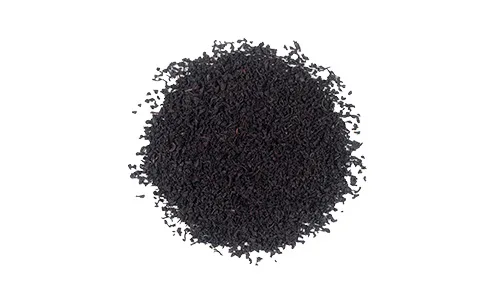
A tea grade is a name given to tea of a particular leaf size, shape and appearance. After tea is made, it is passed over a series of sieves (called “sifting” or “sorting”). Large pieces stay on the top meshes; smaller pieces fall through to the lower ones. Each fraction becomes a grade.
Three points are important:
- Grades describe size and appearance, not quality. A grade tells you what the tea looks like. It does not, on its own, tell you how good it is. An excellent Dust 1 from a fine estate can taste better than a poor Orange Pekoe.
- Grades must be “true to grade”. A batch sold as BOP should contain only BOP-sized particles, without excessive fibre, stalk, or finer fannings and dust that belong to other grades. Tasters and brokers check this carefully.
- Grades affect brewing. Large leaf infuses slowly and gives a lighter, more delicate cup. Small particles infuse quickly and give a stronger, darker cup. That is why tea bags use small grades and loose-leaf teas often use larger ones.
How grades are made
From made tea to graded tea
- 1Made teaLeaves the drier as mixed particle sizes
- 2SiftingVibrating meshes separate sizes
- 3Fibre extractionStatic rollers lift out fibre
- 4CuttingSome leaf broken for broken grades
- 5WinnowingAir removes light, flaky pieces
- 6Packing by gradeEach grade true to its description
When tea leaves the drier at the end of manufacture, it is a mixture of particles of different sizes. The factory then:
- Sifts the tea on vibrating meshes of different sizes.
- Separates fibre and stalk, often with electrostatic “fibre extractors” that lift light fibres away from the leaf.
- Cuts or breaks some larger leaf to produce more of the popular broken grades, when the market needs them.
- Winnows the tea to remove dust and light particles.
- Re-sorts the fractions until each grade is even and true to its description.
Each factory decides which grades it makes, depending on its leaf, its elevation and its buyers. A low-grown factory may make many leafy and tippy grades; a high-grown factory may focus on BOP and BOPF. The graded tea is packed in sacks and sent to the Colombo Tea Auction or to buyers directly.
The five families of Ceylon tea grades
Grades listed in the nomenclature, by family
Orthodox
16 grades
Green tea
11 grades
Off grades
7 grades
CTC
5 grades
White tea
2 grades
061218
| Family | How it is made | Number of grades in the nomenclature |
|---|---|---|
| Orthodox black tea | Rolled and fully oxidised by the orthodox method, then sifted | 16 main grades |
| CTC black tea | Cut, torn and curled by machine into granules | 5 grades |
| White tea | Hand-plucked buds, naturally dried | 2 grades |
| Off grades | By-product fractions from sifting | 7 grades |
| Green tea | Heated soon after plucking to stop oxidation, then rolled and dried | 11 grades and styles |
The complete grade list
The tables below list every grade in the nomenclature, with a short explanation of each. Grade Articles 2 to 7 describe them in more detail.
Orthodox black tea: main grades
| Abbreviation | Full name | What it looks like |
|---|---|---|
| BOP | Broken Orange Pekoe | Small, neat broken pieces of leaf of medium size; a balance of taste and strength |
| BOPF | Broken Orange Pekoe Fannings | Smaller than BOP, broken leaf just larger than dust; stronger than BOP |
| OP | Orange Pekoe | Whole, well-twisted leaf; the same style as OPA but smaller |
| OPA | Orange Pekoe “A” | Good quality tea of long, bold, large and slightly open leaf pieces |
| OP1 | Orange Pekoe One | Long, wiry leaf; more wiry than OP |
| FBOP | Flowery Broken Orange Pekoe | The BOP style but slightly larger, with a few tips |
| FBOP1 | Flowery Broken Orange Pekoe One | Long, twisted, wiry and fairly tippy; a little smaller than BOP1 in the size list, but longer in style |
| BOP1 | Broken Orange Pekoe One | Wiry, well-twisted semi-leaf tea, smaller than OP1; mild and malty, usually low-grown |
| Pekoe (PEK) | Pekoe | Twisted, coarse leaf |
| Pekoe1 (PEK1) | Pekoe One, also called Flowery Pekoe | The Pekoe style but smaller |
| FBOPF | Flowery Broken Orange Pekoe Fannings | Similar to BOP or BOPF leaf but firm, with a few tips |
| FBOPF1 | Flowery Broken Orange Pekoe Fannings One | Similar to BOPF but firm, with a few more tips than FBOPF; typical low-country tippy tea |
| FBOPFSP | Flowery Broken Orange Pekoe Fannings Special | Like FBOPF1 but firmer and blacker, with much better tips; valued highly |
| FBOPFEXSP | Flowery Broken Orange Pekoe Fannings Extra Special | Firm, black leaf with an abundance of long, leafy tips; valued above FBOPFSP |
| D | Dust | Fine particles, similar to Dust 1 but slightly brown and powdery; lower value |
| D1 | Dust One | The smallest clean particles, smaller than fannings; less grainy than Pekoe Dust |
CTC (cut, tear, curl) teas
| Abbreviation | Full name | What it looks like |
|---|---|---|
| BPS | Broken Pekoe Special | Even, curled pieces |
| BP1 | Broken Pekoe One | A little smaller than BPS; bold, round granules giving a bright, full-bodied cup |
| BPL | Broken Pekoe Leaf | Even leaf pieces |
| PF1 | Pekoe Fannings One | Smaller than BP1; a strong-tasting tea |
| PD | Pekoe Dust | The smallest CTC particles, smaller than PF1 |
White tea
| Grade | What it is |
|---|---|
| Silver Tips (ST) | Small, unopened buds of the tea plant, silvery white in colour |
| Golden Tips (GT) | Buds of a golden-white colour, dried naturally, with a light amber liquor and notes of honey and pine |
Off grades
| Abbreviation | Full name | What it looks like |
|---|---|---|
| BOP1A | Broken Orange Pekoe One “A” | Light, large flaky leaf without stalk or fibre |
| BM | Broken Mix | Smaller than BOP1A; mixed broken pieces |
| FNGS | Fannings | Broken leaf particles slightly larger than dust |
| FNGS1 | Fannings One | Slightly larger than FNGS |
| PFNGS (PFGS) | Pekoe Fannings | Broken leaf particles slightly larger than dust |
| PFNGS1 | Pekoe Fannings One | Slightly larger than PFNGS |
| BP | Broken Pekoe | Broken stems; choppy, hard leaf |
Green tea
| Abbreviation | Full name | What it looks like |
|---|---|---|
| CH | Chunmee | Curled, twisted pieces, smaller than Gunpowder Special |
| GP1 | Gunpowder One | Twisted and coarse like Pekoe, but green, rolled into pellets |
| GP2 | Gunpowder Two | A little more open and coarse, slightly bigger than GP1 |
| GP Sp | Gunpowder Special | Bold, curled, twisted pieces, bigger than Chunmee |
| YH | Young Hyson | Like OP, but green |
| GC | Green Curl | Open, coarse leaf of a darker colour |
| SW | Sowmee | Even, neat, open pieces |
| Sencha | Sencha | Tiny, dark green, needle-shaped pieces |
| GTFF | Green Tea Flowery Fannings | Like BOPF but green, firm, with a few tips |
| GTFF1 | Green Tea Flowery Fannings One | Like GTFF but a little bigger |
| GRP | Green Tea Powder | Powdered tea from the last stage of manufacture |
Decoding the words in a grade name
Tea grade names use a small vocabulary, and once you know it you can read almost any grade.
| Word or letter | Meaning |
|---|---|
| Orange | A historic trade term. It does not refer to orange flavour or colour. One popular explanation links it to the Dutch House of Orange-Nassau, but the origin is uncertain |
| Pekoe | From a Chinese term often linked to the fine white down on young buds; in grading, it describes a particular leaf style |
| Broken (B) | The leaf has been broken into smaller pieces |
| Flowery (F) | The tea contains tips: buds that turn golden or silver after manufacture |
| Fannings (F at the end) | Small particles, smaller than broken grades but larger than dust |
| Dust (D) | The finest particles |
| 1, “One” | A variant of the grade, usually finer, more wiry or more select |
| A | A variant, usually bolder or larger, as in OPA |
| SP, “Special” | A superior selection, often with better tips |
| EXSP, “Extra Special” | An even more select version, with an abundance of tips |
| Wiry | Thin, long, tightly twisted leaf |
| Bold | Large, chunky pieces |
| Firm | Solid, well-made particles that do not crumble |
| Tippy | Containing visible tips |
| Granular | Round, bead-like particles, as in CTC tea |
So FBOPF1 reads as “Flowery Broken Orange Pekoe Fannings One”: a fannings-sized broken tea with tips, in a select version.
The leaf-size ladder
Orthodox black tea grades, largest to smallest
1. Whole leaf · slow, delicate brew
OPAOPOP1Pekoe
2. Semi-leaf and large broken · smooth, rounded
BOP1FBOP1FBOPPekoe 1
3. Broken · balance of taste and strength
BOP
4. Fannings · strong, quick
BOPFFBOPFFBOPF1FBOPF SpecialFBOPF Extra Special
5. Dust · fastest, strongest; tea bags
Dust 1Dust
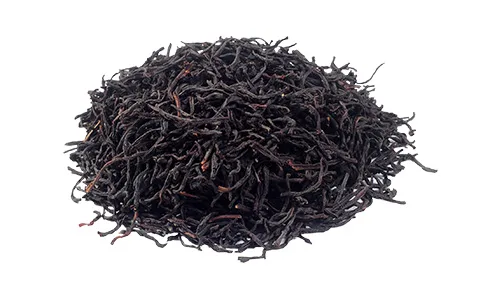
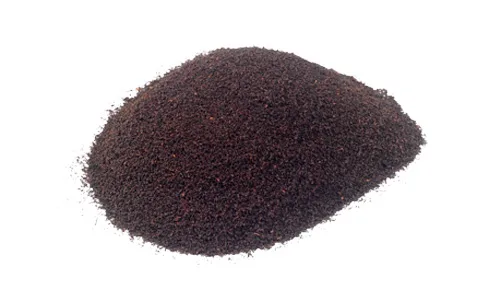
From largest to smallest, the main orthodox black tea grades run roughly as follows:
- Whole leaf: OPA, OP, OP1 and Pekoe.
- Semi-leaf and large broken: BOP1, FBOP1, FBOP and Pekoe1.
- Broken: BOP.
- Fannings: BOPF, FBOPF, FBOPF1 and the Special grades.
- Dust: Dust 1 and Dust.
Orthodox or CTC?
Orthodox and CTC teas are both black teas, but they are made differently and use different grade names.
| Feature | Orthodox | CTC |
|---|---|---|
| Method | Leaf is rolled, oxidised, fired and sifted | Leaf is cut, torn and curled by machine into granules |
| Appearance | Twisted, wiry or broken leaf | Small, round, even granules |
| Cup | Bright, brisk, aromatic; varies by region | Strong, coloury, quick to brew |
| Typical grades | OP, BOP, BOPF, Dust 1 | BPS, BP1, PF1, PD |
| Typical uses | Loose tea, premium tea bags, speciality tea | Tea bags, strong milk tea, catering |
Sri Lanka is famous above all for orthodox tea. CTC tea is produced in smaller volumes, mostly in the low-grown areas. CTC Tea Grades Explained: BPS, BP1, BPL, PF1 and PD in Ceylon Tea explains CTC grades in detail.
Grades and growing regions
Grades and elevation go together. Low-grown factories in Sabaragamuwa and Ruhuna produce large, black, leafy teas and many tippy grades, such as FBOPF1, FBOPFSP and FBOPFEXSP, which are popular in the Middle East and Russia. Mid-grown teas from Kandy are full-bodied and are often made as BOP and BOPF. High-grown teas from Nuwara Eliya, Dimbula, Uda Pussellawa and Uva are often made as BOP and BOPF too; BOPF is especially popular at higher elevations because it gives strength while keeping the bright, fragrant character of high-grown tea.
Small-Leaf Ceylon Black Tea Grades: BOP, BOPF, FBOP, the Flowery Fannings and Dust explains how the small-leaf grades differ between elevations, and Leafy Ceylon Black Tea Grades: OP, OP1, OPA, BOP1, Pekoe and Flowery Pekoe covers the leafy grades favoured by many low-grown factories.
How buyers use grades
Grades are the common language of the tea trade:
- Catalogues: brokers list each lot by estate, grade, weight and number of packages.
- Valuations: each grade has its own market value, which depends on quality, demand and season.
- Blending: blenders combine grades and regions to create a consistent taste for their brands.
- Contracts: importers specify the grade, elevation and quality standard they want.
- Packing: grades decide the format, for example BOPF and Dust 1 for tea bags, OP and BOP for loose tea.
How to brew different grades
| Grade size | Examples | Brewing time | Tips |
|---|---|---|---|
| Whole leaf | OP, OPA, OP1, Pekoe | 4–5 minutes | Use a teapot with room for the leaf to open |
| Semi-leaf and broken | BOP1, FBOP, BOP | 3–4 minutes | A balance of strength and aroma |
| Fannings | BOPF, FBOPF family, PF1 | 2–3 minutes | Ideal for tea bags and strong milk tea |
| Dust | Dust 1, Dust, PD | 2 minutes | Very quick and strong; usually in tea bags |
| Green tea | Chunmee, Gunpowder, Sencha | 2–3 minutes at 75–80°C | Do not use boiling water |
| White tea | Silver Tips, Golden Tips | 4–5 minutes at 75–85°C | Re-brew the buds two or three times |
Hakgala and Ceylon tea grades
Hakgala teas are grown on Raiden’s own plantations in Sri Lanka and offered in classic Ceylon grades:
- Hakgala black tea: BOP for strong, bright loose tea; OP for a lighter, aromatic whole-leaf cup; BOPF and Dust 1 for tea bags.
- Hakgala green tea: Chunmee style for loose-leaf tea, with green tea fannings for tea bags.
- Hakgala white tea: classic Silver Tips.
- Hakgala oolong: a medium-oxidised, twisted-leaf Ceylon oolong.
For importers and private label clients, Raiden (Pvt) Ltd supplies a wider range of grades, and Dsigngo designs the packaging and labels. Our Ceylon Tea Import and Export guide explains how we supply tea to overseas buyers.
An example in practice
The following example is illustrative and does not describe a real client.
A new tea shop wants to offer customers a “grade tasting” so they can understand Ceylon tea. Using this nomenclature, the shop chooses five teas: an OP, a BOP, a BOPF, a Dust 1 and a Silver Tips. Each is brewed for the time shown in the brewing table above and served side by side, with a small sample of the dry leaf in front of each cup.
Customers immediately see the difference: the OP is light and fragrant, the BOP bright and balanced, the BOPF strong, the Dust 1 dark and quick, and the Silver Tips pale and sweet. Dsigngo designs a printed card that explains each grade name, and the shop sells more loose-leaf tea because customers now understand what they are buying.
Frequently asked questions
What does BOP stand for?
BOP stands for Broken Orange Pekoe: small, neat, broken pieces of leaf that give a good balance of taste and strength. It is one of the most popular Ceylon grades.
Is Orange Pekoe a flavour?
No. Orange Pekoe (OP) is a grade name for whole, well-twisted leaf. It has nothing to do with oranges.
What does "Flowery" mean in a grade name?
It means the tea contains tips: young buds that turn golden or silver during manufacture.
Which grades are used in tea bags?
Small grades such as BOPF, Dust 1 and the CTC grades PF1 and PD are usually used in tea bags, because they infuse quickly.
Does a higher grade mean better tea?
Not necessarily. Grades describe leaf size and appearance. Quality depends on the estate, plucking, manufacture and season. Some special grades, such as FBOPFEXSP, are highly valued because of their tips.
Who publishes the Ceylon tea grade names?
The Tea Exporters Association Sri Lanka publishes the standard grade nomenclature used by the Ceylon tea trade.
Conclusion
Ceylon tea grades are the language of the tea trade. They describe five families of tea (orthodox black, CTC, white, off grades and green), and each abbreviation tells a buyer how the leaf looks, how it will brew and what it suits. Once you know a few words, such as Orange, Pekoe, Broken, Flowery, Fannings and Dust, you can read almost any grade name.
Hakgala, the Ceylon tea brand of Raiden (Pvt) Ltd, uses these grades to offer the right tea for every cup, and Dsigngo Marketing brings them to importers and customers around the world. Continue with Small-Leaf Ceylon Black Tea Grades: BOP, BOPF, FBOP, the Flowery Fannings and Dust to explore the small-leaf black tea grades in detail.
Need help choosing grades for your market or brand? Contact Raiden (Pvt) Ltd and Dsigngo Marketing for samples and specifications.
Related reading
- Small-Leaf Ceylon Black Tea Grades: BOP, BOPF, FBOP, the Flowery Fannings and Dust
- Leafy Ceylon Black Tea Grades: OP, OP1, OPA, BOP1, Pekoe and Flowery Pekoe
- CTC Tea Grades Explained: BPS, BP1, BPL, PF1 and PD in Ceylon Tea
- Ceylon White Tea Grades: Silver Tips and Golden Tips Explained
- Ceylon Tea Off Grades Explained: BOP1A, Broken Mix, Fannings and Broken Pekoe
- Ceylon Green Tea Grades: Chunmee, Gunpowder, Young Hyson, Sencha and More
- Ceylon Black Tea: Regions, Grades, Flavour and How to Brew
- Arabica Coffee: Flavour, Growing Conditions and Why It Leads the World
- English Breakfast Tea: History, Flavour and the Hakgala Ceylon Blend
- Ceylon Tea Import and Export: How Raiden (Pvt) Ltd and Dsigngo Bring Pure Ceylon Tea to the World
Sources
- Tea Exporters Association Sri Lanka, Tea Grade Nomenclature (text and grade photographs): https://teasrilanka.org/tea-grade
- Sri Lanka Export Development Board, Ceylon tea industry capability: https://www.srilankabusiness.com/tea/about-tea/industry-capability.html
- Sri Lanka Export Development Board, types of tea: https://www.srilankabusiness.com/faq/tea/buyer/what-are-types-of-tea.html
- Raiden (Pvt) Ltd company profile: https://www.raiden.lk
Related News

What is CTC tea and how is it graded? A guide to Ceylon CTC grades BPS, BP1, BPL, PF1 and Pekoe Dust, how CTC differs...
Discover hand-made white tea: how skilled makers roll and shape white tea buds by hand, styles from pearls to flowering teas, how to brew them,...
How Ceylon white tea is graded: Silver Tips and Golden Tips, how buds are plucked, dried and sorted, how to judge quality, brew, store and...













