

Dsigngo is a Graphic Design and Digital Marketing Company.
Write what you are looking for and press enter to begin your search!

Key takeaways
- Ceylon green tea grades are defined mainly by shape.
- Chunmee curls, Gunpowder pellets, Young Hyson long leaf and Sencha needles each brew differently.
- Shiny, small, tight Gunpowder pellets indicate freshness and quality.
- GTFF and GTFF1 are green tea fannings for tea bags; GRP is green tea powder.
- Brew green tea at 75–80°C, never with boiling water.
Introduction
Sri Lanka is famous for black tea, but it also makes a remarkable range of green teas, and they have their own grade names. Some come from the Chinese tradition, such as Chunmee, Gunpowder and Young Hyson. Others come from the Japanese tradition, such as Sencha. Others are distinctly practical, such as Green Tea Flowery Fannings for tea bags and Green Tea Powder for lattes and food.
The Tea Exporters Association Sri Lanka lists eleven green tea grades and styles in its nomenclature: CH (Chunmee), GP1 (Gunpowder One), GP2 (Gunpowder Two), GP Sp (Gunpowder Special), YH (Young Hyson), GC (Green Curl), SW (Sowmee), Sencha, GTFF (Green Tea Flowery Fannings), GTFF1 and GRP (Green Tea Powder). This article explains each of them, with photographs, and shows how they are made, how they taste and how they are used.
It is the seventh and final article in the Ceylon Tea Grade series from Hakgala, the Ceylon tea brand of Raiden (Pvt) Ltd, written with Dsigngo Marketing. Ceylon Green Tea: How It Is Made and Brewed introduces Ceylon green tea for everyday drinkers.
How green tea grades are made
Green tea is made from the same plant as black tea, but it is heated soon after plucking to stop oxidation. This “fixing” step keeps the leaf green. The leaf is then rolled and shaped, dried and sorted into grades.
Green tea process
- 1PluckingBud and two young leaves
- 2FixingSteaming or pan-firing stops oxidation
- 3Rolling & shapingCurls, pellets or needles
- 4DryingFixes shape, helps the tea keep
- 5SortingGraded by size and shape
The shape of a green tea grade comes mainly from the rolling stage:
- Curling the leaf produces Chunmee (“eyebrow”) shapes.
- Rolling it into pellets produces Gunpowder.
- Twisting it into long strips produces Young Hyson.
- Leaving it more open produces Green Curl and Sowmee.
- Steaming and pressing it into needles produces Sencha.
- Breaking it into small particles produces fannings, and grinding it produces powder.
Each factory makes the styles its buyers want, and many have their own variations. The colour of green tea grades should always be green: grey, brown or black pieces suggest poor fixing or storage.
The eleven green tea grades
Chunmee (CH)
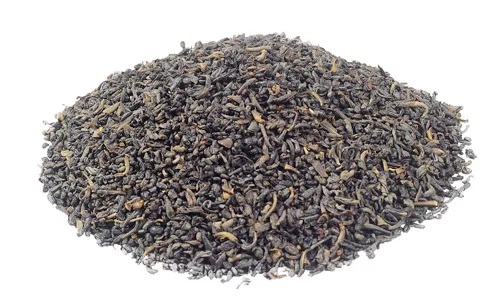
Chunmee is one of the world’s most popular green tea styles. Its name comes from the Chinese for “precious eyebrows”, describing its curled, twisted pieces. The nomenclature describes them as smaller than Gunpowder Special.
The association notes that Chunmee has a dusty appearance and is generally more acidic and less sweet than other green teas, and that it is divided into several numbered grades.
In the cup: bright, brisk and slightly tangy, with a pleasant astringency.
Best for: everyday loose-leaf green tea. Hakgala green tea is made in the Chunmee style.
Gunpowder One (GP1)
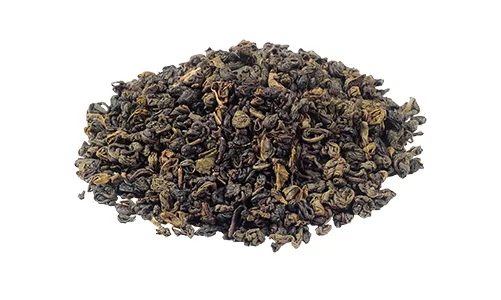
Gunpowder tea is rolled into small, tight pellets that look like grains of gunpowder, which is where its English name comes from. GP1 is described as twisted and coarse, similar to Pekoe, but its colour must be green.
The association gives two useful buying tips:
- Shiny pellets indicate that the tea is relatively fresh.
- Pellet size is associated with quality: high-quality gunpowder has small, tightly rolled pellets.
It also notes that Gunpowder’s flavour varies according to where the tea was grown.
In the cup: full-bodied, slightly smoky or toasty, and strong for a green tea.
Best for: loose-leaf green tea, and especially mint tea, which is popular in North Africa and the Middle East.
Gunpowder Two (GP2)
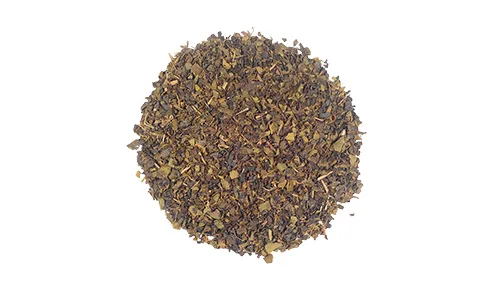
GP2 is a little more open and coarse, and slightly bigger than GP1. The pellets are looser and larger.
In the cup: robust and slightly coarser than GP1.
Best for: mint tea and everyday green tea.
Gunpowder Special (GP Sp)
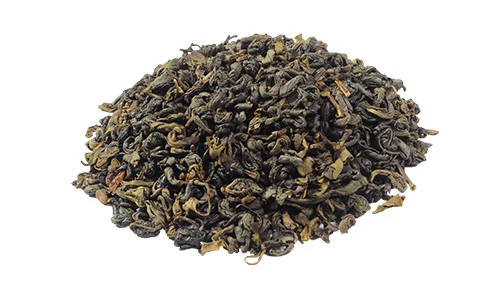
Gunpowder Special is made of bold, curled, twisted pieces of leaf, bigger than Chunmee. It is a select gunpowder style with a fuller appearance.
In the cup: full and smooth.
Best for: premium gunpowder blends and mint tea.
Young Hyson (YH)
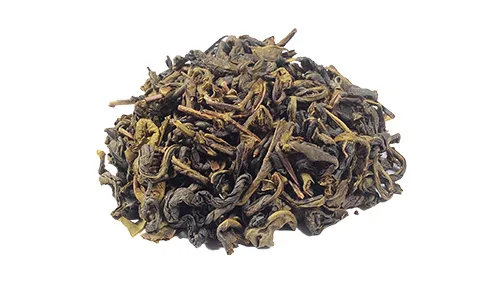
Young Hyson is described as similar to OP, but green in colour: long, twisted whole leaf, like a green version of Orange Pekoe. The name comes from the Chinese tea trade, where Hyson was a classic green tea style.
In the cup: fresh, light and gently astringent.
Best for: loose-leaf green tea.
Green Curl (GC)
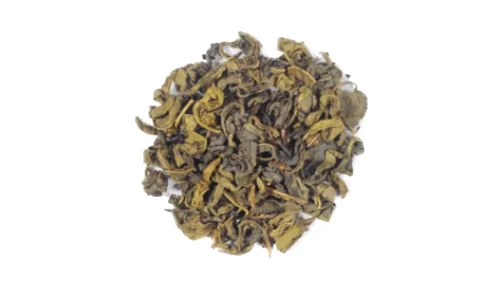
Green Curl consists of open, coarse leaves of a darker colour. It is less tightly rolled than Chunmee or Gunpowder.
In the cup: fuller and more robust.
Best for: everyday green tea and blends.
Sowmee (SW)
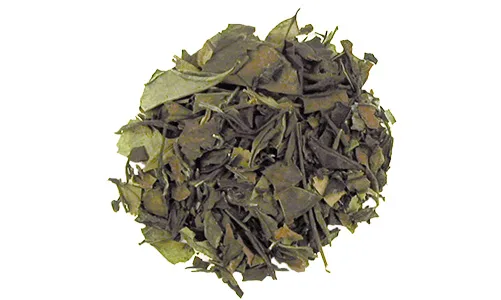
Sowmee is made of even and neat open pieces: smaller fragments that remain after the more shaped grades have been sorted.
In the cup: light and smooth.
Best for: blending and value green teas.
Sencha
Sencha consists of tiny, dark green, needle-shaped pieces. Sencha is the most popular green tea in Japan, where it is made by steaming the leaf, then rolling it into fine needles. Ceylon Sencha-style teas use the same method.
In the cup: grassy, vegetal and bright, with a vivid green liquor.
Best for: loose-leaf green tea, cold brew and iced green tea.
Green Tea Flowery Fannings (GTFF)
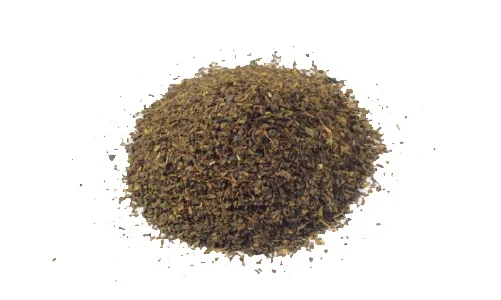
GTFF is similar to BOPF (see Small-Leaf Ceylon Black Tea Grades: BOP, BOPF, FBOP, the Flowery Fannings and Dust): firm leaf, green in colour, with a few tips. It is the green tea equivalent of black tea fannings.
In the cup: quick, fresh and consistent.
Best for: green tea bags. Hakgala uses green tea fannings in its green tea bags.
Green Tea Flowery Fannings One (GTFF1)
GTFF1 is similar to GTFF but a little bigger in size. It brews slightly more slowly and gives a little more body.
Best for: tea bags and pyramid bags.
Green Tea Powder (GRP)
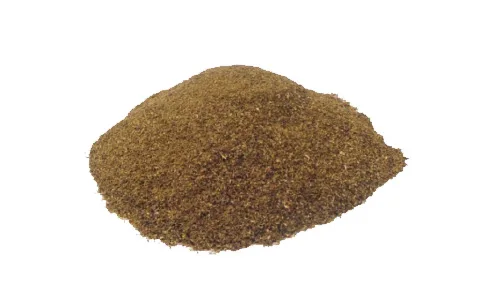
Green Tea Powder is a powder-type tea from the last part of manufacture. It is made from the finest particles left at the end of sorting and is used where a quick, strong green tea flavour is wanted.
Note: Green Tea Powder from the grade nomenclature is different from Japanese matcha, which is made from shade-grown leaf ground in stone mills. Both are powdered green tea, but they are produced differently.
Best for: green tea lattes, smoothies, baking, ice cream and food manufacturing.
Green tea grades at a glance
| Grade | Shape | Description | Typical use |
|---|---|---|---|
| CH, Chunmee | Curled “eyebrows” | Curled, twisted, smaller than GP Sp; more acidic, less sweet | Everyday loose green tea |
| GP1, Gunpowder One | Tight pellets | Twisted and coarse like Pekoe, but green | Loose tea, mint tea |
| GP2, Gunpowder Two | Looser pellets | A little more open and coarse; bigger than GP1 | Mint tea |
| GP Sp, Gunpowder Special | Bold curls | Bold, curled, twisted pieces; bigger than Chunmee | Premium blends |
| YH, Young Hyson | Long, twisted | Like OP, but green | Loose tea |
| GC, Green Curl | Open, coarse | Darker, open, coarse leaf | Everyday blends |
| SW, Sowmee | Small, open pieces | Even and neat | Blending, value teas |
| Sencha | Needles | Tiny, dark green needles | Loose tea, cold brew |
| GTFF | Fannings | Like BOPF, firm, green, a few tips | Tea bags |
| GTFF1 | Larger fannings | Like GTFF, a little bigger | Tea bags |
| GRP, Green Tea Powder | Powder | From the last part of manufacture | Lattes, food |
Ceylon green tea grades by shape
Curls
Chunmee
Pellets
Gunpowder 1Gunpowder 2Gunpowder Special
Long, twisted leaf
Young Hyson
Open leaf
Green CurlSowmee
Needles
Sencha
Fannings
GTFFGTFF1
Powder
Green Tea Powder
Green tea in Sri Lanka: a short history
Sri Lanka’s tea industry was built on black tea, and for most of its history green tea was made only occasionally, often for particular buyers. Interest grew in the late twentieth century, as green tea became popular around the world for its fresh taste and natural appeal. Sri Lankan factories began to install equipment for steaming and pan-firing, and producers learned to make Chinese-style and Japanese-style green teas from Ceylon leaf.
Because most Sri Lankan tea bushes were bred for black tea, Ceylon green tea developed its own character: fuller in body and sometimes more robust than Chinese or Japanese green teas. Today, Sri Lanka makes green tea in all the styles in the nomenclature, and exports are growing steadily.
Chinese and Japanese styles compared
| Feature | Chinese-style grades | Japanese-style grades |
|---|---|---|
| Ceylon examples | Chunmee, Gunpowder, Young Hyson, Green Curl, Sowmee | Sencha |
| Fixing method | Usually pan-firing or hot air | Steaming |
| Shapes | Curls, pellets, long twisted leaf, open leaf | Fine needles |
| Typical flavour | Toasty, nutty, brisk | Grassy, vegetal, bright |
| Liquor | Pale yellow-green to golden | Vivid green |
| Popular uses | Everyday green tea, mint tea | Loose tea, cold brew, iced tea |
Green tea in food and drinks
Ceylon green tea grades are increasingly used beyond the teapot:
- Green tea lattes: whisk Green Tea Powder with a little hot water, then add steamed milk and a touch of honey.
- Smoothies: blend Green Tea Powder with banana, mango or pineapple and yoghurt.
- Iced green tea: cold-brew Sencha or Chunmee overnight, then serve over ice with lemon or mint.
- Baking and desserts: add Green Tea Powder to cakes, biscuits, ice cream or cream fillings for colour and flavour.
- Savoury dishes: use brewed green tea to cook rice or as a base for broths.
- Spiced green tea: brew Chunmee with a little Ceylon cinnamon, ginger or cardamom for a Sri Lankan twist.
For food manufacturers and cafés, Green Tea Powder and fannings offer consistent flavour in a convenient form.
How to brew green tea grades
| Grade group | Tea per cup | Water | Time |
|---|---|---|---|
| Chunmee, Young Hyson, Green Curl | About 2g | 75–80°C | 2–3 minutes |
| Gunpowder | 2g (pellets are dense) | 75–80°C | 2–3 minutes; pellets unroll as they brew |
| Sencha | About 2g | 70–80°C | 1–2 minutes |
| GTFF and GTFF1 tea bags | One bag | 75–80°C | 2 minutes |
| Green Tea Powder | 1–2g whisked into water or milk | 70–80°C | No steeping; whisk and drink |
Never use boiling water for green tea: it extracts bitterness. Most green teas can be brewed two or three times.
Moroccan-style mint tea with Gunpowder
- Rinse 1–2 teaspoons of Gunpowder briefly with hot water and discard the water.
- Add a large handful of fresh mint and sugar to taste.
- Fill the pot with hot water and steep for 3–4 minutes.
- Pour from a height into small glasses to create a light froth.
How to judge green tea grades
| What to check | What good looks like |
|---|---|
| Colour | Green to olive-green; no brown or black pieces |
| Shape | True to grade: tight pellets for Gunpowder, even curls for Chunmee, fine needles for Sencha |
| Freshness | Shiny pellets and a fresh, grassy or toasty aroma |
| Infusion | Bright green leaves that open fully |
| Liquor | Clear, pale green-yellow or golden |
| Taste | Fresh, with gentle astringency; no harsh bitterness or stale notes |
Green tea grades in the export trade
Ceylon green tea is still a small share of Sri Lanka’s exports, around 2% of total tea exports in recent years, but it is growing. Sri Lanka exported about 4.57 million kilograms of green tea in the first eleven months of 2025, according to Sri Lanka Customs data published by Forbes & Walker. Gunpowder is especially popular in North Africa and the Middle East for mint tea, while Chunmee, Sencha and green tea bags are popular in other markets. Our Ceylon Tea Import and Export guide explains how Raiden (Pvt) Ltd supplies green tea to overseas buyers.
Choosing a green tea grade for your market
| If your customers want… | Consider |
|---|---|
| Traditional mint tea | Gunpowder One (GP1), or GP2 for a stronger, coarser style |
| An everyday loose green tea | Chunmee or Young Hyson |
| A grassy, Japanese-style tea | Sencha |
| A premium gift or display tea | Gunpowder Special or Young Hyson |
| Green tea bags | GTFF or GTFF1 |
| Lattes, smoothies and baking | Green Tea Powder |
| A value green tea or blending base | Green Curl or Sowmee |
Many importers combine two or three grades, for example Gunpowder for traditional customers, GTFF tea bags for modern retail and Green Tea Powder for cafés. Raiden (Pvt) Ltd can supply samples of each so that buyers can compare them side by side, brewed at the right temperature and time for each grade.
Storing green tea
Green tea is more delicate than black tea. Store it in airtight, opaque containers, away from light, heat, moisture and strong smells, and use opened packs within a few months. Shiny Gunpowder pellets and a bright green colour are signs of fresh tea; dull, brownish leaf suggests old or poorly stored tea.
Hakgala green tea
Hakgala green tea comes from Raiden’s own plantations in Sri Lanka. It is made in the Chunmee style for loose-leaf packs, with green tea fannings for tea bags. For importers and private label clients, Raiden can also supply Gunpowder, Young Hyson, Sencha and other green tea grades, and Dsigngo designs packaging for each market.
An example in practice
The following example is illustrative and does not describe a real client.
A distributor in North Africa wants a Ceylon Gunpowder for traditional mint tea, and a green tea bag for younger customers. Raiden sends samples of GP1, GP2 and Gunpowder Special. The distributor’s tasters prefer GP1 for its small, shiny pellets and full flavour with mint. For the tea bags, Raiden recommends GTFF, which brews quickly and evenly. Dsigngo designs two packs, a traditional tin for the Gunpowder and a modern box for the tea bags, with labels in Arabic and French.
Frequently asked questions
What is the most popular Ceylon green tea grade?
Chunmee and Gunpowder are among the most widely made and traded styles, while GTFF is the standard grade for green tea bags.
Why is it called Gunpowder tea?
Because its tightly rolled pellets look like grains of gunpowder.
How can I tell if Gunpowder tea is fresh?
Look for shiny pellets. Small, tightly rolled pellets are also associated with higher quality.
Is Green Tea Powder the same as matcha?
No. Both are powdered green tea, but matcha is made from shade-grown leaf ground in stone mills, while Green Tea Powder comes from the last part of green tea manufacture.
Which green tea grade is best for tea bags?
GTFF and GTFF1, the green tea flowery fannings, are designed for tea bags.
Can I add milk to green tea?
Milk is not usually added to loose green tea, because it hides the fresh flavour. Green Tea Powder, however, is often whisked into milk to make lattes and smoothies.
Does green tea contain caffeine?
Yes. All green tea grades contain caffeine, and the amount depends on the leaf, the grade and how it is brewed. Fannings and powder release caffeine more quickly than whole-leaf styles.
Which grade is Hakgala green tea?
Hakgala green tea is made in the Chunmee style for loose leaf, with green tea fannings for tea bags.
Conclusion
Ceylon green tea grades are defined by shape: curled Chunmee, pelleted Gunpowder in three grades, long Young Hyson, open Green Curl and Sowmee, needle-shaped Sencha, GTFF and GTFF1 fannings for tea bags, and Green Tea Powder for lattes and food. Each grade brews a different cup and suits a different market.
This completes the Ceylon Tea Grade series. Together, the seven articles cover every grade in the Tea Exporters Association Sri Lanka’s nomenclature. Hakgala, the Ceylon tea brand of Raiden (Pvt) Ltd, offers Chunmee-style green tea from its own plantations, and Dsigngo Marketing helps importers bring Ceylon green tea to their markets.
Need Ceylon green tea for mint tea, tea bags or lattes? Contact Raiden (Pvt) Ltd and Dsigngo Marketing for samples and specifications.
Ask about Ceylon green tea grades
Related reading
- Ceylon Tea Grade Nomenclature: The Complete Guide to Every Tea Grade
- Small-Leaf Ceylon Black Tea Grades: BOP, BOPF, FBOP, the Flowery Fannings and Dust
- Leafy Ceylon Black Tea Grades: OP, OP1, OPA, BOP1, Pekoe and Flowery Pekoe
- CTC Tea Grades Explained: BPS, BP1, BPL, PF1 and PD in Ceylon Tea
- Ceylon White Tea Grades: Silver Tips and Golden Tips Explained
- Ceylon Tea Off Grades Explained: BOP1A, Broken Mix, Fannings and Broken Pekoe
- Ceylon Black Tea: Regions, Grades, Flavour and How to Brew
- Arabica Coffee: Flavour, Growing Conditions and Why It Leads the World
- English Breakfast Tea: History, Flavour and the Hakgala Ceylon Blend
- Ceylon Tea Import and Export: How Raiden (Pvt) Ltd and Dsigngo Bring Pure Ceylon Tea to the World
Sources
- Tea Exporters Association Sri Lanka, Tea Grade Nomenclature (text and grade photographs): https://teasrilanka.org/tea-grade
- Forbes & Walker, Sri Lanka tea exports, November 2025 (Sri Lanka Customs data): https://www.forbestea.com/pdf/SRI%20LANKA%20TEA%20EXPORTS%20NOVEMBER%202025.pdf
- Sri Lanka Export Development Board, Ceylon green tea: https://www.srilankabusiness.com/tea/green-tea.html
- Raiden (Pvt) Ltd company profile: https://www.raiden.lk
Related News

What is Lapsang Souchong? The story of the world's famous smoked tea, how smoking works, how to brew and cook with it, and Hakgala's Lapsang...
A complete guide to Ceylon black tea: Sri Lanka's seven regions, orthodox processing, leaf grades, flavour, quality marks and brewing, from Hakgala by Raiden.
What is masala tea? The history of masala chai, the spices that make it, why Sri Lanka's spices are special, and how to brew Hakgala...













