

Dsigngo is a Graphic Design and Digital Marketing Company.
Write what you are looking for and press enter to begin your search!

Key takeaways
- BOP is one of the most popular Ceylon grades, with a balance of taste and strength.
- BOPF is smaller and stronger than BOP and popular at high elevations.
- 'Flowery' grades contain golden tips; FBOPF Special and Extra Special have the most.
- Dust and Dust 1 are the finest particles, used in tea bags.
- Always ask for the elevation as well as the grade.
Introduction
When most people drink a cup of Ceylon tea, the leaf in their pot or tea bag is almost certainly a small-leaf grade. These are the broken leaf, fannings and dust grades that give Ceylon tea its famous strength, brightness and speed of brewing. They include some of the best-known abbreviations in the tea world, such as BOP and BOPF, as well as a family of “flowery” grades with golden tips that are prized in the Middle East and beyond.
The Tea Exporters Association Sri Lanka groups ten grades under the heading of small-leaf main grades: BOP, BOPF, FBOP, FBOP1, FBOPF, FBOPF1, FBOPFSP, FBOPFEXSP, Dust and Dust 1. This article explains each of them in detail, with a photograph of every grade, and shows how they differ in appearance, cup, region and use.
This is the second article in the Ceylon Tea Grade series from Hakgala, the Ceylon tea brand of Raiden (Pvt) Ltd, written with Dsigngo Marketing. Ceylon Tea Grade Nomenclature: The Complete Guide to Every Tea Grade explains the full nomenclature and the meaning of each word in a grade name.
Why small-leaf grades matter
Small-leaf grades dominate everyday tea for three reasons:
- Speed: small particles have more surface area, so they infuse quickly. That makes them ideal for tea bags, offices, hotels and busy households.
- Strength and colour: more surface area means a stronger, darker cup, which suits tea taken with milk and sugar.
- Consistency: small, even particles pack neatly into tea bags and blend easily, so brands can deliver the same taste in every cup.
At the same time, the “flowery” small-leaf grades, with their visible tips, are some of the most attractive teas Sri Lanka produces, and they are valued for their sweetness and appearance as much as their strength.
Orthodox black tea grades, largest to smallest
1. Whole leaf · slow, delicate brew
OPAOPOP1Pekoe
2. Semi-leaf and large broken · smooth, rounded
BOP1FBOP1FBOPPekoe 1
3. Broken · balance of taste and strength
BOP
4. Fannings · strong, quick
BOPFFBOPFFBOPF1FBOPF SpecialFBOPF Extra Special
5. Dust · fastest, strongest; tea bags
Dust 1Dust
Broken Orange Pekoe (BOP)
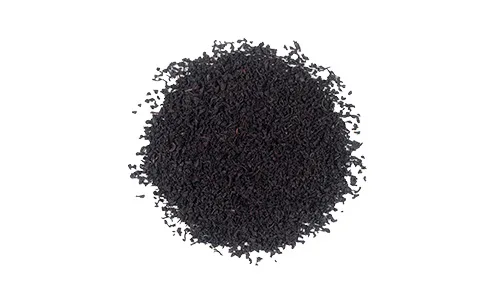
BOP is the classic Ceylon grade, and one of the most widely produced and traded. The nomenclature describes it as small or broken pieces of leaf, and explains that it is popular because its leaf size brings out a good balance of taste and strength.
A good BOP is well made and neat, with leaf of medium size and no excessive stalk or fibre. It should also be true to grade: there should be no fine fannings or dust mixed in, because those particles belong to other grades and would change how the tea brews.
In the cup: BOP brews a bright, brisk, well-balanced liquor. High-grown BOPs are lighter and more fragrant; mid- and low-grown BOPs are fuller and stronger.
Best for: loose tea, strong tea with milk, premium tea bags and everyday blends. Hakgala uses BOP for its strong, bright loose-leaf black tea.
Brewing: 2–3 grams per cup, boiling water, 3–4 minutes.
Broken Orange Pekoe Fannings (BOPF)
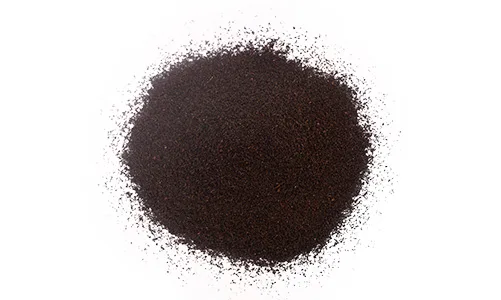
BOPF is smaller than BOP: a broken leaf only slightly larger than dust. Because the particles are smaller, BOPF tastes stronger than BOP while keeping its other characteristics, such as brightness and flavour.
The nomenclature notes that BOPF is popular in the higher elevations. High-grown factories in Nuwara Eliya, Dimbula, Uda Pussellawa and Uva often make BOPF because it combines the fragrance of high-grown tea with extra strength.
In the cup: strong, bright and quick to colour.
Best for: tea bags, catering, strong breakfast blends. Hakgala uses BOPF in its tea bags.
Brewing: one tea bag or 2 grams per cup, boiling water, 2–3 minutes.
Flowery Broken Orange Pekoe (FBOP)
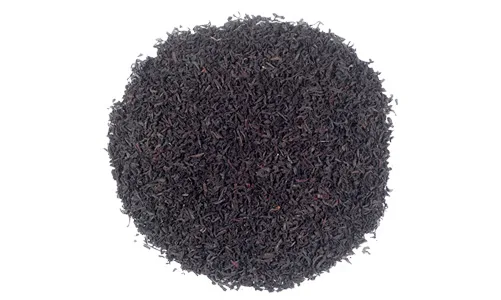
FBOP follows the BOP style but is slightly bigger and contains a few tips: the young buds that turn golden during manufacture. In the size order of the nomenclature, FBOP is smaller than BOP1 but larger than FBOPF1.
The tips give FBOP a more attractive appearance and a slightly sweeter, smoother cup. FBOP is often made by low-grown factories, whose large, black leaf and generous tips are popular in the Middle East.
In the cup: full-bodied and smooth, with sweetness from the tips.
Best for: loose tea in markets that value appearance and body.
Flowery Broken Orange Pekoe One (FBOP1)
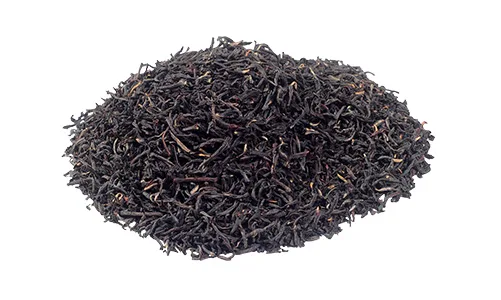
FBOP1 is a long, twisted, wiry leaf that is fairly tippy. The nomenclature describes it as longer than BOP1, and in its main grade list as a little smaller than BOP1 in size: in other words, a slender, wiry tea with a semi-leaf appearance.
FBOP1 is a showpiece grade. Its long, twisted black leaf and golden tips look impressive in a glass jar or a tea shop display.
In the cup: smooth and rounded, with a pleasant sweetness.
Best for: loose-leaf tea, speciality tea shops and gift packs.
Flowery Broken Orange Pekoe Fannings (FBOPF)
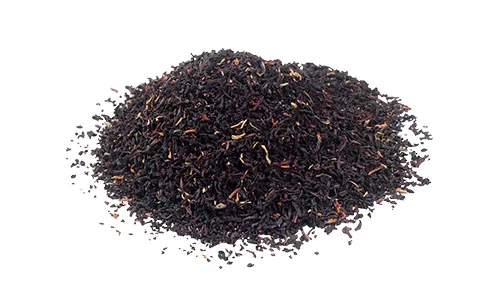
FBOPF is the first of the “flowery fannings” family. The nomenclature describes it as similar to BOP leaf but firm, with a few tips. Despite the word “fannings” in its name, FBOPF in practice is often a semi-leaf tippy tea, especially from the low country.
In the cup: strong, sweet and full-bodied.
Best for: loose tea and blends where a touch of tip is wanted.
Flowery Broken Orange Pekoe Fannings One (FBOPF1)
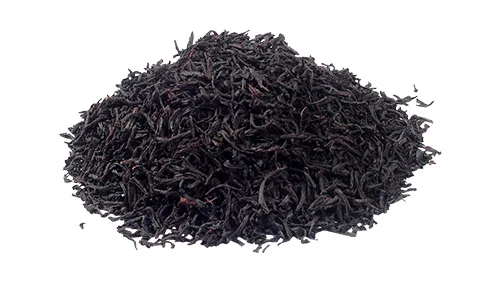
FBOPF1 is described as a typical low-country semi-leaf tippy tea. It is similar to BOPF but firm, and it contains a few more tips than FBOPF.
FBOPF1 is one of the signature grades of Sri Lanka’s low-grown regions, Ruhuna and Sabaragamuwa. Low-country factories receive large, fast-growing leaf that makes black, firm, tippy tea, and FBOPF1 shows it at its best.
In the cup: rich, sweet and full-bodied, with a dark liquor.
Best for: markets that like strong, sweet, dark tea, such as the Middle East, Russia and Central Asia.
Flowery Broken Orange Pekoe Fannings Special (FBOPFSP)
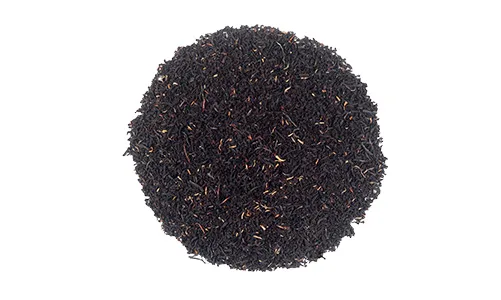
FBOPFSP, or FBOPF Special, is similar to FBOPF1 but firmer and blacker, with much better tips. The tips are larger and more plentiful, which gives the tea a striking golden-and-black appearance. The nomenclature notes that these teas command high values in the market.
In the cup: smooth, sweet and rich, with very little bitterness.
Best for: premium loose tea, gift packs and speciality ranges.
Flowery Broken Orange Pekoe Fannings Extra Special (FBOPFEXSP)
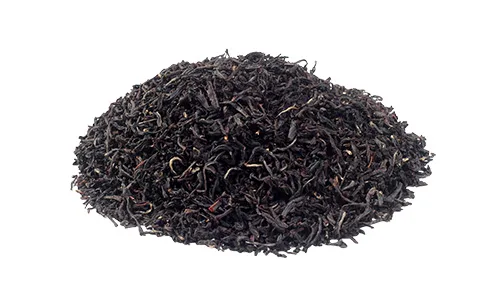
FBOPFEXSP, or FBOPF Extra Special, is the most select grade in this family. The nomenclature describes it as a whole leaf tea with an abundance of long tips, similar to FBOP1 but with firmer and blacker leaf and much better leafy tips. It is valued even more highly than FBOPF Special.
Making FBOPFEXSP depends on very fine plucking with plenty of buds, careful rolling to keep the tips intact, and expert sorting to select the best tippy particles.
In the cup: exceptionally smooth, sweet and mellow, with honeyed notes from the tips.
Best for: luxury tea ranges, gifting and connoisseurs.
The flowery fannings family, by tips
- 1FBOPFFirm leaf, a few tips
- 2FBOPF1Firm, a few more tips; low-country
- 3FBOPF SpecialFirmer, blacker, much better tips
- 4FBOPF Extra SpecialAbundant long, leafy tips
Dust (D)
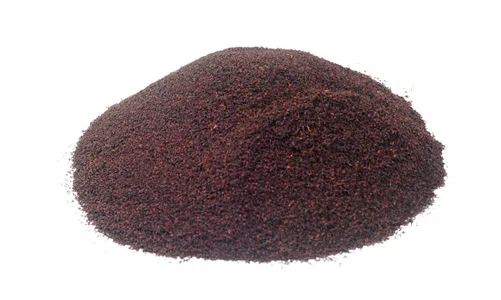
Dust is made of the smallest particles left after sifting. The nomenclature describes it as similar to Dust 1 but appearing as a slightly brown, powdery leaf, and it is valued lower than Dust 1.
Dust is widely used in tea bags, because it infuses rapidly and makes a strong, robust brew. It is also used in catering and in strong milk teas.
In the cup: very strong, dark and quick.
Dust One (Dust 1)
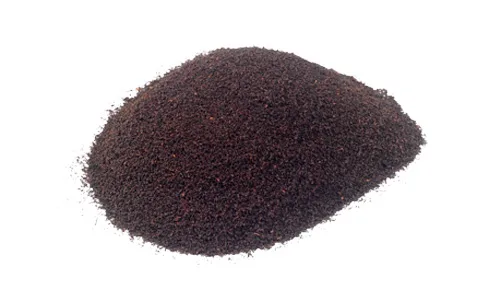
Dust 1 consists of the smallest particles, smaller than fannings. Compared with Pekoe Dust (a CTC grade, see CTC Tea Grades Explained: BPS, BP1, BPL, PF1 and PD in Ceylon Tea), it is less grainy and clean: it should be free from fibre and brown, powdery particles.
Good Dust 1 is one of the most important grades for tea bags. It gives a strong colour and flavour in two minutes, and it fills tea bags evenly. Hakgala uses Dust 1 alongside BOPF in its tea bags.
In the cup: strong, bright and quick to brew, with good colour when milk is added.
The ten small-leaf grades compared
| Grade | Size | Tips | Cup | Typical use |
|---|---|---|---|---|
| BOP | Medium broken | None or few | Balanced taste and strength | Loose tea, blends |
| BOPF | Smaller than BOP | None or few | Stronger than BOP | Tea bags, high-grown blends |
| FBOP | Slightly bigger than BOP | A few | Full, smooth | Loose tea |
| FBOP1 | Long, wiry semi-leaf | Fairly tippy | Smooth, sweet | Speciality loose tea |
| FBOPF | Firm, BOP-like | A few | Strong, sweet | Loose tea, blends |
| FBOPF1 | Firm, BOPF-like semi-leaf | More than FBOPF | Rich, sweet, dark | Middle East and CIS markets |
| FBOPFSP | Firm, black | Much better tips | Smooth, rich | Premium ranges |
| FBOPFEXSP | Firm, black, near whole leaf | Abundant long tips | Very smooth, mellow | Luxury ranges |
| Dust | Finest, slightly brown | None | Very strong | Tea bags, catering |
| Dust 1 | Finest, clean | None | Strong, bright | Tea bags |
Small-leaf grades and elevation
The same grade can taste very different depending on where it was grown:
- High-grown BOP and BOPF are bright, brisk and fragrant, with a golden liquor. They are often used to add “lift” to blends.
- Mid-grown BOP and BOPF from Kandy are full-bodied and coppery, ideal for strong everyday tea.
- Low-grown small-leaf grades are dark, sweet and rich, and low-country factories produce most of the tippy FBOP and FBOPF grades.
When buying small-leaf grades, always ask for the elevation as well as the grade.
How to judge small-leaf grades
- Evenness: particles should be of similar size, with no mixing of dust or larger pieces.
- Cleanliness: there should be no excessive stalk, fibre or foreign matter.
- Colour: black or blackish-brown leaf; tips should be bright golden, not dull.
- Firmness: good particles are firm and do not crumble into powder when handled.
- Infusion: the brewed leaf should be bright and coppery.
- Liquor: bright and clear, with good colour and strength; with milk, it should turn a bright golden-brown.
Why broken grades became so popular
In the early days of the Ceylon tea industry, most tea was sold as whole leaf. Over the twentieth century, demand moved steadily towards smaller, broken grades. There were several reasons:
- Tea bags: the spread of tea bags, first in the United States and later in Britain and around the world, created huge demand for small particles that brew quickly inside a paper filter.
- Strength: consumers who take tea with milk and sugar wanted a stronger, more colourful cup in less time.
- Efficiency: broken grades pack more densely, which reduces shipping and packaging costs per cup.
- Consistency: smaller particles blend more evenly, which helps brands keep the same taste throughout the year.
Ceylon factories responded by adjusting rolling and sifting to produce more BOP, BOPF and dust, while keeping the orthodox method that gives Ceylon tea its bright character. Today, small-leaf grades make up a large share of Sri Lanka’s production, while leafy grades remain important for markets that brew tea in a pot.
What makes a good tea bag tea?
Not every small-leaf tea makes a good tea bag. Packers look for:
- Fast infusion: the tea must release colour and flavour within two to three minutes.
- Good colour with milk: in markets where milk is added, the tea must turn a bright golden-brown, not grey.
- Even particle size: particles that are too fine can pass through the filter paper and leave sediment in the cup; particles that are too large brew slowly.
- Clean leaf: fibre and stalk spoil both the appearance of the bag and the taste of the cup.
- Consistency: each batch must match the brand’s standard, which often means blending several grades and estates.
BOPF and Dust 1 meet these needs particularly well, which is why they are the most common grades in Ceylon tea bags. Some blends also include a little BOP for aroma, or CTC grades for extra colour.
Storing small-leaf tea
Small particles have more surface area, so small-leaf grades lose freshness faster than leafy teas once they are exposed to air. Keep them in airtight containers, away from light, heat, moisture and strong smells such as spices or coffee. Tea bags should stay in their box or an airtight tin, and opened catering packs should be resealed after each use. Always check the best-before date and use the oldest stock first.
How Hakgala uses small-leaf grades
Hakgala black tea is grown on Raiden’s own plantations in Sri Lanka and packed in classic grades:
- BOP for strong, bright loose-leaf tea.
- BOPF and Dust 1 for tea bags that brew quickly and strongly.
For importers and private label clients, Raiden (Pvt) Ltd can supply a wider range of small-leaf grades, including tippy FBOP and FBOPF grades for markets that value appearance and sweetness. Dsigngo designs the packaging and labels in-house.
An example in practice
The following example is illustrative and does not describe a real client.
A distributor in the Gulf wants two products: an everyday tea bag for offices and a premium loose tea for traditional customers who brew strong, sweet tea in a pot. Raiden suggests a blend of BOPF and Dust 1 for the tea bags, and an FBOPF1 for the loose tea, with an FBOPF Special for a gift tin at festive seasons.
The distributor tastes all three. The tea bags brew a strong, bright cup in two minutes; the FBOPF1 gives the dark, sweet tea its customers expect; and the Special, with its golden tips, makes an eye-catching gift. Dsigngo designs a family of packs that shows the tips on the premium lines.
Frequently asked questions
What is the difference between BOP and BOPF?
BOPF particles are smaller than BOP, so BOPF brews faster and stronger. BOP gives a more balanced cup.
What does the "F" at the start of FBOP mean?
“Flowery”: the tea contains tips, the young buds that turn golden during manufacture.
Which small-leaf grade is best for tea bags?
BOPF and Dust 1 are the classic tea bag grades, because they infuse quickly and strongly.
Why are FBOPF Special and Extra Special valued so highly?
They contain more and better tips, firm black leaf, and need fine plucking and careful sorting. Their tips give a smooth, sweet cup and an attractive appearance.
What is the difference between Dust and Dust 1?
Both are the finest particles. Dust 1 is clean and less grainy; Dust is slightly brown and powdery and is valued lower.
Which grades does Hakgala use?
Hakgala uses BOP for loose tea and BOPF and Dust 1 for tea bags.
Conclusion
Small-leaf grades are the backbone of Ceylon tea. BOP gives balance, BOPF adds strength, the flowery FBOP and FBOPF grades add tips and sweetness, and Dust and Dust 1 deliver speed and strength in tea bags. Knowing the differences helps importers, retailers and tea lovers choose exactly the cup they want.
Hakgala, the Ceylon tea brand of Raiden (Pvt) Ltd, uses these grades in its loose tea and tea bags, and Dsigngo Marketing helps bring them to customers worldwide. Continue with Leafy Ceylon Black Tea Grades: OP, OP1, OPA, BOP1, Pekoe and Flowery Pekoe to explore the leafy grades: OP, OP1, OPA, BOP1 and Pekoe.
Need small-leaf grades for your brand or market? Contact Raiden (Pvt) Ltd and Dsigngo Marketing for samples and specifications.
Ask about Hakgala black tea grades
Related reading
- Ceylon Tea Grade Nomenclature: The Complete Guide to Every Tea Grade
- Leafy Ceylon Black Tea Grades: OP, OP1, OPA, BOP1, Pekoe and Flowery Pekoe
- CTC Tea Grades Explained: BPS, BP1, BPL, PF1 and PD in Ceylon Tea
- Ceylon White Tea Grades: Silver Tips and Golden Tips Explained
- Ceylon Tea Off Grades Explained: BOP1A, Broken Mix, Fannings and Broken Pekoe
- Ceylon Green Tea Grades: Chunmee, Gunpowder, Young Hyson, Sencha and More
- Ceylon Black Tea: Regions, Grades, Flavour and How to Brew
- Arabica Coffee: Flavour, Growing Conditions and Why It Leads the World
- English Breakfast Tea: History, Flavour and the Hakgala Ceylon Blend
- Ceylon Tea Import and Export: How Raiden (Pvt) Ltd and Dsigngo Bring Pure Ceylon Tea to the World
Sources
- Tea Exporters Association Sri Lanka, Tea Grade Nomenclature (text and grade photographs): https://teasrilanka.org/tea-grade
- Sri Lanka Export Development Board, Ceylon tea industry capability: https://www.srilankabusiness.com/tea/about-tea/industry-capability.html
- Raiden (Pvt) Ltd company profile: https://www.raiden.lk
Related News

What is Ceylon oolong tea? How partial oxidation creates its floral, fruity flavour, how it is made in Sri Lanka, how to brew it gongfu...
How is jasmine tea made? The ancient art of scenting green tea with jasmine flowers, how to brew it without bitterness, and Hakgala's jasmine green...
A complete guide to Ceylon tea: regions, grades, the Colombo auction, export rules and import into the UAE and Gulf, and how Raiden (Pvt) Ltd...













