

Dsigngo is a Graphic Design and Digital Marketing Company.
Write what you are looking for and press enter to begin your search!

Key takeaways
- Leafy grades are whole or semi-leaf teas that brew slowly and delicately.
- OP is whole, well-twisted leaf; OP1 is more wiry; OPA is long, bold and open.
- BOP1 is a mild, malty low-country semi-leaf tea.
- Pekoe is twisted and coarse; Flowery Pekoe is the same style but smaller.
- Brew leafy teas for 4–5 minutes and give the leaf room to unfold.
Introduction
There is something special about a whole-leaf tea. Long, twisted black leaves unfurl slowly in the pot, releasing a delicate aroma and a smooth, layered cup that changes as it brews. In Ceylon tea, these are the leafy grades, and they include perhaps the most famous grade name in the world: Orange Pekoe.
The Tea Exporters Association Sri Lanka lists six leafy main grades: BOP1, OP1, OP, OPA, Pekoe (PEK) and Flowery Pekoe (PEK1). Each has its own leaf style, from long and wiry to bold and open, and each brews a different cup. Leafy teas are especially important in the Middle East, North Africa, Russia and Central Asia, where tea is often brewed in a pot and served strong, and in speciality markets everywhere.
This is the third article in the Ceylon Tea Grade series from Hakgala, the Ceylon tea brand of Raiden (Pvt) Ltd, written with Dsigngo Marketing. Small-Leaf Ceylon Black Tea Grades: BOP, BOPF, FBOP, the Flowery Fannings and Dust covered the small-leaf grades; this article explains the leafy grades, with a photograph of each.
What makes a tea "leafy"?
A leafy grade is made from whole or nearly whole leaf that has been rolled and twisted but not broken into small pieces. During sifting, these large pieces stay on the upper meshes. They are then sorted by shape: long and wiry, twisted, bold and open, or coarse.
Leafy teas share several characteristics:
- Slower infusion: the leaf unfolds gradually, so leafy teas need longer brewing, usually four to five minutes.
- A lighter, more delicate cup: less surface area means less extraction per minute, giving a smoother and more aromatic tea.
- Visible quality: the dry leaf shows how well the tea was plucked and rolled, so buyers can judge it by eye.
- Re-brewing: many leafy teas can be brewed more than once.
Leafy grades are produced in all regions, but they are a speciality of the low-grown factories of Ruhuna and Sabaragamuwa, where large, fast-growing leaf makes bold, black, twisted teas.
Orange Pekoe (OP)
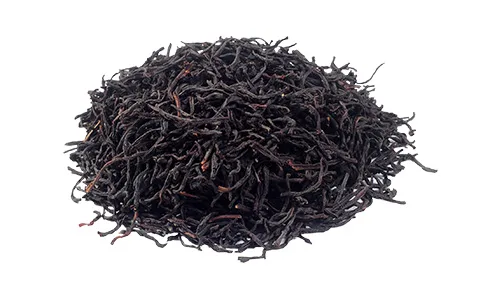
Orange Pekoe is a whole leaf, well twisted tea. The nomenclature explains that OP gives a delicate brew that varies in taste according to the district where it is grown. In the leafy family, OP is less wiry than OP1 but much more twisted than OPA, and it is the same style as OPA but smaller.
About the name: “Orange Pekoe” has nothing to do with oranges. It is a historic trade term. One popular theory connects “Orange” with the Dutch royal House of Orange-Nassau, whose traders were early importers of tea, and “Pekoe” with a Chinese word associated with the white down on young tea buds. Whatever its origin, the name became a mark of whole-leaf black tea.
In the cup: delicate, aromatic and smooth. High-grown OP is light and fragrant; low-grown OP is fuller, with a darker liquor and malty sweetness.
Best for: loose-leaf tea, teapots, afternoon tea and speciality ranges. Hakgala uses OP for its lighter, aromatic whole-leaf black tea.
Brewing: 2–3 grams per cup, boiling water, 4–5 minutes.
Orange Pekoe One (OP1)
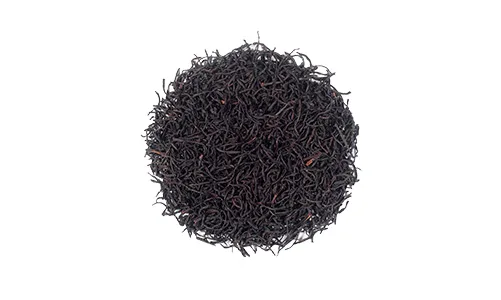
OP1 is a long, wiry tea, well or partly twisted. It is described as more wiry than OP: the leaves are thinner, longer and more tightly twisted, so the tea looks like fine black threads.
Producing a good OP1 requires fine plucking and careful rolling, so it is often seen as an elegant, refined grade. Many tea shops display OP1 because its slender leaves look so attractive.
In the cup: light, bright and refined, with a smooth finish.
Best for: premium loose tea, tea shops and gifts.
Orange Pekoe "A" (OPA)
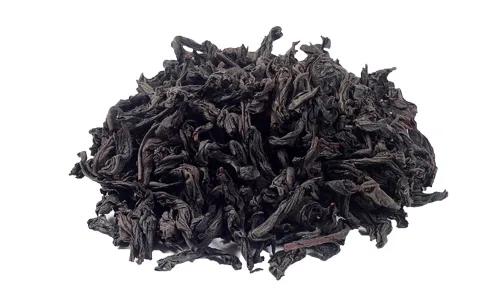
OPA is a long, bold leaf tea with an “air twist”, made up of large and slightly open leaf pieces. The nomenclature calls it a good quality tea. Compared with OP, OPA is larger and less tightly twisted; the leaf has been rolled gently, so it opens quickly in the pot.
OPA is a favourite grade of low-grown factories, whose large leaves make bold, impressive OPAs.
In the cup: mellow, smooth and sweet, with less astringency than smaller grades.
Best for: loose tea in markets that prefer bold leaf, and for brewing in large pots.
Broken Orange Pekoe One (BOP1)
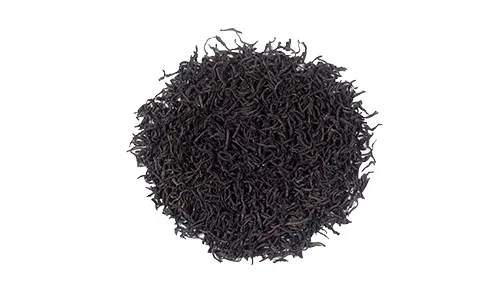
BOP1 is a well-twisted semi-leaf tea, generally from the low country, with a mild, malty taste. In the nomenclature’s size order, BOP1 is wiry and smaller than OP1.
Although its name begins with “Broken”, BOP1 is classed with the leafy grades, because its particles are long and twisted rather than small and broken. It sits between the whole-leaf OP grades and the broken BOP.
In the cup: mild, malty and smooth.
Best for: loose tea for daily drinking, especially in markets that enjoy low-grown tea.
Pekoe (PEK)
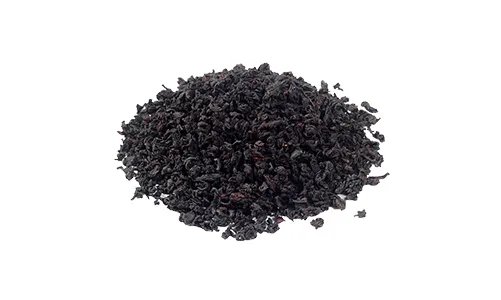
Pekoe is described simply as twisted and coarse. Its leaf pieces are shorter and chunkier than OP, curled and twisted, often made from slightly more mature leaf. Pekoe brews a fuller cup than the OP grades.
In the cup: full-bodied, strong and rounded.
Best for: strong pot-brewed tea and blends that need body.
Flowery Pekoe (PEK1)
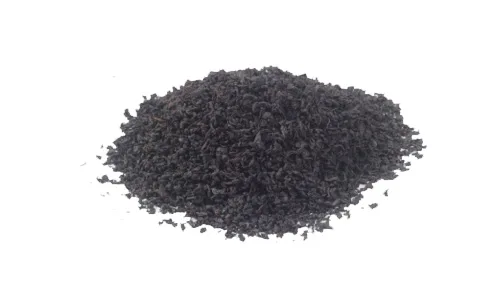
Flowery Pekoe, also called Pekoe One (PEK1), is similar to Pekoe but smaller in size. The smaller, curled pieces brew a little faster than Pekoe.
In the cup: full and smooth, with good strength.
Best for: loose tea for strong brewing.
Leafy grades by leaf style
Long and wiry · refined, light
OP1
Whole, well twisted · delicate; varies by district
OP
Long, bold, air-twisted, slightly open · mellow, sweet
OPA
Well-twisted semi-leaf · mild, malty; low country
BOP1
Twisted and coarse · full-bodied
PekoeFlowery Pekoe (smaller)
The six leafy grades compared
| Grade | Leaf style | Relative size | Cup | Typical use |
|---|---|---|---|---|
| OP1 | Long, wiry, well or partly twisted | Long and slender | Light, refined | Premium loose tea |
| OP | Whole leaf, well twisted | Smaller than OPA | Delicate, varies by district | Loose tea, afternoon tea |
| OPA | Long, bold, air-twisted, slightly open | The largest | Mellow, sweet | Bold loose tea |
| BOP1 | Well-twisted semi-leaf | Smaller than OP1 | Mild, malty | Daily loose tea |
| PEK | Twisted and coarse | Medium, chunky | Full-bodied | Strong pot tea |
| PEK1 | Like Pekoe, smaller | Smaller than Pekoe | Full, smooth | Strong loose tea |
Leafy grades and growing regions
- Low-grown (Ruhuna, Sabaragamuwa): large, black, bold leaf; the source of many OP, OPA, Pekoe and BOP1 teas. The cup is dark, sweet and full.
- Mid-grown (Kandy): leafy grades with good body and a coppery colour.
- High-grown (Nuwara Eliya, Dimbula, Uda Pussellawa, Uva): fewer leafy grades, but high-grown OPs and OP1s can be outstandingly fragrant and delicate.
The nomenclature’s note that OP “varies in taste according to the different districts” applies to all leafy grades. When buying, always ask for the region or elevation.
How to brew leafy teas
- Give the leaf room. Use a teapot or a large infuser so the leaves can unfurl. Small tea balls cramp the leaf.
- Use enough tea. Leafy teas are bulky, so a heaped teaspoon may weigh only 2 grams. Weigh 2–3 grams per cup if you can.
- Use freshly boiled water, at 95–100°C, for black tea.
- Brew longer. Allow 4–5 minutes, tasting from 4 minutes onwards.
- Re-brew. Many leafy teas give a pleasant second cup; add a minute to the brewing time.
- Serve plain or with milk. High-grown OPs are best plain or with lemon; low-grown leafy teas take milk and sugar well.
Traditional pot brewing
In many Middle Eastern and Central Asian homes, leafy Ceylon tea is brewed strong in a teapot, often kept warm on a samovar or kettle, and diluted with hot water to taste. Bold grades such as OPA and Pekoe are ideal for this style because they release flavour steadily without becoming harsh.
How to judge leafy grades
| What to check | What good looks like |
|---|---|
| Dry leaf | Even, black, well-twisted or wiry leaf, true to grade, with no excessive stalk or fibre |
| Tips | Where present, bright golden tips |
| Aroma | Clean and fresh, with no smoky, musty or burnt notes |
| Infused leaf | Bright, even, coppery leaves that unfold fully |
| Liquor | Clear and bright; delicate for high-grown teas, dark and rich for low-grown teas |
| Taste | Smooth, with good body and no harshness |
From sifter to sale: how leafy grades are sorted
Leafy grades need extra care at the sorting stage. After firing, the tea is passed over coarse meshes that hold back the large leaf. That leaf is then sorted further:
- Stalk and fibre removal: leafy tea easily carries stalk, so factories pick it out by machine and sometimes by hand.
- Separation by length: long, wiry leaf (OP1) is separated from shorter, twisted leaf (OP) and bolder, open leaf (OPA).
- Separation by shape: coarse, chunky pieces become Pekoe; smaller pieces of the same style become Flowery Pekoe.
- Checking for tips: where the leaf contains golden tips, the factory may keep them in the grade to raise its appearance.
- Final inspection: the tea maker checks each grade by eye and by tasting before it is packed and sent to the broker.
Because leafy grades are judged so much by appearance, a small amount of stalk or broken leaf can lower their value. This is why buyers ask for teas that are “true to grade”: every piece should match the style the grade name promises.
Whole-leaf tea in Ceylon's history
When the first Ceylon tea was made in the late nineteenth century, it was almost all whole leaf, rolled by hand or by early rolling machines. Teas were sold under names borrowed from the China trade, and “Orange Pekoe” and “Pekoe” became familiar words on tea chests shipped from Colombo to London.
As the industry grew, factories installed better rollers and sifters, and they began to sort tea into more precise grades. The arrival of tea bags and the demand for strong, quick tea in the twentieth century shifted much of production towards broken grades. But leafy teas never disappeared. They kept their place in traditional markets and in speciality tea, and low-grown factories in particular built a reputation for bold, black, beautifully made leaf.
Today, leafy grades are a sign of craftsmanship. Making an even, well-twisted OP or a long, wiry OP1 requires fine plucking, careful withering and skilled rolling, and tea makers take great pride in them.
Pairing leafy teas with food
Because leafy teas are smoother and less astringent than small-leaf grades, they pair well with food:
- High-grown OP and OP1: light dishes, sandwiches, fruit, pastries and afternoon tea.
- Low-grown OP and OPA: dates, nuts, biscuits, cakes and sweets such as baklava, kokis or kavum.
- Pekoe and Flowery Pekoe: hearty breakfasts, cheese, roasted meats and spiced dishes.
- BOP1: everyday meals and snacks; its mild, malty taste goes well with bread, eggs and pastries.
In the Middle East, strong leafy Ceylon tea is often served after meals with dates or sweets, and in Sri Lanka a cup of strong tea with milk and a sweet snack is an afternoon tradition.
Leafy teas in blends
Blenders use leafy grades to add aroma, smoothness and visual appeal. A loose-leaf breakfast blend might combine a low-grown OPA for sweetness with a mid-grown BOP for strength. A premium blend might include a little high-grown OP1 for fragrance. Leafy grades are also the best base for many flavoured teas, such as Earl Grey or rose and vanilla, because the whole leaf holds natural flavourings well and looks attractive in the pack.
Leafy grades in the export trade
Leafy grades have a loyal following in several major Ceylon tea markets:
- Iraq, the Gulf states and North Africa value bold, black leafy teas brewed strong and sweet.
- Russia, Türkiye and Central Asia buy both leafy and broken grades, often in packets.
- Speciality markets in Europe, North America and East Asia value high-grown OP and OP1 teas for their fragrance.
Importers often build a range that combines a leafy grade for traditional customers with a broken grade or tea bags for modern retail. Our Ceylon Tea Import and Export guide explains how Raiden (Pvt) Ltd supplies these markets.
Hakgala and leafy teas
Hakgala black tea comes from Raiden’s own plantations in Sri Lanka. Its leafy offering is Hakgala OP, a whole-leaf Orange Pekoe with a lighter, aromatic cup, alongside BOP for strong loose tea and BOPF and Dust 1 for tea bags. For importers and private label clients, Raiden can also supply OP1, OPA, BOP1, Pekoe and Flowery Pekoe, and Dsigngo designs packaging that shows the beauty of the whole leaf.
An example in practice
The following example is illustrative and does not describe a real client.
A family-run tea house in the Gulf brews tea in large pots throughout the day. Its current tea turns bitter if it stands too long, and customers complain that it lacks body.
Raiden recommends tasting an OPA and a Pekoe from low-grown estates. Both release flavour steadily and stay smooth when kept warm, and the Pekoe gives the body customers want. The tea house chooses a blend of the two, packed in bulk for the kitchen and in smaller retail packs for customers to take home. Dsigngo designs a pack with a window that shows the bold, twisted leaf, and the tea house adds the blend to its shelf.
Frequently asked questions
Is Orange Pekoe a type of tea or a grade?
It is a grade: a whole, well-twisted leaf. Orange Pekoe can come from any region and any estate that makes leafy tea.
What is the difference between OP and OP1?
OP1 is longer, thinner and more wiry than OP. Both are whole-leaf grades with a delicate cup.
What is the difference between OP and OPA?
OPA is larger and bolder, with an “air twist” and slightly open leaf. OP is smaller and more tightly twisted.
Why does BOP1 count as a leafy grade?
Although its name starts with “Broken”, BOP1 is a long, well-twisted semi-leaf tea, so it is grouped with the leafy grades.
How long should I brew a leafy tea?
Usually 4–5 minutes with freshly boiled water. Give the leaves room to unfold.
Which leafy grade does Hakgala offer?
Hakgala offers OP, a whole-leaf Orange Pekoe with a lighter, aromatic cup, grown on Raiden’s own plantations. Importers and private label clients can also ask for OP1, OPA, BOP1, Pekoe and Flowery Pekoe.
Can I use leafy grades in tea bags?
Not usually. Leafy teas infuse too slowly for standard tea bags, although large pyramid bags can hold some leafy grades.
Conclusion
Leafy grades are where Ceylon tea shows its craftsmanship. OP1 is long and wiry, OP whole and well twisted, OPA bold and open, BOP1 a mild, malty semi-leaf, and Pekoe and Flowery Pekoe twisted and coarse. Each brews a different cup, and each has loyal drinkers around the world.
Hakgala, the Ceylon tea brand of Raiden (Pvt) Ltd, offers whole-leaf OP alongside its broken and tea bag grades, and Dsigngo Marketing helps importers and retailers present leafy teas at their best. Continue with CTC Tea Grades Explained: BPS, BP1, BPL, PF1 and PD in Ceylon Tea to discover CTC tea grades.
Need leafy Ceylon teas for your market? Contact Raiden (Pvt) Ltd and Dsigngo Marketing for samples and specifications.
Related reading
- Ceylon Tea Grade Nomenclature: The Complete Guide to Every Tea Grade
- Small-Leaf Ceylon Black Tea Grades: BOP, BOPF, FBOP, the Flowery Fannings and Dust
- CTC Tea Grades Explained: BPS, BP1, BPL, PF1 and PD in Ceylon Tea
- Ceylon White Tea Grades: Silver Tips and Golden Tips Explained
- Ceylon Tea Off Grades Explained: BOP1A, Broken Mix, Fannings and Broken Pekoe
- Ceylon Green Tea Grades: Chunmee, Gunpowder, Young Hyson, Sencha and More
- Ceylon Black Tea: Regions, Grades, Flavour and How to Brew
- Arabica Coffee: Flavour, Growing Conditions and Why It Leads the World
- English Breakfast Tea: History, Flavour and the Hakgala Ceylon Blend
- Ceylon Tea Import and Export: How Raiden (Pvt) Ltd and Dsigngo Bring Pure Ceylon Tea to the World
Sources
- Tea Exporters Association Sri Lanka, Tea Grade Nomenclature (text and grade photographs): https://teasrilanka.org/tea-grade
- Sri Lanka Export Development Board, Ceylon tea industry capability: https://www.srilankabusiness.com/tea/about-tea/industry-capability.html
- Daily FT, "Tea industry in 2025: An overview": https://www.ft.lk/agriculture/Tea-industry-in-2025-An-overview/31-787557
- Raiden (Pvt) Ltd company profile: https://www.raiden.lk
Related News

What is Lapsang Souchong? The story of the world's famous smoked tea, how smoking works, how to brew and cook with it, and Hakgala's Lapsang...
A complete guide to Ceylon black tea: Sri Lanka's seven regions, orthodox processing, leaf grades, flavour, quality marks and brewing, from Hakgala by Raiden.
What is masala tea? The history of masala chai, the spices that make it, why Sri Lanka's spices are special, and how to brew Hakgala...













