

Dsigngo is a Graphic Design and Digital Marketing Company.
Write what you are looking for and press enter to begin your search!

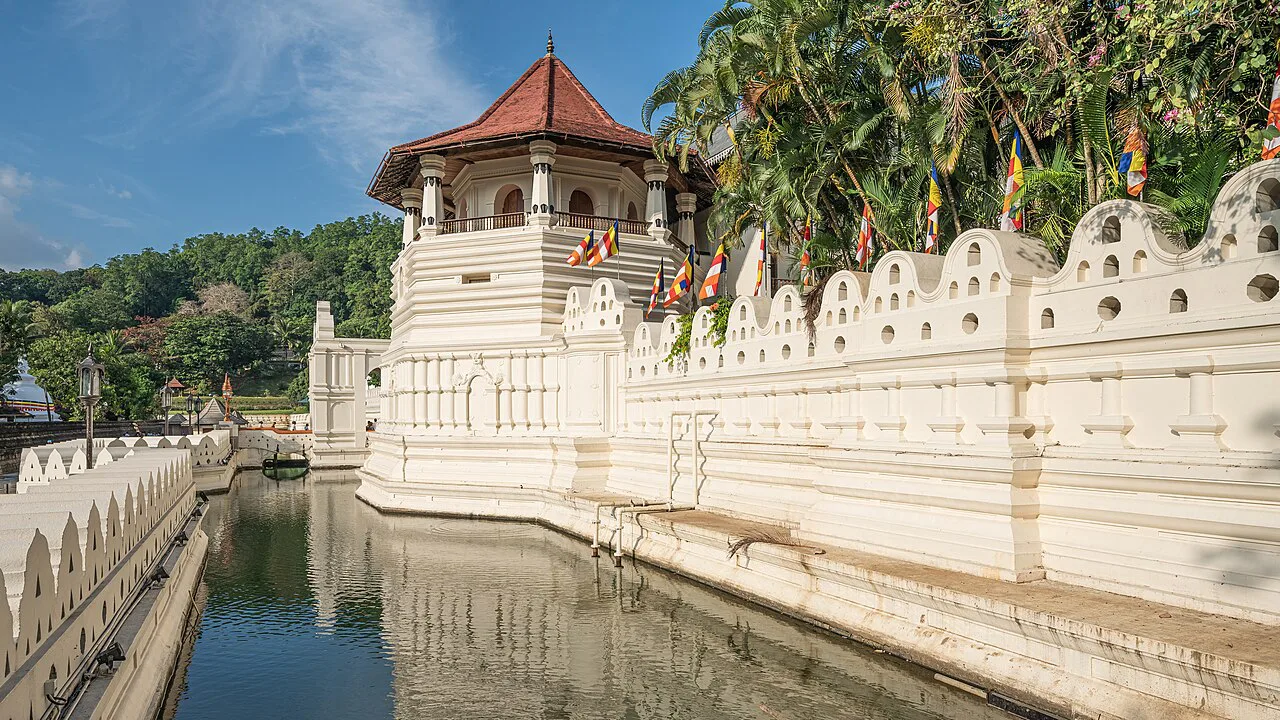
Kandy, Hill Country
Temple of the Tooth
Sri Lanka’s most sacred Buddhist site holds a relic that survived a princess’s desperate escape from India, hidden in her hair, seventeen centuries ago.
According to tradition, Sri Lanka’s most sacred Buddhist relic reached the island hidden in the hair of a fleeing princess, smuggled out of a collapsing Indian kingdom to escape a conquering Hindu invader. Seventeen centuries later, that same tooth relic remains enshrined here, and the temple built to hold it has become the spiritual heart of Sri Lankan Buddhism.
Quick Facts
| Location | Central Kandy, on the Royal Palace grounds beside Kandy Lake |
| Relic arrived in Sri Lanka | 4th century CE, during the reign of King Sirimeghavana (303 to 331) |
| Legendary courier | Princess Hemamala, daughter of King Guhasiva of Kalinga |
| Current temple structure | Rebuilt and expanded from the 17th century onward |
| UNESCO status | Part of the Sacred City of Kandy, World Heritage Site since 1988 |
| Daily ceremonies (Thewawa) | Held at dawn, noon and evening |
Commonly searched as: Temple of the Tooth Kandy · Sri Dalada Maligawa · Sacred Tooth Relic Sri Lanka · Esala Perahera · things to do in Kandy
A Tooth Smuggled Out of a Falling Kingdom
According to the tradition recorded in Sri Lankan chronicle, the Buddha’s tooth relic originated in Kalinga, a kingdom in central-eastern India, where it was venerated for generations and, by tradition, credited with helping make Kalinga one of the most powerful states in the region. When King Guhasiva of Kalinga faced defeat at the hands of a Hindu invader, the relic’s safety became urgent, and his daughter, Princess Hemamala, undertook a desperate escape, hiding the sacred tooth in her hair and fleeing with her husband, Prince Danta, across the sea to Sri Lanka. The relic reached the island during the reign of King Sirimeghavana, who ruled from 303 to 331 CE, and it immediately became an object of profound reverence, enshrined in a series of increasingly elaborate jewelled reliquaries.
As Sri Lanka’s ancient kingdoms shifted capitals over the following centuries, from Anuradhapura through Polonnaruwa and eventually to Kandy, the relic moved with them, a physical marker of political as much as religious legitimacy. Kandy’s own tenure as custodian wasn’t smooth either: King Senarath relocated the relic to Medamahanuwara for safety amid Portuguese aggression, before King Rajasinha II returned it to Kandy, where King Vimaladharmasuriya built a storied structure to house it, later expanded to three storeys under his successors.
A Building Without a Buddha Statue
One detail surprises many first-time visitors: the temple’s inner sanctum, where the tooth relic itself is kept, contains no Buddha statue at all, since the relic itself is considered a direct physical presence of the Buddha, making a separate image unnecessary within that specific chamber. Visitors ascend a staircase past a replica stupa containing another relic (a bowl) and the ceremonial casket used to parade a representation of the tooth during the Esala Perahera, before reaching the upper hall where the relic is exhibited and the Pirith Mandapaya, a chanting pavilion where devotees offer their prayers.
The relic itself is rarely displayed directly to the public, kept within a series of nested golden caskets, and even during the annual Esala Perahera, a representative casket has been carried in procession rather than the relic itself since 1990, a security measure introduced amid the threat of theft during Sri Lanka’s civil war.
Daily Rituals
Three daily worship ceremonies, known as Thewawa, take place at dawn, noon and evening, when the inner shrine doors open for devotees to offer prayers. Traditional Kandyan drums (Hewisi), conch shells and ceremonial music accompany each ceremony, performed by hereditary custodians, the Basnayake Nilames and other temple officials, who have maintained an unbroken tradition of service to the relic across generations.
The Esala Perahera
The temple’s Esala Perahera, held annually in July or August, ranks among the most spectacular religious processions anywhere in the world. Most historians trace its current form to the reign of King Kirti Sri Rajasinha (1747 to 1781), who, on the advice of Siamese monks visiting to help restore Buddhist ordination lineages, merged the previously separate processions of the four guardian devales, Natha, Vishnu, Kataragama and Pattini, with the main Dalada Perahera honouring the tooth relic itself, giving the combined festival a distinctly Buddhist character it retains today. The ten-night festival culminates in the Randoli Perahera, when the ceremonial relic casket is paraded through Kandy’s streets atop a magnificently decorated elephant, accompanied by hundreds of traditionally costumed dancers, drummers, fire performers, and caparisoned elephants, drawing hundreds of thousands of pilgrims and spectators.
Visiting Tips
- Time your visit around one of the three daily Thewawa ceremonies for the fullest sense of the temple’s living devotional life.
- Dress modestly, covering shoulders and knees, and remove shoes before entering.
- Combine with the adjacent Kandy National Museum, International Buddhist Museum, and British Garrison Cemetery, all within the same former palace complex.
- Book accommodation well in advance if visiting during the Esala Perahera, given the huge crowds it draws.
Where It Sits on the Map
Temple of the Tooth (Sri Dalada Maligawa), central Kandy Open in Google Maps ↗
Frequently Asked Questions
How did the tooth relic reach Sri Lanka?
According to tradition, Princess Hemamala of Kalinga smuggled it out of India hidden in her hair during the 4th century CE, fleeing a Hindu invader who had defeated her father’s kingdom.
Why is there no Buddha statue in the temple’s inner sanctum?
The tooth relic itself is considered a direct physical presence of the Buddha, making a separate statue unnecessary in that specific chamber.
Is the actual relic displayed to visitors?
Rarely; it’s kept within nested golden caskets, and since 1990 a representative casket, rather than the relic itself, has been used during the Esala Perahera for security reasons.
What is the Esala Perahera?
An annual ten-night festival in July or August honouring the tooth relic, combining processions from the temple and Kandy’s four guardian devales, considered one of the world’s most spectacular religious processions.
← Sri Lanka: The Complete Guide — see all 258 places by region
Related News
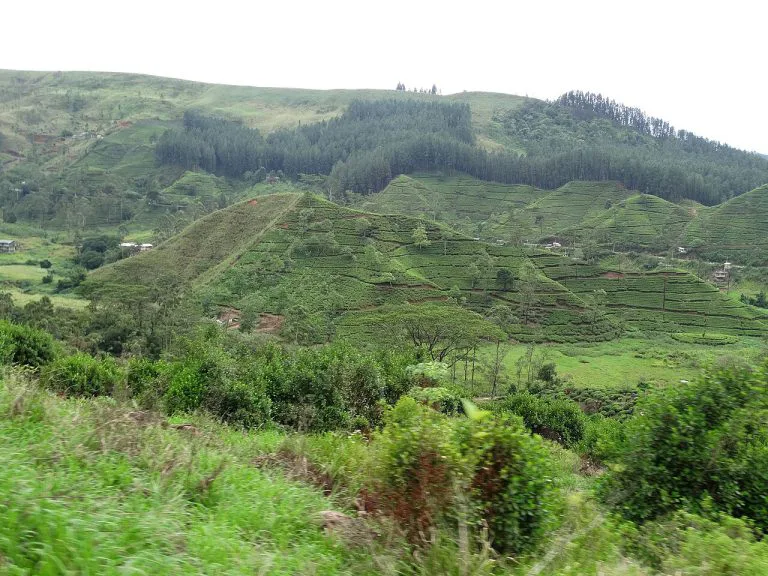
A guide to Sri Lanka's Hill Country: Kandy, tea plantations, Ella, Adam's Peak, Horton Plains, and travel tips.
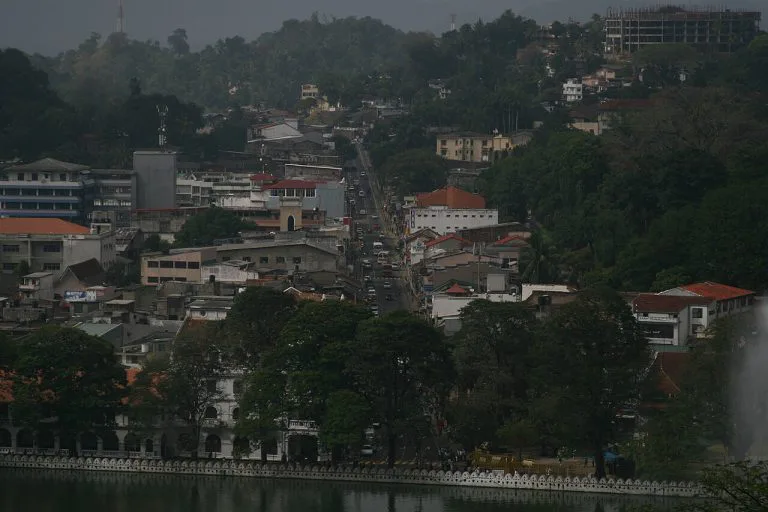
A complete guide to Kandy: the last Sinhalese kingdom's fall in 1815, the Temple of the Tooth, Kandy Lake, and visiting tips.
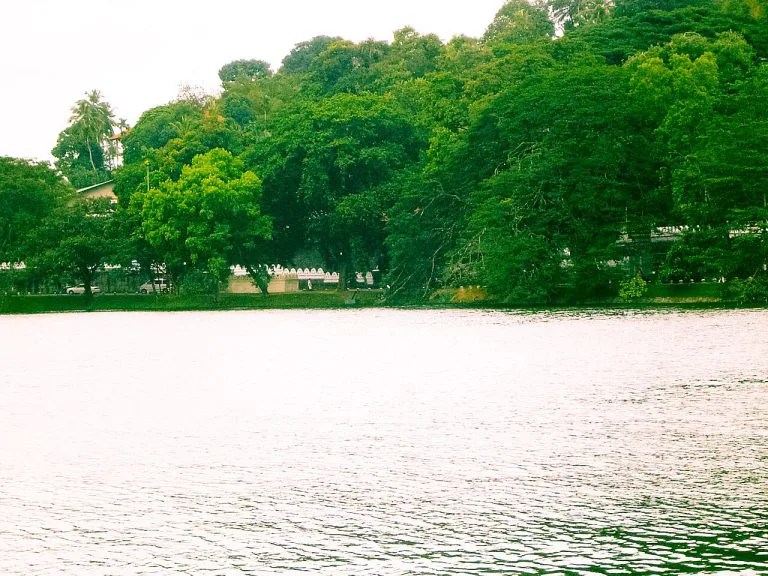
A guide to Kandy Lake, built by the last king of Kandy in 1807: its dark construction history, the island retreat, walking the shore, and...













