

Dsigngo is a Graphic Design and Digital Marketing Company.
Write what you are looking for and press enter to begin your search!

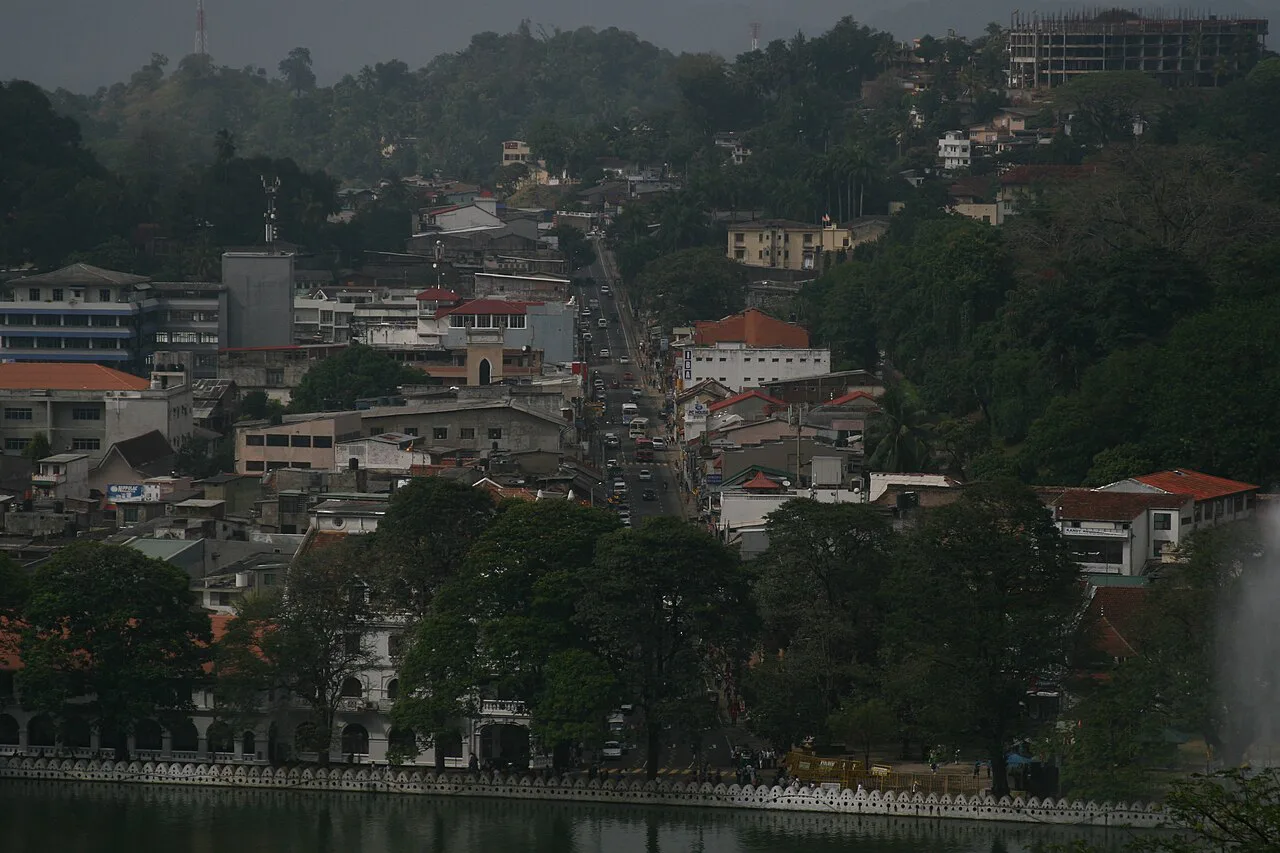
Kandy and the Hill Country
Kandy
The final capital of over 2,300 years of Sinhalese monarchy, defended for two centuries by mountain terrain alone, until its own chiefs handed the last king to the British in 1815.
Kandy carries the weight of being the last chapter in one of the world’s longest continuous royal dynasties. When its own chiefs turned on King Sri Vikrama Rajasinha in 1815, it wasn’t military defeat that ended over 2,300 years of Sinhalese self-rule, it was betrayal from within the walls of the very palace still standing at the city’s centre.
Quick Facts
| Location | Central highlands, about 116 km from Colombo |
| Ancient name | Senkadagalapura |
| Sinhala name today | Maha Nuwara |
| Founded as capital | By King Wickramabahu III, 1357 to 1374 |
| Fell to the British | 1815, via the Kandyan Convention |
| UNESCO status | Sacred City of Kandy, World Heritage Site since 1988 |
Commonly searched as: Kandy Sri Lanka · Kandy history · Kandyan Kingdom · Kandy things to do · last king of Sri Lanka
A City Named Several Different Ways
Kandy’s ancient name, Senkadagalapura, carries several competing origin stories, some tracing it to a Brahmin named Senkadagala who once lived in the area, others to a queen named Senkada married to King Wickramabahu, and still others to a coloured stone (gala) called Senkada. Whatever its true origin, the settlement was formally established as a capital city by King Wickramabahu III of the Gampola era, reigning from 1357 to 1374, and later became the seat of the Kandyan Kingdom proper under Senasammata Wickremabahu in the 15th century. The name “Kandy” itself is an English derivation of “Kanda Uda Rata,” meaning roughly “land on the mountain,” while the city’s Sinhala name today, Maha Nuwara, simply means “great city.”
Two Centuries of Successful Resistance
What makes Kandy’s history genuinely remarkable is how long it held out. From the 1590s, when the Kandyan Kingdom first began resisting sustained Portuguese pressure, through Dutch attempts in the 17th century, to early British incursions, Kandy’s combination of mountainous, heavily forested terrain and hidden mountain access routes made a direct military assault extraordinarily costly. Coastal Sri Lanka fell to European powers centuries before the highland kingdom did, and Kandy’s survival against three separate colonial empires across more than 225 years stands as one of history’s more successful examples of terrain-based indigenous resistance to colonization.
That resistance finally ended not through battlefield defeat but political betrayal. Sri Vikrama Rajasinha, the last of the Nayakkar dynasty’s four Kandyan kings, ruled from 1798 amid growing paranoia and increasingly harsh treatment of his own nobility, conditions modern scholarship increasingly frames as a response to genuine existential threats to his throne rather than simple tyranny. When the British moved against Kandy in early 1815, disaffected Kandyan chiefs, including the chief minister Ehelepola, whose family the king had brutally punished, sided with the invaders. British troops entered Kandy on 14 February 1815 without resistance, and the king was captured four days later, hiding near the village of Medamahanuwara. On 2 March 1815, the Kandyan Convention was signed at the Magul Maduwa (Royal Audience Hall) beside the Temple of the Tooth, formally ending 2,357 years of Sinhalese independence. Sri Vikrama Rajasinha spent his remaining 17 years exiled at Vellore Fort in India, dying there in 1832.
A Rebellion, and Then Integration
British rule proved harder for many Kandyans to accept than expected, and a major rebellion broke out in 1817 across the Wellassa and Uva regions, suppressed only after considerable effort, including the execution of rebel leader Keppetipola Disawe. Following the uprising’s defeat, the Kandyan provinces were more fully integrated into British-administered Ceylon, ending the region’s distinct political status.
What Survives Today
Modern Kandy retains a genuinely different character from Colombo, more compact, set around a scenic lake, and anchored spiritually by the Temple of the Tooth, home to Buddhism’s most revered relic in Sri Lanka. The city’s status as a UNESCO World Heritage “Sacred City” since 1988 reflects both its religious significance and its role as the last seat of an unbroken royal line stretching back over two millennia. Beyond the temple, Kandy holds numerous individual sights worth dedicated visits: Kandy Lake, several historic devales (shrines to guardian deities), the Malwatte Vihara monastery, museums, and Udawattekele Sanctuary, a forest reserve within walking distance of the city centre.
Visiting Tips
- Allow at least two days to properly see the Temple of the Tooth complex, Kandy Lake, and the city’s museums.
- Visit during the annual Esala Perahera (July/August) for Kandy’s most spectacular festival, though expect large crowds.
- Kandy makes a natural gateway to the rest of the Hill Country, connected by the scenic railway line toward Ella.
- The city’s cooler elevation offers a welcome break from coastal heat and humidity.
Where It Sits on the Map
Kandy, Central Province, Sri Lanka Open in Google Maps ↗
Frequently Asked Questions
Why was Kandy the last kingdom to fall to colonial powers?
Its mountainous terrain and hidden access routes made direct military conquest extremely costly, allowing it to resist Portuguese, Dutch and British forces for over two centuries.
How did the Kingdom of Kandy actually fall in 1815?
Not through battlefield defeat, but political betrayal: disaffected Kandyan chiefs sided with the British against King Sri Vikrama Rajasinha, who was captured and exiled, ending 2,357 years of Sinhalese self-rule.
What happened to the last king of Kandy?
Sri Vikrama Rajasinha was exiled to Vellore Fort in India, where he lived as a prisoner for 17 years until his death in 1832.
Why is Kandy a UNESCO World Heritage Site?
It was inscribed in 1988 as the ‘Sacred City of Kandy,’ recognising its religious significance, especially the Temple of the Tooth, and its history as the final capital of the Sinhalese monarchy.
← Sri Lanka: The Complete Guide — see all 258 places by region
Related News
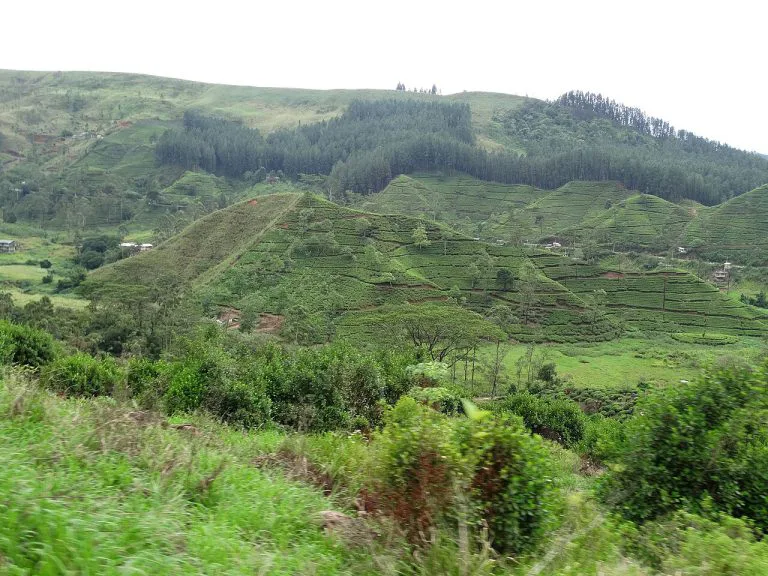
A guide to Sri Lanka's Hill Country: Kandy, tea plantations, Ella, Adam's Peak, Horton Plains, and travel tips.
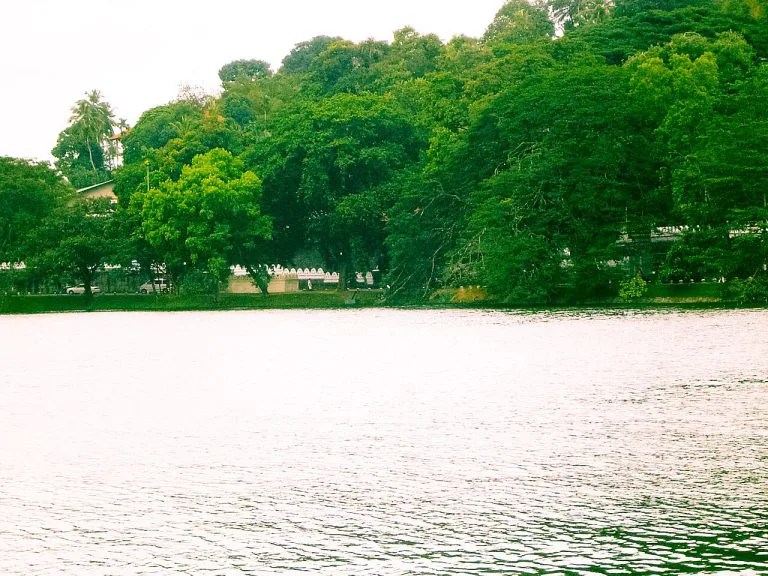
A guide to Kandy Lake, built by the last king of Kandy in 1807: its dark construction history, the island retreat, walking the shore, and...
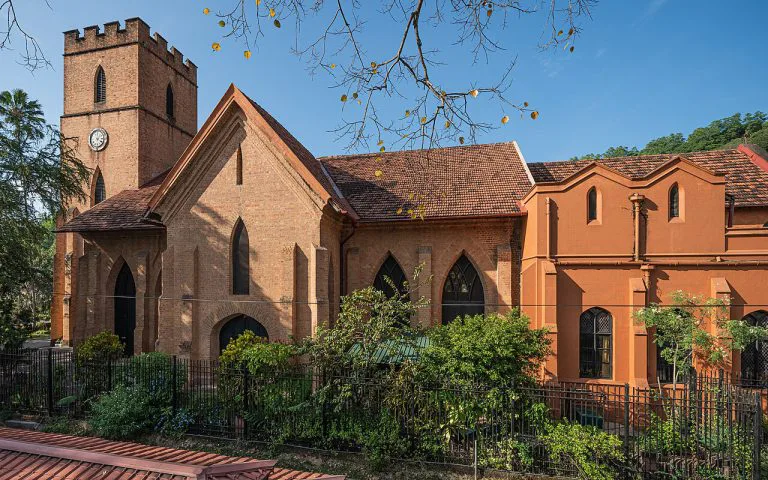
A guide to St Paul's Church in Kandy: its origins in the old Royal Audience Hall, Neo-Gothic architecture, its historic organ, visiting tips and map.













