

Dsigngo is a Graphic Design and Digital Marketing Company.
Write what you are looking for and press enter to begin your search!

Kandy, Hill Country
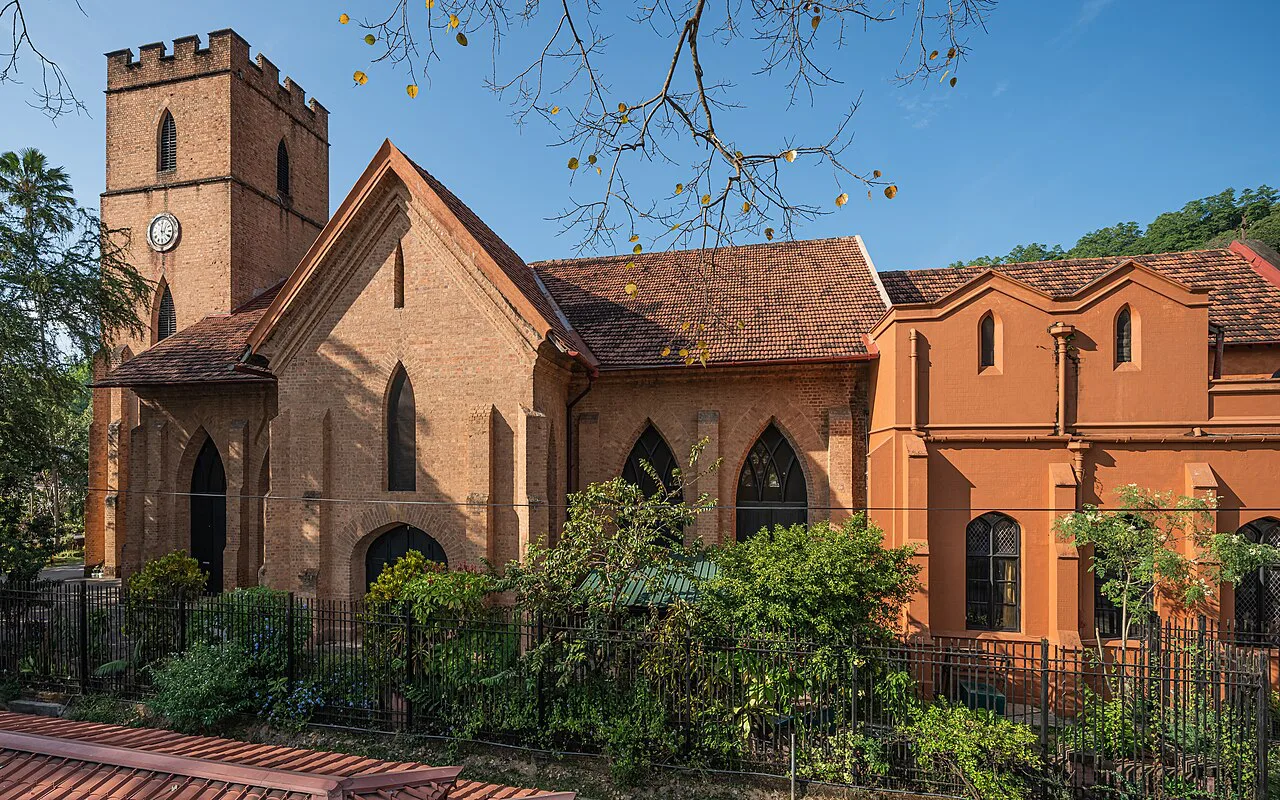
St Paul’s Church
An Anglican church built after its bishop objected to holding services in the former royal Audience Hall he associated with ‘horrid cruelties,’ now standing peacefully beside the Temple of the Tooth.
It’s a striking pairing: St Paul’s Church shares an actual boundary wall with the Temple of the Tooth, Buddhism’s most revered relic shrine in Sri Lanka, a physical closeness that has come to symbolise religious tolerance in an overwhelmingly Buddhist country.
Quick Facts
| Location | 10 Deva Veediya, Kandy, adjacent to the Temple of the Tooth |
| Idea first raised | 1825, by Bishop Reginald Heber of Calcutta |
| Foundation laid | 16 March 1843 |
| Consecrated | 25 January 1853 |
| Style | Neo-Gothic, built from solid terracotta brick |
| Notable feature | The only pipe organ in Kandy, and among the largest in regular use in Sri Lanka |
Commonly searched as: St Paul’s Church Kandy · Kandy Anglican church · Temple of the Tooth nearby church · things to do in Kandy · Kandy colonial architecture
Born From a Bishop’s Discomfort
The idea for a proper Anglican church in Kandy traces back to 1825, when Reginald Heber, the second Bishop of Calcutta, visited the city alongside the Governor of Ceylon, Edward Barnes, to conduct a confirmation service. At the time, Sunday worship for the British garrison and a small local Christian community was being held inside the former Royal Audience Hall of the Kandyan kings, the very building where the Kandyan Convention had been signed only a decade earlier, ending the last Sinhalese kingdom. Heber noted that he associated the space with “horrid cruelties,” a reference to its history as a site of royal punishment and political drama under Kandy’s final kings, and concluded that a purpose-built church, properly sited and designed, was needed to serve the garrison and community instead.
It took nearly two decades for that idea to become reality. The British government granted a block of Crown land by deed in 1843, and the foundation stone was laid on 16 March 1843, with construction carried out by engineers Affleck and Gordon. The church was finally consecrated on 25 January 1853, under the name St Paul’s, standing on land immediately adjacent to the Temple of the Tooth.
A Royal Gift From King George III
One of the church’s most treasured possessions predates the building itself. A silver-gilt communion set, originally presented by King George III to serve the spiritual needs of the British military garrison in Kandy, remains in active use at St Paul’s today, brought out especially for Easter and Christmas services, a direct physical link back to the church’s earliest congregational roots decades before the current building was completed.
Architecture and the Organ
Built from solid terracotta brick in the Neo-Gothic style, St Paul’s interior has been described as a genuine piece of English Victoriana, complete with stained glass windows depicting the Crucifixion, Ascension and Nativity. The church houses the only pipe organ in Kandy, and possibly the largest still in regular use anywhere in Sri Lanka. The original organ, donated in 1874, remained in continuous use for well over a century before being replaced in 2009 with a similarly sized instrument sourced from a disused church in Bradford, England.
A Symbol of Religious Coexistence
St Paul’s occupies a genuinely unusual position: an active Christian church sharing a physical boundary with one of the most sacred Buddhist sites in the world. Rather than existing in tension, the church has come to be seen locally as a marker of religious tolerance in Sri Lanka, a Buddhist-majority country where St Paul’s continued presence right beside the Dalada Maligawa is often cited as a small but meaningful example of interfaith coexistence.
Visiting Tips
- Visit before or after the Temple of the Tooth, given the two sites’ shared boundary.
- Photography inside the church is generally not permitted; respect this rule.
- Visit in the early morning or late afternoon for a quieter, more contemplative experience.
- Dress modestly, as with any active place of worship.
Where It Sits on the Map
St Paul’s Church, 10 Deva Veediya, Kandy Open in Google Maps ↗
Frequently Asked Questions
Why was St Paul’s Church built?
Bishop Reginald Heber, visiting in 1825, objected to holding Anglican services in the former Royal Audience Hall of the Kandyan kings, a site he associated with ‘horrid cruelties,’ and called for a purpose-built church instead.
When was the church completed?
Its foundation was laid in 1843, and it was consecrated on 25 January 1853.
What is notable about the church’s organ?
It’s the only pipe organ in Kandy and possibly the largest in regular use in Sri Lanka; the original 1874 organ was replaced in 2009 with one sourced from a disused church in Bradford, England.
What is significant about the church’s location?
It shares a physical boundary with the Temple of the Tooth, making it a notable symbol of religious coexistence in a predominantly Buddhist country.
← Sri Lanka: The Complete Guide — see all 258 places by region
Related News
A guide to Sri Lanka's Hill Country: Kandy, tea plantations, Ella, Adam's Peak, Horton Plains, and travel tips.
A complete guide to Kandy: the last Sinhalese kingdom's fall in 1815, the Temple of the Tooth, Kandy Lake, and visiting tips.
A guide to Kandy Lake, built by the last king of Kandy in 1807: its dark construction history, the island retreat, walking the shore, and...













