

Dsigngo is a Graphic Design and Digital Marketing Company.
Write what you are looking for and press enter to begin your search!

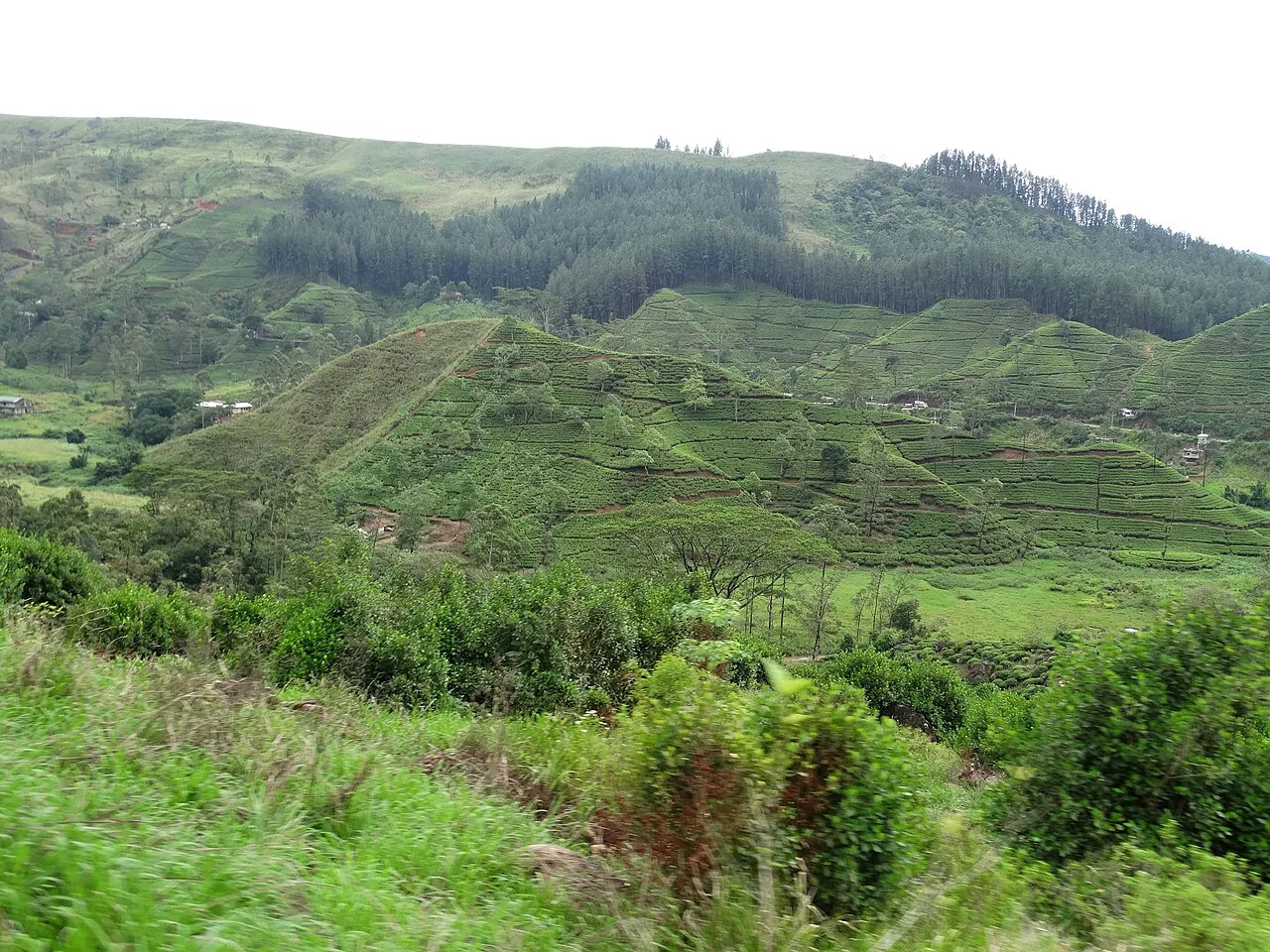
Sri Lanka Regions
Kandy and the Hill Country
A cool, misty highland region built around the last independent Sinhalese kingdom, where colonial-era tea plantations now blanket the mountains that once defended it from three European empires.
Sri Lanka’s Hill Country rises so sharply from the surrounding lowlands that it protected an entire kingdom for over two centuries. Kandy held out against Portuguese, Dutch and British forces alike, resisting conquest until 1815, longer than any other kingdom on the island, thanks largely to the same mountainous terrain that now draws hikers, tea enthusiasts and train-window photographers from around the world.
Quick Facts
| Extent | Central highlands from Kandy through Nuwara Eliya, Ella, Haputale and Adam’s Peak |
| Elevation range | Roughly 500 m (Kandy) to over 2,500 m (highest peaks) |
| Historic anchor | Kandy, last capital of the Sinhalese kingdom, fell to the British in 1815 |
| Key industries | Tea cultivation, introduced commercially in the 1860s-70s |
| Iconic experience | The scenic Kandy-to-Ella railway line |
| Major sights | Temple of the Tooth, Horton Plains/World’s End, Adam’s Peak, Nine Arch Bridge |
Commonly searched as: Sri Lanka Hill Country · Kandy to Ella train · Sri Lanka tea country · Hill Country itinerary · Nuwara Eliya travel guide
A Kingdom Protected by Its Own Geography
For over two centuries, from the 1590s until 1815, the Kingdom of Kandy successfully resisted conquest by three successive European powers, Portuguese, Dutch, and British, even as those same powers steadily took control of Sri Lanka’s coastal lowlands. The kingdom’s survival depended heavily on its geography: rugged mountain terrain, hidden and easily ambushed access routes, and thick forest cover made a direct assault on the capital extraordinarily costly for any invading force. It took internal political betrayal, not military defeat, to finally bring the kingdom down, when disaffected Kandyan chiefs sided with the British against their own king in 1815, ending 2,357 years of continuous Sinhalese self-rule on the island.
That defensive terrain is precisely what makes the Hill Country so visually dramatic today: steep valleys, misty peaks, and a patchwork of terraced tea plantations covering slopes that would have been nearly impassable to an advancing 18th-century army.
From Royal Capital to Tea Empire
After 1815, the British gradually transformed the Hill Country’s economy, clearing forest for coffee plantations initially, then switching decisively to tea after a coffee blight devastated the industry in the 1870s. That shift produced the tea culture the region is now globally associated with, along with hill stations like Nuwara Eliya, built explicitly as cool-climate retreats for British colonial administrators seeking relief from the tropical lowland heat.
Today the region blends all of these layers at once: an active, still-revered Buddhist religious centre at Kandy’s Temple of the Tooth, colonial-era tea estates still processing leaf by traditional methods, dramatic natural landmarks like Horton Plains’ World’s End cliff and Adam’s Peak’s pilgrimage trail, and the increasingly famous Kandy-to-Ella railway, frequently cited among the world’s most scenic train journeys.
Planning a Hill Country Trip
Most visitors approach the Hill Country either as a loop from Kandy through Nuwara Eliya to Ella and back toward the coast, or as a slower, multi-stop train journey savouring each town along the way. Both work well; the choice depends on how much time you have and whether you prioritise depth over ground covered.
Best Time to Visit
The Hill Country has its own distinct weather pattern from the coast, generally driest from January to April, with a secondary drier window around June to September in some areas. Given the elevation, temperatures are noticeably cooler than the rest of Sri Lanka year-round, and rain gear is worth packing regardless of season.
Getting Around
- The Kandy-to-Ella train is one of Sri Lanka’s signature travel experiences; book seats well in advance, especially for observation-class carriages.
- Private drivers offer more flexibility for visiting scattered tea estates, temples and waterfalls off the main rail line.
- Kandy is well connected to Colombo by both road and rail, making it a natural entry point to the region.
- Pack layers; even at midday, higher elevations like Nuwara Eliya and Horton Plains can be surprisingly cool.
Where It Sits on the Map
Kandy and the Hill Country region, Sri Lanka Open in Google Maps ↗
Frequently Asked Questions
Why did the Kingdom of Kandy survive so long against European powers?
Its mountainous terrain, hidden mountain passes, and thick forest cover made military conquest extremely costly; it ultimately fell in 1815 through internal political betrayal rather than battlefield defeat.
What is the Hill Country best known for today?
Tea plantations, the Temple of the Tooth in Kandy, the scenic Kandy-to-Ella train journey, and natural landmarks like Horton Plains’ World’s End and Adam’s Peak.
How did the region become tea country?
British colonists initially planted coffee after 1815, but switched to tea after a devastating coffee blight in the 1870s, establishing the plantation economy still visible today.
When is the best time to visit the Hill Country?
Roughly January to April is the primary dry season, though the region’s cooler climate means rain gear is worth packing year-round.
← Sri Lanka: The Complete Guide — see all 258 places by region
Related News
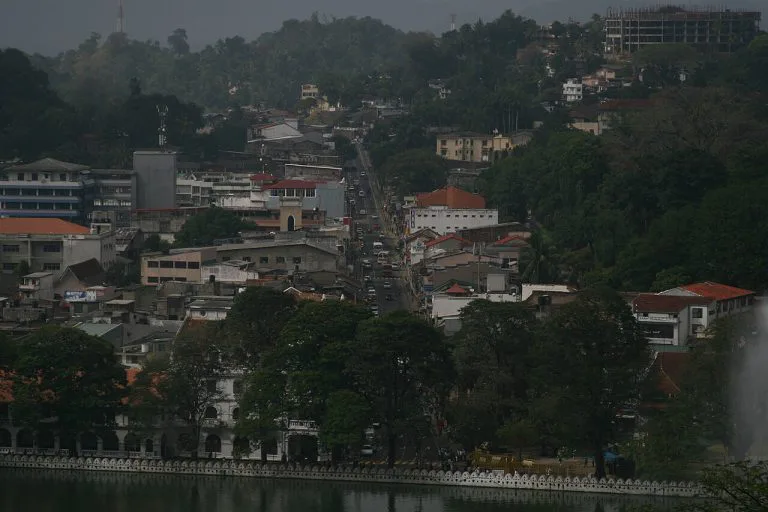
A complete guide to Kandy: the last Sinhalese kingdom's fall in 1815, the Temple of the Tooth, Kandy Lake, and visiting tips.
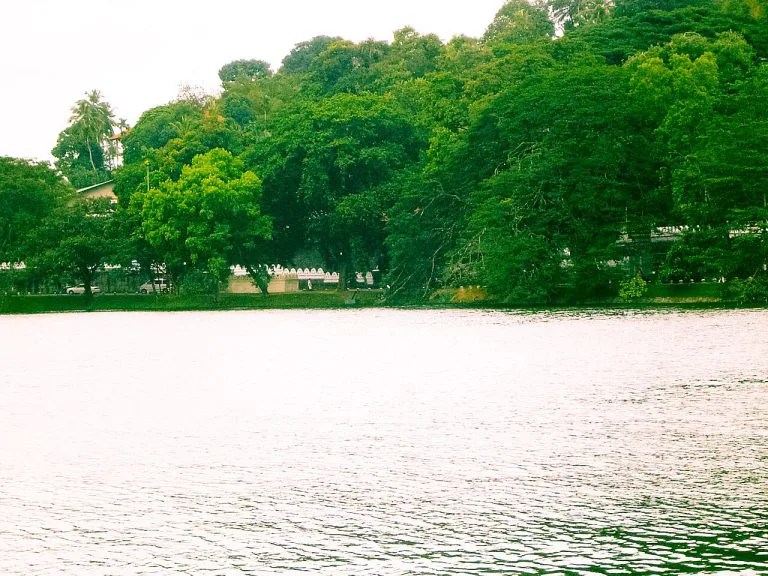
A guide to Kandy Lake, built by the last king of Kandy in 1807: its dark construction history, the island retreat, walking the shore, and...
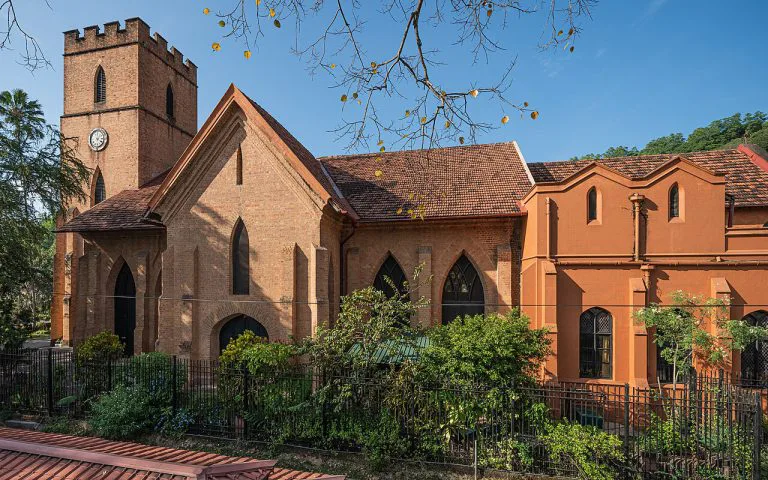
A guide to St Paul's Church in Kandy: its origins in the old Royal Audience Hall, Neo-Gothic architecture, its historic organ, visiting tips and map.













