

Dsigngo is a Graphic Design and Digital Marketing Company.
Write what you are looking for and press enter to begin your search!

Matale District, Cultural Triangle
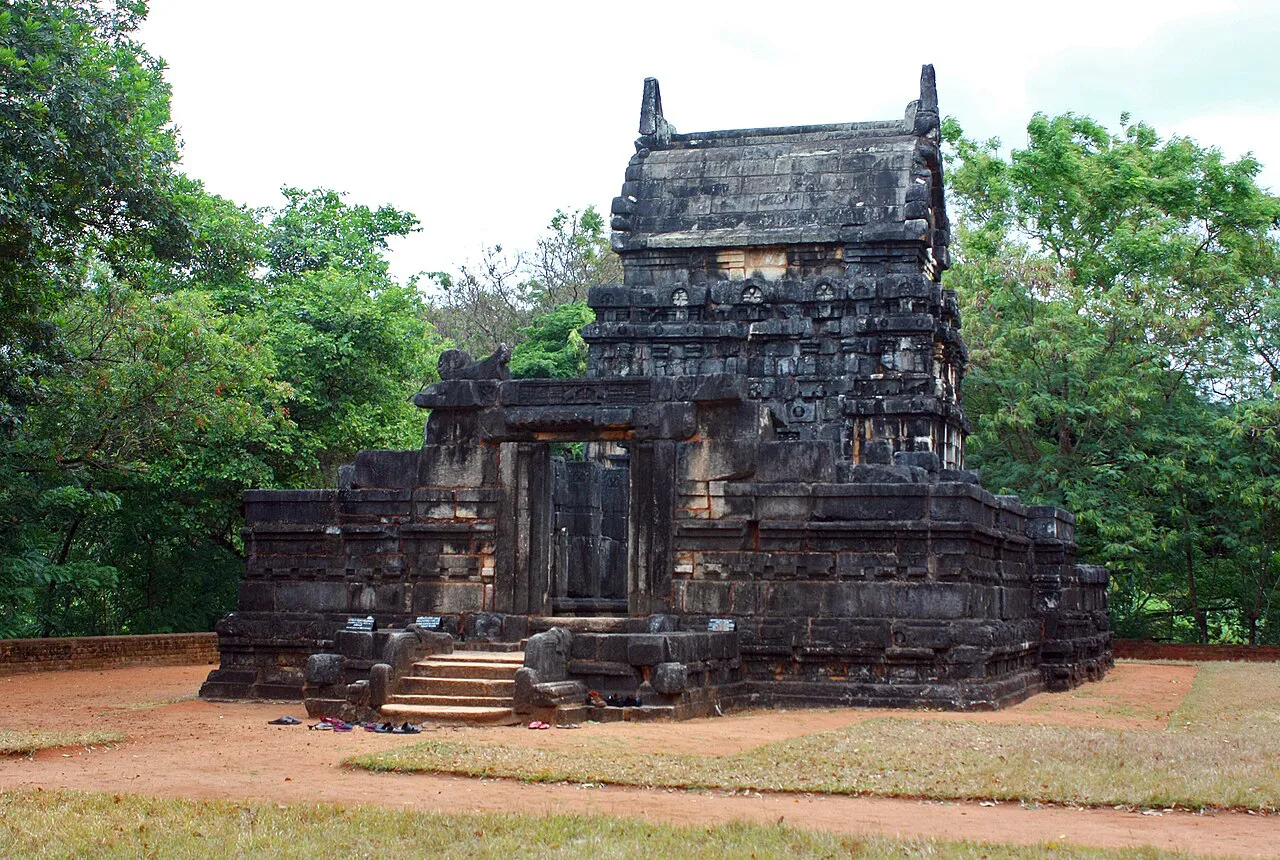
Nalanda Gedige
Standing near the geographic centre of Sri Lanka, this temple blends Hindu and Buddhist architecture so thoroughly that it remains the only structure of its kind anywhere on the island, and it exists today only because engineers dismantled and rebuilt it before a dam could drown it.
Nalanda Gedige is genuinely unique among Sri Lanka’s ancient monuments, a temple so thoroughly blending Hindu Dravidian and Buddhist architectural traditions that historians describe it as the only building of its kind ever discovered on the island, and one that very nearly disappeared beneath a reservoir before a dramatic relocation effort saved it.
Quick Facts
| Location | On the bund of the Bowatenna Reservoir, south of Dambulla |
| Built | Between the 8th and 10th centuries CE |
| Architectural style | Hybrid Dravidian (South Indian, Pallava-influenced) and Buddhist |
| Significance | The only known example of this composite architectural style in Sri Lanka |
| Notable carvings | Weathered Tantric imagery, and a rare relief of Kuvera, god of wealth |
| Relocated | 1985, stone by stone, ahead of the Bowatenna Reservoir’s construction |
Commonly searched as: Nalanda Gedige · Nalanda Gedige Matale · Sri Lanka Hindu Buddhist temple · Bowatenna Reservoir temple · things to do near Dambulla
A Temple Unlike Any Other in Sri Lanka
Built sometime between the 8th and 10th centuries CE, Nalanda Gedige stands close to what’s considered the geographic centre of Sri Lanka, roughly equidistant from Anuradhapura, Polonnaruwa and Kandy, the three corners of the Cultural Triangle. Its design immediately sets it apart from virtually every other ancient structure on the island: built from solid stone, following the layout of a South Indian Hindu temple with a mandapa (entrance hall), a short passage to an inner sanctum, and an ambulatory path circling the sacred centre, all rendered in a style scholars trace to 7th-century Pallava-era Madras. Yet the building is generally believed to have been used by Buddhists, likely a Mahayana or Vajrayana community with pronounced Tantric learning, making it a genuine architectural hybrid unlike anything else discovered in Sri Lanka.
Weathered carvings throughout the site reflect that unusual blend directly: some panels depict distinctly Tantric, sexually themed imagery reminiscent of the famous sculptures at Khajuraho in India, a rare artistic choice for a Sri Lankan Buddhist site, while a semi-circular relief on the southern section depicts Kuvera, the Hindu god of wealth, seated on a lotus plinth in a specific artistic treatment that art historians note appears nowhere else on the island.
Saved From a Rising Reservoir
Nalanda Gedige’s survival to the present day owes as much to 20th-century engineering as to its original construction. When plans for the Bowatenna Reservoir threatened to permanently submerge the temple’s original location, Sri Lankan authorities undertook a genuinely painstaking rescue operation in 1985, carefully dismantling the entire stone structure piece by piece and reconstructing it on higher ground along the reservoir’s bund, where it stands today. That relocation, a collaborative effort between local artisans, archaeologists and engineers, preserved a monument that would otherwise have been lost entirely beneath the reservoir’s waters, and the temple’s current lakeside setting, framed by forest and water, has arguably given it an even more atmospheric backdrop than its original site.
A Site Fewer Visitors Reach
Despite sitting directly beside the main A9 route and being included on the standard Cultural Triangle entrance ticket, Nalanda Gedige receives noticeably fewer visitors than nearby Dambulla or Sigiriya, a pattern local guides attribute less to genuine inaccessibility than to how thoroughly the “beaten tourist track” tends to dictate where visitors actually stop. For travellers willing to make the short detour, that relative obscurity means a quieter, more contemplative visit to a monument widely regarded as one of the most architecturally significant and unusual in the entire country.
Visiting Tips
- Combine with a visit to Aluvihare, roughly 20 km away, for an efficient day covering both sites.
- Look closely at the Kuvera relief on the southern facade, a genuinely rare piece of iconography found nowhere else in Sri Lanka.
- Allow about an hour to properly explore the compact but detailed site.
- Bring a camera for the temple’s lakeside setting, particularly scenic in the soft light of early morning or late afternoon.
Where It Sits on the Map
Nalanda Gedige, Bowatenna Reservoir, Matale District Open in Google Maps ↗
Frequently Asked Questions
Why is Nalanda Gedige architecturally significant?
It’s considered the only known example in Sri Lanka of a stone temple blending South Indian Hindu Dravidian architecture with Buddhist use, likely by a Tantric Mahayana or Vajrayana community.
When was Nalanda Gedige built?
Between the 8th and 10th centuries CE.
Why was the temple relocated?
Its original site was due to be submerged by the newly built Bowatenna Reservoir; in 1985, the entire stone structure was carefully dismantled and rebuilt on the reservoir’s bund to save it.
What is notable about the temple’s carvings?
Weathered Tantric imagery similar to Khajuraho’s sculptures in India, and a rare relief of Kuvera, the Hindu god of wealth, found nowhere else in Sri Lanka.
← Sri Lanka: The Complete Guide — see all 258 places by region
Related News
A guide to Sri Lanka's Cultural Triangle: Sigiriya, Polonnaruwa, Anuradhapura, Dambulla and Mihintale, with travel tips.

A complete guide to Sigiriya Rock Fortress: King Kashyapa's parricide, the water gardens, the famous frescoes, visiting tips and map.
A guide to the ancient city of Polonnaruwa: from Chola conquest to Parakramabahu the Great's garden-city, visiting tips and map.













