

Dsigngo is a Graphic Design and Digital Marketing Company.
Write what you are looking for and press enter to begin your search!

The Cultural Triangle, Sri Lanka
Dambulla
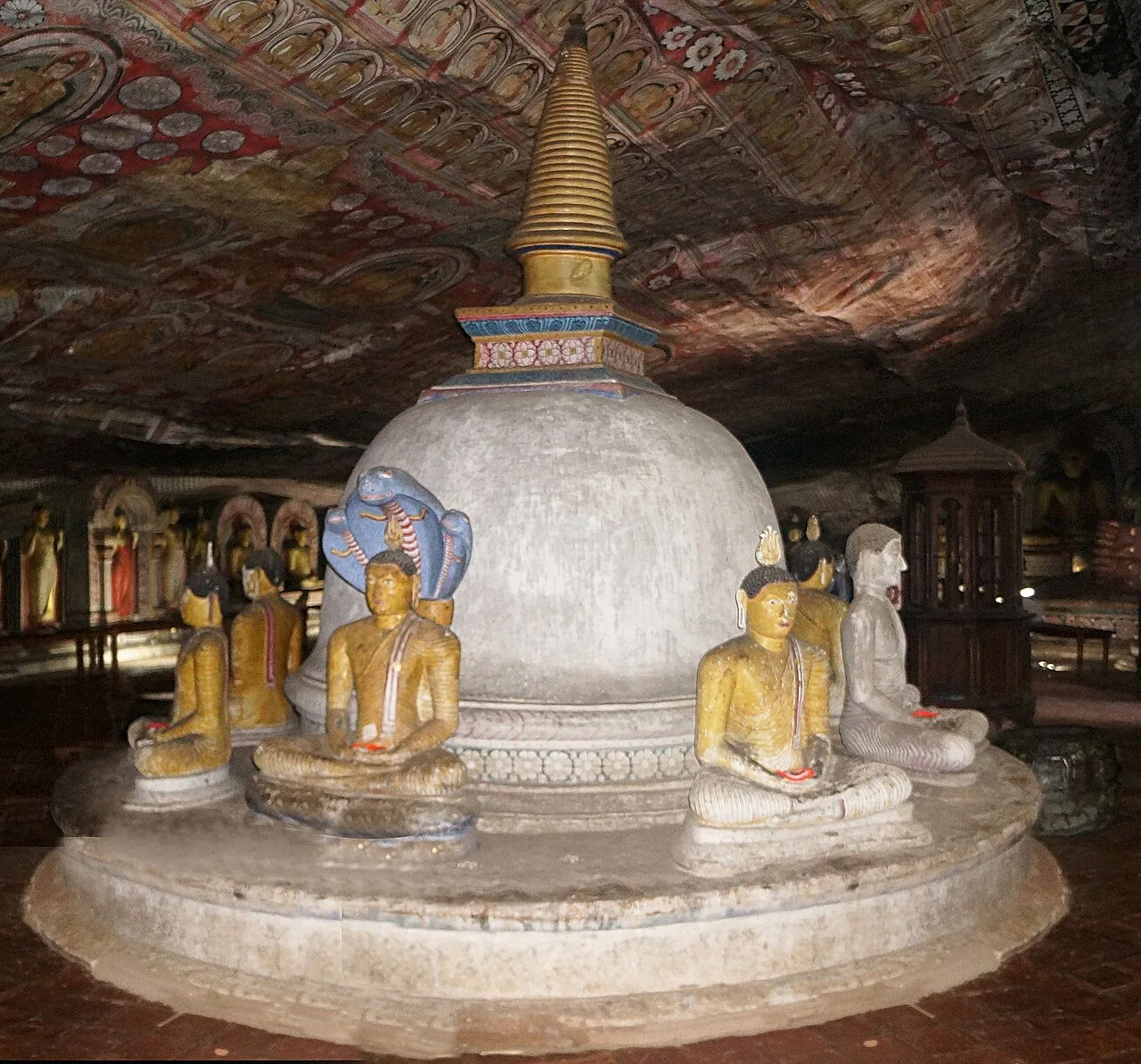
While tour buses climb the rock to see 2,000-year-old cave temples, a few kilometres away an entirely different Dambulla wakes at 3am, when lorries from across the island unload pyramids of tomatoes under fluorescent light.
Most visitors know Dambulla only for the rock towering above it and the ancient cave temples carved into its face, but the working town spread out below has its own, entirely different claim to national significance: one of the largest wholesale produce markets anywhere in South Asia.
Quick Facts
| Location | Central Sri Lanka, Cultural Triangle, at the A9/A6 highway junction |
| History | Over 2,000 years as a religious, cultural and commercial hub |
| Key modern landmark | Dambulla Dedicated Economic Centre (DDEC), established 1999 |
| Market scale | Handles an estimated 40 to 50% of Sri Lanka’s vegetable distribution |
| Trading hours | Roughly 3am to 8am, busiest before dawn |
| Town layout | Two nodes about 2 km apart: the market/highway junction, and the cave temple precinct |
Commonly searched as: Dambulla town · Dambulla Economic Centre · Dambulla market · Dambulla Sri Lanka · things to do in Dambulla
A Junction Town Built on Trade
Dambulla’s history as a significant settlement stretches back more than 2,000 years, shaped from the outset by its role as a religious and commercial crossroads. Below the cave temple rock, the town developed as a genuine junction settlement, and that function has only intensified in the modern era: today Dambulla sits at the interchange of the A9 and A6 highways, the main routes connecting Kandy, Anuradhapura, Jaffna and the wider Cultural Triangle, making it a natural stopping and transfer point for traffic moving across a large swathe of the country.
The town itself is loosely organised around two separate centres roughly 2 km apart: the main commercial hub, clustered around the highway interchange with its bus station, banks, restaurants and market streets, and the cave temple precinct to the south, reached via a car park and a moderately steep 15 to 20-minute climb up the rock.
Sri Lanka’s Produce Capital
Dambulla’s most significant modern institution isn’t a temple at all, it’s the Dambulla Dedicated Economic Centre (DDEC), established in 1999 specifically to decentralise Sri Lanka’s agricultural trade, which had previously funnelled almost entirely through Colombo’s Manning Market. That shift transformed the national produce supply chain: rather than relying on a chain of collectors and intermediaries, farmers could bring their harvests directly to Dambulla to sell to wholesalers, retailers and exporters, cutting out layers of middlemen and bringing growers closer to the vendors and consumers who’d ultimately buy their crops.
The scale of what resulted is genuinely striking: DDEC is now considered the largest wholesale market for fruits, vegetables and other agricultural produce anywhere in Sri Lanka, and one of the largest of its kind in South Asia, handling an estimated 40 to 50% of the country’s entire vegetable distribution. The market operates through the night and into early morning, its busiest period running roughly from 3am to 8am, when lorries arrive from across the island to unload tomatoes, capsicums, beans, pumpkins, bananas and tropical fruit under the market’s fluorescent lighting, farmers who’ve spent their day working fields arriving to trade through the night in a demanding but remarkably efficient rhythm.
An Unlikely Tourist Draw
Despite having no historical pretensions whatsoever, Dambulla’s produce market has increasingly become a genuine visitor attraction in its own right, offering a vivid, chaotic and entirely authentic glimpse into Sri Lanka’s agricultural economy that stands in genuine contrast to the curated calm of the nearby cave temples. Visitors are welcome to walk through, provided they exercise basic courtesy and avoid blocking working areas, an early-morning visit here offers a side of Sri Lankan daily life that few travellers on a temple-and-ruins circuit ever otherwise encounter.
Visiting Tips
- Visit the produce market at dawn, ideally before 6am, to see it at its most active and atmospheric.
- Combine with the cave temples and Golden Temple complex, both within easy reach of the town centre.
- Explore the town’s roadside stalls and market streets for local fruit, spices, and handicrafts.
- Use Dambulla as a practical base for exploring Sigiriya, Anuradhapura and the wider Cultural Triangle, given its central highway position.
Where It Sits on the Map
Dambulla, Cultural Triangle, Sri Lanka Open in Google Maps ↗
Frequently Asked Questions
What is the Dambulla Dedicated Economic Centre?
Established in 1999, it’s the largest wholesale market for fruits, vegetables and other produce in Sri Lanka, handling an estimated 40 to 50% of the country’s vegetable distribution.
When is the best time to visit the produce market?
Roughly 3am to 8am, when trading is busiest, with lorries arriving from across the island to unload fresh produce.
How is Dambulla town laid out?
Around two centres roughly 2 km apart: the main commercial hub at the A9/A6 highway junction, and the cave temple precinct to the south.
Why is Dambulla such an important junction town?
It sits at the interchange of two major highways connecting Kandy, Anuradhapura, Jaffna and the wider Cultural Triangle, making it a natural stopping point for travel across central Sri Lanka.
← Sri Lanka: The Complete Guide — see all 258 places by region
Related News
A guide to Sri Lanka's Cultural Triangle: Sigiriya, Polonnaruwa, Anuradhapura, Dambulla and Mihintale, with travel tips.

A complete guide to Sigiriya Rock Fortress: King Kashyapa's parricide, the water gardens, the famous frescoes, visiting tips and map.
A guide to the ancient city of Polonnaruwa: from Chola conquest to Parakramabahu the Great's garden-city, visiting tips and map.













