

Dsigngo is a Graphic Design and Digital Marketing Company.
Write what you are looking for and press enter to begin your search!

The Cultural Triangle, Sri Lanka
Polonnaruwa
Founded by South Indian Chola invaders, reclaimed by a Sinhalese king, and transformed by his grandson into a garden-city so ambitious that its irrigation reservoir still waters rice fields nearly nine centuries later.
Polonnaruwa began under foreign occupation and ended in foreign conquest, but the two centuries in between produced one of the most ambitious garden-cities of the medieval world, built by a king so committed to water management that he vowed not a single drop of rain should reach the sea unused.
Quick Facts
| Location | North Central Province, on the shore of Parakrama Samudra reservoir |
| Original name under Chola rule | Jananathamangalam |
| Became Sinhalese capital | 1070 CE, under King Vijayabahu I |
| Golden age | 1153 to 1186, under King Parakramabahu I |
| Capital abandoned | Around 1310 CE, after South Indian invasions |
| UNESCO status | World Heritage Site since 1982 |
Commonly searched as: Polonnaruwa · Polonnaruwa ancient city · King Parakramabahu · Parakrama Samudra · Cultural Triangle Sri Lanka
Founded by Invaders, Reclaimed by a King
Polonnaruwa’s origins as a major city trace to the 10th century, when the South Indian Chola dynasty, after destroying Anuradhapura in 993 CE, established their own capital at the site under the name Jananathamangalam, favouring its more strategic, less exposed location compared to the previous capital further north. Hinduism flourished during this Chola period, leaving behind Brahmanic monuments that still stand alongside the later Buddhist structures visitors see today.
That foreign rule ended in 1070 CE, when the Sinhalese king Vijayabahu I defeated the Chola forces and reunified the country, choosing to retain Polonnaruwa as his capital rather than returning to Anuradhapura, recognising its superior defensive position against future South Indian incursions. Vijayabahu focused his reign on repairing the island’s irrigation infrastructure and restoring general prosperity after decades of foreign occupation.
Parakramabahu’s Garden-City
Polonnaruwa reached its true golden age under Vijayabahu’s grandson, Parakramabahu I, who ruled from 1153 to 1186. His building programme was staggering in scope: palaces, monuments, parks, temples and irrigation works transformed the city, and his approach to water management became legendary, reportedly insisting that no drop of rainwater should be allowed to reach the sea without first being put to agricultural use. That philosophy produced the Parakrama Samudra, the “Sea of Parakrama,” a 2,400-hectare reservoir so vast it functioned partly as a defensive moat around the city and partly as the foundation of an irrigation network that turned Polonnaruwa into the rice-growing capital of ancient Lanka, a network still supplying water to paddy fields in the region today, nearly nine centuries later.
Beyond irrigation, Parakramabahu pursued an ambitious foreign policy, sending a punitive military mission against Burma in 1164 and launching several unsuccessful expeditions into southern India to support a Pandyan claimant to the throne there. Nineteenth-century historian Sir Emerson Tennent estimated the city’s population under his rule reached as high as 3 million, though modern historians consider that figure considerably inflated.
Decline and Abandonment
Polonnaruwa’s prosperity didn’t survive long after Parakramabahu’s death. King Nissankamalla, a Kalingan royal who married into the Sinhalese dynasty, continued building projects during his shorter 1187 to 1196 reign but proved a lavish spender who strained the kingdom’s resources. Decades later, in 1215, another Kalingan figure, the invader Kalinga Magha, seized Polonnaruwa by force, ransacking the capital and deliberately destroying its irrigation systems and Buddhist temples. Sinhalese forces eventually drove him out, but by then Polonnaruwa’s viability as a capital had been fatally undermined, and the seat of power shifted to Yapahuwa and other sites further from the vulnerable eastern approaches.
What remains today is a genuinely rare thing: an abandoned medieval capital preserved largely intact rather than built over by later development, since the region’s population centre shifted away entirely rather than continuing to grow on the same footprint. That abandonment, tragic in its own historical moment, is precisely why modern visitors can walk through a coherent, extensively preserved 12th-century royal city today, rather than piecing its layout together from scattered fragments beneath a living town.
Visiting Tips
- Rent a bicycle in Polonnaruwa town to explore the spread-out archaeological site, the traditional and still popular way to see the ruins.
- Watch for troops of monkeys, including black and white langurs, common throughout the park.
- Allow a full day to properly cover the Royal Palace ruins, Gal Vihara, the Quadrangle, and other major monuments.
- Visit early morning to avoid the heat, since much of the site offers little shade.
Where It Sits on the Map
Polonnaruwa, North Central Province, Sri Lanka Open in Google Maps ↗
Frequently Asked Questions
Who founded Polonnaruwa as a capital?
It was first established as a capital by South Indian Chola invaders in the 10th century, before Sinhalese king Vijayabahu I reclaimed it in 1070 CE.
Who was Polonnaruwa’s greatest king?
Parakramabahu I, who ruled from 1153 to 1186 and transformed the city into an ambitious garden-city with extensive irrigation works, including the massive Parakrama Samudra reservoir.
Why was Polonnaruwa eventually abandoned?
Invasions by South Indian forces, particularly Kalinga Magha in 1215, devastated the city’s irrigation systems and temples, undermining its viability as a capital by around 1310 CE.
How is Polonnaruwa best explored today?
By bicycle, rented in the nearby town, given the archaeological site’s spread-out layout across a large area.
← Sri Lanka: The Complete Guide — see all 258 places by region
Related News
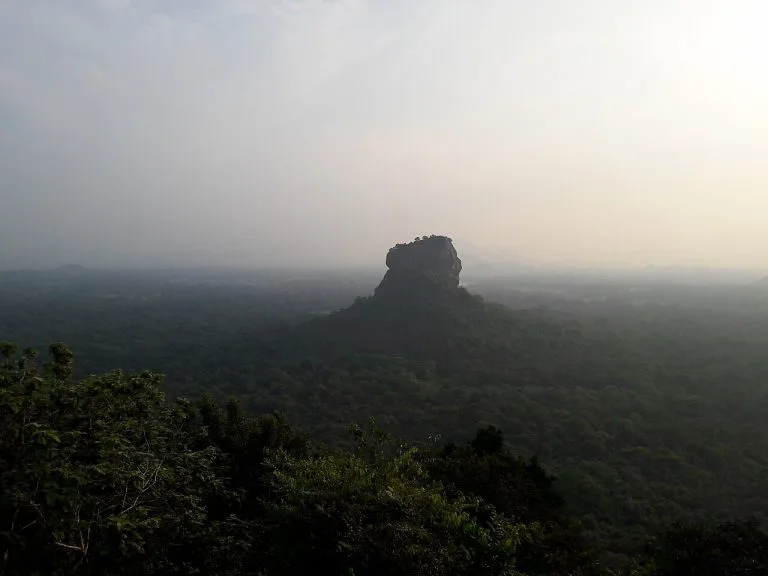
A guide to Sri Lanka's Cultural Triangle: Sigiriya, Polonnaruwa, Anuradhapura, Dambulla and Mihintale, with travel tips.

A complete guide to Sigiriya Rock Fortress: King Kashyapa's parricide, the water gardens, the famous frescoes, visiting tips and map.
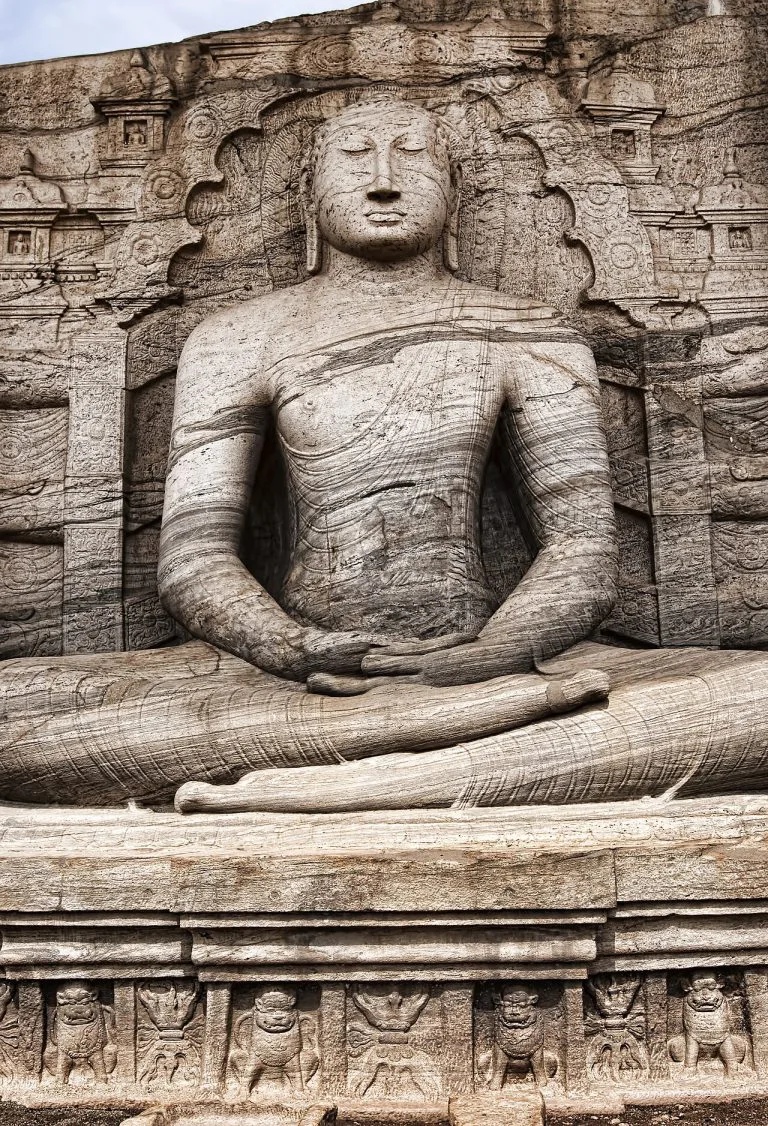
A guide to Gal Vihara at Polonnaruwa: four monumental Buddha statues carved from one rock face, the sorrowful expression debate, visiting tips and map.













