

Dsigngo is a Graphic Design and Digital Marketing Company.
Write what you are looking for and press enter to begin your search!

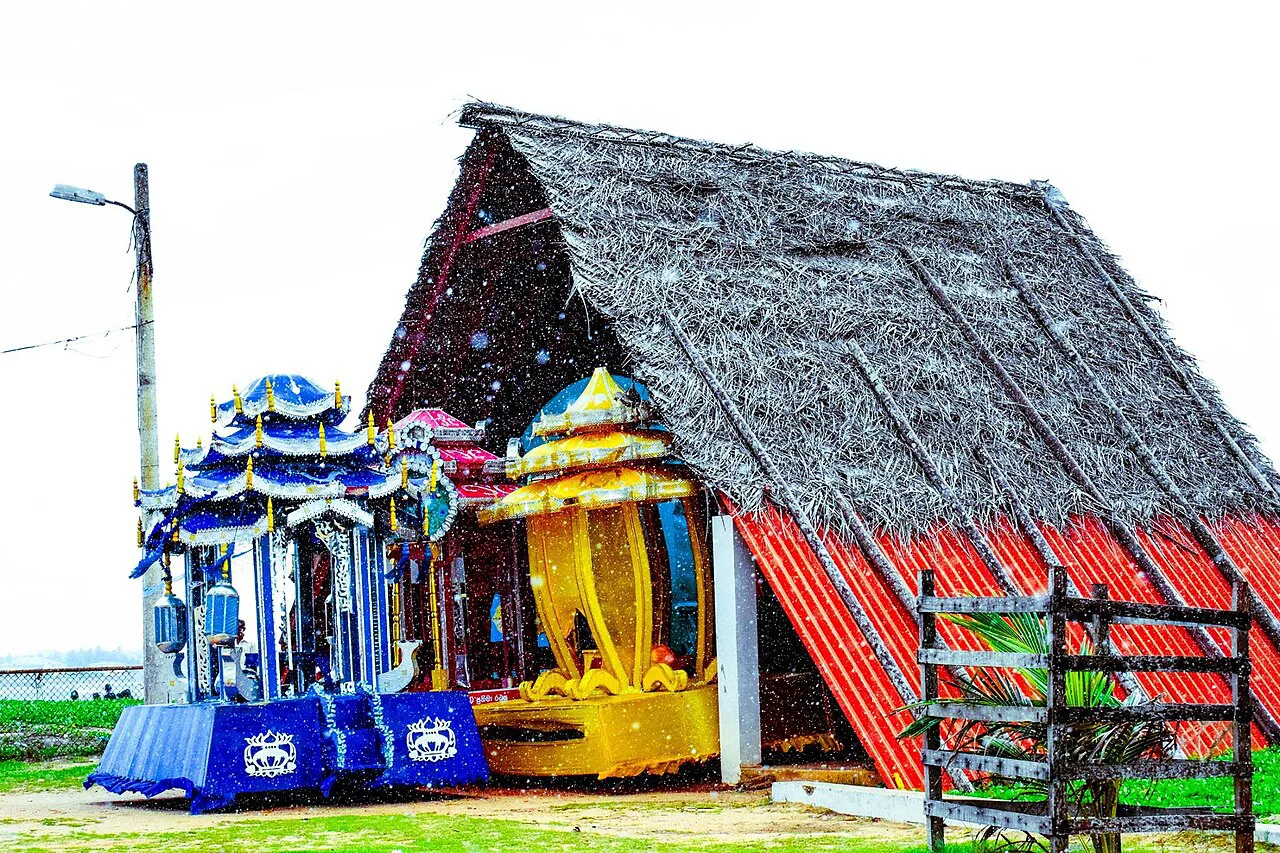
Kandy, Hill Country
Devales
Four shrines clustered around the Temple of the Tooth, each dedicated to a guardian deity, together forming a ranked hierarchy that once determined how Kandyan kings received their royal names.
According to Kandyan tradition, the city is protected by four guardian gods, each with a dedicated shrine clustered around the Temple of the Tooth, a genuinely striking example of how thoroughly Hindu and Buddhist devotional practice have intertwined in Sri Lankan religious life.
Quick Facts
| Location | Clustered around the Temple of the Tooth, central Kandy |
| The four devales | Natha, Vishnu (Maha Devale), Kataragama, and Pattini |
| Kandyan-era hierarchy | Natha ranked highest, followed by Vishnu, Kataragama, and Pattini |
| Oldest devale | Natha Devale, built 14th century by King Vikramabahu III |
| Coronation site | Vishnu Devale, where Kandyan kings were traditionally crowned |
| Festival role | Central to the annual Esala Perahera procession |
Commonly searched as: Kandy Devales · Natha Devale · Vishnu Devale Kandy · Kataragama Devale Kandy · Pattini Devale Kandy
Four Gods, One Ranked Order
During the Kandyan era, the kingdom recognised four guardian deities in a strict order of precedence: Natha, ranked highest, followed by Vishnu, Kataragama, and Pattini. Each held, and still holds, a dedicated shrine near the Temple of the Tooth, and that hierarchy shaped royal ceremony directly, Kandyan kings traditionally received their royal names at the Natha Devale, while coronations were held at the Vishnu Devale, tying the very legitimacy of Kandyan kingship to these Hindu-Buddhist shrines standing alongside the island’s most sacred Buddhist relic.
Natha Devale: The Oldest Building in Kandy
Standing directly across from the Temple of the Tooth, Natha Devale is considered the oldest surviving structure from the Kandyan period, built in the 14th century by King Vikramabahu III of the Gampola Kingdom. Constructed in Dravidian-influenced “gedige” style with a dome-shaped, stupa-like roof, its three ornately decorated entrances lead to a sanctum housing a bronze image of Natha, associated with Maitreya, the future Buddha. The devale’s history carries a darker chapter too: its southern entrance, historically known as Deva Sanhinda, is where Madduma Bandara, the young son of the chief minister Ehelepola, was executed by royal order, one of the events that hardened Kandyan opposition to King Sri Vikrama Rajasinha in the years before the kingdom’s fall.
Vishnu, Kataragama and Pattini
Vishnu Devale (Maha Devale)
Just north of the Temple of the Tooth, this shrine to Vishnu, regarded in Sri Lankan tradition as a guardian deity charged by the Buddha with protecting the island, was historically the site of Kandyan royal coronations. Its most striking features are a large dancing pavilion (digge) and a long stone stairway leading to the main shrine.
Kataragama Devale
Dedicated to Kataragama (Skanda), the deity’s rise to prominence in this region grew from the 14th century onward, expanding further from the 16th century. Unlike the other three devales, this one is run by Hindu priests rather than Buddhist custodians, and its shrine entrance faces the main street through an ornately decorated gateway (vahalkada). Its dancing and drummers’ halls are known for carved wooden pillars depicting soldiers, wrestlers, dancers and mythical creatures.
Pattini Devale
Standing west of Natha Devale, this shrine honours Pattini, goddess of chastity and healing, particularly associated with curing infectious and childhood diseases and invoked during drought and famine. Though its exact founding date is unknown, 17th-century writer Robert Knox referenced its perahera during the reign of King Rajasinghe II (1635 to 1687), confirming the shrine is at least four centuries old.
Central to the Esala Perahera
All four devales play a defined role in Kandy‘s grandest annual festival, the Esala Perahera, each sending its own procession following behind the main Dalada Perahera carrying the Temple of the Tooth’s relic casket. The order (Natha, Vishnu, Kataragama, Pattini) and distinct character of each procession, the Kataragama Devala Perahera notably features Hindu-influenced elements including the Kavadi dance and, for some devotees, penitential body piercing, reflects the same ranked hierarchy that shaped Kandyan royal ceremony centuries ago.
Visiting Tips
- Visit all four in a single walking loop, since they cluster closely around the Temple of the Tooth.
- Be prepared for persistent requests for donations or unofficial “guide” services at the busier devales, particularly Kataragama Devale.
- Dress modestly and remove shoes before entering any shrine.
- Visit during the Esala Perahera (July/August) to see all four devale processions in their full ceremonial context.
Where It Sits on the Map
The Four Devales, clustered around the Temple of the Tooth, Kandy Open in Google Maps ↗
Frequently Asked Questions
What are the four devales of Kandy?
Natha, Vishnu (Maha Devale), Kataragama, and Pattini, each dedicated to a guardian deity ranked in that order of precedence during the Kandyan era.
Which is the oldest devale in Kandy?
Natha Devale, built in the 14th century by King Vikramabahu III, considered the oldest surviving building from the Kandyan period.
Why was the Vishnu Devale historically significant?
It was traditionally the site where Kandyan kings were crowned.
How do the devales feature in the Esala Perahera?
Each sends its own procession following the main Dalada Perahera, with distinct ceremonial styles, the Kataragama procession in particular features Hindu-influenced elements like the Kavadi dance.
← Sri Lanka: The Complete Guide — see all 258 places by region
Related News
A guide to Sri Lanka's Hill Country: Kandy, tea plantations, Ella, Adam's Peak, Horton Plains, and travel tips.
A complete guide to Kandy: the last Sinhalese kingdom's fall in 1815, the Temple of the Tooth, Kandy Lake, and visiting tips.
A guide to Kandy Lake, built by the last king of Kandy in 1807: its dark construction history, the island retreat, walking the shore, and...













