

Dsigngo is a Graphic Design and Digital Marketing Company.
Write what you are looking for and press enter to begin your search!


Badulla, Hill Country
Kataragama Devale
Torched by a Portuguese army in 1630, this Badulla shrine was rebuilt within decades and today shows off Kandyan-style wood carving rivalling that of the far more famous Embekke Devale.
On a single night in August 1630, a Portuguese army under General Constantino de Sa ransacked Badulla, torching this devale along with thousands of measures of stored rice. What survived was rebuilt, and today stands as one of the finest examples of Kandyan-era woodwork outside Embekke itself.
Quick Facts
| Location | Lower Street, central Badulla |
| Deities honoured | Kataragama, Saman, and Vishnu |
| Origins | Possibly as early as the reign of King Vimaladharmasuriya I (1592 to 1604) |
| Destroyed | August 1630, by Portuguese forces under Constantino de Sa |
| Rebuilt by | King Rajasinghe II of Kandy (1635 to 1687) |
| Architecture | Kandyan style, not South Indian Tamil style |
Commonly searched as: Kataragama Devale Badulla · Badulla Kataragama Devalaya · Battle of Randeniwela · Kandyan wood carving · things to do in Badulla
Destruction and the Battle That Followed
The devale’s exact founding date remains uncertain, though tradition attributes its origins to the reign of King Vimaladharmasuriya I, who ruled the Kingdom of Kandy from 1592 to 1604. Whatever its precise age, the shrine was already an established religious centre by 1630, when a Portuguese army under General Constantino de Sa invaded Badulla, then a sub-kingdom of Kandy, at the end of August that year. Portuguese forces ransacked and burned the entire town, deliberately destroying more than 2,000 measures of stored rice and slaughtering livestock in an apparent effort to starve the local population into submission, with the devale itself among the buildings razed in the attack.
Local legend credits a minor ruler, King Kumarasinghe, with turning the tide against the invading Portuguese force shortly afterward, defeating them decisively at a paddy field called Randeniwela in what became known as the Battle of Randeniwela, remembered as one of the earliest and most significant Portuguese defeats in the region. Following that victory, the devale was restored and formally re-endowed by King Rajasinghe II of Kandy, who reigned from 1635 to 1687, rebuilding it according to Kandyan architectural tradition.
Kandyan Craftsmanship, Not South Indian Style
Unusually among Sri Lankan Kataragama shrines, which often draw on South Indian Tamil architectural conventions, the rebuilt Badulla devale was constructed distinctly in the Kandyan style, with a long wooden shrine hall painted with murals depicting a perahera procession. The devale’s roof rests on elegantly carved timber columns topped with lotus bracket capitals, and the Sinhasana Mandapaya, the raised platform from which King Rajasinghe II is believed to have watched the devale’s own processions, features wood carving reported to rival the celebrated craftsmanship at Embekke Devalaya near Kandy.
What’s Inside
The complex includes a Pilimageya (shrine room), kitchen, Sinhasanaya (throne chamber), and priests’ quarters, with statues of Kataragama, Saman and Vishnu serving as the main objects of veneration. Kandyan-era paintings decorate the exterior walls, adding a further layer of period artistic detail to a site that has now survived, in one form or another, for close to four centuries since its post-Portuguese reconstruction.
That resilience, destroyed by an invading force, rebuilt within a few decades by the very kingdom that defeated the invaders, mirrors a pattern seen at religious sites across Sri Lanka’s coastal and lowland regions during the colonial era. What sets Badulla‘s devale apart is how directly its rebuilding is tied to a specific, named local military victory, giving the site a dual identity as both a place of ongoing worship and a monument to a documented act of regional resistance against Portuguese expansion into the Kandyan highlands.
Visiting Tips
- Look closely at the carved timber columns and the Sinhasana Mandapaya, the devale’s standout architectural features.
- The site is a formally recognised archaeological protected monument, so treat it with appropriate respect.
- Combine with Muthiyangana Temple, both located in central Badulla, for a compact heritage walk through the town.
- Dress modestly, as with any active place of worship.
Where It Sits on the Map
Kataragama Devale, Lower Street, Badulla Open in Google Maps ↗
Frequently Asked Questions
What happened to the devale in 1630?
A Portuguese army under General Constantino de Sa destroyed it along with much of Badulla town, as part of a campaign that also included burning stored rice and slaughtering livestock.
Who rebuilt the devale, and when?
King Rajasinghe II of Kandy, who reigned from 1635 to 1687, restored and re-endowed it following the Battle of Randeniwela victory over the Portuguese.
What makes the devale’s architecture distinctive?
It was rebuilt in Kandyan style rather than the South Indian Tamil style common to many Kataragama shrines, with wood carving reportedly comparable to the famous Embekke Devalaya.
What deities are honoured at the devale?
Kataragama, Saman, and Vishnu.
← Sri Lanka: The Complete Guide — see all 258 places by region
Related News
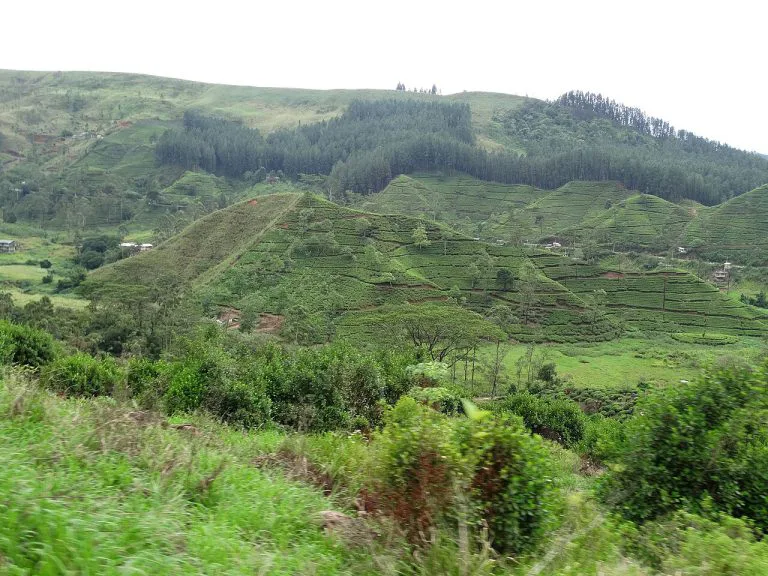
A guide to Sri Lanka's Hill Country: Kandy, tea plantations, Ella, Adam's Peak, Horton Plains, and travel tips.
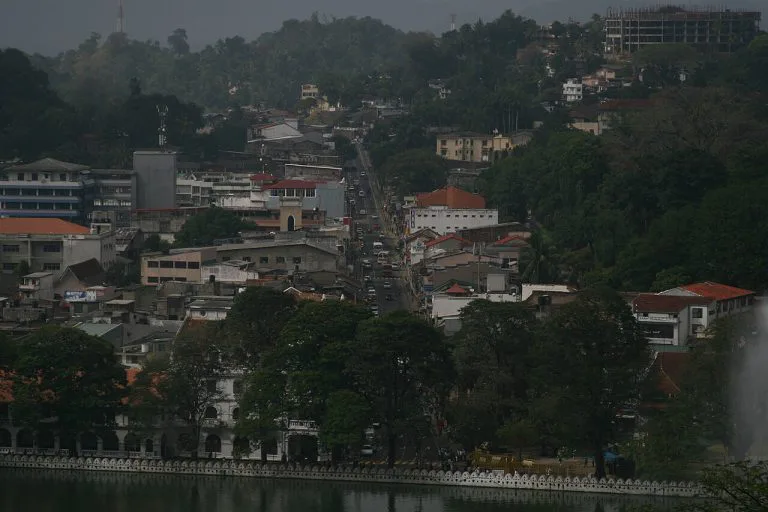
A complete guide to Kandy: the last Sinhalese kingdom's fall in 1815, the Temple of the Tooth, Kandy Lake, and visiting tips.
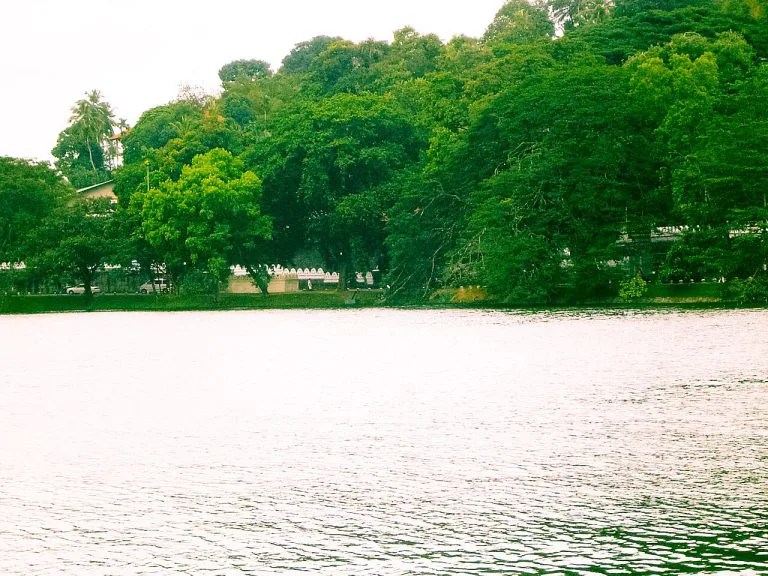
A guide to Kandy Lake, built by the last king of Kandy in 1807: its dark construction history, the island retreat, walking the shore, and...













