

Dsigngo is a Graphic Design and Digital Marketing Company.
Write what you are looking for and press enter to begin your search!

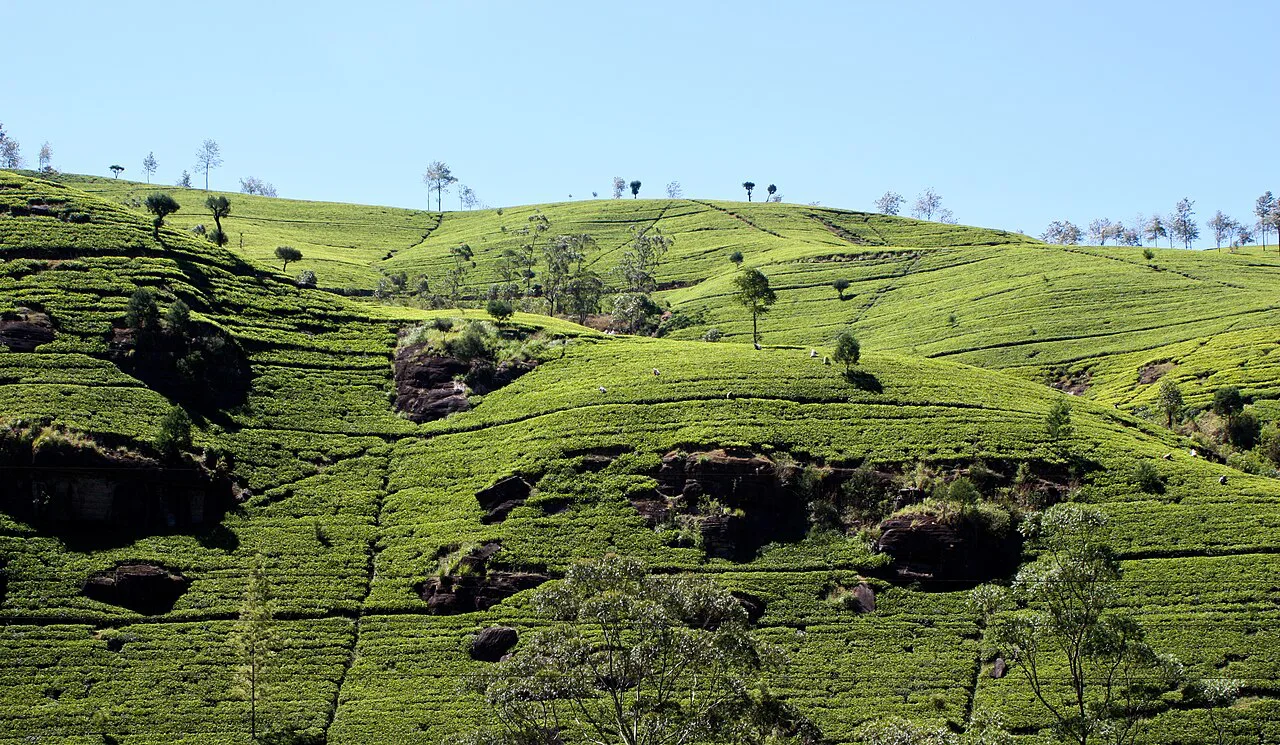
Near Nuwara Eliya, Hill Country
Damro Labookellie Tea Centre
First commissioned in 1841, decades before James Taylor’s famous 1867 tea plantings, this sprawling 5,000-hectare estate still tends tea bushes more than a century and a half old.
Damro Labookellie’s history predates James Taylor’s celebrated 1867 tea plantings at Loolecondera by more than two decades, having been first commissioned in 1841 by Captain William Mackwood, whose firm still ranks as the second-oldest mercantile company in Sri Lanka.
Quick Facts
| Location | About 20 km north of Nuwara Eliya, near Ramboda |
| Formerly known as | Mackwoods Labookellie |
| Commissioned | 1841, by Captain William Mackwood |
| Size | Over 5,000 hectares, employing 1,000+ pluckers |
| Notable feature | Some tea bushes over 150 years old |
| Tours | Free guided factory tours, with tea and cake tasting |
Commonly searched as: Damro Labookellie Tea Centre · Labookellie tea estate · Nuwara Eliya tea tour · Mackwoods tea Sri Lanka · things to do near Nuwara Eliya
Older Than Ceylon’s ‘Official’ Tea Origin Story
While James Taylor’s 1867 plantings at Loolecondera Estate are generally credited with launching Ceylon’s commercial tea industry, Labookellie’s own history stretches back even further, first commissioned in 1841 by Captain William Mackwood. Mackwood’s firm is recognised today as the second-oldest mercantile company operating in Sri Lanka, giving the estate a genuinely deep institutional pedigree. Damro has since acquired the factory and estate from Mackwoods, though the site is still often referred to by its earlier name, Mackwoods Labookellie, particularly among longtime visitors and local guides.
The estate’s scale is considerable: spanning over 5,000 hectares of tea plantation and employing more than a thousand pluckers, Labookellie is one of the largest and most visited tea tourism operations in the Nuwara Eliya region, its tea bushes periodically rejuvenated across generations while some plants on the estate remain more than 150 years old, still productive despite their age.
A More Commercial, More Comprehensive Experience
Compared to smaller, more compact operations like Pedro Tea Estate, Labookellie offers a noticeably larger-scale visitor experience. Guided tours are free and cover the full tea manufacturing process, from plucking through rolling, fermentation, drying and grading, and visitors can walk directly through the surrounding tea fields to watch experienced pluckers working at a pace that takes years to develop. Some visitors and guides describe the estate as feeling more commercial than smaller operations, reflecting both its larger scale and its popularity as a standard stop on Nuwara Eliya tour itineraries.
Tea and Cake, With a View
Following the factory tour, visitors are typically directed to the estate’s tea lounge for a complimentary tasting of freshly brewed tea alongside cake, all enjoyed against sweeping panoramic views over the surrounding plantation hills. It’s a popular enough stop that advance booking generally isn’t required, visitors are simply assigned a guide upon arrival.
Visiting Tips
- No advance booking is typically needed; guides are assigned to visitors as they arrive.
- Allow time to walk through the tea fields themselves, not just the factory, for the fullest sense of the estate’s scale.
- Purchase tea directly from the estate shop, a good source for genuinely fresh, high-quality Ceylon tea.
- Combine with nearby Ramboda Falls and Bluefield Tea Gardens for a fuller Hill Country tea day.
A Living Link Across Nearly Two Centuries
What makes Labookellie genuinely remarkable isn’t just its age but its continuity. Tea bushes planted more than 150 years ago are still being harvested on the estate today, meaning the leaves that end up in a visitor’s cup may come from plants that predate not just Sri Lankan independence but the entire 20th century. That kind of agricultural continuity is unusual even by the standards of an industry built around long-term plantation cycles, and it gives a visit here a different texture from newer or more heavily modernised tea operations elsewhere in the Hill Country. Walking through fields worked continuously since the 1840s, watching pluckers using techniques passed down across many generations, offers a tangible sense of just how long Ceylon tea has been shaping both the landscape and the livelihoods of this part of Sri Lanka.
Where It Sits on the Map
Damro Labookellie Tea Centre, near Ramboda, Nuwara Eliya district Open in Google Maps ↗
Frequently Asked Questions
How old is Damro Labookellie Tea Centre?
It was first commissioned in 1841 by Captain William Mackwood, predating James Taylor’s celebrated 1867 tea plantings that are often cited as the start of Ceylon’s tea industry.
How large is the estate?
Over 5,000 hectares, employing more than 1,000 tea pluckers, making it one of the largest tea tourism operations in the Nuwara Eliya region.
Is there a fee for the factory tour?
No, guided tours are free, typically concluding with a complimentary tea and cake tasting at the estate’s tea lounge.
Why is it also called Mackwoods Labookellie?
That was the estate’s earlier name, referencing its original founder, Captain William Mackwood, before Damro acquired the factory and estate.
← Sri Lanka: The Complete Guide — see all 258 places by region
Related News
A guide to Sri Lanka's Hill Country: Kandy, tea plantations, Ella, Adam's Peak, Horton Plains, and travel tips.
A complete guide to Kandy: the last Sinhalese kingdom's fall in 1815, the Temple of the Tooth, Kandy Lake, and visiting tips.
A guide to Kandy Lake, built by the last king of Kandy in 1807: its dark construction history, the island retreat, walking the shore, and...













