

Dsigngo is a Graphic Design and Digital Marketing Company.
Write what you are looking for and press enter to begin your search!

The South, Sri Lanka
Weligama
A ‘sandy village’ whose stilt fishermen have become one of the most photographed images of Sri Lanka, now also the country’s leading beginner surf destination.
Weligama’s name translates simply to ‘Sandy Village,’ but it has become shorthand for one of Sri Lanka’s most enduring visual symbols: fishermen perched impossibly on narrow wooden poles rising from the surf, a technique so distinctive it now appears on postcards and travel brochures across the country.
Quick Facts
| Location | Matara District, southern coast |
| Name meaning | ‘Sandy Village’ in Sinhala |
| Beach length | About 2 km, within a large sheltered bay |
| Traditional practice | Stilt fishing (ritipanna), emerged after World War II |
| Surf character | Long, gentle beach break, Sri Lanka’s leading beginner surf spot |
| Nearby historic site | Kushtarajagala, a 9th-century rock-cut Bodhisattva statue |
Commonly searched as: Weligama Sri Lanka · Weligama stilt fishermen · Weligama surf · Kushtarajagala statue · things to do in Weligama
A Fishing Technique Born of Necessity
Stilt fishing, known locally as ritipanna, is believed to have developed in the years following the Second World War, when food shortages and limited access to boats or sophisticated equipment pushed local fishermen toward a more resourceful method: driving a pole into the shallow seabed, attaching a small crossbar (petta) to sit on, and fishing directly from that elevated perch using simple handmade rods (pittas) made from kithul wood. Sitting for hours above the water, using one hand to hold the stilt steady and the other to manage a barbless hook, fishermen would target small fish like spotted herring and mackerel, staying elevated specifically so their shadow wouldn’t fall across the water and scare the fish away.
Practised historically along a stretch of coast including Koggala, Kumbalgama, Midigama, Weligama and Thalarambe, stilt fishing has become most closely associated with Weligama in the popular imagination, its bay providing some of the most reproduced images of the practice anywhere. In reality, modern fishing methods have largely replaced ritipanna as an economic activity, and many of the fishermen seen perched on stilts today do so primarily for photographs, sometimes returning to the stilts a second time in the evening specifically to pose for passing tourists, accepting tips or small payments in return.
Sri Lanka’s Beginner Surf Capital
Weligama’s wide, sheltered bay and consistently gentle, long-breaking waves have made it the country’s premier destination for learning to surf, a role distinct from nearby Midigama’s more challenging reef breaks aimed at intermediate riders. Numerous surf schools and camps operate along the beach, offering lessons and board rentals to first-time surfers from around the world, and the town’s laid-back atmosphere, mixing sleepy fishing-village charm with a growing surf-tourism economy, has made it a popular base for longer stays along the south coast.
Kushtarajagala
A short distance from Weligama’s beach sits Kushtarajagala, a 9th-century rock-cut statue believed to depict a Mahayana Bodhisattva, carved directly into a large boulder. Often overlooked amid Weligama’s beach and surf reputation, it offers a genuinely old and historically significant counterpoint, and is well worth a short detour for visitors interested in the region’s deeper cultural history.
Visiting Tips
- Visit the shoreline early morning or dusk for the best chance of photographing stilt fishermen, and consider tipping if you take photos of them posing.
- Book surf lessons through an established local school if you’re a beginner; Weligama’s gentle waves are ideal for first-timers.
- Visit Kushtarajagala for a quieter, historically rich stop away from the beach.
- Combine with Mirissa (15 minutes away) for whale watching, or Galle Fort (about 45 minutes) for colonial heritage.
A Symbol That Outgrew Its Original Purpose
There’s a genuine irony at the heart of Weligama’s fame: the practice that made it internationally recognisable has largely stopped functioning as an economic necessity and has instead become something closer to a living performance staged for visitors. That shift doesn’t make the stilt fishermen any less worth seeing, the skill required to balance on a narrow crossbar for hours is real regardless of the underlying economic motivation, but it’s worth understanding as part of the picture. Weligama’s image has, in a sense, become bigger than the fishing practice itself, a distinctly Sri Lankan example of how a genuine local tradition can transform into cultural shorthand once it enters global travel photography and tourism marketing.
Where It Sits on the Map
Weligama, Matara District, Southern Province Open in Google Maps ↗
Frequently Asked Questions
What does Weligama mean?
‘Sandy Village’ in Sinhala, a reference to its long, sand-fringed bay.
Are Weligama’s stilt fishermen still fishing traditionally?
Modern fishing methods have mostly replaced stilt fishing as an economic activity; today, many fishermen perched on stilts do so primarily to be photographed by tourists, though the technique’s history is genuine.
Why is Weligama good for surfing?
Its wide, sheltered bay produces long, gentle breaking waves, making it Sri Lanka’s leading destination for beginner surfers.
What is Kushtarajagala?
A 9th-century rock-cut statue near Weligama, believed to depict a Mahayana Bodhisattva, offering a historic counterpoint to the town’s beach and surf reputation.
← Sri Lanka: The Complete Guide — see all 258 places by region
Related News
A guide to Southern Sri Lanka, from Galle to Kataragama: beaches, wildlife safaris, colonial forts, and travel tips.

A complete guide to Galle Fort: history from Ptolemy to the Dutch, walking the ramparts, top sights, and visiting tips.
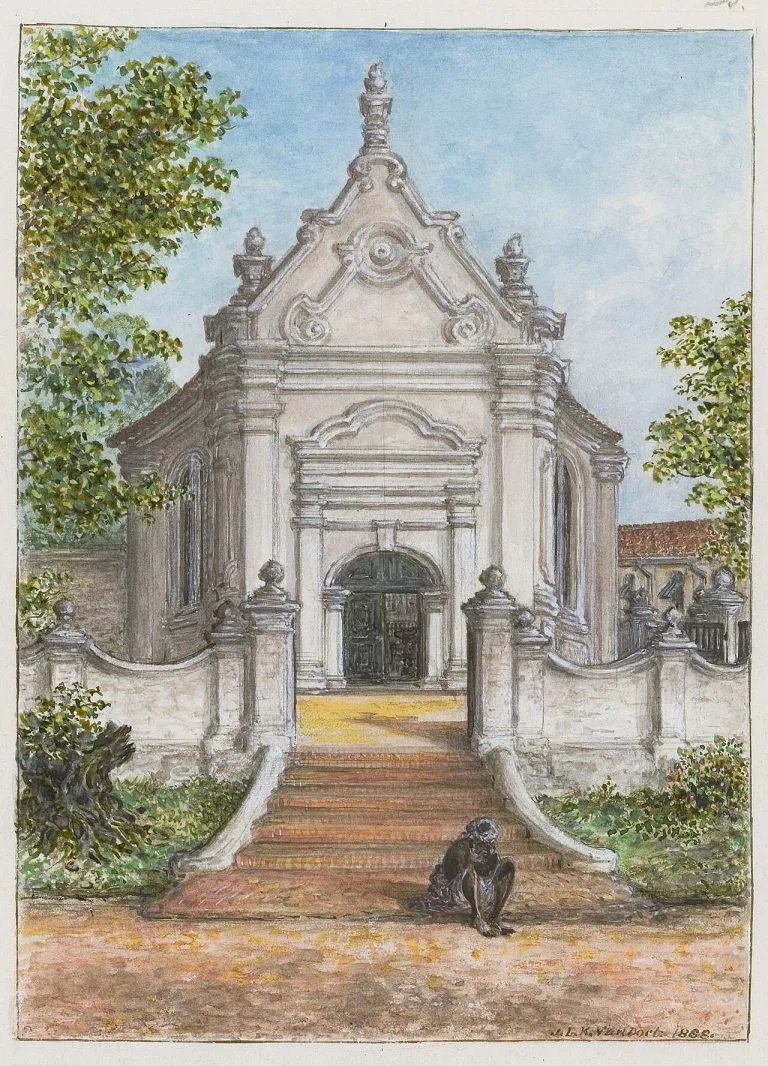
A guide to the Dutch Reformed Church in Galle Fort: the story behind its 1755 completion, the tombstone floor, visiting tips and map.













