

Dsigngo is a Graphic Design and Digital Marketing Company.
Write what you are looking for and press enter to begin your search!

Galle Fort, The South
Dutch Reformed Church
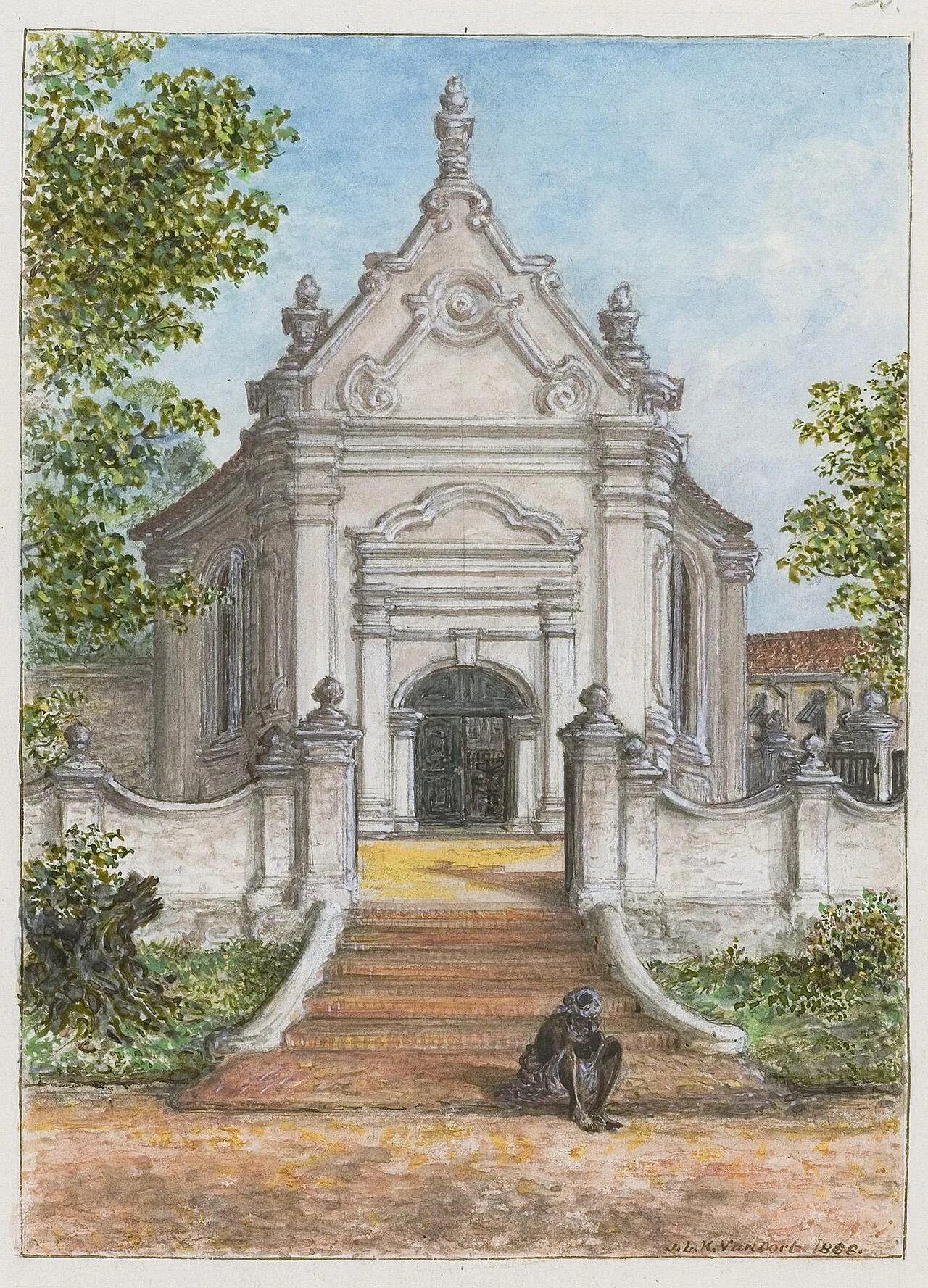
Also known as Groote Kerk, this 1755 church sits at the highest point in Galle Fort, its floor paved with 18th-century Dutch tombstones, completed thanks to one grateful father’s long-awaited daughter.
Every guidebook mentions that the Dutch Reformed Church is one of the oldest Protestant churches in Sri Lanka. Fewer mention why it took over seventy years to actually get built, a stalled construction project rescued, according to church record, by one commander’s overwhelming gratitude for the birth of a daughter he’d waited decades for.
Quick Facts
| Location | Church Street, Galle Fort, near the main entrance |
| Also known as | Groote Kerk (‘Great Church’) |
| Foundations laid | 1682 |
| Completed | 1755, funded by Commandeur Casparus de Jong |
| Site history | Believed built on a former Portuguese Capuchin convent |
| Architecture | Doric-inspired, whitewashed facade with a steeply pitched roof |
Commonly searched as: Dutch Reformed Church Galle · Groote Kerk Galle Fort · oldest Protestant church Sri Lanka · Galle Fort churches · things to do in Galle Fort
A Church Seven Decades in the Making
The Dutch Reformed congregation in Galle actually predates this specific building by over a century, with the first Dutch Reformed ministrations in the fort recorded as early as 1642, held first near the Galle Clock Tower and later in a second, more elaborate church built across the street, of which only the belfry survives today. When that second building proved structurally unsound, the congregation resolved to build a permanent home at the highest point within Galle Fort, more than 12 metres above sea level, a site believed to have once held a Portuguese Capuchin convent.
Foundations for this third and final church were laid in 1682, but construction stalled almost immediately for lack of funds, and stayed stalled for decades. The old church was patched up and kept limping along, even gaining a stopgap belfry in 1701 with a bell cast in 1709. The breakthrough finally came in 1755, when Casparus de Jong, Lord of Spanbroek and Commandeur of Galle, and his wife Geertruyda Adriana Le Grand donated the funds needed to finish the long-dormant project, reportedly out of gratitude for the birth of a daughter after years of waiting. According to the church’s baptismal register, the girl wasn’t baptised until the building was complete, and her baptism is recorded on 24 August 1755, suggesting the stalled construction was finished in a matter of months once proper funding finally arrived.
What’s Inside
The completed church, formally named Groote Kerk, holds a floor paved entirely with tombstones salvaged from an earlier Dutch burial ground, each carved with the names and heraldic crests of colonial-era families, a genuinely unusual and slightly eerie architectural choice by modern standards, but a practical and common one in Dutch colonial church-building. Highlights include a hexagonal pulpit crafted from Malaysian calamander wood and local satinwood, a pipe organ brought from Colombo and installed in 1760, and stained glass windows added later under British administration.
Surviving the 2004 Tsunami
The church’s elevated position, at the fort’s highest point, combined with the surrounding fort walls, is credited with helping protect the building from the worst of the 2004 Indian Ocean tsunami, even as areas outside the fortifications suffered severe damage.
Visiting Tips
- Sunday services begin at 9:30 am; visiting outside service times allows for quieter exploration.
- A caretaker is often on hand and willing to give an informal tour of the church and its history.
- Look closely at the tombstone floor and churchyard for Dutch-language inscriptions dating back over 250 years.
- Combine with a visit to the nearby Old Gate and lighthouse, both an easy walk away within the fort.
A Building Held Together by Gratitude
It’s worth sitting with the oddity of the church’s origin story for a moment. Grand religious buildings are usually funded through institutional channels, colonial administrations, trading companies, wealthy congregations pooling resources over time. Groote Kerk’s completion instead hinged on the personal emotional relief of one specific couple after decades of waiting for a child, a detail that survives in the church’s own baptismal register rather than in any official colonial record. That such a deeply personal act of gratitude produced a building still standing and in active use nearly 270 years later says something about how individual lives, even those of colonial administrators whose broader legacy is often viewed critically today, left genuinely human marks on the structures Sri Lanka inherited from that era.
Where It Sits on the Map
Dutch Reformed Church (Groote Kerk), Church Street, Galle Fort Open in Google Maps ↗
Frequently Asked Questions
When was the Dutch Reformed Church completed?
In 1755, after foundations laid in 1682 sat unfinished for over seven decades due to a lack of funds.
Why did construction finally get completed in 1755?
Commandeur Casparus de Jong and his wife funded the completion out of gratitude for the birth of their daughter, whose baptism was delayed until the church was finished.
What is distinctive about the church’s floor?
It’s paved with tombstones salvaged from an earlier Dutch burial ground, inscribed with the names and crests of colonial-era families.
Is the church still active today?
Yes, it remains a functioning church with Sunday services, making it one of the oldest continuously used Protestant churches in Sri Lanka.
← Sri Lanka: The Complete Guide — see all 258 places by region
Related News
A guide to Southern Sri Lanka, from Galle to Kataragama: beaches, wildlife safaris, colonial forts, and travel tips.

A complete guide to Galle Fort: history from Ptolemy to the Dutch, walking the ramparts, top sights, and visiting tips.
A guide to the National Maritime Archaeology Museum in Galle Fort: history, the 2004 tsunami, shipwreck artefacts, visiting tips and map.













