

Dsigngo is a Graphic Design and Digital Marketing Company.
Write what you are looking for and press enter to begin your search!

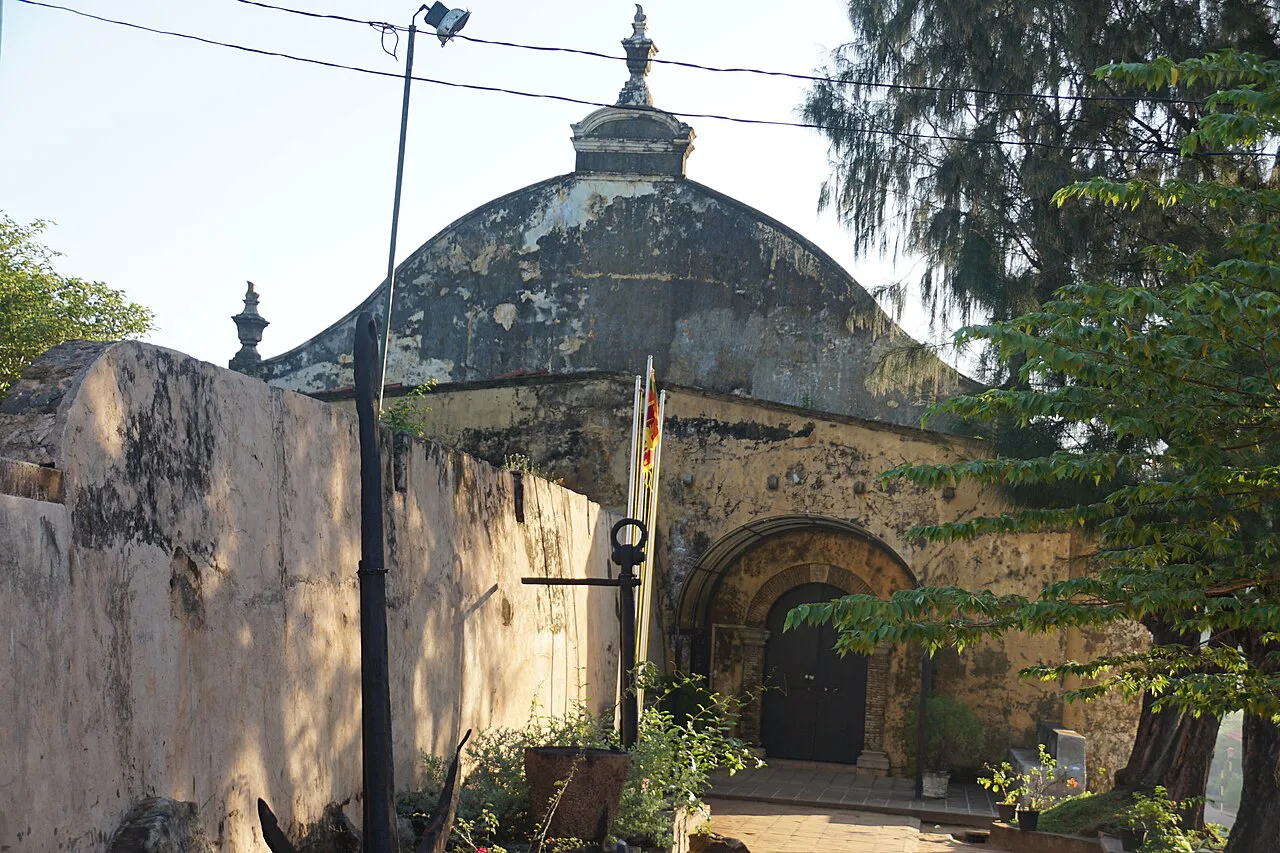
Galle Fort, The South
National Maritime Archaeology Museum
Housed in a 1671 Dutch warehouse built into Galle Fort’s own ramparts, this museum survived a direct hit from the 2004 tsunami and rebuilt itself around the very disaster that nearly destroyed it.
The National Maritime Archaeology Museum tells two overlapping stories at once: the story of Sri Lanka’s centuries-long relationship with the sea, and the story of its own near-destruction and rebuilding, a disaster that struck the very museum dedicated to studying maritime history.
Quick Facts
| Location | Queen Street, Galle Fort, above the Old Gate |
| Building | A Dutch East India Company warehouse dating to 1671 |
| First opened | 9 May 1992 |
| 2004 tsunami impact | Roughly 80% of 3,600 shipwreck artefacts lost |
| Reopened | 4 March 2010, after Dutch government-funded restoration |
| Typical visit length | 45 to 90 minutes |
Commonly searched as: National Maritime Museum Galle · Galle Fort Dutch warehouse · Sri Lanka shipwreck artefacts · Galle Fort museums · things to do in Galle Fort
A Warehouse Built Into the Fort Itself
The museum occupies one of Galle Fort’s more architecturally unusual buildings: a Dutch East India Company warehouse dating to 1671, constructed in a way that partly integrates the structure directly into the thickness of the fort’s own ramparts, sitting above the Old Gate entrance. Originally used to store spices, ship equipment and trade goods moving through the VOC’s network, the warehouse later passed through various uses after the British took over in 1796 and shifted administrative focus to Colombo, at different points serving as military stores and even a prison, before its heritage value was finally recognised.
The museum opened to the public on 9 May 1992, organised around three broad themes: maritime history, marine biology, and underwater archaeology, drawing on a collection of roughly 3,600 objects salvaged from shipwrecks in the waters around Galle’s historic port.
Nearly Destroyed by the Very Sea It Studies
On 26 December 2004, the Indian Ocean tsunami struck Galle directly, and the museum, then closed for renovations, was flooded to a height of 2.2 metres as water surged through the fort’s northern gate. The adjoining UNESCO Maritime Archaeology Unit, a joint Sri Lankan-Dutch research project housed on a nearby jetty, was completely destroyed. Of the museum’s roughly 3,600 shipwreck artefacts, only an estimated 20% survived, a genuinely painful irony for an institution built specifically to preserve objects the sea had already claimed once before.
Recovery took years. The Kingdom of the Netherlands provided a grant of Rs. 177 million through the Sri Lanka-Netherlands Cultural Cooperation Program to fully renovate the roughly 40,000-square-foot warehouse, and the museum reopened on 4 March 2010 as the country’s first dedicated National Maritime Archaeology Museum, with a redesigned dual-entrance layout connecting both to the fort’s current main gate and to the historic Old Gate below.
What You’ll See Today
Exhibits include navigational instruments spanning several centuries, from sextants and compasses to detailed nautical charts, alongside underwater archaeology finds recovered from local shipwrecks, anchors, cannons, ceramic cargo, coins, and personal items. A large suspended whale skeleton anchors the marine biology section, alongside preserved coral, shells and fish specimens native to the surrounding seas, and models of traditional fishing craft and a replica Dutch East India Company trading vessel round out the collection.
Visiting Tips
- Allow 45 to 90 minutes for a relaxed visit through all three exhibition themes.
- Visit earlier in the day, the warehouse can get warm during peak afternoon hours, especially without strong air conditioning.
- Combine with the nearby Dutch Reformed Church, Old Gate and fort ramparts, all within easy walking distance.
- The museum is a good option for families, with engaging displays suited to children alongside serious maritime history content for adults.
A Fitting Home for a Difficult Story
There’s a certain rightness to how this particular museum’s history unfolded. A building constructed to store the material wealth extracted from centuries of maritime trade, later devastated by the very ocean that made that trade possible, then rebuilt through international cooperation between the country that once colonised Galle and the nation now working to preserve its heritage. The Netherlands’ funding of the museum’s restoration wasn’t simple charity, it reflected a genuine, ongoing relationship between Dutch and Sri Lankan heritage institutions, one that treats Galle Fort‘s Dutch colonial history as a shared responsibility to preserve rather than a closed chapter belonging to only one side of that history.
Where It Sits on the Map
National Maritime Archaeology Museum, Queen Street, Galle Fort Open in Google Maps ↗
Frequently Asked Questions
What building houses the museum?
A Dutch East India Company warehouse dating to 1671, partly built into the thickness of Galle Fort’s own ramparts, above the Old Gate.
How badly was the museum affected by the 2004 tsunami?
Severely, roughly 80% of its 3,600 shipwreck artefacts were lost when floodwaters up to 2.2 metres deep swept through the building, which was closed for renovations at the time.
When did the museum reopen after the tsunami?
On 4 March 2010, following a Dutch government-funded restoration of the historic warehouse building.
What can visitors see inside?
Navigational instruments, shipwreck artefacts (anchors, cannons, ceramics, coins), a large whale skeleton, and marine biology specimens, alongside exhibits on the warehouse building’s own history.
← Sri Lanka: The Complete Guide — see all 258 places by region
Related News
A guide to Southern Sri Lanka, from Galle to Kataragama: beaches, wildlife safaris, colonial forts, and travel tips.

A complete guide to Galle Fort: history from Ptolemy to the Dutch, walking the ramparts, top sights, and visiting tips.
A guide to the Dutch Reformed Church in Galle Fort: the story behind its 1755 completion, the tombstone floor, visiting tips and map.













