

Dsigngo is a Graphic Design and Digital Marketing Company.
Write what you are looking for and press enter to begin your search!

The South, Sri Lanka
Galle
A 36-hectare walled Dutch fort city on Sri Lanka’s southwestern tip, trading with Arabia and China for over a thousand years before becoming a UNESCO World Heritage Site.
Ptolemy marked this harbour on his 2nd-century map of the world. Ibn Battuta passed through it in the 14th century en route to Sri Pada. The Portuguese made their very first Sri Lankan landfall here in 1505. By the time you walk Galle Fort’s ramparts today, you’re tracing a coastline that has drawn traders and travellers for close to two thousand years.
Quick Facts
| Location | Southwestern coast, about 115 km from Colombo |
| UNESCO status | Inscribed 1988, as ‘Old Town of Galle and its Fortifications’ |
| Fort size | 36 hectares, largely intact after four centuries |
| Built by | Portuguese (from 1588), rebuilt and expanded by the Dutch (from 1640, completed 1663) |
| Colonial capital status | Served as the island’s Dutch-era capital until 1656, when Colombo took over |
| 2004 tsunami | The fort’s thick walls helped protect the old town from major structural damage |
Commonly searched as: Galle Fort · Galle Sri Lanka · Galle Fort things to do · Galle Dutch history · Galle UNESCO World Heritage
A Port Older Than Any Empire That Ruled It
Galle’s history as a trading harbour predates every colonial power that eventually fortified it. The geographer Ptolemy referenced the port on his world map as early as the 2nd century CE, and medieval records place Galle as a regular waypoint for merchants travelling from Arabia, China, and the Greek world. The 6th-century traveller Cosmas Indicopleustes noted it as a port of call, and the celebrated 14th-century explorer Ibn Battuta passed through on his way to Adam’s Peak and the Tenavaram Temple. By the time European ships arrived, Galle was already a mature, well-connected trading centre.
The Portuguese made their first landing in Sri Lanka at Galle in 1505, an event of genuine historical significance well beyond the fort itself, marking the beginning of nearly 450 years of continuous European colonial presence on the island. They built a modest mud-and-timber fortification, Santa Cruz, later reinforced with a watchtower and bastions after regional pressure from the Sitawakan king Raja Singha I forced a more serious defensive posture from 1588 onward.
The Dutch Rebuild
Everything changed in 1640, when the Dutch East India Company, acting in alliance with King Raja Singha II of Kandy, captured the fort from the Portuguese. Rather than simply occupying the existing structure, the Dutch entirely rebuilt Galle between 1640 and 1663, enclosing the whole peninsula within a bastioned stone wall and laying out a planned grid-pattern town within, the layout that still defines the fort’s streets today. For a period following this rebuild, Galle, not Colombo, functioned as the island’s capital under Dutch administration, until Colombo took over that role in 1656.
When the British took control in 1796, they added their own marks to the fort, including a plaque bearing the Royal Coat of Arms placed over the old gate, but largely preserved the Dutch-built city rather than remodelling it, which is a major reason Galle Fort survives today as one of the best-preserved examples of a European-built fortified city anywhere in South or Southeast Asia. That preservation record earned it UNESCO World Heritage status in 1988.
Walking the Ramparts
A full circuit of Galle Fort’s walls takes roughly an hour at an easy pace and remains the single best way to get oriented. Highlights along the way include the Old Gate, with its 1669 VOC monogram and sundial, best photographed at dawn, the still-operational lighthouse (Sri Lanka’s oldest), and the Flag Rock Bastion, widely considered the fort’s best sunset viewpoint.
What to See Inside the Walls
Beyond the ramparts themselves, Galle Fort holds a genuinely dense concentration of individual sights, several of which merit their own dedicated visits: the Dutch Reformed Church (built 1755), the National Maritime Archaeology Museum, the Galle National Museum, the Historical Mansion Museum, and All Saints Church, alongside the Meeran Jumma Mosque reflecting the fort’s multicultural population. The fort’s thick, solid walls notably helped protect much of the old town from serious structural damage during the devastating 2004 Indian Ocean tsunami, even as areas outside the walls suffered heavily.
Practical Tips
- The fort is compact, car-free within its walls, and ideal for exploring on foot or by bicycle over half a day.
- Visit Church Street for boutique shops, cafes and gelato, a popular modern addition to the historic streetscape.
- Combine a rampart walk at sunrise or sunset for the most comfortable temperatures and best light.
- Galle is well connected by train and bus from Colombo, roughly 2 to 4 hours depending on the service.
Where It Sits on the Map
Galle Fort, Old Town of Galle, Sri Lanka Open in Google Maps ↗
Frequently Asked Questions
Why is Galle Fort a UNESCO World Heritage Site?
It was inscribed in 1988 as an outstanding, largely intact example of a European colonial fortified city in South and Southeast Asia, blending Portuguese, Dutch and British layers over an even older Asian trading port.
Who originally built Galle Fort?
The Portuguese built the first fortification from 1588, but the Dutch, after capturing it in 1640, rebuilt and expanded it entirely between 1640 and 1663 into the fort seen today.
How did Galle Fort survive the 2004 tsunami relatively intact?
Its thick, solid Dutch-built walls acted as a barrier, protecting much of the old town’s structures from the worst of the wave damage that affected unprotected areas nearby.
How long does it take to walk the fort’s ramparts?
Roughly an hour at an easy pace for a full circuit, though a proper visit including museums and sights inside the walls is best allowed half a day or more.
← Sri Lanka: The Complete Guide — see all 258 places by region
Related News
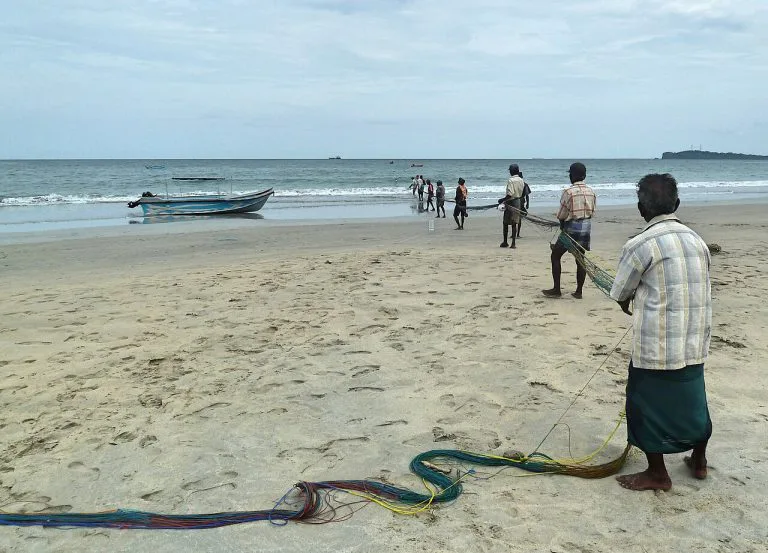
A guide to Southern Sri Lanka, from Galle to Kataragama: beaches, wildlife safaris, colonial forts, and travel tips.
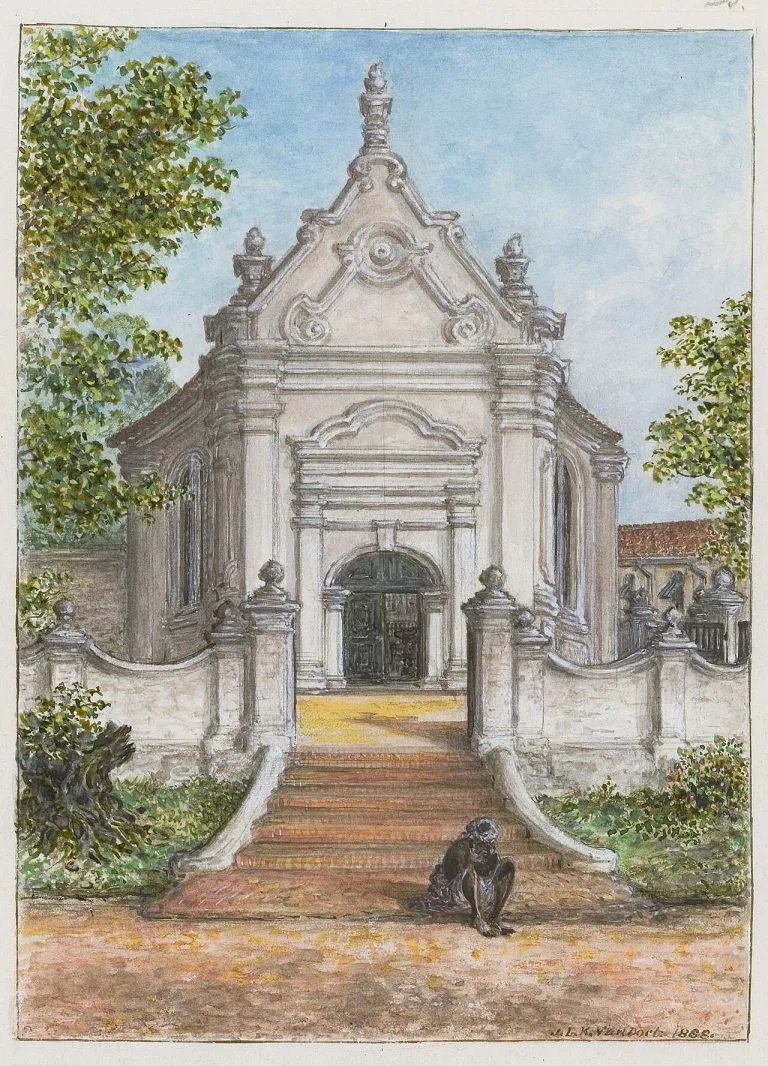
A guide to the Dutch Reformed Church in Galle Fort: the story behind its 1755 completion, the tombstone floor, visiting tips and map.
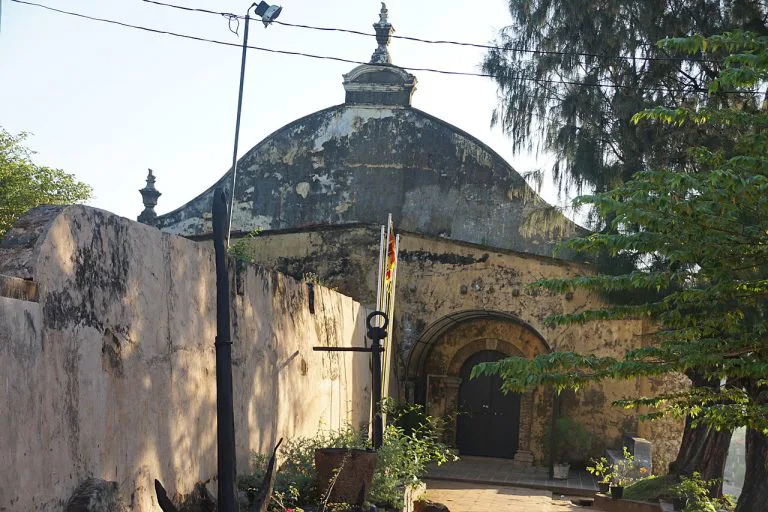
A guide to the National Maritime Archaeology Museum in Galle Fort: history, the 2004 tsunami, shipwreck artefacts, visiting tips and map.













