

Dsigngo is a Graphic Design and Digital Marketing Company.
Write what you are looking for and press enter to begin your search!

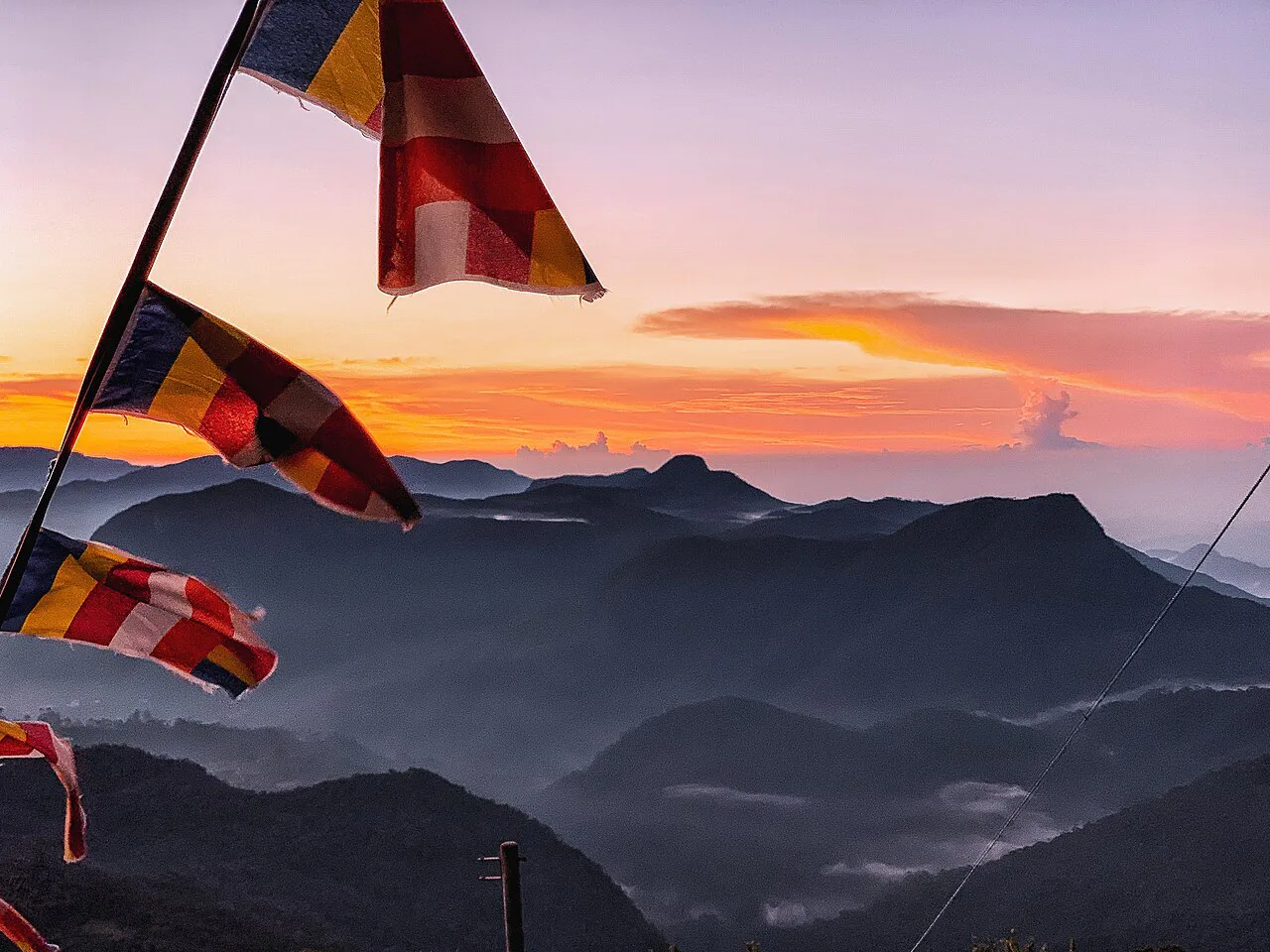
Hill Country, Sri Lanka
Adam’s Peak
A single depression in rock at a mountain summit, claimed simultaneously as the footprint of the Buddha, the Hindu god Shiva, the biblical Adam, and, in some Christian tradition, St Thomas the Apostle.
Few mountains anywhere hold sacred significance for four entirely different religious traditions at once. Adam’s Peak’s summit holds a single, roughly 1.8-metre depression in the rock, and depending entirely on who you ask, it belongs to the Buddha, to Shiva, to Adam himself, or to the Apostle Thomas.
Quick Facts
| Location | Ratnapura District, Sabaragamuwa Province, northeast of Ratnapura |
| Sinhala name | Sri Pada (‘Sacred Footprint’) |
| Height | 2,243 metres (7,359 ft) |
| Also known as | Samanala Kanda (‘Butterfly Mountain’) |
| Earliest historical evidence | Reign of King Vijayabahu I (1055 to 1110 CE) |
| Pilgrimage season | December Poya to the Vesak festival in May |
Commonly searched as: Adam’s Peak Sri Lanka · Sri Pada pilgrimage · Adam’s Peak sunrise climb · Sri Pada history · things to do in the Hill Country
One Footprint, Claimed by Everyone
The summit’s central feature, a roughly 1.8-metre-long depression in the rock known as Sri Pada, the “Sacred Footprint,” has been interpreted differently by each faith tradition that venerates it. Buddhists believe it marks the spot where the Buddha left his footprint during his third and final visit to Sri Lanka, as recorded in the Mahavamsa chronicle. Hindus call the mountain Sivan Adi Padham and attribute the print to the god Shiva, or in some tellings to Hanuman. Muslims regard it as the first footstep Adam took upon being cast down to Earth from Paradise, the origin of the peak’s English name. Portuguese colonists, arriving centuries later, attributed the same footprint to St Thomas the Apostle, adding a Christian layer to what was already a genuinely multi-faith site of veneration.
Some accounts trace the mountain’s earliest identification as sacred to King Valagambahu, who reigned in the 1st century BCE and is said to have discovered the footprint while hiding in the mountain wilderness during a period of exile from Chola invaders. The first solid historical evidence of an organised pilgrimage cult, though, dates to the reign of Vijayabahu I (1055 to 1110 CE), documented in both chronicles and stone inscriptions found at Gilimale and Ambagamuwa, recording his efforts to support pilgrims making the difficult journey.
Centuries of Royal Patronage
Successive Sri Lankan kings invested heavily in making the pilgrimage more accessible, a pattern of royal support stretching across several centuries. King Parakramabahu II (1236 to 1270) worshipped at the footprint and granted land for its upkeep, while his minister Devapathiraja improved the mountain road and installed iron chains on posts to aid the ascent. King Nissanka Malla documented a lavish pilgrimage and donations in a stone inscription at the mountain’s base in the late 12th century. Religious control of the site shifted at points too, King Rajasinghe I, who renounced Buddhism for Hinduism in the late 16th century, handed custody of the mountain to Saivite priests, before King Kirti Sri Rajasinghe restored Buddhist control and income from associated villages in the 18th century. The renowned Moroccan traveller Ibn Battuta also climbed the peak during his 14th-century travels, leaving one of the earliest detailed foreign accounts of the pilgrimage.
The Butterfly Legend
In Sinhalese folklore, the mountain is also known as Samanala Kanda, “Butterfly Mountain,” tied to legends that migrating butterflies travel here to spend their final days, drawn to the peak’s pyramid-like silhouette as a kind of final resting place.
The Modern Pilgrimage Climb
Today’s pilgrimage season runs from the December Poya (full moon) day through to the Vesak festival in May, during which the roughly 5,500-step trail is illuminated for nighttime ascent, creating a striking ribbon of light winding up the mountainside after dark. Pilgrims typically begin climbing well before dawn, chanting and making offerings along the way, timing their ascent to reach the summit for ira-sevaya, the sunrise, considered the spiritual high point of the climb. At the top, rituals include circumambulating the sacred footprint and ringing a bell, once for each successful ascent a pilgrim has completed in their lifetime.
Practical Realities of the Climb
Outside the main pilgrimage season, the trail can be closed or simply not recommended, since illumination and facilities along the route are reduced or unavailable. The climb itself is genuinely demanding regardless of season, thousands of steps, cold temperatures near the summit, and often crowded conditions near the top during peak periods.
Visiting Tips
- Climb during the official pilgrimage season (December to May) for the safest, most supported ascent, with illuminated steps and open rest stops.
- Start the climb around 2 to 3 am to reach the summit in time for sunrise.
- Bring warm layers; temperatures near the summit before dawn can be surprisingly cold.
- Expect crowds on weekends and during full moon (Poya) days in particular; weekday climbs are generally quieter.
Where It Sits on the Map
Adam’s Peak (Sri Pada), Ratnapura District, Sabaragamuwa Province Open in Google Maps ↗
Frequently Asked Questions
Why is Adam’s Peak sacred to four different religions?
A footprint-shaped depression at the summit has been variously identified as the Buddha’s, the Hindu god Shiva’s, Adam’s first step on Earth, and, in Christian tradition, St Thomas the Apostle’s.
When is the pilgrimage season?
From the December Poya (full moon) day through to the Vesak festival in May, when the trail is illuminated for night climbing.
How many steps are there to the summit?
Approximately 5,500 steps, a genuinely demanding climb regardless of fitness level.
Why is it also called Samanala Kanda?
Meaning ‘Butterfly Mountain’ in Sinhala, tied to folklore about migrating butterflies said to travel here to spend their final days.
← Sri Lanka: The Complete Guide — see all 258 places by region
Related News
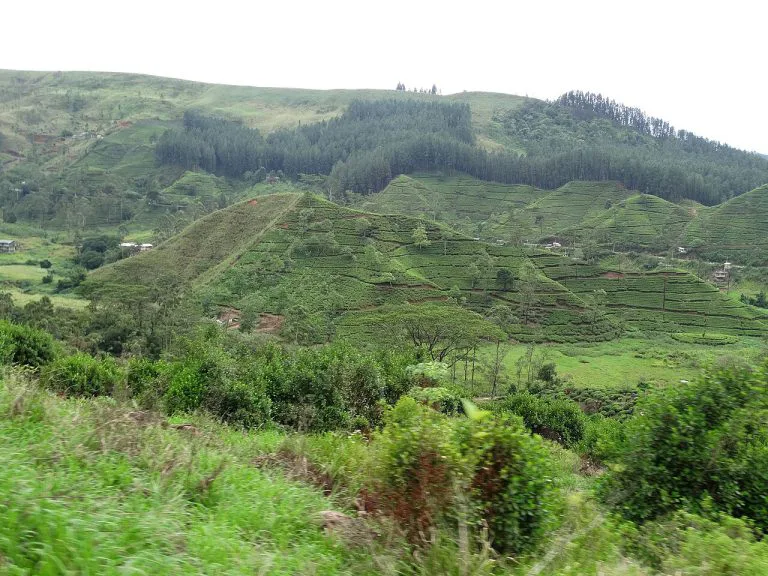
A guide to Sri Lanka's Hill Country: Kandy, tea plantations, Ella, Adam's Peak, Horton Plains, and travel tips.
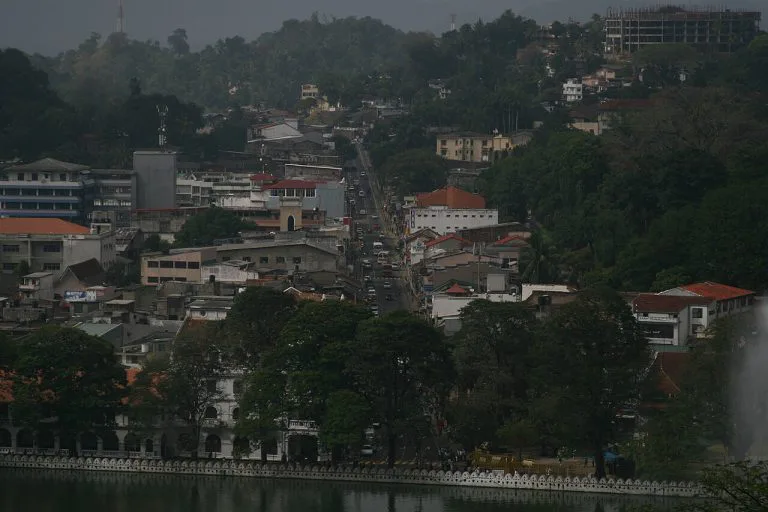
A complete guide to Kandy: the last Sinhalese kingdom's fall in 1815, the Temple of the Tooth, Kandy Lake, and visiting tips.
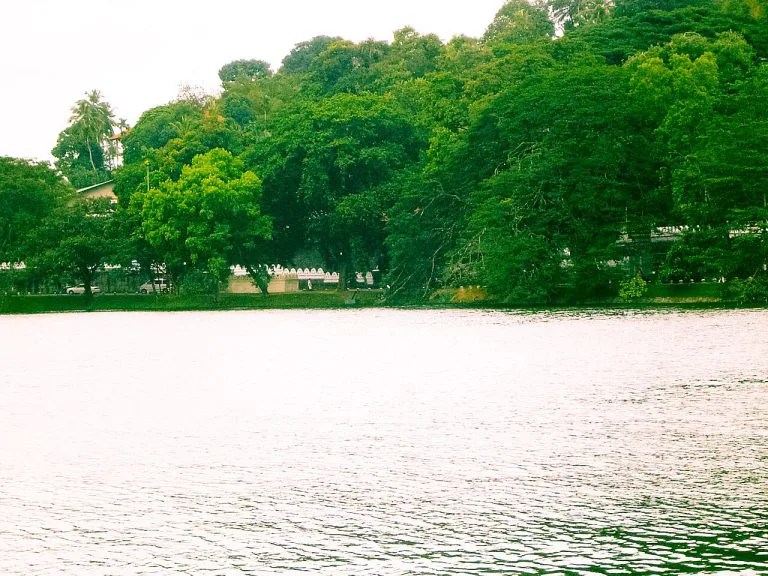
A guide to Kandy Lake, built by the last king of Kandy in 1807: its dark construction history, the island retreat, walking the shore, and...













