

Dsigngo is a Graphic Design and Digital Marketing Company.
Write what you are looking for and press enter to begin your search!

The South, Sri Lanka
Mirissa
A once-quiet fishing village that stayed under the radar until the 2000s, now Sri Lanka’s premier launch point for blue whale watching and one of its liveliest beach towns.
For a beach town now firmly on every Sri Lanka itinerary, Mirissa took its time getting there. While Hikkaduwa, Bentota and Unawatuna were already drawing tourists in the 1960s and 70s, Mirissa stayed a working fishing village well into the 1990s, discovered only gradually by backpackers looking for something quieter, before whale watching turned it into one of the country’s most visited coastal destinations.
Quick Facts
| Location | Southern coast, between Weligama and Matara |
| Historical role | Working fishing village, with possible minor historical trade links to India and the Middle East |
| Discovered by tourism | 1990s to early 2000s, initially by backpackers |
| Whale watching season | November to April |
| Species seen | Blue whales, sperm whales, dolphins, occasionally orcas and turtles |
| Fishing port status | One of the largest on Sri Lanka’s southern coast |
Commonly searched as: Mirissa Sri Lanka · Mirissa whale watching · Mirissa beach · blue whale watching Sri Lanka · things to do in Mirissa
From Fishing Village to Backpacker Discovery
Mirissa’s inhabitants have lived off the Indian Ocean’s resources for generations, and some historical evidence suggests the village may once have functioned as a minor trading point connecting to India and the Middle East, though its primary identity has always centred on fishing rather than commerce. When Sri Lanka’s tourism industry began developing in the 1960s and 70s, it concentrated first on major cities like Colombo, Kandy and Galle, with early beach development following at Hikkaduwa, Bentota and especially Unawatuna. Mirissa, comparatively remote and undeveloped, remained a sleepy coastal village for decades longer.
That changed gradually through the 1990s and early 2000s, as backpackers seeking quieter alternatives to the increasingly developed beach towns further along the coast began discovering Mirissa’s crescent bay. The 2004 Indian Ocean tsunami caused severe damage along this stretch of coast, but the reconstruction period that followed coincided with, and arguably accelerated, a rapid influx of small tourism businesses rebuilding in Mirissa’s beach-facing strip.
The Whale Watching Boom
The real transformation came in the early 2010s, when Mirissa’s position, close to unusually plankton-rich waters that attract blue whales and other marine giants, turned it into Sri Lanka’s leading whale-watching launch point. Boats depart from Mirissa’s fishing harbour, itself one of the largest on the southern coast, heading out into waters known for sightings of blue whales, the largest animals on Earth, alongside sperm whales, dolphins, and occasionally orcas, flying fish and mating sea turtles. The whale-watching season runs roughly November to April, when calmer seas make boat trips more comfortable and reliable; outside that window, monsoon conditions make the crossing considerably rougher.
What a Whale Watching Trip Looks Like
Trips typically depart early in the morning, heading out for around an hour before reaching prime whale-watching waters. Conditions can be genuinely choppy, seasickness tablets are a near-universal recommendation among past visitors, but sightings are frequent enough during peak season that most operators report consistent success. Reputable operators follow whale-watching regulations designed to minimise disturbance to the animals, though enforcement across the industry has been inconsistently applied according to some conservation research.
Beyond Whales
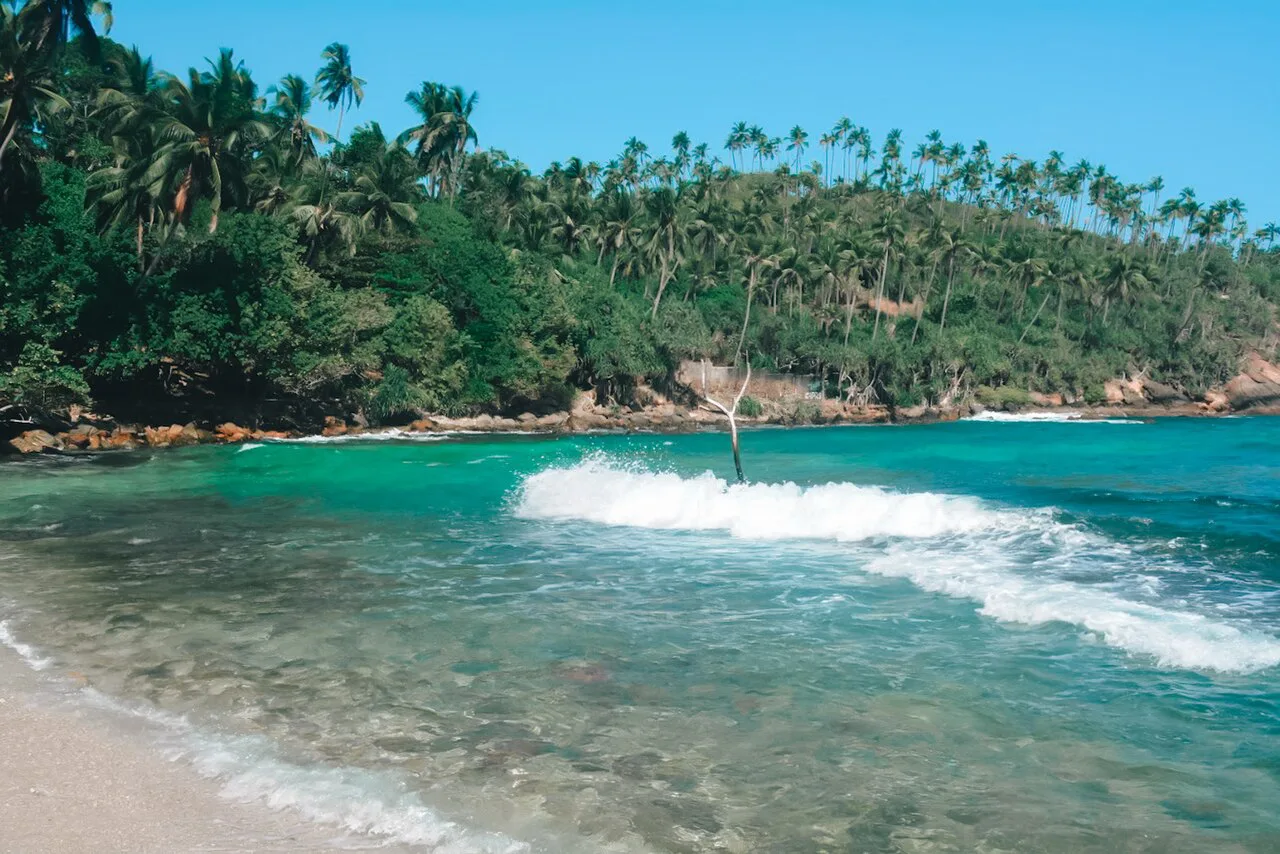
Mirissa’s beach itself, a modest but beautiful stretch of white sand framed by palm trees, has become one of Sri Lanka’s most photographed spots, particularly the Parrot Rock/Palm Tree Hill viewpoint overlooking the bay. The town offers beginner-friendly surf breaks, a lively evening scene of beachfront bars and barbecue seafood stalls, and easy access to nearby Weligama and Galle Fort for day trips. At night, Mirissa’s split personality becomes obvious: the beach-facing strip hums with restaurants, bars and music, while a short walk inland reveals ordinary Sri Lankan neighbourhood life largely unchanged by the tourism next door.
Practical Tips
- Book whale watching tours through an established operator and take a seasickness precaution before departure.
- Visit November through April for the best whale watching conditions.
- Combine with Weligama (3 km away) or Galle Fort (45 minutes away) for a fuller South Coast itinerary.
- Choose beach-facing accommodation for a livelier scene, or inland guesthouses for better value and quieter nights.
Where It Sits on the Map
Mirissa, Southern Province, Sri Lanka Open in Google Maps ↗
Frequently Asked Questions
Why is Mirissa famous for whale watching?
Its coastal waters sit close to unusually plankton-rich feeding grounds that attract blue whales and other marine giants, making it Sri Lanka’s leading whale-watching launch point since the early 2010s.
When is the best time to see whales in Mirissa?
Roughly November to April, when calmer seas make boat trips more comfortable and sightings more reliable.
Was Mirissa always a tourist destination?
No, it remained a working fishing village well into the 1990s and early 2000s, discovered gradually by backpackers before whale watching tourism transformed it more recently.
What else can visitors do in Mirissa besides whale watching?
Relax on its palm-fringed beach, surf beginner-friendly breaks, enjoy beachfront nightlife, and visit the Parrot Rock/Palm Tree Hill viewpoint.
← Sri Lanka: The Complete Guide — see all 258 places by region
Related News
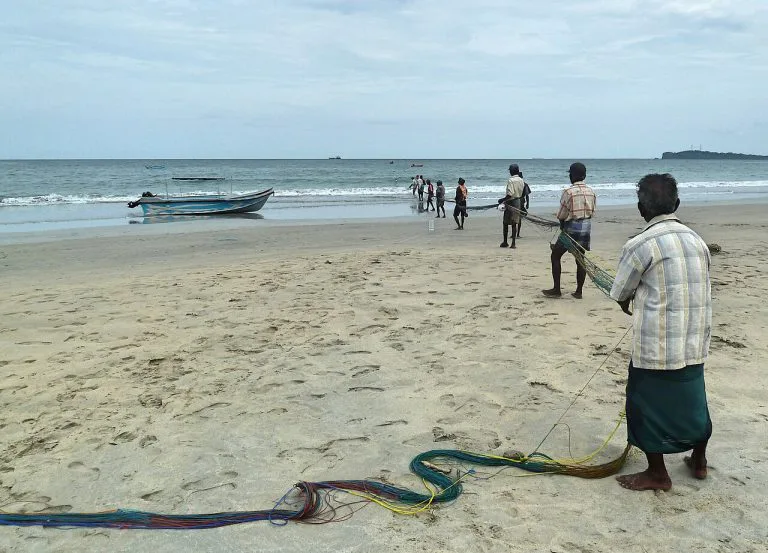
A guide to Southern Sri Lanka, from Galle to Kataragama: beaches, wildlife safaris, colonial forts, and travel tips.

A complete guide to Galle Fort: history from Ptolemy to the Dutch, walking the ramparts, top sights, and visiting tips.
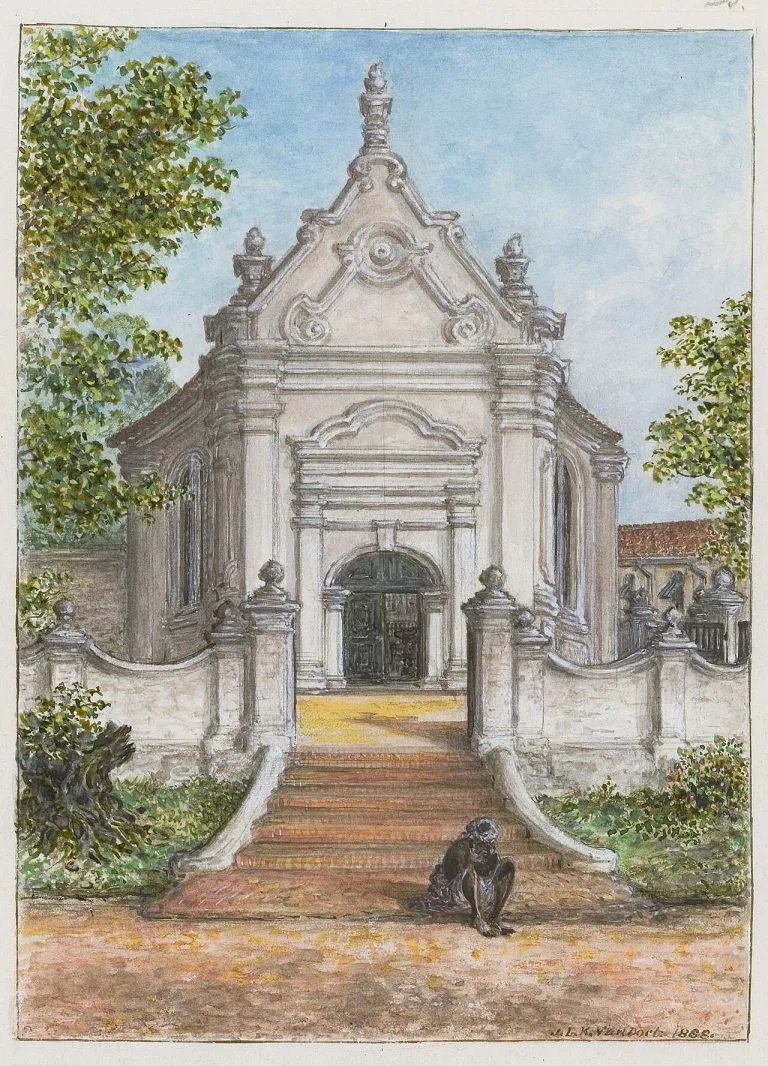
A guide to the Dutch Reformed Church in Galle Fort: the story behind its 1755 completion, the tombstone floor, visiting tips and map.













