

Dsigngo is a Graphic Design and Digital Marketing Company.
Write what you are looking for and press enter to begin your search!

The South, Sri Lanka
Midigama
A quiet six-kilometre stretch of coves and reef breaks between Weligama and Ahangama, rated among the best spots in southwest Sri Lanka for intermediate surfers.
Midigama doesn’t chase the crowds that fill Weligama’s beginner-friendly bay or Mirissa’s beach bars a little further along the coast, and that’s precisely the appeal. This roughly six-kilometre run of small coves and reef points has quietly built a reputation as one of southwest Sri Lanka’s best intermediate surf destinations.
Quick Facts
| Location | Southern coast, between Weligama and Ahangama |
| Coastline length | About 6 km of coves and reef points |
| Named surf breaks | Coconuts, Lazy Left, Plantations, Rams, and others |
| Skill level | Best suited to intermediate to advanced surfers |
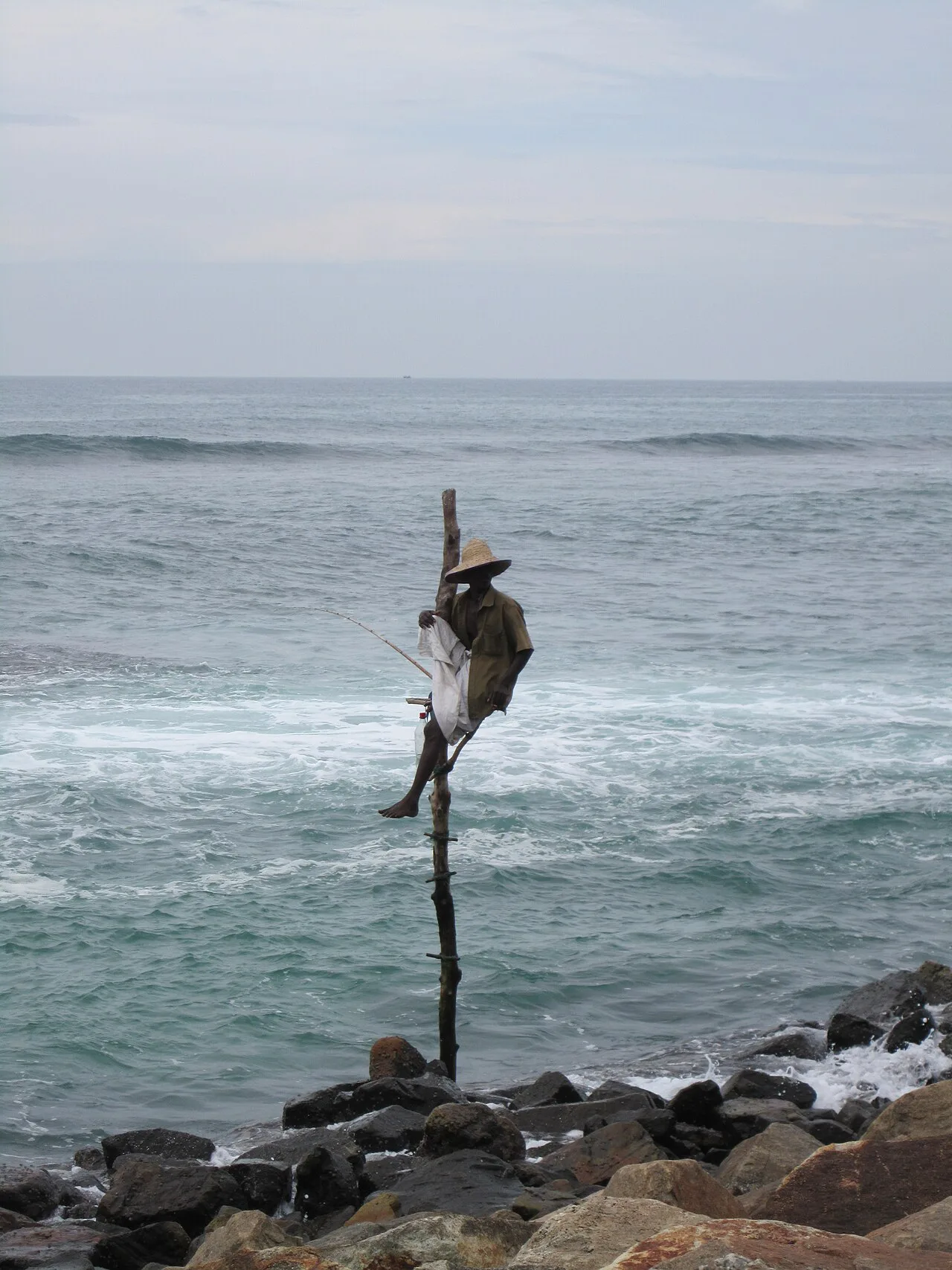
| Traditional fishing | Stilt fishermen (ritipanna) visible at sunrise and sunset |
| Nearby | Weligama (beginner surf), Mirissa (whale watching), Galle Fort |
Commonly searched as: Midigama surf · Midigama Sri Lanka · Sri Lanka intermediate surf spots · Midigama stilt fishermen · things to do near Weligama
A Surf Coast Without the Branding
Midigama doesn’t have a single defined town centre the way Weligama or Mirissa do, it’s better understood as a loose collective name for a run of small beaches, coves and reef points stretching roughly six kilometres along the coast road. What the area lacks in obvious infrastructure or Instagram-driven fame, it makes up for with genuinely good surf: local guides and surf publications consistently rate Midigama among the top spots in southwest Sri Lanka specifically for intermediate riders, offering five or six distinct reef and point breaks including well-known named spots like Coconuts, Lazy Left, Plantations and Rams.
That intermediate-level challenge sets Midigama apart from neighbouring Weligama, whose long, gentle beach break is specifically suited to beginners just starting out. Surfers looking to progress beyond beginner waves often make the short hop from Weligama to Midigama once they’re ready for reef breaks with more consistent shape and a bit more punch.
Stilt Fishermen Along the Shore
Midigama is one of several spots along this stretch of coast, alongside Koggala, Kumbalgama, Weligama and Thalarambe, where traditional stilt fishing, known locally as ritipanna, can still be observed. Fishermen balance for hours on a narrow crossbar (petta) fixed to a pole driven into the shallow seabed, casting simple handmade lines for small fish like spotted herring and mackerel. The technique reportedly developed after the Second World War, born out of practical necessity among fishermen without access to boats or more sophisticated equipment, and it remains one of the most recognisable images associated with Sri Lanka’s southern coast, best seen at sunrise or sunset when the light silhouettes the fishermen against the water.
A Slower Pace of Travel
Midigama’s low-key character extends beyond surfing. The village holds a scattering of surf camps, guesthouses and beachside cafes rather than large resorts, and visitors often describe the atmosphere as genuinely relaxed compared to the busier tourist strips nearby. Small local temples tucked behind the sand and rocky headlands between the coves add quiet points of interest beyond the surf breaks themselves.
Visiting Tips
- Come with at least intermediate surfing ability to make the most of Midigama’s reef breaks; complete beginners are better served at nearby Weligama.
- Visit the shoreline at sunrise or sunset for the best chance of seeing stilt fishermen at work.
- Base yourself at one of the small surf camps or guesthouses along the main road for an easy walk to multiple breaks.
- Combine with day trips to Weligama, Mirissa, or Galle Fort, all within easy reach by tuk-tuk or local transport.
Where Sri Lanka’s Surf Scene Actually Started
Midigama’s understated reputation belies its real significance within Sri Lanka’s surf history. Long before Weligama built out a full surf-school economy for beginners, Midigama’s reef breaks were already drawing a smaller, more dedicated crowd of travelling surfers seeking genuinely good waves rather than a polished tourist experience. That history still shapes the place today: accommodation remains modest, the pace stays unhurried, and the area’s appeal rests almost entirely on the quality of its breaks rather than marketing or infrastructure. For surfers who’ve already learned the basics elsewhere and are looking for their next step up, Midigama offers exactly that progression, without the crowds that now define some of the coast’s more famous surf towns.
Where It Sits on the Map
Midigama, between Weligama and Ahangama, Southern Province Open in Google Maps ↗
Frequently Asked Questions
What makes Midigama different from Weligama?
Midigama offers more challenging reef and point breaks suited to intermediate and advanced surfers, while Weligama’s gentler beach break caters specifically to beginners.
What are Midigama’s main surf breaks?
Named breaks include Coconuts, Lazy Left, Plantations and Rams, among five or six total reef and point breaks along its roughly six-kilometre coastline.
Can visitors still see traditional stilt fishermen at Midigama?
Yes, stilt fishing (ritipanna) can be observed here, particularly at sunrise and sunset, alongside other nearby spots like Koggala and Weligama.
Is Midigama a good base for exploring the South Coast?
Yes, its central location makes it easy to combine with day trips to Weligama, Mirissa, and Galle Fort.
← Sri Lanka: The Complete Guide — see all 258 places by region
Related News
A guide to Southern Sri Lanka, from Galle to Kataragama: beaches, wildlife safaris, colonial forts, and travel tips.

A complete guide to Galle Fort: history from Ptolemy to the Dutch, walking the ramparts, top sights, and visiting tips.

A guide to the Dutch Reformed Church in Galle Fort: the story behind its 1755 completion, the tombstone floor, visiting tips and map.













