

Dsigngo is a Graphic Design and Digital Marketing Company.
Write what you are looking for and press enter to begin your search!

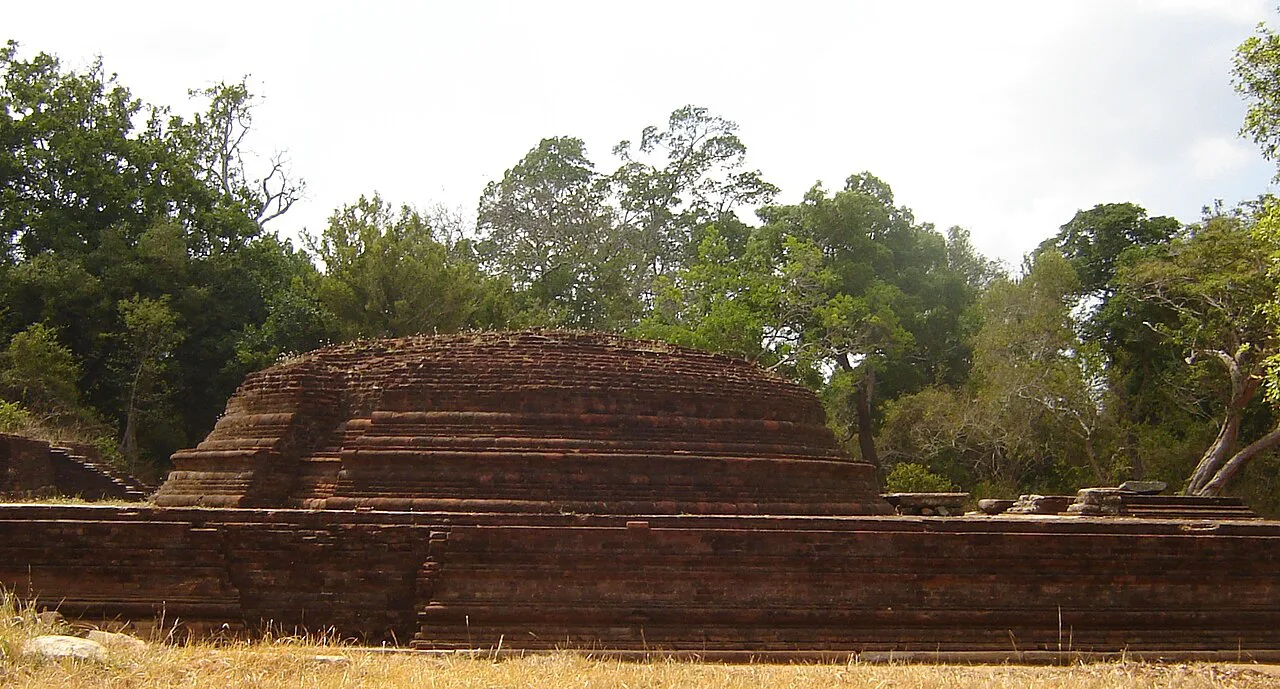
Near Trincomalee, The East
Velgam Vehera
When Chola forces from South India conquered this part of Sri Lanka in the 10th century, conventional wisdom says they destroyed Buddhist religious sites. Here, they did the opposite: they rebuilt one, and named it after their own king.
Velgam Vehera quietly complicates a widely held assumption about South Indian Chola rule in Sri Lanka: rather than destroying this Buddhist temple during their conquest, the Cholas restored it, renamed it after their own emperor, and left behind Tamil inscriptions documenting their donations to a Sinhalese Buddhist shrine.
Quick Facts
| Location | Near Kanniya village, about 10 km northwest of Trincomalee |
| Also known as | Natanar Kovil (to local Tamils), Vilgam Rajamaha Viharaya |
| Founded | 3rd century BCE, under King Devanampiyatissa |
| Chola-era name | Rajarajaperumpalli, after Chola emperor Rajaraja I |
| Rediscovered | 1929, by the Sri Lanka Archaeological Department |
| Notable statue | A 2.1 m dolomite limestone Buddha in Abhaya Mudra |
Commonly searched as: Velgam Vehera · Natanar Kovil Trincomalee · Vilgam Vihara · Chola Buddhist temple · things to do near Trincomalee
Founded by Sri Lanka’s First Buddhist King
Velgam Vehera traces its origins to King Devanampiyatissa, the 3rd-century BCE monarch whose meeting with the monk Mahinda brought Buddhism to Sri Lanka and who founded numerous religious sites across the island. An inscription found on a hill adjoining the temple, dating to the reign of King Bhatika Tissa (140-164 CE), records a royal endowment to a monastery here called Abagara Vahara, confirming the site’s use and name were already well established by the 2nd century CE, with the actual founding likely considerably earlier still. Later Sri Lankan kings, including Bathiya I, Agbo II, Vijayabahu I and Parakramabahu I, contributed to the temple’s ongoing expansion and renovation across the centuries that followed.
Spared, Then Restored, by Conquering Cholas
The temple’s most historically striking chapter came with the Chola invasion of Sri Lanka in the 990s, an event that saw Anuradhapura fall and the capital eventually shift to Polonnaruwa. Conventional understanding of the Chola conquest often assumes systematic destruction of Buddhist religious sites, but Velgam Vehera’s history tells a genuinely different story: rather than destroying the temple, the Cholas restored it, renaming it Rajarajaperumpalli after their own king, Rajaraja I, a fact confirmed by Tamil-language inscriptions discovered at the site documenting their donations and repairs. Historians suggest the likely explanation lies in the presence of an influential Buddhist minority among Tamil seafarers and merchants, whose religious interests the Chola administration had genuine reason to accommodate.
That layered history, Sinhalese Buddhist foundation, South Indian Tamil restoration, earned the site a rare and specific distinction: it’s considered the only known example of what scholars term a Tamil Vihara, or Buddhist Palli, anywhere in Sri Lanka, a genuinely unusual physical record of religious coexistence across an otherwise contested and violent period of the island’s history.
Rediscovered, Then Attacked, Then Spared Again
The overgrown ruins of Velgam Vehera were formally rediscovered by Sri Lanka’s Archaeological Department in 1929, and the site has since been declared an archaeological protected monument. Its resilience wasn’t limited to the ancient past: during Sri Lanka’s civil war, in a 2000 LTTE attack, the temple’s ancient Bo tree, itself a living link to the site’s earliest Buddhist history, reportedly survived a mortar strike that lodged in its trunk without destroying it, an event many locals regard as a genuine miracle.
Visiting Tips
- Combine with a visit to nearby Kanniya Hot Wells, given their close proximity.
- Look for the Tamil-language Chola-era inscriptions, genuinely rare physical evidence of the temple’s unusual restoration history.
- Visit for the site’s quiet, forested atmosphere as much as its historical significance; it’s a genuinely peaceful, uncrowded stop.
- Note the site’s name confusion with a separate, more recently rediscovered “Vilgam Vihara” near Seruwawila; confirm your destination carefully when navigating.
Where It Sits on the Map
Velgam Vehera (Natanar Kovil), near Kanniya, Trincomalee District Open in Google Maps ↗
Frequently Asked Questions
Why is Velgam Vehera historically unusual?
Rather than destroying it during their conquest, Chola invaders from South India restored the Buddhist temple in the 10th-11th centuries, renaming it after their king and leaving Tamil inscriptions documenting their donations.
Who founded Velgam Vehera?
King Devanampiyatissa, the 3rd-century BCE monarch who also brought Buddhism to Sri Lanka; later kings including Vijayabahu I and Parakramabahu I contributed further renovations.
Why is it also called Natanar Kovil?
That’s the name used by the local Tamil community, reflecting the temple’s layered Sinhalese Buddhist and Tamil history.
What happened to the temple during Sri Lanka’s civil war?
In a 2000 LTTE attack, a mortar reportedly lodged in the ancient Bo tree without destroying it, an event regarded locally as a genuine miracle.
← Sri Lanka: The Complete Guide — see all 258 places by region
Related News
A guide to Sri Lanka's East Coast: Trincomalee, Batticaloa, Arugam Bay, wildlife parks, and the region's unique dry-season timing.
A guide to Trincomalee: one of the world's finest natural harbours, its ancient temple, colonial and WWII history, visiting tips and map.
A guide to Fort Frederick in Trincomalee: built from a demolished temple's stones, still an active Sri Lankan military base, its resident deer, visiting tips...













