

Dsigngo is a Graphic Design and Digital Marketing Company.
Write what you are looking for and press enter to begin your search!

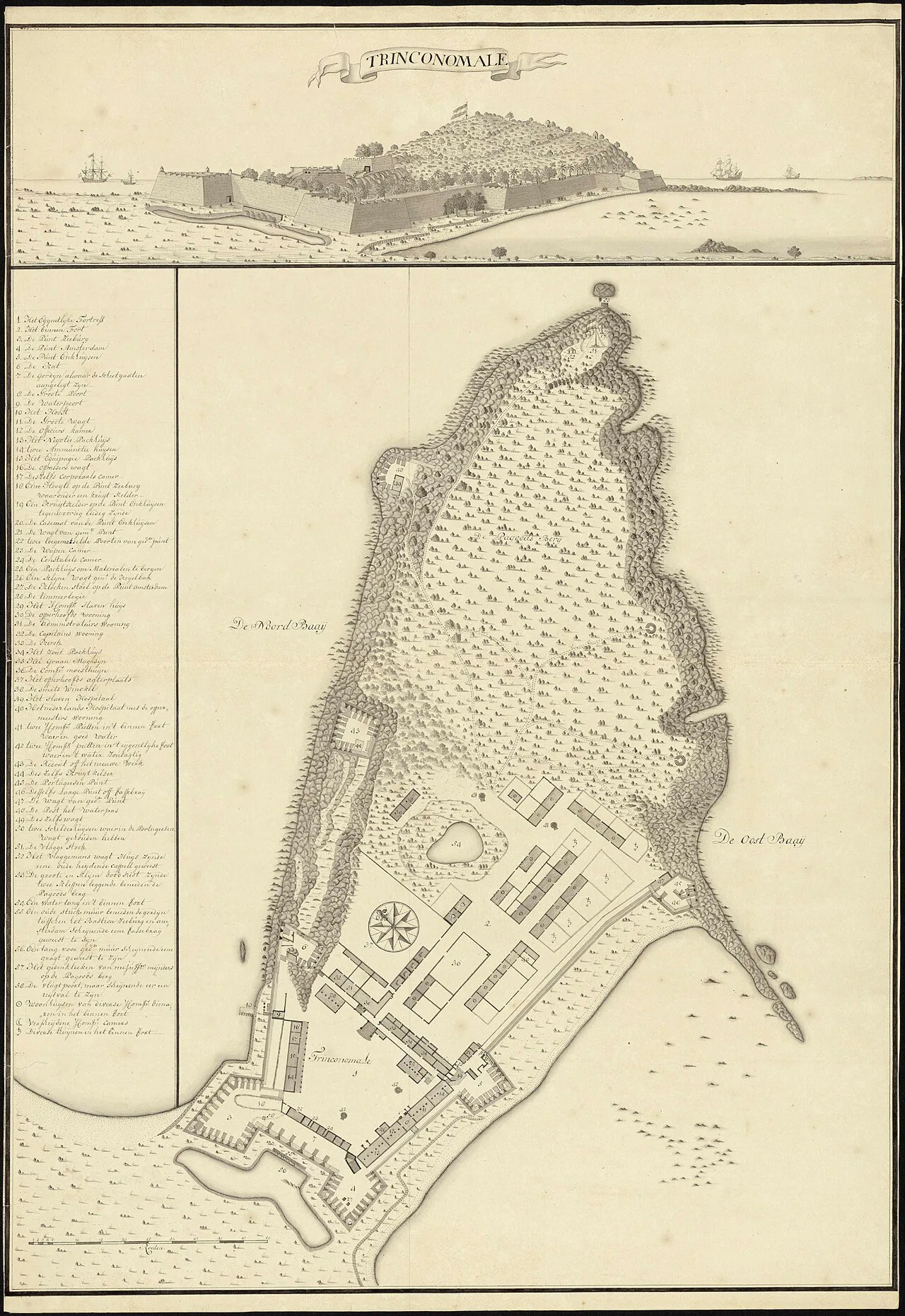
Trincomalee, The East
Fort Frederick
Built in 1623 from the very stones of a Hindu temple the Portuguese had just torn down, this fort remains an active Sri Lankan military installation today, and remarkably, visitors can still walk right through it.
Fort Frederick’s very stones carry a genuine irony: the Portuguese built it in 1623-24 largely from material salvaged after demolishing the ancient Koneswaram Temple that once stood on the same clifftop, meaning the fort’s walls are, quite literally, made from the destroyed shrine it now shares its grounds with.
Quick Facts
| Location | Central Trincomalee, on the peninsula tip |
| Built by | The Portuguese, 1623-24 |
| Rebuilt by | Dutch (1639), briefly French (1672), British (1803) |
| Named for | Frederick, Duke of York |
| Current use | Active Sri Lankan military installation |
| Notable residents | Freely roaming spotted deer |
Commonly searched as: Fort Frederick Trincomalee · Trincomalee fort history · Fort Frederick spotted deer · Koneswaram fort · things to do in Trincomalee
Built From a Demolished Temple
When Portuguese forces arrived at Trincomalee in the early 17th century, they found Koneswaram Temple standing prominently atop Swami Rock, an ancient and revered Hindu shrine. In 1624, they demolished it, stripping away anything of immediate value and using the temple’s carved stone to construct their own fortification on the same commanding clifftop position, a fort that would eventually be named Fort Frederick, after the Duke of York. Remaining temple fragments considered unusable were simply pushed over the cliff into the Indian Ocean below, where many pieces were lost for centuries before later recovery efforts.
Control of the fort changed hands repeatedly in the centuries that followed, illustrating Trincomalee’s harbour’s enduring strategic value: the Dutch captured and substantially strengthened it in 1639, the French held it briefly in 1672, and the British finally secured and rebuilt the fort in 1803, the structure largely visible today. Remarkably, despite that long, contested history, Fort Frederick remains an active military installation under the Sri Lankan armed forces to this day, one of the few historic forts in the country still serving its original defensive function rather than existing purely as a heritage site.
A Fort You Can Still Walk Through
Despite its active military status, Fort Frederick’s historic areas remain genuinely open to visitors, free of charge, a rare combination of ongoing strategic use and public heritage access. Walking through the main gate, visitors pass shaded paths, a preserved European cemetery, and colonial-era architecture including the Admiralty House, with its lush lawns and banyan trees, before the road eventually leads up toward Koneswaram Temple at the fort’s far end.
The Fort’s Resident Deer
One of Fort Frederick’s most charming features has nothing to do with its military or religious history: spotted deer roam freely throughout the grounds, grazing calmly along the shaded paths in what feels like a genuinely peaceful contrast to the site’s turbulent colonial past. Their presence has become one of the fort’s most photographed and beloved details for visitors passing through.
That combination, deer grazing peacefully within the walls of an active military installation built from a demolished temple’s own stones, captures something genuinely distinctive about Fort Frederick: it’s a site where multiple, seemingly contradictory identities, sacred, military, historical, and now touristic, all coexist within the same compact clifftop space, each layer still visibly present rather than fully replaced by whatever came after it.
Visiting Tips
- Entry to the historic areas is free, though photography restrictions apply in active military zones; follow posted guidance.
- Walk or take a tuk-tuk from central Trincomalee; the fort sits within easy reach of town.
- Combine with Koneswaram Temple, reached via the same road through the fort.
- Watch for the resident spotted deer along the shaded paths, a genuine highlight for many visitors.
Where It Sits on the Map
Fort Frederick, Trincomalee, northeastern Sri Lanka Open in Google Maps ↗
Frequently Asked Questions
Why is Fort Frederick built from temple stone?
The Portuguese demolished the ancient Koneswaram Temple in 1624 and used its stones to construct the fort on the same clifftop site.
Is Fort Frederick still a military base?
Yes, it remains an active Sri Lankan military installation, one of the few historic Sri Lankan forts still serving its original defensive function.
Can visitors still enter the fort?
Yes, the historic areas are open to the public free of charge, though some photography restrictions apply in active military zones.
What wildlife can visitors see at the fort?
Spotted deer roam freely throughout the grounds, a popular and charming sight for visitors.
← Sri Lanka: The Complete Guide — see all 258 places by region
Related News
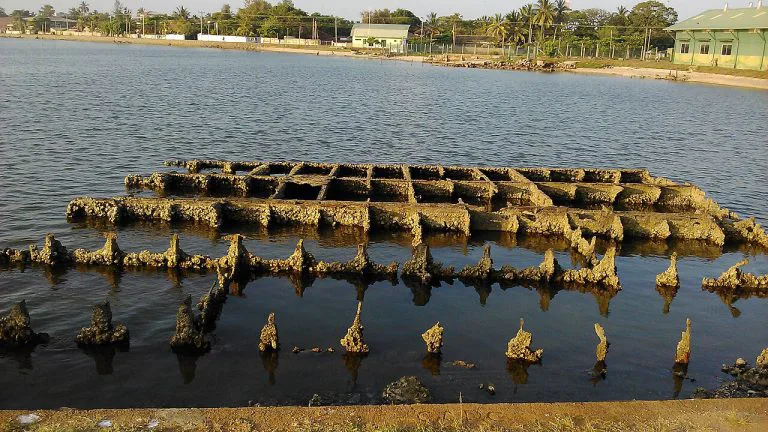
A guide to Sri Lanka's East Coast: Trincomalee, Batticaloa, Arugam Bay, wildlife parks, and the region's unique dry-season timing.
A guide to Trincomalee: one of the world's finest natural harbours, its ancient temple, colonial and WWII history, visiting tips and map.
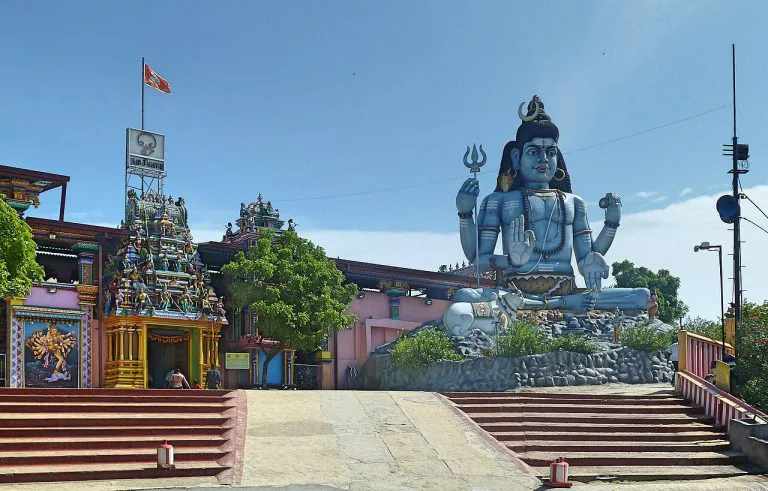
A guide to Koneswaram Temple and Lover's Leap in Trincomalee: a Pancha Ishwaram Shiva shrine, and a tragic legend later debunked, visiting tips and map.













