

Dsigngo is a Graphic Design and Digital Marketing Company.
Write what you are looking for and press enter to begin your search!

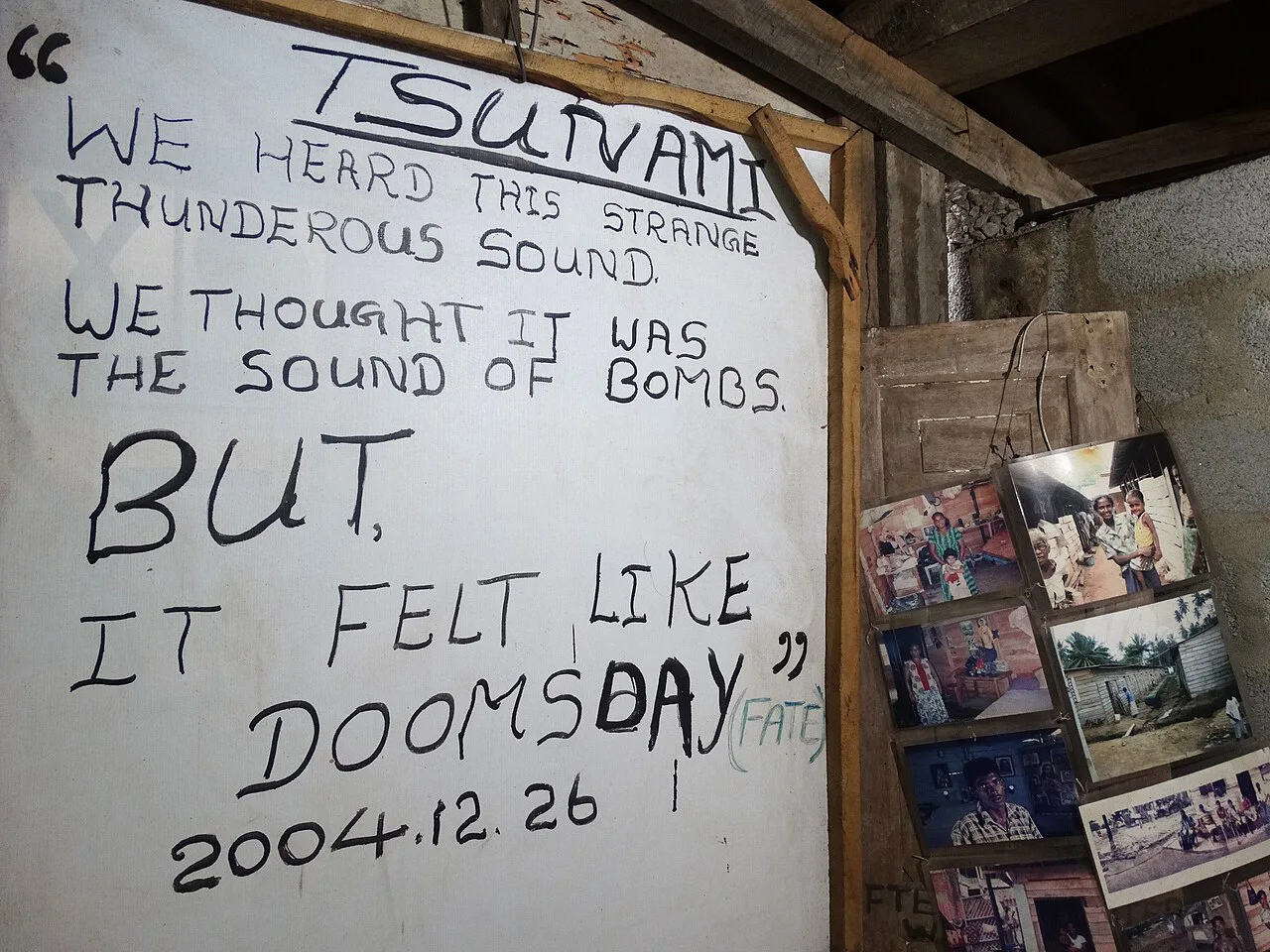
Peraliya, near Hikkaduwa
Tsunami Museum
A memorial and museum near Hikkaduwa commemorating the 2004 Indian Ocean tsunami, centred on the wreckage of a passenger train that became the deadliest single rail disaster in recorded history.
On the morning of 26 December 2004, an overcrowded passenger train travelling between Colombo and Galle was struck by the Indian Ocean tsunami as it passed the small village of Peraliya. What followed became the single deadliest railway disaster ever recorded, and the site is now home to a museum and memorial dedicated to remembering it.
Quick Facts
| Date | 26 December 2004 |
| Train | No. 50, the ‘Matara Express,’ commonly known as the Queen of the Sea |
| Location | Peraliya, near Hikkaduwa, on Sri Lanka’s coastal railway line |
| Death toll | Estimated at 1,700 or more, making it the deadliest rail disaster in history |
| Memorial sites | A restored carriage, the Community Tsunami Museum, and a General Tsunami Photo Museum |
| Nearby landmark | A 30 m Buddha statue (Tsunami Honganji Viharaya), donated by Japan |
Commonly searched as: Peraliya Tsunami Museum · 2004 tsunami train Sri Lanka · Queen of the Sea train disaster · Sri Lanka tsunami memorial · things to do near Hikkaduwa
The Deadliest Rail Disaster in History
The train involved, officially No. 50 and widely known by its nickname “Queen of the Sea,” was travelling its usual coastal route from Colombo to Galle on the morning of 26 December 2004, packed well beyond capacity, as was common on this line. As the first tsunami wave struck, the train came to a stop, and desperate local residents, seeing the train as solid ground, climbed aboard seeking shelter from the rising water. Two much larger waves then hit in succession, tearing the train from its tracks and tumbling it onto its side more than 100 metres from the shoreline. Exact casualty figures remain uncertain, but estimates place the death toll at a minimum of 900 and most likely over 1,700, encompassing both passengers and the local residents who had sought refuge inside, making it the deadliest single railway disaster ever recorded anywhere in the world.
The disaster at Peraliya was part of a far larger catastrophe. The 2004 Indian Ocean earthquake and tsunami killed an estimated 226,408 people across the region according to the international disaster database EM-DAT, with 35,399 of those deaths occurring in Sri Lanka alone, making it the country’s worst natural disaster in living memory.
A Memorial With a Complicated History
In the aftermath of the disaster, some of the wrecked carriages were initially placed upright at the Peraliya site as a memorial, but this drew criticism from the local community and regular commuters who found passing the wreckage daily too distressing. The carriages were subsequently relocated to Hikkaduwa Railway Station for a period, though this arrangement also proved controversial, seen by some as lacking sensitivity toward victims’ families. Eventually, a rebuilt locomotive and its carriages returned to Peraliya, and since 26 December 2008, they have made an annual return journey to the site each anniversary, taking part in a religious ceremony and memorial service remembering those who died.
Today, visitors can see a memorial carriage from the wreck displayed beside the Community Tsunami Museum in Peraliya, alongside a separate, free General Tsunami Photo Museum nearby. Both sit close to the main Colombo to Galle coastal road (A2), making the site an easy, if sobering, stop for travellers passing along this stretch of coast.
Nearby: The Tsunami Buddha Statue
A short distance north of Peraliya stands a 30-metre-tall Buddha statue, known as the Tsunami Honganji Viharaya, donated by Japan in memory of the disaster’s victims and intended as a symbol of protection for the local community going forward. The statue is a replica of the 6th-century Buddhas of Bamiyan in Afghanistan, destroyed by the Taliban in 2001, recreated using the earliest known sketches of the original monument, adding a further layer of meaning to a memorial built on loss and reconstruction.
Visiting Respectfully
- Approach the site with the gravity it deserves; this is a genuine memorial to mass loss of life, not simply a curiosity stop.
- The Community Tsunami Museum charges a modest entry fee, while the General Tsunami Photo Museum is free.
- Photography is generally permitted, but be mindful and respectful, particularly around any local visitors or survivors paying respects.
- Consider combining a visit with some understanding of the broader 2004 disaster’s scale and impact on Sri Lanka before arriving.
Where It Sits on the Map
Tsunami Museum and memorial, Peraliya, near Hikkaduwa Open in Google Maps ↗
Frequently Asked Questions
What happened at Peraliya on 26 December 2004?
An overcrowded passenger train was struck by tsunami waves following the 2004 Indian Ocean earthquake, killing an estimated 1,700 or more passengers and local residents who had sought shelter aboard, making it the deadliest rail disaster in recorded history.
What can visitors see at the site today?
A memorial train carriage from the wreck, alongside the Community Tsunami Museum and a separate General Tsunami Photo Museum, both near the main coastal highway.
Is there an entry fee?
The Community Tsunami Museum charges a modest fee, while the General Tsunami Photo Museum nearby is free to enter.
What is the large Buddha statue near Peraliya?
A 30-metre statue donated by Japan, called Tsunami Honganji Viharaya, built as a memorial and a replica of the destroyed Buddhas of Bamiyan in Afghanistan.
← Sri Lanka: The Complete Guide — see all 258 places by region
Related News
A guide to Sri Lanka's West Coast region, from Kalpitiya to Hikkaduwa: beaches, history, wildlife and travel tips.
A complete guide to Negombo, Sri Lanka: history, the fish market, Dutch canal, churches, and visiting tips near the airport.

A guide to Sri Munneswaram Temple near Chilaw, Sri Lanka: history, the Ramayana legend, festivals, visiting tips and map.













