

Dsigngo is a Graphic Design and Digital Marketing Company.
Write what you are looking for and press enter to begin your search!

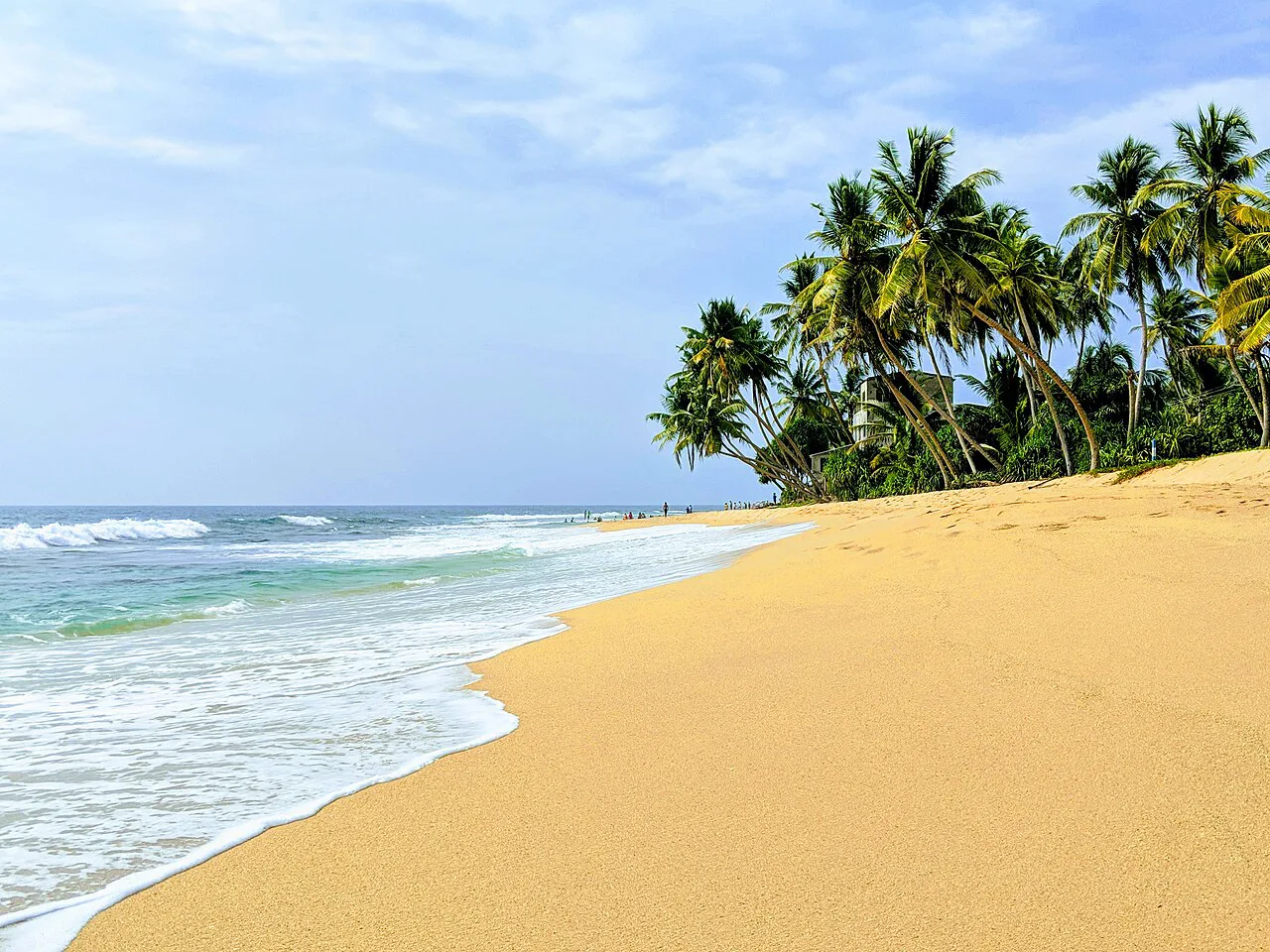
West Coast, Sri Lanka
Hikkaduwa
One of Sri Lanka’s original beach resort towns, built around a shallow coral reef that became the country’s first marine protected area.
Hikkaduwa’s reputation was built by surfers and backpackers who discovered its reliable waves and shallow, colourful reef in the 1970s, decades before Sri Lanka’s tourism industry had any organised shape at all. Today it remains one of the liveliest beach towns on the coast, balancing a genuine marine conservation legacy with a reputation for parties and nightlife.
Quick Facts
| Location | Galle District, about 100 km south of Colombo |
| Reef protection status | Marine sanctuary (1979), Nature Reserve (1998), National Park (2002) |
| Reef size | About 104 hectares, roughly 1.35 km of coastline |
| Biodiversity | Over 60 species of hard coral, 170+ species of reef fish |
| Popular surf spot | Narigama beach break, at the northern end of town |
| Best time to visit | November to April |
Commonly searched as: Hikkaduwa Sri Lanka · Hikkaduwa coral reef · Hikkaduwa surfing · Hikkaduwa snorkelling · things to do in Hikkaduwa
From Fishing Village to Surf Pioneer
Hikkaduwa’s transformation into a tourist destination traces back to the 1970s, when word spread among travelling surfers and backpackers about its reliable waves and the shallow, richly coloured reef just offshore. That early wave of visitors established Hikkaduwa as one of Sri Lanka’s original beach resort towns, well before Bentota‘s more formally planned development or the south coast’s later hotspots like Mirissa emerged. Decades of development followed, and today Hikkaduwa carries a reputation as a livelier, more party-oriented beach town than some of its neighbours, with a dense strip of bars, restaurants and guesthouses along the coastal road.
Sri Lanka’s First Marine Protected Area
Hikkaduwa’s coral reef has a conservation history stretching back further than most visitors realise. It was first recognised as a Fisheries Protected Area in 1961, then declared a marine sanctuary in 1979, making it the first officially protected marine area in Sri Lanka. Protection expanded to Nature Reserve status in 1998, and finally, in 2002, the reef was upgraded to a full Marine National Park, the highest level of environmental protection available, one of only two such marine parks in the entire country.
The reef itself, a shallow fringing system beginning near the fishing harbour and extending roughly 4 km south, supports around 60 species of hard coral and over 170 species of reef fish, along with seagrass beds that provide habitat for dugongs and sea turtles. A major coral bleaching event during the 1998 El Nino significantly damaged the reef’s once-famous branching and table corals, and the 2004 tsunami caused further harm, but conservation efforts have continued, and the reef remains one of the most accessible and studied marine ecosystems in the country.
Getting in the Water
Snorkelling here is genuinely beginner-friendly, with sections of reef sitting in water as shallow as 1 to 5 metres and located just 50 to 100 metres offshore. Non-swimmers can view the reef via glass-bottomed boat instead. For surfers, the main beach break suits beginners, while the reef break known as Benny’s and the Narigama break at the northern end of town offer more challenge for experienced riders. Scuba divers have a wider range of options too, including deeper reefs, rock formations, and several old shipwrecks that have matured into artificial reefs at sites like Kiralagala and Godagala.
Practical Tips
- Visit between November and April for the calmest seas and best underwater visibility.
- Be mindful of strong currents even close to shore, especially outside the main swimming season.
- Choose reputable dive and snorkel operators who follow reef-safe practices, given the ecosystem’s fragile recovery from past bleaching and tsunami damage.
- Combine with nearby attractions like the Hikkaduwa Sea Turtle Hatchery, Seenigama Temple, and the Peraliya Tsunami Museum for a fuller day along this stretch of coast.
A Town That Grew Up Around Its Reef
What makes Hikkaduwa an interesting case study in Sri Lankan tourism is how directly its development has been shaped by the very ecosystem it sits beside. The reef drew the first wave of surfers and divers in the 1970s, which built the town’s early tourism infrastructure, which in turn created enough local and international interest to justify the conservation status that followed a few years later. That cycle, natural feature attracts visitors, visitors justify protection, protection sustains the feature that keeps attracting visitors, has played out with mixed success here, given the bleaching and tsunami setbacks along the way, but Hikkaduwa’s continued popularity suggests the underlying formula still works, even if the reef itself needs ongoing care to keep pace with the crowds it draws.
Where It Sits on the Map
Hikkaduwa, Galle District, West Coast, Sri Lanka Open in Google Maps ↗
Frequently Asked Questions
Why is Hikkaduwa’s reef significant?
It was Sri Lanka’s first officially protected marine area, declared a sanctuary in 1979 and later upgraded to a full Marine National Park in 2002, one of only two in the country.
Is Hikkaduwa good for beginner snorkellers?
Yes, the reef sits in shallow water just 50 to 100 metres offshore, making it one of the most accessible snorkelling spots in Sri Lanka.
What is Hikkaduwa known for besides the reef?
Surfing (it was one of Sri Lanka’s original surf destinations from the 1970s), a lively nightlife scene, and beach hotels ranging from budget to boutique.
Has the coral reef been damaged over the years?
Yes, a major coral bleaching event in 1998 and the 2004 Indian Ocean tsunami both caused significant damage, though conservation efforts continue and biodiversity remains substantial.
← Sri Lanka: The Complete Guide — see all 258 places by region
Related News
A guide to Sri Lanka's West Coast region, from Kalpitiya to Hikkaduwa: beaches, history, wildlife and travel tips.
A complete guide to Negombo, Sri Lanka: history, the fish market, Dutch canal, churches, and visiting tips near the airport.

A guide to Sri Munneswaram Temple near Chilaw, Sri Lanka: history, the Ramayana legend, festivals, visiting tips and map.













