

Dsigngo is a Graphic Design and Digital Marketing Company.
Write what you are looking for and press enter to begin your search!

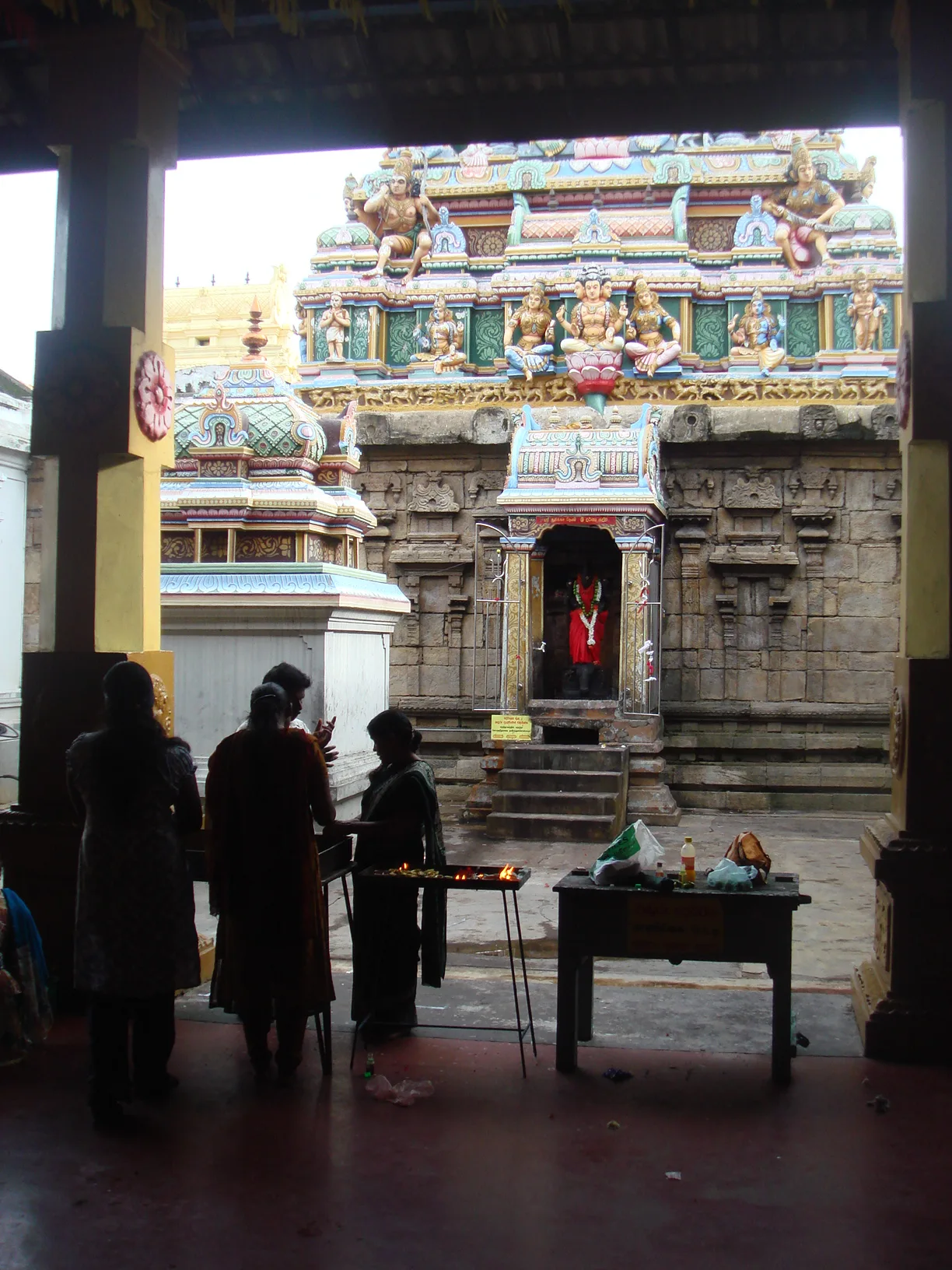
Chilaw, West Coast
Sri Munneswaram Temple
One of Sri Lanka’s five ancient Pancha Ishwaram temples dedicated to Shiva, linked by legend to King Rama’s journey home after the events of the Ramayana.
A little inland from Chilaw’s fishing harbours, the Munneswaram temple complex holds a place among Sri Lanka’s oldest and most storied Hindu sites. Part historical mystery, part Ramayana legend, and part living, working temple complex serving five different congregations under one roof, it remains one of the West Coast’s most significant pilgrimage destinations.
Quick Facts
| Location | Munneswaram village, near Chilaw, Puttalam District |
| Established | At least by 1000 CE, possibly earlier |
| Main deity | Lord Shiva |
| Complex | Five temples: Shiva, Ganesha, Ayyanayake, Kali, and a Buddhist vihara |
| Legendary link | Said to be where King Rama prayed to Shiva after the events of the Ramayana |
| Key festivals | Navarathri and Sivarathri, plus the four-week Munneswaram festival |
Commonly searched as: Munneswaram Temple · Pancha Ishwaram Sri Lanka · Ramayana temple Sri Lanka · Chilaw Hindu temple · Sri Lanka Ramayana trail
One of Five Ancient Ishwarams
Munneswaram is counted among the Pancha Ishwarams, five ancient temples dedicated to Shiva said to have been established across Sri Lanka in antiquity, alongside Koneswaram in Trincomalee, Naguleswaram near Jaffna, and Thiruketheeswaram close to Mannar. Historical records place Munneswaram’s existence at least as far back as 1000 CE, with some accounts suggesting the site’s religious significance stretches back even further, tied to the medieval administrative division known as Munneswaram Pattuva, which functioned as the spiritual and religious centre for the surrounding region.
According to Tamil legend woven into the Ramayana epic, King Rama of Ayodhya stopped at Munneswaram after his war with the demon-king Ravana of Lanka, praying to Shiva here to absolve himself of Brahmahasti, a serious transgression under Hindu dharma for having killed a Brahmin-born figure, since Ravana was said to hold that status. The story continues that Shiva advised Rama to install four Shiva lingams across the island as part of his penance, at Munneswaram, Manavari, Trincomalee and Mannar, tying this temple directly into a wider network of Ramayana-linked pilgrimage sites still visited today.
Destroyed and Rebuilt, More Than Once
Munneswaram’s physical history has been anything but peaceful. The temple was reportedly destroyed completely by the Portuguese in 1578, leaving only its foundation intact, before being rebuilt under King Rajasinghe I. It suffered a second Portuguese destruction in the early 17th century, and was rebuilt again, this time by the local community itself rather than royal patronage, a pattern of resilience that locals point to as evidence of the site’s enduring spiritual significance to both Tamil and Sinhala communities in the region.
Five Temples Under One Roof
The complex today comprises five distinct temples: the central and most prestigious Shiva temple, along with temples dedicated to Ganesha, Ayyanayake (a Sinhala guardian deity, maintained by local Sinhalese families), Kali, and a Buddhist vihara, Pushparamaya, added sometime after the 19th century. The Kali temple, known for association with rituals involving spirit possession and curse removal, draws devotees from both the Hindu and Buddhist communities, reflecting the genuinely mixed religious character of the surrounding area.
Festivals
Munneswaram hosts two major annual Hindu festivals: Navarathri, a nine-day celebration honouring the presiding goddess, and Sivarathri, an overnight observance in honour of Shiva. The temple also runs its own dedicated Munneswaram festival, a four-week event that, notably, draws Hindus, Buddhists, Christians and Muslims alike, reflecting the temple’s unusually broad appeal across Sri Lanka’s religious communities.
Visiting Tips
- The temple is open daily from roughly 5:30 am to 8 pm, with morning, afternoon and evening puja ceremonies.
- Entry and parking are generally free.
- Dress modestly and remove shoes before entering shrine areas.
- Chilaw railway station is the nearest rail connection if travelling by train from Colombo.
A Temple That Predates Sri Lanka’s Modern Religious Boundaries
What makes Munneswaram genuinely distinctive isn’t just its age, it’s how thoroughly it defies the idea that Sri Lanka’s religious communities exist in separate, parallel worlds. A temple complex with a Hindu Shiva shrine, a Sinhala guardian-deity shrine tended by local Sinhalese families, a Kali temple that draws Buddhist devotees seeking protection or curse removal, and an actual Buddhist vihara sharing the same grounds represents a kind of religious layering that’s increasingly rare to find so explicitly combined in one location. That the temple’s own dedicated festival draws Hindus, Buddhists, Christians and Muslims together suggests Munneswaram has functioned, for centuries, as something closer to a shared regional sacred site than a temple belonging to any single faith exclusively.
Where It Sits on the Map
Sri Munneswaram Temple, Munneswaram village, near Chilaw Open in Google Maps ↗
Frequently Asked Questions
What deity is Munneswaram Temple dedicated to?
Primarily Lord Shiva, though the complex also includes temples dedicated to Ganesha, Ayyanayake, Kali, and a Buddhist vihara.
What is the temple’s connection to the Ramayana?
According to legend, King Rama prayed here to Shiva after killing Ravana, seeking absolution for the transgression of killing a Brahmin-born figure.
Why has the temple been rebuilt multiple times?
The Portuguese destroyed it twice, in 1578 and again in the early 17th century, but local communities and Sinhalese kings rebuilt it on both occasions.
Is Munneswaram visited by non-Hindus?
Yes, the temple’s Kali shrine and its own dedicated Munneswaram festival draw Buddhist, Christian and Muslim devotees alongside the Hindu community.
← Sri Lanka: The Complete Guide — see all 258 places by region
Related News
A guide to Sri Lanka's West Coast region, from Kalpitiya to Hikkaduwa: beaches, history, wildlife and travel tips.
A complete guide to Negombo, Sri Lanka: history, the fish market, Dutch canal, churches, and visiting tips near the airport.
A guide to Sri Lanka's Kalpitiya Peninsula: dolphin watching, kitesurfing, the Dutch fort, best time to visit and map.













