

Dsigngo is a Graphic Design and Digital Marketing Company.
Write what you are looking for and press enter to begin your search!

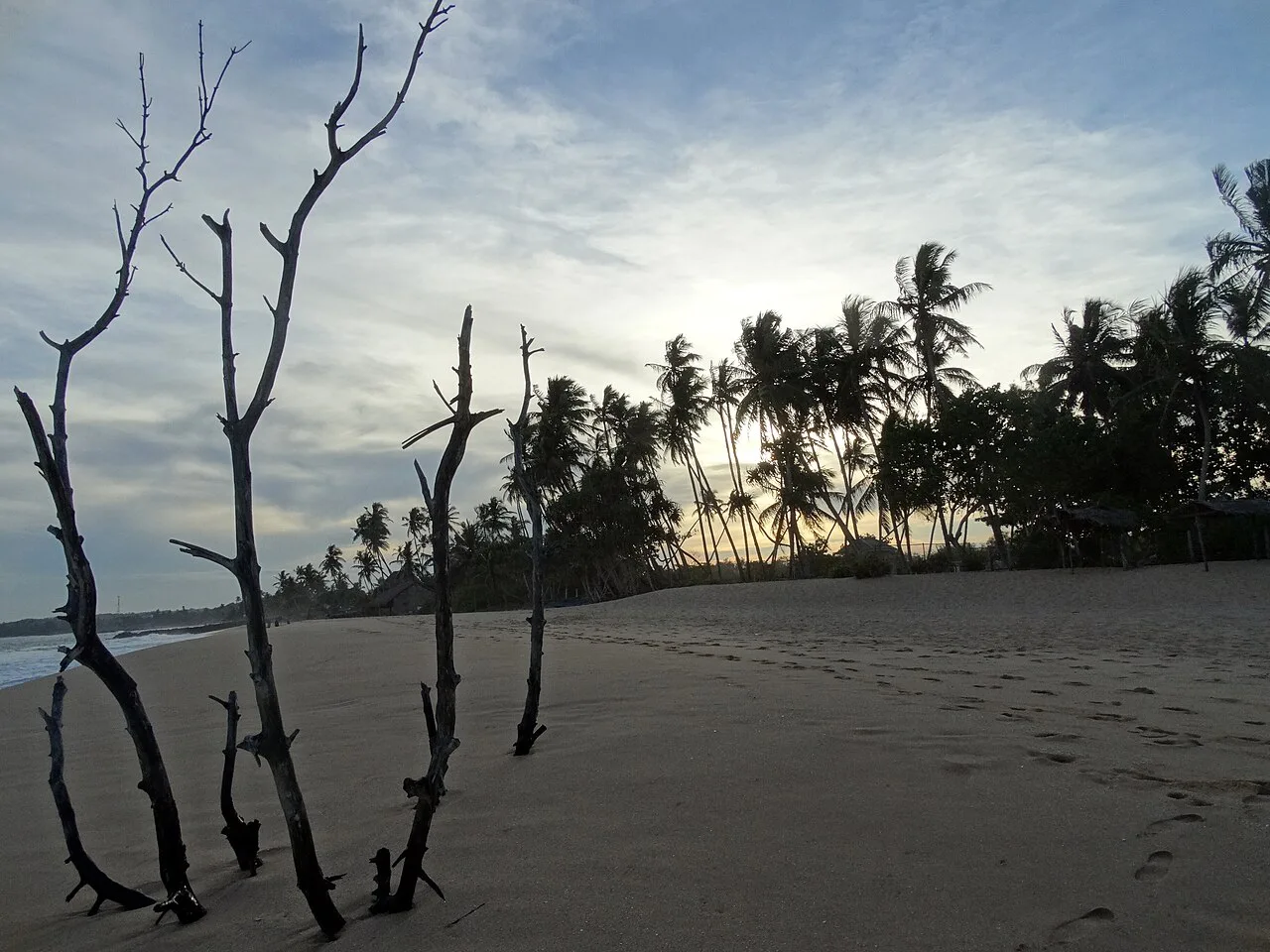
The South, Sri Lanka
Tangalla
A relaxed fishing and beach town named for its rocky headland, whose Dutch-era fort now serves as a working prison rather than a museum.
Tangalle takes its name from a hillock overlooking the town, its Sinhala meaning, ‘projected rock,’ a nod to the rocky coastline that punctuates otherwise long, sandy beaches along this stretch of the deep South Coast. That protected, reef-enclosed bay made it valuable to traders and colonists alike for centuries, long before it became a relaxed base for modern beach travellers.
Quick Facts
| Location | 195 km south of Colombo, 35 km east of Matara |
| Name meaning | ‘Projected rock’ in Sinhala |
| Pre-colonial role | Trading port for Arab and Persian Muslim merchants |
| Colonial history | Important Dutch and later British anchorage |
| Dutch Fort status | Built by the Dutch; currently used as a working prison |
| Modern role | Beach tourism base and gateway to Mulgirigala, Rekawa, Bundala and Yala |
Commonly searched as: Tangalle Sri Lanka · Tangalle beach · Tangalle Dutch Fort · Tangalle to Yala · things to do in Tangalle
A Protected Bay With a Long Trading History
Long before European powers arrived on Sri Lanka’s shores, Tangalle already functioned as a working seaport, used by Muslim traders from Arabia and Persia drawn by its unusually large, reef-protected bay, one of the biggest natural harbours anywhere along the southern coast. That same sheltered geography later attracted the Dutch, who identified Tangalle’s strategic value and established it as an important anchorage, followed by the British, who continued using the port after taking control of the island’s coastal territories.
Physical reminders of that colonial period are still scattered through the town: a Dutch-built fort, a rest house, and a court house all survive in some form, giving Tangalle’s town centre a quieter but genuine echo of the colonial architecture found in more famous sites like Galle Fort, on a considerably smaller scale.
A Fort That’s Still a Working Prison
Tangalle’s Dutch Fort has taken an unusual path compared to most of Sri Lanka’s colonial-era fortifications. Rather than being restored into a museum or heritage tourism site, it was converted into a prison by the British in the mid-19th century, a function it continues to serve today under the Sri Lankan government. That means, unlike Galle Fort or the Star Fort at Matara, visitors can’t walk through Tangalle’s fort, it remains a functioning correctional facility, viewable only from the outside as a historic landmark rather than an interior attraction.
Beaches and Coves
Tangalle’s coastline alternates between long open beaches and smaller, more sheltered coves tucked behind rocky headlands, with palm-fringed spots like Goyambokka particularly popular among visitors staying at nearby boutique resorts. High waves and occasional slippery rocks mean caution is warranted when swimming in some sections, though the enclosed main bay offers calmer conditions than the open coastline further along.
A Base for the Deep South
Tangalle’s real strength as a destination lies in its central position relative to the region’s best natural and cultural attractions. The ancient rock temple of Mulgirigala sits about 17 to 20 km north, Rekawa’s turtle nesting beach is a short drive east, the Hummanaya Blow Hole and Kalametiya Bird Sanctuary are both easily reached, and Yala, Uda Walawe and Bundala National Parks are all within striking distance for day trips or overnight safaris. That combination of relaxed beach time and proximity to major wildlife and heritage sites makes Tangalle a popular base for travellers wanting to slow down without giving up easy access to the region’s highlights.
Visiting Tips
- Use Tangalle as a base for day trips to Mulgirigala, Rekawa, and the Hummanaya Blow Hole.
- Check swimming conditions locally, since some beach sections have stronger waves and rocky patches than others.
- The fort is a viewing-only landmark, not an interior attraction, given its current use as a prison.
- Fresh seafood is a highlight of the local dining scene, given Tangalle’s active fishing industry.
A Deliberately Slower Pace
Compared to the more developed resort strips at Bentota or Hikkaduwa, Tangalle has cultivated a noticeably quieter, more understated identity, boutique villas and small guesthouses rather than large hotel chains, deserted stretches of beach rather than crowded ones, and a general emphasis on relaxation over nightlife. That positioning has made it a particular favourite among travellers looking for a slower, more private South Coast experience, one where the main activities are genuinely unhurried: watching the sunset, exploring nearby natural and historic sites at a relaxed pace, and eating fresh seafood pulled straight from the working harbour that has defined the town for centuries.
Where It Sits on the Map
Tangalle, Hambantota District, Southern Province Open in Google Maps ↗
Frequently Asked Questions
What does the name Tangalle mean?
‘Projected rock’ in Sinhala, referring to the rocky coastline and a hillock overlooking the town.
Can visitors go inside Tangalle’s Dutch Fort?
No, unlike Galle Fort or Matara’s Star Fort, Tangalle’s fort was converted into a working prison by the British and remains one today, so it can only be viewed from outside.
What is Tangalle a good base for?
Day trips to Mulgirigala rock temple, Rekawa turtle beach, the Hummanaya Blow Hole, and Yala, Uda Walawe and Bundala National Parks.
What was Tangalle used for before European colonisation?
It functioned as a trading port for Muslim merchants from Arabia and Persia, thanks to its large, naturally protected bay.
← Sri Lanka: The Complete Guide — see all 258 places by region
Related News
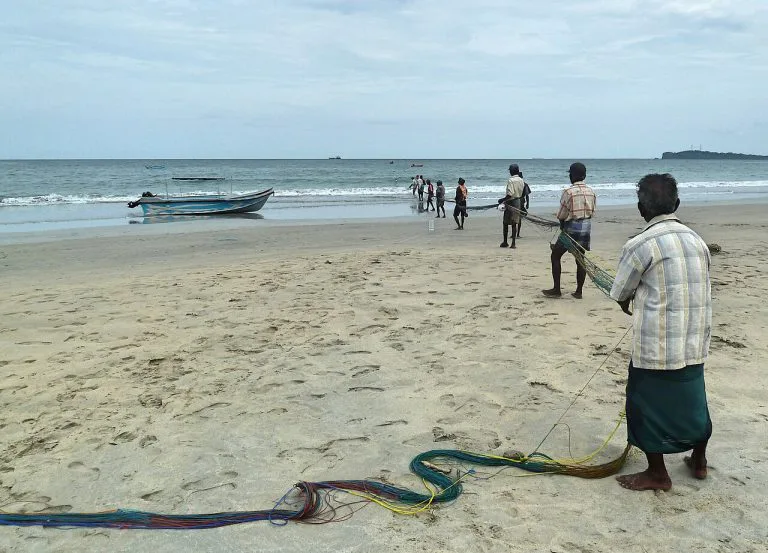
A guide to Southern Sri Lanka, from Galle to Kataragama: beaches, wildlife safaris, colonial forts, and travel tips.

A complete guide to Galle Fort: history from Ptolemy to the Dutch, walking the ramparts, top sights, and visiting tips.
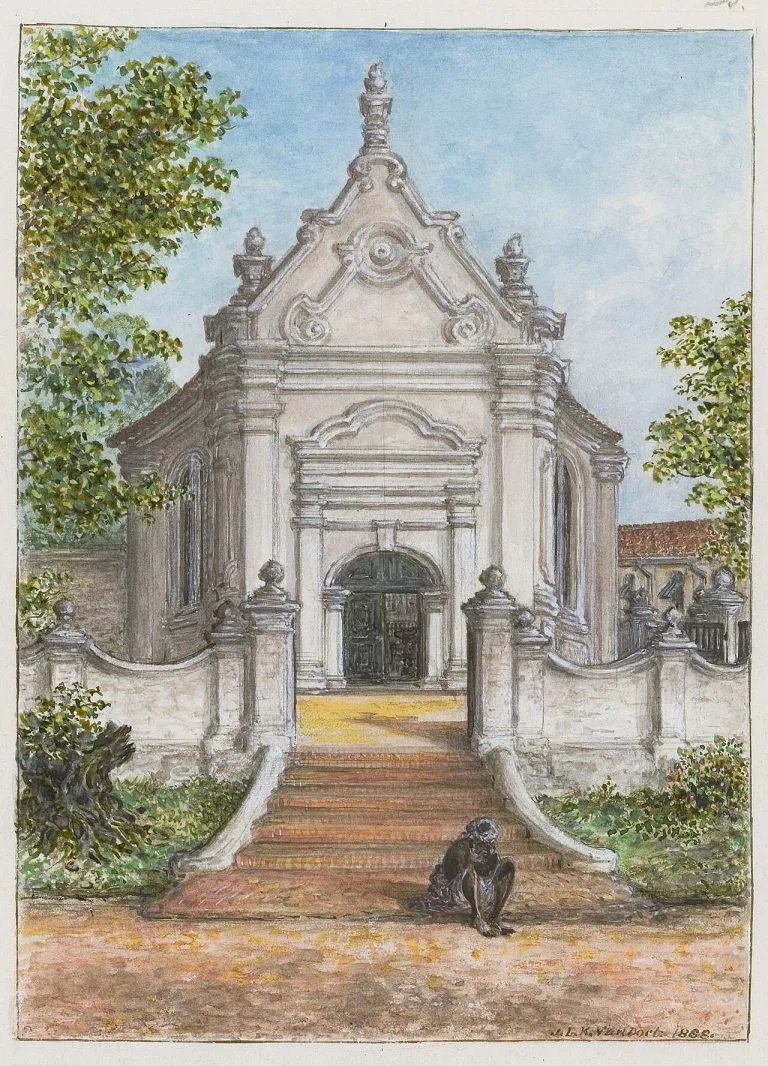
A guide to the Dutch Reformed Church in Galle Fort: the story behind its 1755 completion, the tombstone floor, visiting tips and map.













