

Dsigngo is a Graphic Design and Digital Marketing Company.
Write what you are looking for and press enter to begin your search!

The East, Sri Lanka
Okanda
Legend holds that the god Skanda first sailed into Sri Lanka here in a golden boat, which turned to stone and still sits on the beach today, drawing pilgrims who gather at this exact spot before disappearing into the jungle toward Kataragama.
Okanda’s small hamlet on Sri Lanka’s eastern coast holds an outsized place in the island’s religious geography, marking, according to both Sinhala and Tamil tradition, the exact spot where the god Skanda first arrived from across the sea, and the last waypoint before thousands of pilgrims each year vanish into the unforgiving jungle toward Kataragama.
Quick Facts
| Location | Ampara District, at the official entrance to Kumana National Park |
| Also known as | Ukanthamalai Murugan Kovil, Okanda Devalaya |
| Legend | Landing site of God Skanda’s golden boat, said to have turned to stone |
| Stone boat name | Ran Oru Gala, still visible on Okanda beach |
| Pilgrimage role | Final gathering point before the Pada Yatra crosses Yala to Kataragama |
| Pilgrim numbers | Historically up to 30,000 during peak Esala season |
Commonly searched as: Okanda Devalaya · Okanda temple · Pada Yatra Okanda · God Skanda landing site · things to do near Kumana
A God’s Arrival, Turned to Stone
Both Sinhala Buddhist and Tamil Hindu traditions agree on a striking detail: the god known as Skanda, Murugan, or Kataragama Deviyo, depending on the tradition telling the story, first arrived in Sri Lanka by sea, landing at several points along the east coast including Okanda, before making his way south toward Kathirkamam, keeping close to the coastline the entire journey. At Okanda specifically, legend holds that the golden boat carrying the god transformed into stone upon arrival, and that very rock, known today as Ran Oru Gala, still sits on Okanda beach, a physical anchor point for a story that predates any written record of its origin.
The temple’s actual founding date is unknown, and while archaeologists have found evidence of an ancient monastery near the site, its origins remain genuinely obscure. What is clear is that Okanda’s position near an ancient harbour would have added to its practical, as well as spiritual, importance, seafaring travellers seeking blessing and protection both before and after their journeys, in addition to the pilgrims drawn purely by religious devotion.
The Last Stop Before the Wilderness
Okanda’s genuinely significant role today centres on the Pada Yatra, an ancient annual foot pilgrimage that, in its fullest form, begins as far away as Nagadipa in the Jaffna Peninsula and continues for nearly two months down the length of Sri Lanka’s eastern coast, through Trincomalee, Batticaloa, and a string of ancient shrines, before reaching Okanda as the final major gathering point. From here, pilgrims, historically as many as 30,000 during the Esala festival season, though more recent accounts suggest considerably reduced numbers, prepare to cross the genuinely difficult, wildlife-filled terrain of Kumana and Yala National Parks on foot, a weeks-long trek undertaken specifically to reach the temple of Kataragama for its major annual festival.
That pilgrimage tradition, walking barefoot across sacred ground regardless of physical hardship, is described by those who’ve undertaken it as a genuinely transformative experience, stripping away worldly attachment through sheer physical endurance in service of religious devotion.
A Temple Reflecting Its Devotees
While the original devalaya was likely a much simpler structure, the present temple has been rebuilt in a style closely resembling a South Indian Kovil, reflecting the large number of Tamil Hindu devotees who worship here today. A smaller shrine dedicated to Valli Amma sits atop the rocky outcrop above the temple, adding a further layer to the site’s devotional geography.
Visiting Tips
- Combine with a visit to Kumana National Park, given Okanda’s position right at the park’s official entrance.
- Visit during the Esala festival season (July/August) if interested in witnessing the Pada Yatra pilgrims gathering before their onward journey.
- Approach the site with genuine respect, since it remains held in reverence across multiple faiths, races and communities.
- Look for the Ran Oru Gala stone boat on the beach, the physical centrepiece of the site’s founding legend.
Where It Sits on the Map
Okanda Devalaya, Ampara District, entrance to Kumana National Park Open in Google Maps ↗
Frequently Asked Questions
What is the legend behind Okanda?
Both Sinhala and Tamil traditions hold that the god Skanda first landed here by sea in a golden boat, which turned to stone and remains on the beach as the Ran Oru Gala.
What is the Pada Yatra?
An ancient annual foot pilgrimage, in its fullest form beginning in Jaffna and continuing for weeks along the east coast, with Okanda serving as the final major gathering point before pilgrims cross Yala and Kumana on foot to reach Kataragama.
Why does the temple resemble a South Indian Kovil?
The present structure was rebuilt to reflect the large number of Tamil Hindu devotees who worship there, though the original ancient devalaya was likely a simpler structure.
Where is Okanda located?
At the official entrance to Kumana National Park in the Ampara District, on Sri Lanka’s eastern coast.
← Sri Lanka: The Complete Guide — see all 258 places by region
Related News
A guide to Sri Lanka's East Coast: Trincomalee, Batticaloa, Arugam Bay, wildlife parks, and the region's unique dry-season timing.
A guide to Trincomalee: one of the world's finest natural harbours, its ancient temple, colonial and WWII history, visiting tips and map.
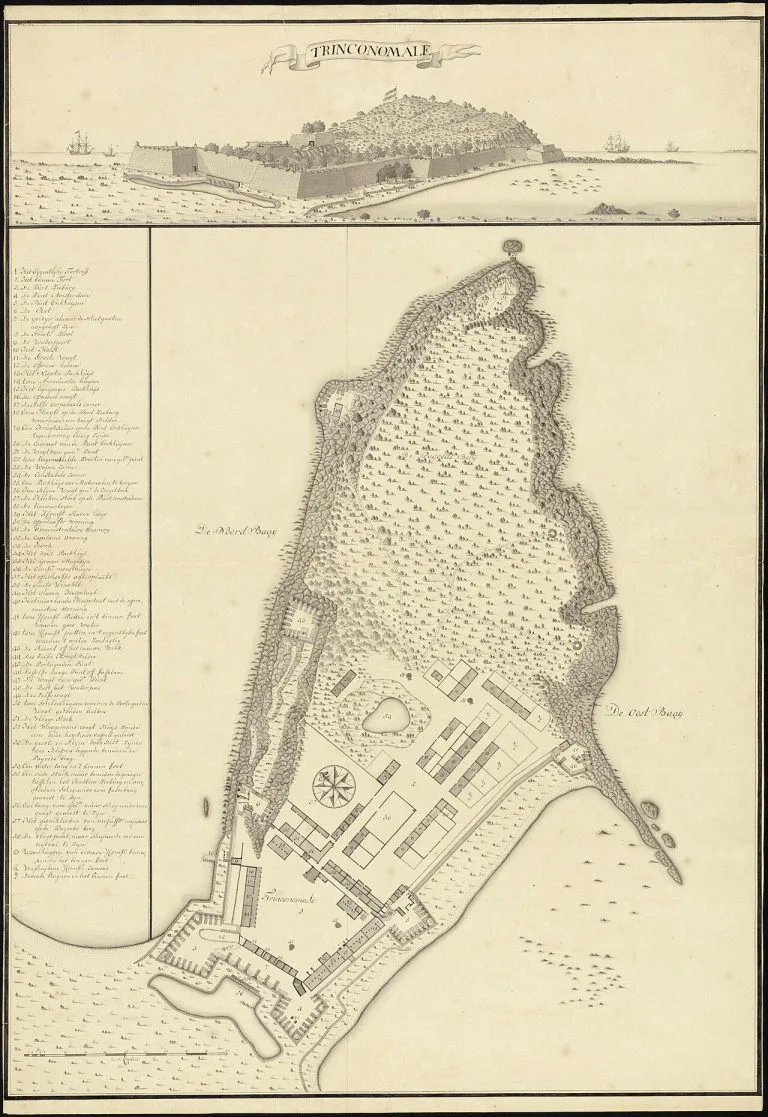
A guide to Fort Frederick in Trincomalee: built from a demolished temple's stones, still an active Sri Lankan military base, its resident deer, visiting tips...













