

Dsigngo is a Graphic Design and Digital Marketing Company.
Write what you are looking for and press enter to begin your search!

Mihintale, Cultural Triangle
Naga Pokuna
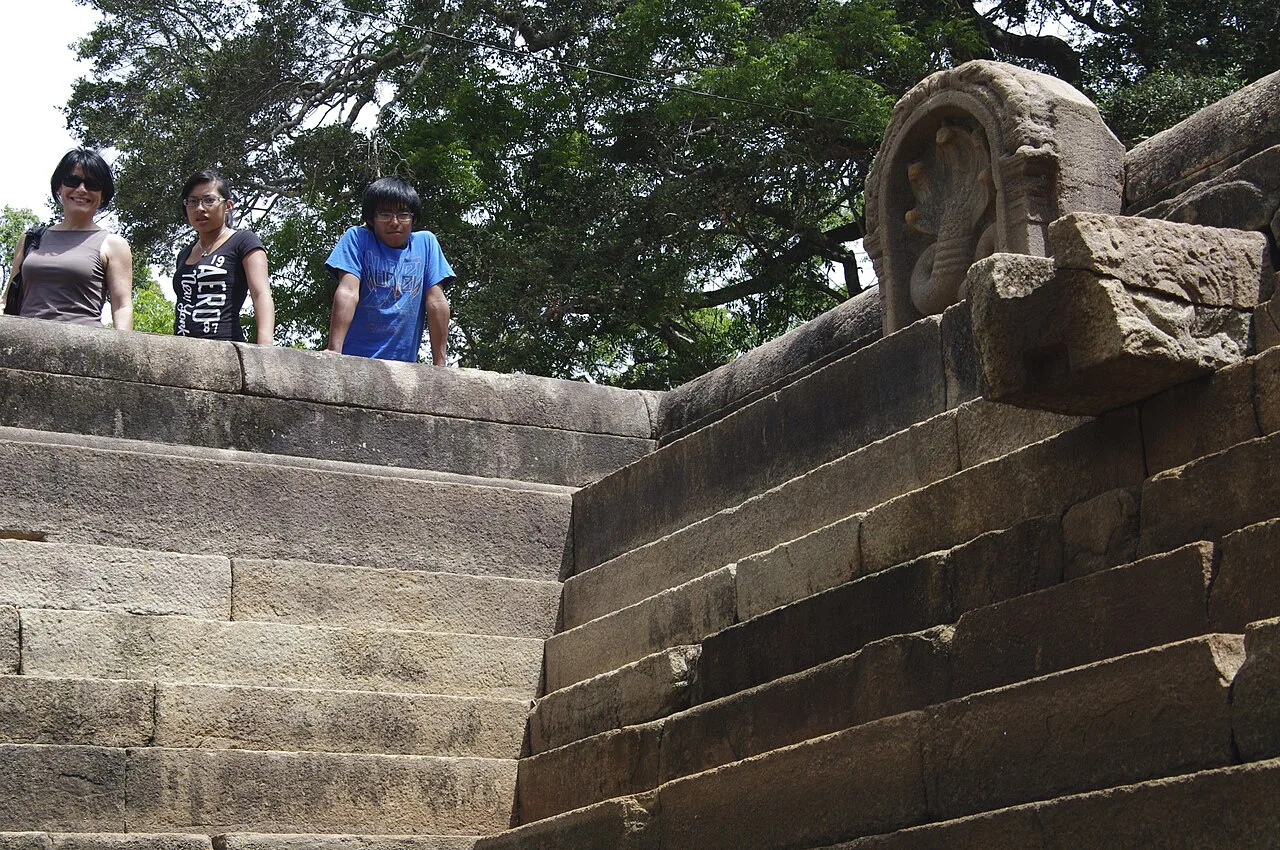
A natural rain-fed pool, deepened and embanked as Mihintale’s monk population grew, still bears the carved likeness of a multi-headed cobra whose tail, according to local telling, reaches all the way down to the bottom of the water.
Naga Pokuna’s name, ‘Cobra Pond,’ comes directly from what’s carved into the rock face at its rear: a serpent with multiple hoods, some accounts say five, others seven, whose tail is said, in local tradition, to reach all the way down to the pool’s floor.
Quick Facts
| Location | At the base of the hill below Mahaseya Dagoba, Mihintale |
| Meaning of name | ‘Cobra Pond’ or ‘Snake Pool’ |
| Notable carving | A multi-headed cobra (naga) carved in low relief on the rear rock face |
| Historical mention | Referenced in Chapter 16 of the Mahavamsa |
| Original function | A natural pond, later embanked and deepened to serve the growing monastery |
| Water distribution | Fed water via stone pipes to the refectory and Sinha Pokuna below |
Commonly searched as: Naga Pokuna Mihintale · Cobra Pond Mihintale · Mihintale water system · Naga Pokuna Snake Pool · things to do at Mihintale
From Natural Pool to Engineered Water Source
Naga Pokuna’s origins trace back to what was likely a simple natural pond, catching rainwater running off the exposed rock surface of the hill crowned by the Mahaseya and older Mihindu Seya stupas above. As Mihintale‘s monastic community grew following Mahinda’s founding visit, that modest natural pool proved insufficient for the water demands of an increasingly large population of resident monks. In response, the pond was deliberately embanked and deepened, transforming it into a genuine reservoir capable of storing enough water to be distributed via an elaborate system of stone pipes down to the monastery’s refectory and Sinha Pokuna further below.
The site carries genuine historical documentation too: it’s referenced in the 16th chapter of the Mahavamsa, which records that Mahinda himself, while returning from a visit to Anuradhapura back to Mihintale, bathed at a tank called Nagacutakka, generally identified with this same location, giving Naga Pokuna a direct textual link back to the monk at the very centre of Mihintale’s founding story.
The Cobra Carving
The pond’s defining feature is the multi-headed cobra carved in low relief on the rock face at its rear, sources vary on the exact number of heads, some describing five, others seven, but all agree on the carving’s striking, serpentine presence looming over the water. In Buddhist and broader South Asian tradition, the naga serpent is closely associated with the guardianship of treasure, the protection of water sources, and the bringing of rain, making the carving’s placement here, watching over the monastery’s crucial water supply, a deliberate and meaningful symbolic choice rather than purely decorative artistry.
A Quiet, Uncrowded Stop
Compared to Mihintale’s more heavily visited monuments, the Ambasthala Dagoba, Aradhana Gala, and the main stairway itself, Naga Pokuna tends to draw a noticeably smaller crowd, giving visitors who make the short detour a genuinely peaceful, contemplative experience among the pool’s still water and surrounding rock formations.
Visiting Tips
- Reach Naga Pokuna via the path branching left partway down from the Ambasthala Dagoba, looping around the base of the Mahaseya hill.
- Take time to examine the cobra carving closely, a genuinely well-preserved piece of ancient relief work.
- Continue the loop trail back down to the second landing, or branch off toward Et Vihara for a longer circuit.
- Watch for monkeys in this area, common throughout Mihintale’s quieter, more forested sections.
Where It Sits on the Map
Naga Pokuna, base of the Mahaseya hill, Mihintale Open in Google Maps ↗
Frequently Asked Questions
Why is it called Naga Pokuna?
The name means ‘Cobra Pond,’ referencing a multi-headed cobra carved in low relief on the rock face at the rear of the pool.
What was Naga Pokuna originally used for?
It began as a natural rain-fed pool, later embanked and deepened to supply water to Mihintale’s growing monastic community, including the refectory and Sinha Pokuna.
Is Naga Pokuna mentioned in ancient chronicles?
Yes, it’s referenced in Chapter 16 of the Mahavamsa, which records Mahinda bathing at a tank identified with this location.
Is Naga Pokuna a busy site to visit?
No, it’s generally much quieter than Mihintale’s main monuments, offering a peaceful detour off the primary pilgrimage path.
← Sri Lanka: The Complete Guide — see all 258 places by region
Related News
A guide to Sri Lanka's Cultural Triangle: Sigiriya, Polonnaruwa, Anuradhapura, Dambulla and Mihintale, with travel tips.

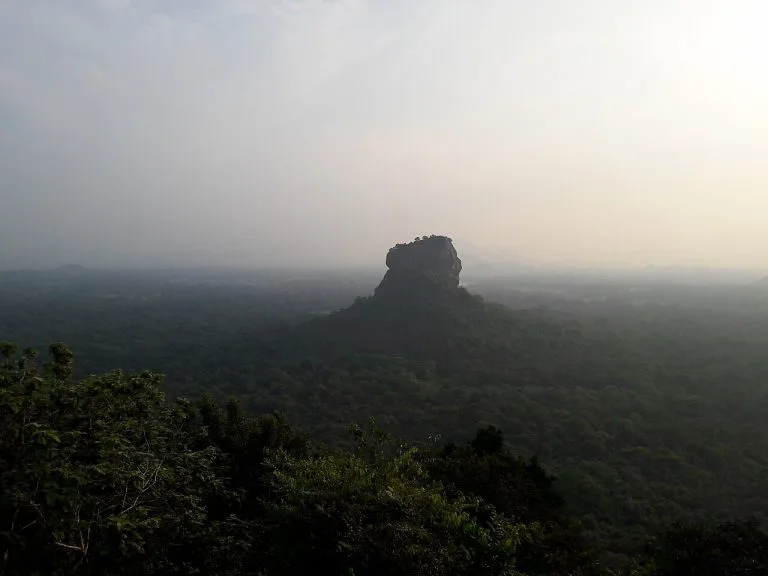
A complete guide to Sigiriya Rock Fortress: King Kashyapa's parricide, the water gardens, the famous frescoes, visiting tips and map.
A guide to the ancient city of Polonnaruwa: from Chola conquest to Parakramabahu the Great's garden-city, visiting tips and map.













