

Dsigngo is a Graphic Design and Digital Marketing Company.
Write what you are looking for and press enter to begin your search!

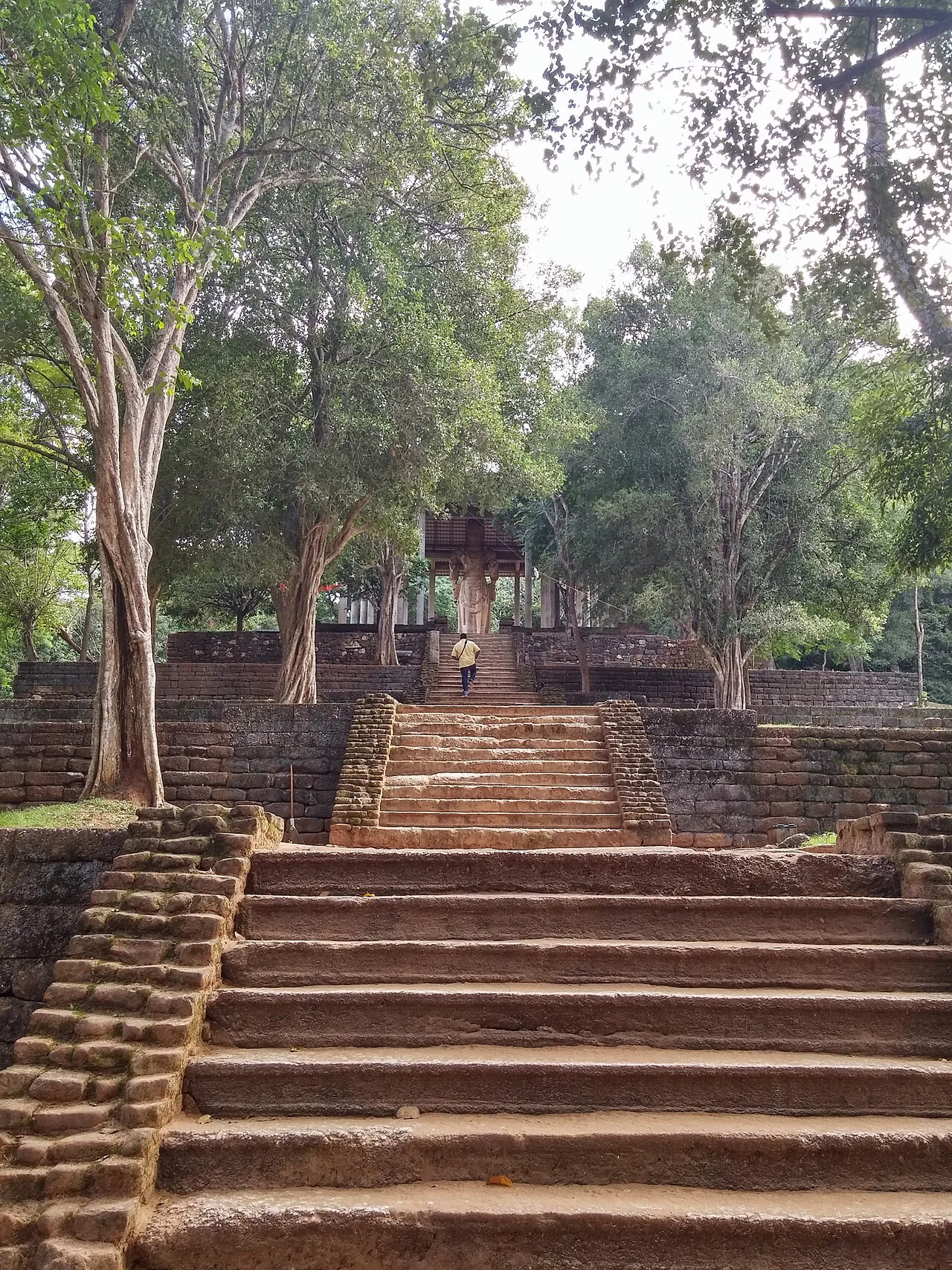
Monaragala District, The East
Maligawila
Found shattered in the jungle in 1951, the tallest ancient standing Buddha statue ever carved in Sri Lanka took a failed 1974 attempt and a successful 1991 effort before it finally stood upright again.
The Maligawila Buddha’s story is really a story of two separate ancient achievements, first carving a standing figure this tall from a single block of limestone in the 7th century, then, thirteen centuries later, successfully standing it back upright after it had spent decades lying broken in the jungle.
Quick Facts
| Location | Near the village of Maligawila, about 15 km south of Monaragala |
| Height | 37 feet 10 inches (11.53 metres) |
| Carved | 7th century CE, commissioned by Prince Aggabodhi of Ruhuna |
| Status | The tallest ancient free-standing Buddha statue in Sri Lanka |
| Found broken | 1951, having been damaged by treasure hunters around 1948 |
| Successfully re-erected | 1991, under President Ranasinghe Premadasa, after a failed 1974 attempt |
Commonly searched as: Maligawila Buddha Statue · tallest standing Buddha Sri Lanka · Prince Aggabodhi statue · Monaragala attractions · things to do in Monaragala
Carved for a Temple Called the ‘Lotus Monastery’
According to the Culavamsa chronicle, the Maligawila Buddha was commissioned in the 7th century CE by Prince Aggabodhi of Ruhuna, the southern kingdom of ancient Sri Lanka, who built a temple named Pathma Vihara (“Lotus Monastery”) and commissioned the great standing statue as its centrepiece. Carved from a single, massive block of limestone, the figure depicts the Buddha in Asisa Mudra, a variation of the Abhaya Mudra gesture, holding his robe at the left shoulder while the right hand is raised in blessing, a style closely comparable to the celebrated Aukana Buddha statue in the Cultural Triangle.
Archaeological evidence around the statue points to an equally ambitious original setting, ruins of an image house measuring roughly 80 feet in length and breadth, with walls about 4 feet thick and an estimated height of around 65 metres, suggesting the towering Buddha once stood enclosed within an equally monumental building, all subsequently lost to time and reclaiming jungle.
Shattered, Then Painstakingly Restored
The statue’s modern story began with genuine tragedy: by 1948, treasure hunters had already damaged the site, and when the ruins were properly rediscovered and cleared in 1951, the great Buddha was found fallen from its pedestal and broken into multiple pieces, a devastating loss for a monument that had stood, in one form or another, for well over a millennium. A first attempt to raise and restore the shattered statue in 1974 ended in failure, leaving the broken pieces where they lay for nearly two more decades.
It took until 1991, under the direction of then-President Ranasinghe Premadasa and a dedicated local engineering team, for the statue to be successfully raised, restored and returned to something approaching its original standing grandeur. That successful restoration transformed Maligawila from an obscure jungle ruin into one of the most visited archaeological sites in Sri Lanka’s southeastern Uva Province.
A Second Giant Statue Nearby
About 500 metres from the main Buddha statue stands a second monumental figure, a 10-metre limestone carving now identified as depicting Maitreya Bodhisattva, or in some interpretations Avalokiteshvara, discovered broken alongside the Buddha in the same 1934 archaeological survey and similarly damaged by treasure hunters before eventual restoration. Together, the two statues represent one of the most significant clusters of ancient Sri Lankan monumental sculpture found anywhere outside the Cultural Triangle.
Visiting Tips
- Combine with the nearby Maligawila Archaeological Museum, which displays finds recovered from the site.
- Visit both the main Buddha statue and the Bodhisattva figure roughly 500 metres away.
- Expect a genuinely quiet, uncrowded visit; Maligawila remains well off the main tourist circuit despite its significance.
- Combine with a wider Monaragala or Uva Province itinerary, given the site’s relatively remote location.
Where It Sits on the Map
Maligawila Buddha Statue, near Monaragala, Uva Province Open in Google Maps ↗
Frequently Asked Questions
How tall is the Maligawila Buddha statue?
37 feet 10 inches (11.53 metres), making it the tallest ancient free-standing Buddha statue in Sri Lanka.
Who commissioned the statue?
Prince Aggabodhi of Ruhuna, in the 7th century CE, according to the Culavamsa chronicle, which records him building the Pathma Vihara temple and its centrepiece statue.
What happened to the statue before it was restored?
It was damaged by treasure hunters around 1948, found broken into pieces in 1951, and a 1974 attempt to re-erect it failed before a successful restoration in 1991 under President Ranasinghe Premadasa.
Is there another significant statue nearby?
Yes, about 500 metres away stands a 10-metre limestone figure identified as Maitreya Bodhisattva, discovered and restored alongside the main Buddha statue.
← Sri Lanka: The Complete Guide — see all 258 places by region
Related News
A guide to Sri Lanka's East Coast: Trincomalee, Batticaloa, Arugam Bay, wildlife parks, and the region's unique dry-season timing.
A guide to Trincomalee: one of the world's finest natural harbours, its ancient temple, colonial and WWII history, visiting tips and map.
A guide to Fort Frederick in Trincomalee: built from a demolished temple's stones, still an active Sri Lankan military base, its resident deer, visiting tips...













