

Dsigngo is a Graphic Design and Digital Marketing Company.
Write what you are looking for and press enter to begin your search!

The Cultural Triangle, Sri Lanka
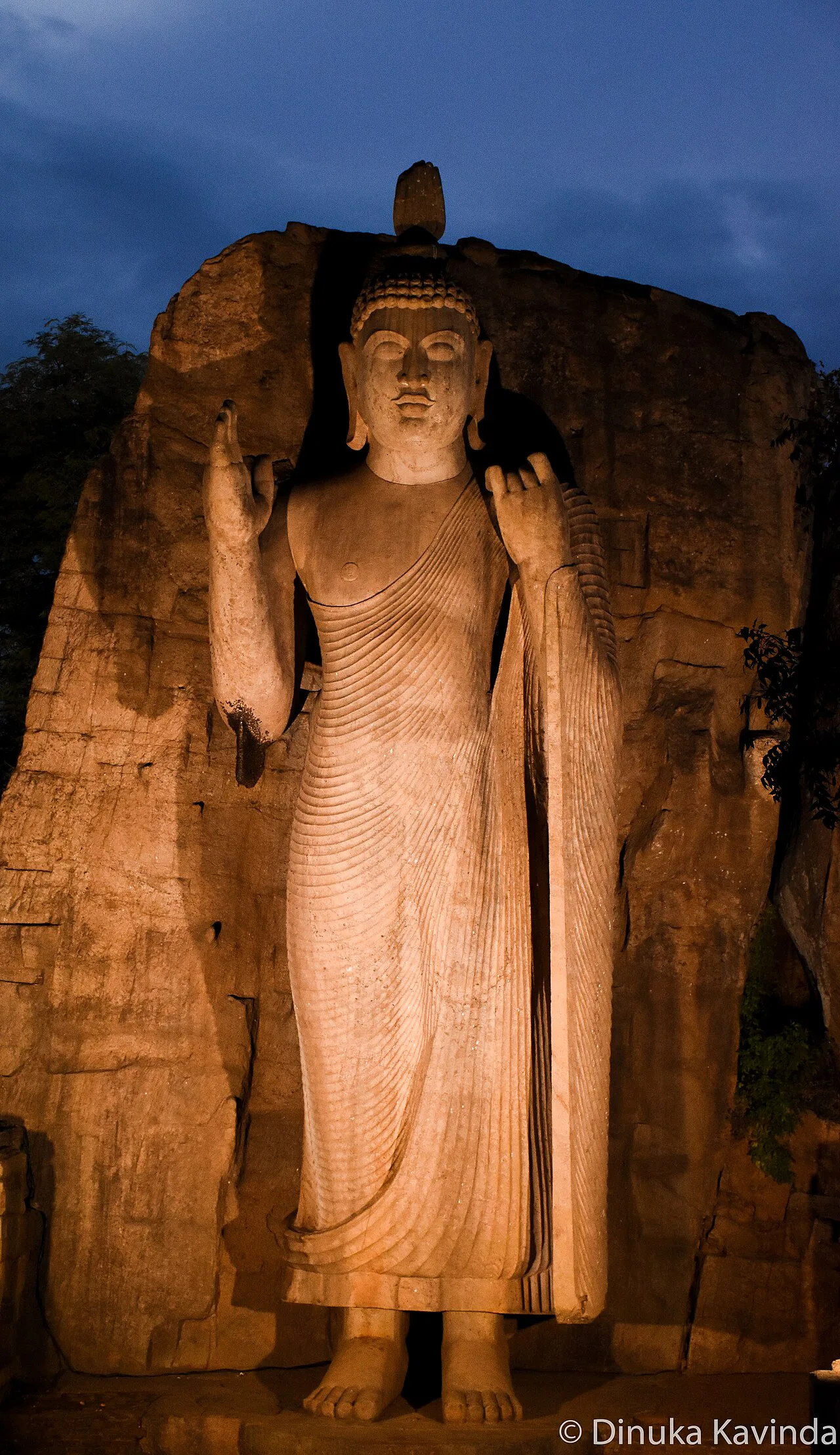
Aukana
Legend holds that a master sculptor and his own student raced to carve matching Buddha statues, agreeing to ring a bell the moment either finished, a story that would explain why one figure stands perfectly complete and the other never did.
Aukana means ‘sun-eating’ in Sinhala, a fitting name for a statue that faces directly east toward the Kala Wewa reservoir, timed so the first rays of dawn light up its finely carved features before anything else in the surrounding landscape.
Quick Facts
| Location | Aukana village, near Kekirawa, North Central Province |
| Height | About 40 feet (12 metres), Sri Lanka’s tallest ancient standing Buddha statue |
| Traditional dating | 5th century CE, under King Dhatusena |
| Alternative dating | Some scholars propose 8th, or even 12th to 13th century |
| Gesture depicted | The Aukana Mudra, a variation signifying blessing |
| Nearby reservoir | Kala Wewa, built by King Dhatusena around 460 CE |
Commonly searched as: Aukana Buddha Statue · Avukana Buddha · tallest ancient Buddha statue Sri Lanka · King Dhatusena statue · things to do in the Cultural Triangle
Carved for a King Who Called His Reservoir His Treasure
The Aukana Buddha is traditionally attributed to the reign of King Dhatusena, who ruled Sri Lanka in the 5th century and is remembered above all for constructing the vast Kala Wewa reservoir around 460 CE, an irrigation project so significant to his legacy that, according to legend, when later asked to reveal the location of his royal treasury, Dhatusena simply pointed toward the reservoir itself, declaring that its benefit to his people was his true wealth. That same king’s story carries a darker postscript elsewhere in Sri Lankan history: he was the father later walled up alive in a dam by his own son Kashyapa, the very act that drove Kashyapa to build the fortress at Sigiriya.
Scholarly opinion on the statue’s actual age is genuinely divided. While popular tradition firmly credits Dhatusena’s 5th-century reign, art historian Diran K. Dohanian has argued on stylistic grounds for an 8th-century origin instead, and other researchers have proposed dates as late as the 12th or 13th century, under Parakramabahu the Great. That uncertainty hasn’t diminished the statue’s fame, if anything, the layered, unresolved debate over its true age adds another dimension of mystery to an already striking monument.
A Master, a Pupil, and a Race to Finish
The most beloved story associated with Aukana involves a rivalry between a master sculptor and his own pupil, commissioned, according to legend, to compete for royal favour by each carving a matching standing Buddha statue, one at Aukana, the other roughly 11 km away at Sasseruwa. The two agreed that whoever finished first would signal completion by ringing a bell. The master completed the Aukana statue first, claiming the reward, while his pupil, on hearing the bell, is said to have abandoned his own unfinished work at Sasseruwa entirely. Some later scholarship has actually cast doubt on the neat symmetry of that legend, noting evidence that the Sasseruwa statue may in fact predate Aukana’s by as much as four centuries, meaning the two figures were likely never created in genuine competition with one another at all. The legend persists regardless, largely because the visual comparison between a polished, finished masterpiece and its rougher, incomplete counterpart makes for such a compelling story.
A Statue Not Fully Freed From the Rock
Despite its towering, freestanding appearance, the Aukana Buddha is not entirely separate from the cliff face it was carved from, a narrow strip of stone at the rear connects the statue to the rock, both a structural support and a reminder of the monolithic carving technique used to create it. The statue’s pedestal, carved separately in the shape of a lotus flower, was positioned beneath the figure afterward.
Visiting Tips
- Visit at dawn, when the first sunlight strikes the statue’s face, widely considered the best time to see it, and the origin of its name.
- Combine with Sasseruwa, about 11 km away, to see both statues from the master-and-pupil legend in a single day.
- Dress modestly, as with any active Buddhist temple site.
- Bring a wide-angle camera lens to properly capture the statue’s full 40-foot height.
Where It Sits on the Map
Aukana Buddha Statue, near Kekirawa, North Central Province Open in Google Maps ↗
Frequently Asked Questions
How tall is the Aukana Buddha statue?
About 40 feet (12 metres), making it the tallest ancient standing Buddha statue in Sri Lanka.
When was the Aukana statue built?
Traditionally dated to the 5th century under King Dhatusena, though some scholars propose the 8th or even 12th to 13th century based on stylistic evidence.
What is the legend connecting Aukana to Sasseruwa?
A master sculptor and his pupil are said to have raced to complete matching statues, with the master finishing Aukana first while the pupil’s Sasseruwa statue was left unfinished, though some evidence suggests Sasseruwa may actually predate Aukana.
Why is the statue called ‘Aukana’?
The name means ‘sun-eating’ in Sinhala, referencing how the statue faces east and is best viewed at dawn when sunlight first illuminates its features.
← Sri Lanka: The Complete Guide — see all 258 places by region
Related News
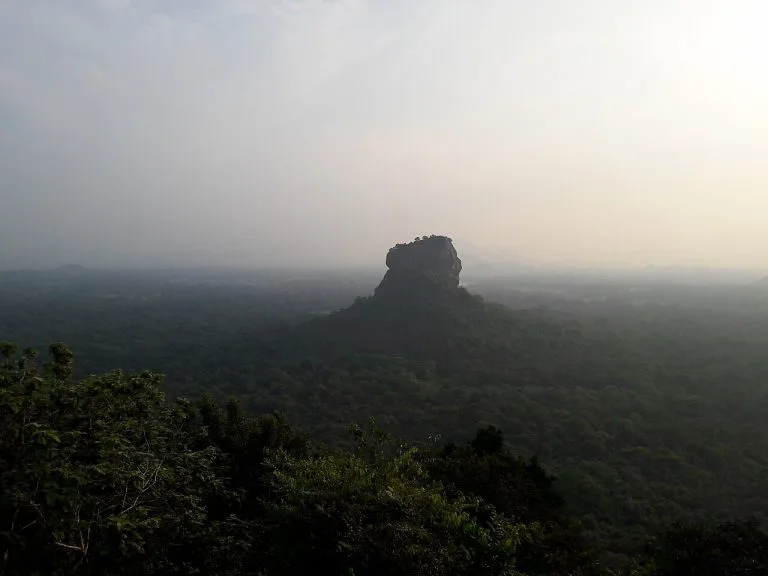
A guide to Sri Lanka's Cultural Triangle: Sigiriya, Polonnaruwa, Anuradhapura, Dambulla and Mihintale, with travel tips.

A complete guide to Sigiriya Rock Fortress: King Kashyapa's parricide, the water gardens, the famous frescoes, visiting tips and map.
A guide to the ancient city of Polonnaruwa: from Chola conquest to Parakramabahu the Great's garden-city, visiting tips and map.













