

Dsigngo is a Graphic Design and Digital Marketing Company.
Write what you are looking for and press enter to begin your search!

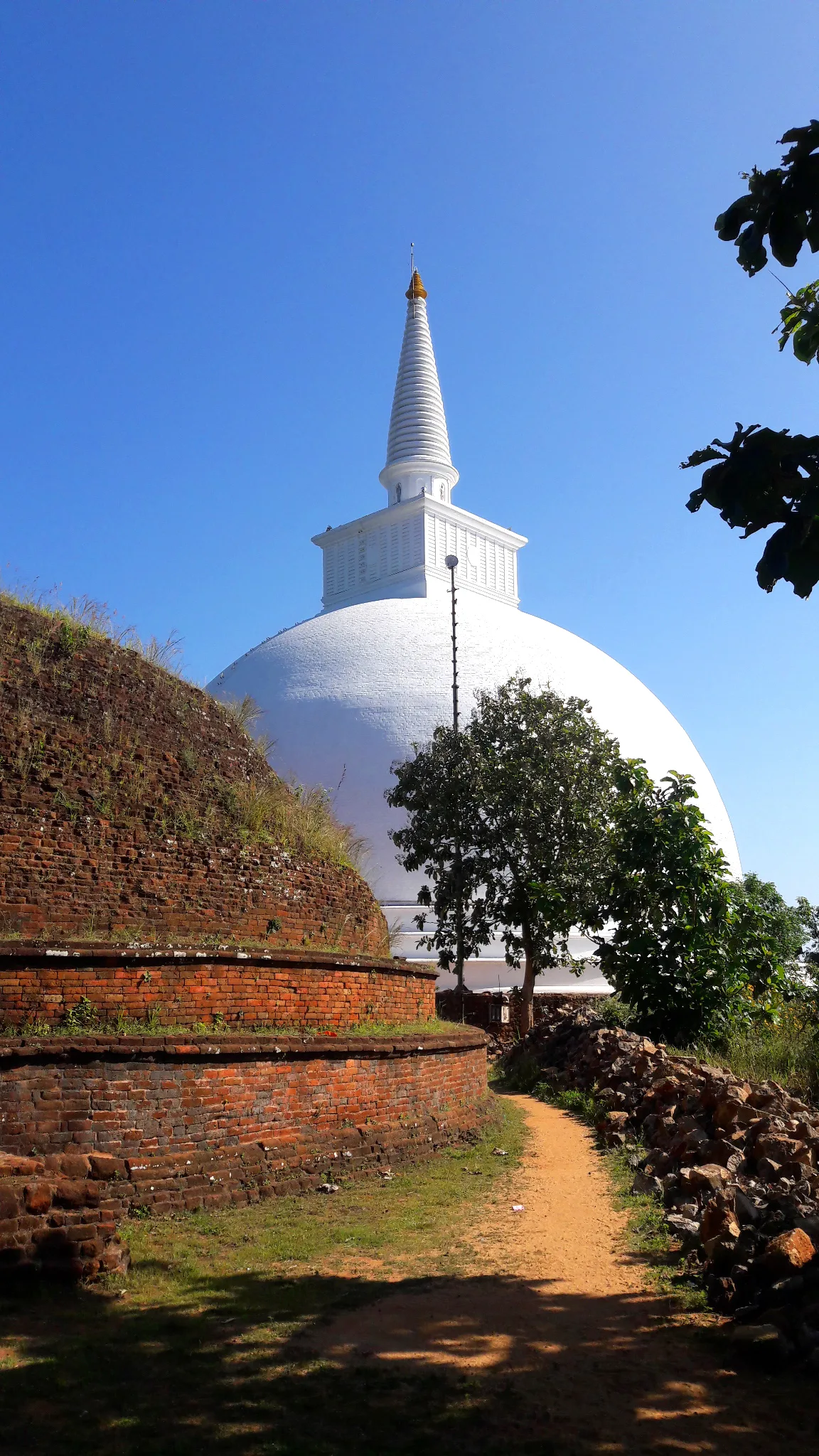
Mihintale, Cultural Triangle
Mahaseya Dagoba
A gleaming white stupa built to house a single strand of hair, believed to belong to the very monk who brought Buddhism to Sri Lanka, standing as the largest dagoba anywhere on Mihintale mountain.
Mahaseya’s scale sets it apart from every other stupa on Mihintale mountain, but its origin story is genuinely intimate: tradition holds it was built to enshrine nothing more than a single hair relic belonging to Mahinda, the monk whose meeting with a hunting king transformed the island’s religious history.
Quick Facts
| Location | Upper terrace of Mihintale, near Ambasthala Dagoba |
| Status | The largest dagoba anywhere at Mihintale |
| Dating | 1st century BCE |
| Relic tradition | Believed to enshrine a single hair relic of the monk Mahinda |
| Nearby feature | A smaller, older brick dagoba on the far side, among the oldest in Sri Lanka |
| Views | Overlooks lakes, forest, and the distant stupas of Anuradhapura |
Commonly searched as: Mahaseya Dagoba · Mahaseya Mihintale · largest stupa Mihintale · Mahinda relic stupa · things to do at Mihintale
A Monument to a Single Strand of Hair
Mahaseya Dagoba, dating to the 1st century BCE, stands as the largest stupa anywhere on Mihintale mountain, its gleaming white dome visible from a considerable distance across the surrounding plains. Tradition holds that the stupa was built specifically to enshrine a single hair relic of Mahinda, the monk whose meeting with King Devanampiya Tissa had, by this point, already permanently reshaped Sri Lankan religious life. That such a modest physical relic, one strand of hair, could justify the construction of the mountain’s grandest monument speaks to just how profound Mahinda’s significance had become in the collective memory of the Buddhist community he helped establish.
The stupa’s commanding position on the upper terrace places it among the mountain’s most visually dominant structures, its scale deliberately setting it apart from the smaller shrines and stupas scattered across the surrounding slopes.
An Older, Humbler Neighbour
On the far side of Mahaseya sits a considerably smaller, older brick dagoba, one of the oldest surviving stupas anywhere in Sri Lanka, yet one that receives only a fraction of the attention paid to its larger, more prominent neighbour. That contrast, an ancient, historically significant structure quietly overshadowed by a later, grander monument built essentially next door, is a pattern that recurs across several sites throughout the Cultural Triangle, where scale and visual drama often determine which ruins draw the crowds regardless of relative historical age or significance.
Views Across the Ancient Kingdom
From Mahaseya’s terrace, visitors can look out across lakes and forest toward Anuradhapura in the distance, a view that connects the two sites both visually and historically, the mountain where Buddhism first arrived on the island looking directly toward the capital city that would go on to become its spiritual and political heart for the following fifteen centuries.
That sightline carries a certain symbolic weight of its own. Standing at Mahaseya, looking toward Anuradhapura’s stupas rising in the distance, visitors can trace the physical geography of how Sri Lankan Buddhism actually spread, from a single hillside encounter with a hunting king, outward to an entire capital city’s worth of monumental religious architecture built in the centuries that followed. Few viewpoints anywhere in the Cultural Triangle offer such a direct, visible link between a religion’s founding moment and its subsequent flourishing.
Visiting Tips
- Look for the smaller, older brick dagoba on the far side of Mahaseya, easy to overlook given its more modest scale.
- Take in the views toward Anuradhapura, particularly rewarding on clear days.
- Combine with the nearby Ambasthala Dagoba and Aradhana Gala, both close by on the same upper terrace.
- Visit toward late afternoon for softer light on the white stupa surface.
Where It Sits on the Map
Mahaseya Dagoba, upper terrace, Mihintale Open in Google Maps ↗
Frequently Asked Questions
What is Mahaseya Dagoba?
The largest stupa anywhere on Mihintale mountain, dating to the 1st century BCE.
What relic is Mahaseya said to enshrine?
A single hair relic belonging to Mahinda, the monk who introduced Buddhism to Sri Lanka.
What is the smaller dagoba near Mahaseya?
An older, smaller brick stupa on the far side, considered among the oldest surviving dagobas in Sri Lanka despite receiving far less attention than Mahaseya itself.
What can be seen from Mahaseya’s terrace?
Panoramic views over the surrounding lakes and forest, extending toward the distant stupas of Anuradhapura on clear days.
← Sri Lanka: The Complete Guide — see all 258 places by region
Related News
A guide to Sri Lanka's Cultural Triangle: Sigiriya, Polonnaruwa, Anuradhapura, Dambulla and Mihintale, with travel tips.

A complete guide to Sigiriya Rock Fortress: King Kashyapa's parricide, the water gardens, the famous frescoes, visiting tips and map.
A guide to the ancient city of Polonnaruwa: from Chola conquest to Parakramabahu the Great's garden-city, visiting tips and map.













