

Dsigngo is a Graphic Design and Digital Marketing Company.
Write what you are looking for and press enter to begin your search!

Polonnaruwa, Cultural Triangle
Lankatilaka Vihara
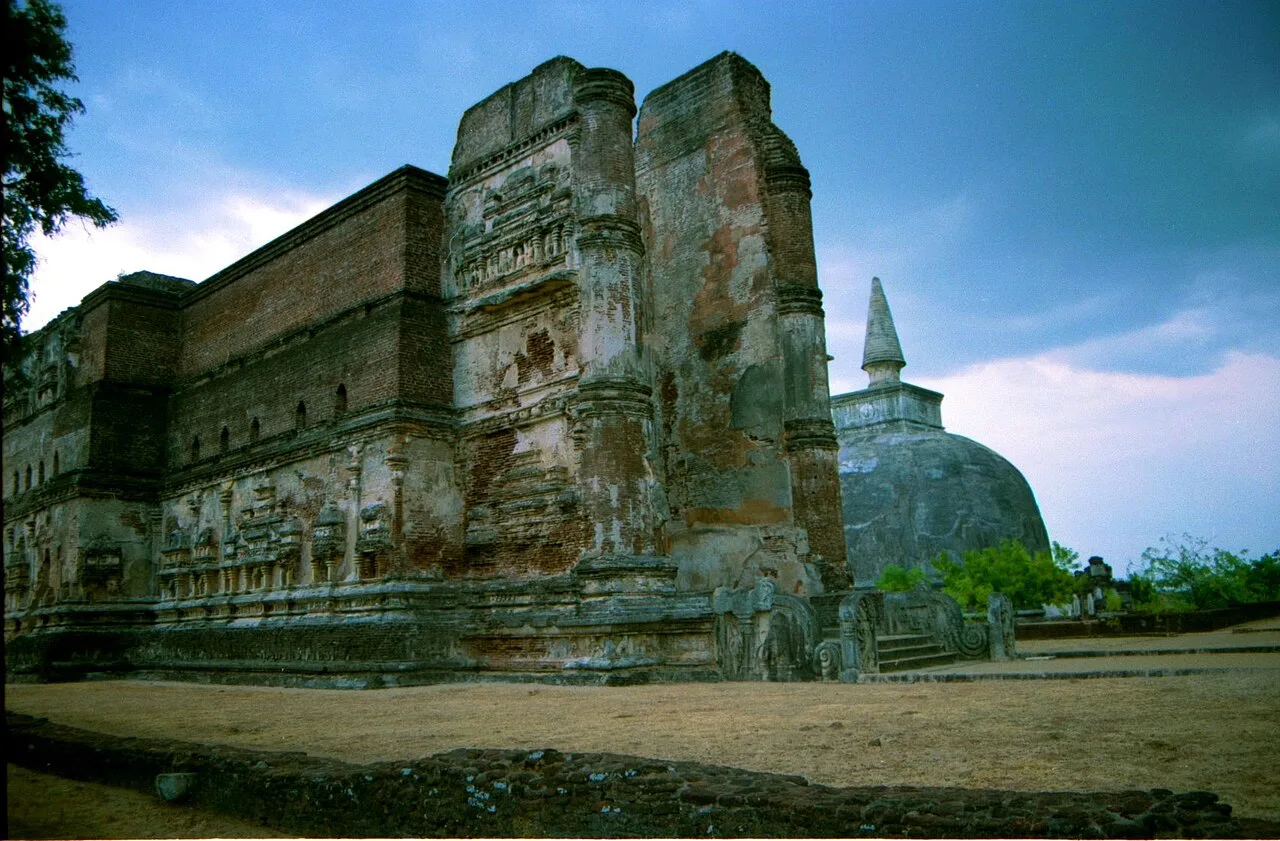
Walls rising 55 feet still stand around a 12th-century Buddha statue that has lost its head and shoulders to erosion, yet somehow remains one of the most striking sights in all of Polonnaruwa.
Even in ruin, missing its roof and much of the giant Buddha statue’s head and shoulders, Lankatilaka Vihara at Polonnaruwa remains genuinely awe-inspiring, widely considered the largest image house ever built in ancient Sri Lanka.
Quick Facts
| Location | Within the Alahana Pirivena complex, Polonnaruwa |
| Built by | King Parakramabahu I, 1153 to 1186 |
| Style | Gedige, a vaulted, enclosed brick shrine type |
| Wall height | Up to 55 feet (17 metres) |
| Buddha statue height | About 14 metres, though head, shoulders and arms have eroded away |
| Later renovation | During the Dambadeniya period (13th century CE) |
Commonly searched as: Lankatilaka Vihara Polonnaruwa · Lankathilaka image house · Alahana Pirivena · Polonnaruwa Buddha statue · things to do in Polonnaruwa
The Largest Image House Ever Built in Ancient Sri Lanka
Lankatilaka Vihara was constructed under King Parakramabahu I during his 1153 to 1186 reign, part of the sweeping building programme that also produced the Royal Palace, Gal Vihara and Rankoth Vihara elsewhere in the city. Built in the gedige style, a vaulted, thick-walled brick shrine designed to house a monumental image, Lankatilaka is widely regarded as the largest structure of its type ever built anywhere in ancient Sri Lanka, its remaining walls still rising as high as 55 feet despite the roof and much of the upper structure having collapsed long ago.
Evidence suggests the building underwent significant renovation during the later Dambadeniya period in the 13th century, indicating that Lankatilaka continued to hold religious importance even after Polonnaruwa‘s decline as a political capital, with subsequent rulers investing in its upkeep well after the city’s political golden age had passed.
A Colossal, Damaged Buddha
Standing within the towering brick walls is a giant standing Buddha statue, roughly 14 metres tall, that has lost its head, shoulders and arms to centuries of erosion and structural collapse. Despite that damage, the sheer scale of what remains, combined with the imposing height of the surrounding walls still framing the figure, gives visitors a genuinely powerful sense of what this space would have felt like at the height of Parakramabahu’s reign, a towering, enclosed shrine designed to overwhelm anyone who entered it.
Two prominent pylons flank the building’s entrance, adding further architectural drama to the approach, while the remaining walls, though roofless, still convey the building’s original monumental intent even in their current, weathered state.
Part of a Larger Monastic Complex
Lankatilaka sits within the Alahana Pirivena, a large monastic complex that also includes Rankoth Vihara and several smaller shrines, reflecting the site’s original function as a significant centre of Buddhist teaching and monastic life rather than an isolated single monument.
Visiting Tips
- Visit alongside Rankoth Vihara and Kiri Vihara, both within the same Alahana Pirivena complex.
- Photograph the site from a distance to fully capture the scale of the surviving walls against the Buddha statue.
- Visit in the morning for cooler temperatures and better light on the brick surfaces.
- Remove shoes and hats before approaching the shrine area, as with any active or formerly consecrated Buddhist site.
Beauty in Incompleteness
There’s a particular kind of visual power that comes from seeing a monument this scale in its damaged state rather than fully restored. A pristine reconstruction of Lankatilaka’s original Buddha statue, head and shoulders intact, might actually convey less about the passage of nine centuries than the eroded figure visitors encounter today, still recognisably monumental despite everything time and structural collapse have taken from it. That tension, between imagining the building’s original overwhelming grandeur and appreciating what genuinely survives, is part of what makes Lankatilaka linger in visitors’ memories longer than some of Polonnaruwa’s better-preserved monuments, a reminder that even incomplete ruins can communicate ambition and scale just as powerfully as anything fully intact.
Where It Sits on the Map
Lankatilaka Vihara, Alahana Pirivena, Polonnaruwa Open in Google Maps ↗
Frequently Asked Questions
Why is Lankatilaka Vihara significant?
It’s widely considered the largest image house ever built in ancient Sri Lanka, with walls still standing up to 55 feet high despite the loss of its roof.
What happened to the Buddha statue’s head and shoulders?
They have eroded away over the centuries, though the roughly 14-metre statue’s overall scale and posture remain clearly visible.
When was Lankatilaka built?
Under King Parakramabahu I during his 1153 to 1186 reign, with later renovation work during the 13th-century Dambadeniya period.
What complex does Lankatilaka belong to?
The Alahana Pirivena, a large monastic complex that also includes Rankoth Vihara and Kiri Vihara nearby.
← Sri Lanka: The Complete Guide — see all 258 places by region
Related News
A guide to Sri Lanka's Cultural Triangle: Sigiriya, Polonnaruwa, Anuradhapura, Dambulla and Mihintale, with travel tips.

A complete guide to Sigiriya Rock Fortress: King Kashyapa's parricide, the water gardens, the famous frescoes, visiting tips and map.
A guide to the ancient city of Polonnaruwa: from Chola conquest to Parakramabahu the Great's garden-city, visiting tips and map.













