

Dsigngo is a Graphic Design and Digital Marketing Company.
Write what you are looking for and press enter to begin your search!

Polonnaruwa, Cultural Triangle
Rankoth Vihara
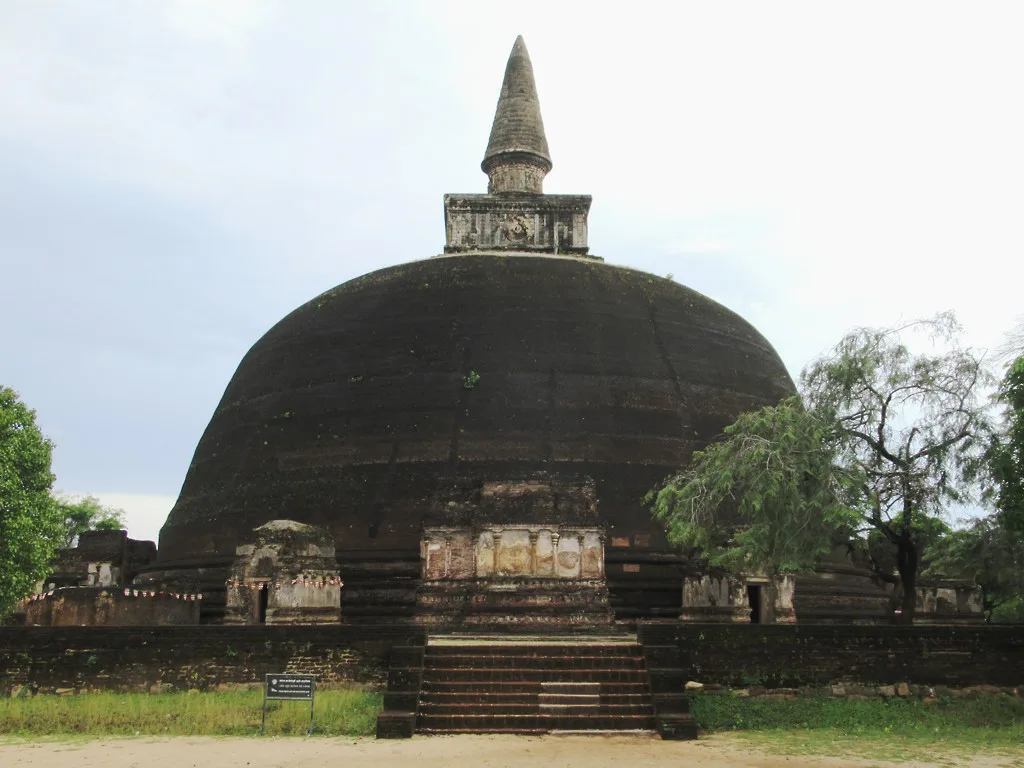
Named for the golden pinnacle a king installed at its summit while personally overseeing construction from a stone throne, this is the largest completed stupa anywhere in ancient Polonnaruwa.
A stone inscription near Rankoth Vihara’s entrance records something genuinely specific: that King Nissanka Malla personally sat and watched this enormous stupa being built, a detail that turns an already impressive monument into a rare, documented moment of royal supervision captured in stone.
Quick Facts
| Location | Southern edge of the Alahana Pirivena monastic complex, Polonnaruwa |
| Size | About 33 metres high, 170 metres in diameter |
| Ranking | The 4th-largest stupa in Sri Lanka, the largest completed one at Polonnaruwa |
| Original name | Ruvanveli or Ratanavali-cetiya |
| Founded | Under King Parakramabahu I (1153 to 1186), linked to his second queen |
| Enlarged and renamed | By King Nissanka Malla (1187 to 1196), who added the golden pinnacle |
Commonly searched as: Rankoth Vehera · Rankoth Vihara Polonnaruwa · largest stupa Polonnaruwa · Nissanka Malla monuments · things to do in Polonnaruwa
A Stupa With Two Royal Builders
Rankoth Vihara’s construction is traditionally attributed to the reign of King Parakramabahu I, with some historical sources linking its foundation specifically to his second queen. The stupa was conceived as Polonnaruwa‘s counterpart to the great Ruvanwelisaya dagoba at Anuradhapura, reflected in its original name, Ruvanveli or Ratanavali-cetiya, a deliberate echo of the earlier capital’s most revered monument.
The stupa reached its current scale and name under King Nissanka Malla, who ruled from 1187 to 1196 and undertook a substantial enlargement and embellishment of the existing structure. Nissanka Malla is credited with crowning the stupa’s pinnacle (kota) with a golden umbrella, giving the monument its lasting name, Rankot, meaning “golden pinnacle” or “golden spire.” A stone seat inscription near the site’s entrance path records that Nissanka Malla personally supervised the construction, seated on a throne to watch the work progress, a genuinely rare documented instance of direct royal oversight of a major building project.
An Engineering Achievement Hidden Inside the Dome
At roughly 33 metres high and 170 metres in diameter, Rankoth Vihara ranks as the fourth-largest stupa anywhere in Sri Lanka, and the largest completed dagoba within Polonnaruwa itself. Its pinnacle alone rises about 9.5 metres, built from 24 concentric rings forming the crowning feature of the structure. Archaeological studies have revealed that the dome’s core contains a solid cubic structure, likely functioning as an internal support system that helped workers lift and position building materials during construction, offering a small window into the practical engineering challenges involved in raising a monument of this scale using 12th-century methods.
The Surrounding Terrace
The stupa sits at the centre of a large square terrace with four entrances aligned to the cardinal points, surrounded by numerous smaller image houses interspersed with flower altars, reflecting the site’s continued role as an active devotional space for pilgrims of all backgrounds, not solely a historical monument. Popular tradition also connects the surrounding shrines to influence from the Mahasanghika Buddhist sect, adding a further layer of religious significance to the wider complex.
Visiting Tips
- Combine with a visit to the wider Alahana Pirivena monastic complex, of which Rankoth Vihara forms the southern edge.
- Bring a hat or umbrella for sun protection, given Polonnaruwa’s dry-zone climate and the terrace’s limited shade.
- Ask the temple’s resident monk, when present, about the murals and frescoes in nearby image houses for additional context.
- Cycle between Rankoth Vihara and other nearby monuments, the standard and most efficient way to explore Polonnaruwa’s spread-out archaeological park.
A Monument That Outlived Its Builders’ Ambitions
Rankoth Vihara’s dual construction history, begun under one king and substantially completed under another, reflects a broader pattern common to Polonnaruwa’s major monuments, where building projects spanned successive reigns and were often finished, renamed or reinterpreted by whichever ruler happened to hold power once the structure neared completion. That layered authorship doesn’t diminish the monument’s significance; if anything, it reflects how central large-scale religious construction was to royal legitimacy throughout the Polonnaruwa period, with each king eager to associate himself with the kingdom’s most visible expressions of Buddhist devotion. Standing before Rankoth Vihara’s massive dome today, visitors are looking at the physical result of at least two rulers’ competing ambitions to be remembered as the kingdom’s great builder-king.
Where It Sits on the Map
Rankoth Vihara, Alahana Pirivena complex, Polonnaruwa Open in Google Maps ↗
Frequently Asked Questions
Who built Rankoth Vihara?
Its foundation is attributed to King Parakramabahu I’s reign, with the stupa later enlarged and given its current name by King Nissanka Malla, who added a golden pinnacle.
How large is Rankoth Vihara?
About 33 metres high and 170 metres in diameter, making it the fourth-largest stupa in Sri Lanka and the largest completed one in Polonnaruwa.
What does the name Rankoth mean?
‘Golden pinnacle’ or ‘golden spire,’ referencing the golden umbrella King Nissanka Malla installed at the stupa’s summit.
Is there evidence of how the stupa was actually built?
Yes, archaeological studies found a solid cubic support structure within the dome’s core, likely used to help lift and position building materials during construction.
← Sri Lanka: The Complete Guide — see all 258 places by region
Related News
A guide to Sri Lanka's Cultural Triangle: Sigiriya, Polonnaruwa, Anuradhapura, Dambulla and Mihintale, with travel tips.

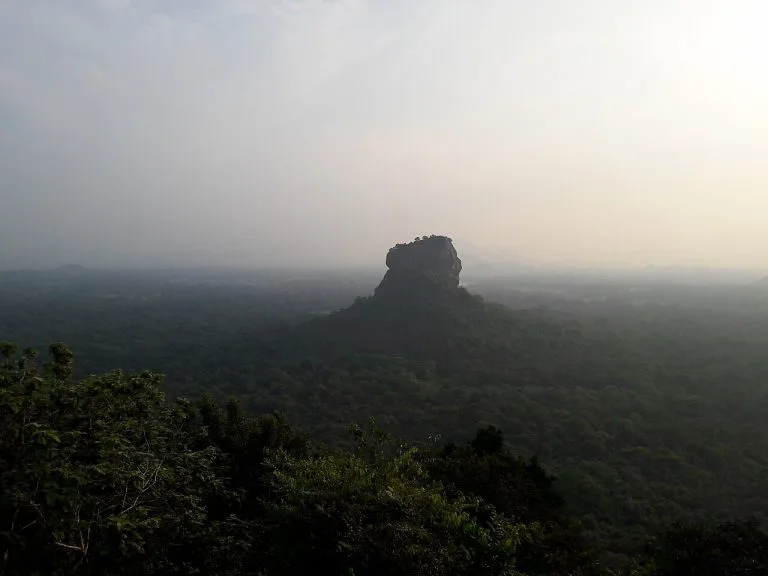
A complete guide to Sigiriya Rock Fortress: King Kashyapa's parricide, the water gardens, the famous frescoes, visiting tips and map.
A guide to the ancient city of Polonnaruwa: from Chola conquest to Parakramabahu the Great's garden-city, visiting tips and map.













