

Dsigngo is a Graphic Design and Digital Marketing Company.
Write what you are looking for and press enter to begin your search!

Kataragama, The South
Kiri Vihara
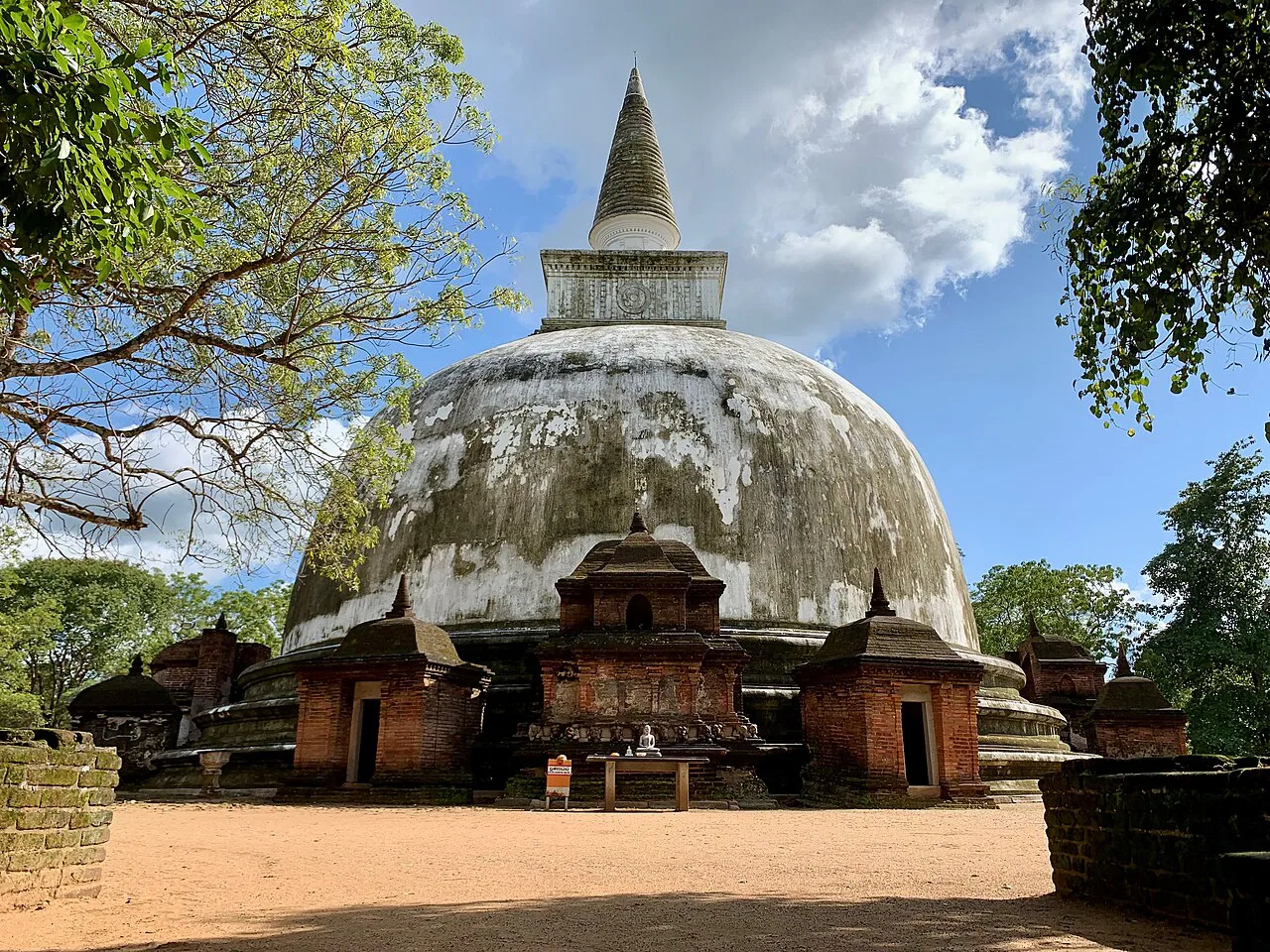
A 95-foot white stupa standing just north of Kataragama’s main shrine, believed to mark the spot where the Buddha meditated during his third and final visit to Sri Lanka.
Eight hundred metres north of Kataragama’s bustling main shrine, a very different kind of sacred atmosphere takes over. Kiri Vehera’s plain white dome, one of Sri Lanka’s Solosmasthana, or sixteen most sacred Buddhist sites, offers a quieter, more contemplative pilgrimage experience than the devotional intensity of the Maha Devale nearby.
Quick Facts
| Location | About 800 m north of the Kataragama Maha Devale |
| Height | 95 feet, with a circumference of 280 feet |
| Traditional origin | Around the 6th century BCE, linked to the Buddha’s third visit to Sri Lanka |
| Also associated with | King Mahasena, in some historical traditions |
| Status | One of the Solosmasthana, the 16 most sacred Buddhist pilgrimage sites in Sri Lanka |
| Present chief prelate | Venerable Kobawaka Dhamminda Thera |
Commonly searched as: Kiri Vehera Kataragama · Solosmasthana Sri Lanka · Kataragama Buddhist stupa · things to do in Kataragama · Sri Lanka sacred stupas
A Site Tied to the Buddha’s Third Visit
Sri Lankan Buddhist tradition holds that the Buddha visited the island three times during his lifetime, and Kiri Vehera is counted among the Solosmasthana, sixteen sites said to have been sanctified by those visits. Local tradition places the stupa’s origins as far back as the 6th century BCE, built to commemorate a spot where the Buddha is believed to have meditated during his third and final journey to Sri Lanka, though as with many ancient religious sites, precise historical dating remains difficult to confirm with certainty. Some traditions also connect the stupa’s construction to King Mahasena, a later Sri Lankan monarch associated with several significant Buddhist building projects.
Whatever the exact chronology, Kiri Vehera’s white dome, standing 95 feet tall with a circumference of 280 feet, has functioned as an important Buddhist pilgrimage destination for an extraordinarily long stretch of continuous religious history, situated deliberately close to, but distinct from, the Hindu-oriented Maha Devale that anchors the rest of Kataragama’s sacred precinct.
A Different Kind of Pilgrimage Experience
Where the Maha Devale draws crowds engaged in active ritual, offerings, drumming, and the sensory intensity of Hindu-influenced devotion, Kiri Vehera offers something quieter. Buddhist pilgrims come here specifically for flower offerings, lamp lighting, chanting and quiet reflection, activities suited to the stupa’s contemplative character. Walking between the two sites within the same short visit gives a genuine sense of how differently religious devotion is expressed even within the same small pilgrimage town, side by side and without friction.
Ongoing Religious Leadership
Kiri Vehera remains an active site of Buddhist religious authority, currently under the guidance of Venerable Kobawaka Dhamminda Thera, the present Chief Prelate of Kirivehera Rajamaha Viharaya. That continuous institutional leadership underscores that, much like the Maha Devale nearby, Kiri Vehera isn’t simply a preserved ancient monument, it remains a living centre of ongoing Buddhist practice and pilgrimage.
Visiting Tips
- Visit in the early morning or late afternoon for a quieter, more contemplative experience.
- Bring flowers or a small offering if you’d like to participate in the customary devotional practice.
- Combine with the Maha Devale, an easy 800-metre walk south, for a fuller sense of Kataragama‘s layered religious landscape.
- Dress modestly and remove footwear before approaching the stupa platform.
Proximity as Religious Statement
The physical closeness between Kiri Vehera and the Maha Devale, just 800 metres apart, isn’t accidental, it reflects centuries of Buddhist and Hindu devotional traditions coexisting within the same small sacred landscape rather than developing in isolation from one another. Pilgrims visiting Kataragama today routinely move between both sites within a single visit, treating them as complementary rather than competing expressions of the town’s broader spiritual identity. For a visitor unfamiliar with Sri Lanka’s religious history, that short walk between a Buddhist stupa and a Hindu-Buddhist shrine complex offers one of the clearest, most compact illustrations available anywhere on the island of how deeply intertwined the country’s major faith traditions have become over two millennia of shared sacred geography.
Where It Sits on the Map
Kiri Vehera, 800 m north of the Maha Devale, Kataragama Open in Google Maps ↗
Frequently Asked Questions
What is Kiri Vehera’s religious significance?
It’s one of the Solosmasthana, the sixteen most sacred Buddhist pilgrimage sites in Sri Lanka, traditionally linked to the Buddha’s third visit to the island.
How old is Kiri Vehera?
Tradition places its origins around the 6th century BCE, though as with many ancient sites, precise dating is difficult to confirm.
How does a visit to Kiri Vehera differ from the Maha Devale?
Kiri Vehera offers a quieter, more contemplative Buddhist pilgrimage experience, in contrast to the more intensely devotional, ritual-heavy atmosphere at the nearby Hindu-oriented Maha Devale.
Is Kiri Vehera still an active religious site?
Yes, it remains under active Buddhist religious leadership and continues to draw pilgrims for flower offerings, lamp lighting and chanting.
← Sri Lanka: The Complete Guide — see all 258 places by region
Related News
A guide to Southern Sri Lanka, from Galle to Kataragama: beaches, wildlife safaris, colonial forts, and travel tips.

A complete guide to Galle Fort: history from Ptolemy to the Dutch, walking the ramparts, top sights, and visiting tips.
A guide to the Dutch Reformed Church in Galle Fort: the story behind its 1755 completion, the tombstone floor, visiting tips and map.













