

Dsigngo is a Graphic Design and Digital Marketing Company.
Write what you are looking for and press enter to begin your search!

Polonnaruwa, Cultural Triangle
Kiri Vihara
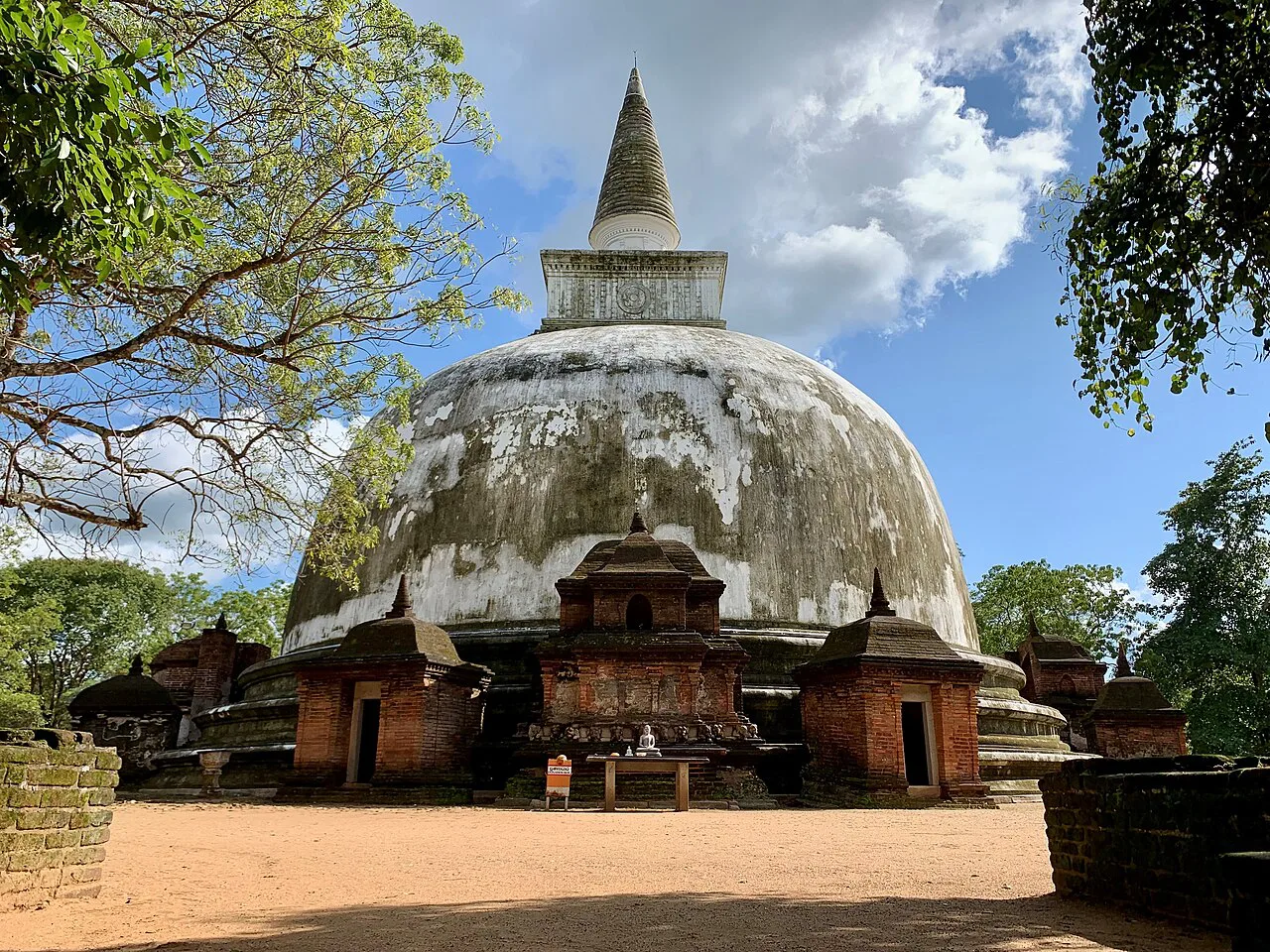
Rediscovered beneath centuries of jungle overgrowth with its original lime plaster still intact, this gleaming white ‘milk temple’ is considered the best-preserved unrestored stupa anywhere in Sri Lanka.
Kiri Vihara’s name means ‘milk-white temple,’ and remarkably, that description still holds true today: when 19th-century archaeologists rediscovered the stupa beneath dense jungle growth, they found its original lime plaster coating still largely intact, a genuinely rare survival that has made it the best-preserved unrestored stupa anywhere in Sri Lanka.
Quick Facts
| Location | Beside Lankatilaka Vihara, within the Alahana Pirivena complex |
| Built by | King Parakramabahu I, in honour of Queen Subhadra |
| Height | 95 feet (about 29 metres) |
| Circumference | 280 feet |
| Ranking | Second-largest stupa in Polonnaruwa |
| Notable feature | Original lime plaster still largely intact, unlike most restored stupas nearby |
Commonly searched as: Kiri Vihara Polonnaruwa · Kiri Vehera · best preserved stupa Sri Lanka · Queen Subhadra temple · things to do in Polonnaruwa
Built for a Queen
Kiri Vihara is traditionally said to have been built by King Parakramabahu I in honour of his queen, Subhadra, part of the same sweeping religious building programme that produced Lankatilaka Vihara immediately next door and Rankoth Vihara nearby. At 95 feet tall with a circumference of 280 feet, it ranks as the second-largest stupa in Polonnaruwa, a genuinely substantial monument even by the standards of a city known for large-scale religious construction.
What sets Kiri Vihara apart from its neighbours isn’t primarily its scale, though, but its state of preservation. When the jungle that had overtaken Polonnaruwa following the city’s abandonment was cleared and the site rediscovered in the 19th and early 20th centuries, Kiri Vihara emerged with much of its original lime plaster coating still in place, largely untouched by restoration work that has altered the surface of many of Polonnaruwa’s other major stupas. That accident of preservation has made it something of a benchmark for what an unrestored ancient Sri Lankan stupa genuinely looked like, as close to its original medieval appearance as any comparable monument on the island.
A Monument to Royal Devotion
Building a stupa specifically in a queen’s honour reflects the close intertwining of royal family life and religious patronage typical of Polonnaruwa’s golden age, where major construction projects served simultaneously as acts of Buddhist merit-making and as public statements of dynastic prestige. Positioned immediately beside the far larger and more architecturally dramatic Lankatilaka Vihara, Kiri Vihara’s gleaming white dome offers a striking visual contrast to its neighbour’s weathered brick walls and headless Buddha statue, two very different monuments from the same royal building era standing side by side.
Why the Plaster Survived
Historians and conservators generally attribute Kiri Vihara’s remarkable preservation to a combination of factors, the specific lime plaster recipe used in its original construction, the relatively dry climate of the Cultural Triangle region, and simple good fortune in how the site was covered and protected by vegetation during the centuries of abandonment following Polonnaruwa’s decline as a capital.
That combination offers a useful reminder of just how much restoration work has shaped the appearance of many of Sri Lanka’s other well-known ancient monuments, at Anuradhapura and elsewhere, structures have often been repaired, replastered, or partially rebuilt over the decades to keep them structurally sound and visually presentable for visitors. Kiri Vihara, by contrast, offers something closer to an unfiltered glimpse of the past, letting visitors see roughly what 19th-century archaeologists themselves encountered when they first cleared away the jungle that had swallowed Polonnaruwa for centuries.
Visiting Tips
- Visit alongside Lankatilaka Vihara immediately next door for a striking visual comparison between preserved and eroded 12th-century structures.
- Look closely at the surviving plaster surface, a genuinely rare, tangible link to how these stupas actually appeared when first built.
- Remove shoes before stepping onto the stupa’s surrounding platform, treated as sacred ground.
- Photograph in the morning or late afternoon, when the light brings out the contrast between the white dome and the surrounding greenery.
Where It Sits on the Map
Kiri Vihara, beside Lankatilaka Vihara, Polonnaruwa Open in Google Maps ↗
Frequently Asked Questions
Who built Kiri Vihara and why?
King Parakramabahu I is traditionally credited with building it in honour of his queen, Subhadra, as part of his broader 12th-century religious building programme.
Why is Kiri Vihara considered special among Polonnaruwa’s stupas?
It’s regarded as the best-preserved unrestored stupa in Sri Lanka, having retained much of its original lime plaster coating since it was rediscovered beneath jungle overgrowth.
How large is Kiri Vihara?
About 95 feet (29 metres) tall with a circumference of 280 feet, making it the second-largest stupa in Polonnaruwa.
What does Kiri Vihara mean?
‘Milk-white temple,’ a name that still accurately describes the stupa’s gleaming white plastered surface today.
← Sri Lanka: The Complete Guide — see all 258 places by region
Related News
A guide to Sri Lanka's Cultural Triangle: Sigiriya, Polonnaruwa, Anuradhapura, Dambulla and Mihintale, with travel tips.

A complete guide to Sigiriya Rock Fortress: King Kashyapa's parricide, the water gardens, the famous frescoes, visiting tips and map.
A guide to the ancient city of Polonnaruwa: from Chola conquest to Parakramabahu the Great's garden-city, visiting tips and map.













