

Dsigngo is a Graphic Design and Digital Marketing Company.
Write what you are looking for and press enter to begin your search!

The Cultural Triangle, Sri Lanka
Kaudulla National Park
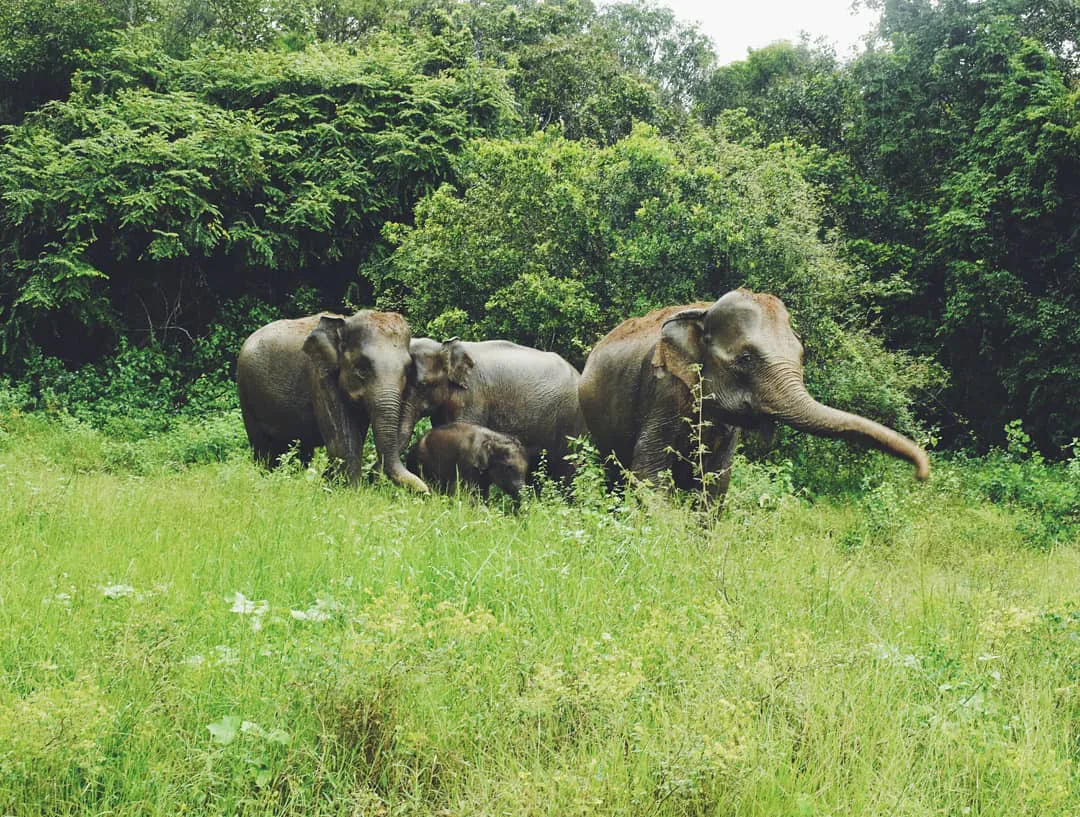
When Minneriya’s grasslands are picked over and the rains return, thousands of elephants pack up and move a short distance north to Kaudulla, following a seasonal circuit that has repeated itself for generations.
Kaudulla National Park is Sri Lanka’s 15th, a relatively recent addition to the country’s protected area network, but the ancient reservoir at its centre and the elephant migration patterns built around it stretch back considerably further than the park’s own 2002 founding date.
Quick Facts
| Location | North Central Province, about 197 km from Colombo, near Habarana |
| Established | 1 April 2002, Sri Lanka’s 15th national park |
| Size | 6,900 hectares |
| Centrepiece | Kaudulla Tank, an ancient reservoir |
| Peak elephant season | October to November, as the herds move on from Minneriya |
| Part of | The Minneriya-Kaudulla-Hurulu elephant migration corridor |
Commonly searched as: Kaudulla National Park · Kaudulla elephant migration · Kaudulla safari · Sri Lanka elephant corridor · things to do near Habarana
The Second Stop on an Ancient Route
Kaudulla was formally declared a national park on 1 April 2002, becoming the 15th such protected area in Sri Lanka, a comparatively recent designation for a landscape whose elephant migration patterns have almost certainly repeated for far longer than the park’s own legal history. Spanning 6,900 hectares around the ancient Kaudulla Tank, the park forms the second link in a three-part seasonal circuit that draws wild elephants across the North Central dry zone each year, from Minneriya, to Kaudulla, and on to Hurulu Eco Park, following the availability of water and fresh grazing as conditions shift with the seasons.
As Minneriya’s grasslands become depleted and the rains begin returning to the region, typically around October and November, elephant herds move north to Kaudulla, where rising water levels refill the tank and expose fresh grassland along its margins, precisely the conditions the animals seek out at each stage of their seasonal circuit.
A Genuine Alternative to Minneriya
For visitors, Kaudulla offers a real alternative to the more famous Minneriya “Gathering,” particularly useful when conditions at Minneriya are less favourable or when travellers specifically want a quieter, less crowded safari experience covering much of the same wildlife. Safari operators in the region frequently monitor recent elephant movements and alternate between the two parks depending on where herds have most recently concentrated, meaning a good local guide or operator can often direct visitors toward whichever park is currently offering the better sightings.
Part of a Larger Wildlife Corridor
Kaudulla doesn’t function in isolation, it’s one node within a wider network of connected protected areas, including Minneriya, Hurulu Forest Reserve, Wasgamuwa and Angammedilla National Parks, linked by elephant corridors that allow genuinely large-scale seasonal movement across the dry zone. That connectivity is increasingly recognised as ecologically vital, supporting genetic diversity among elephant populations and providing a buffer against the unpredictable impacts of climate change on any single water source or habitat.
For visitors, understanding that wider context adds real depth to what might otherwise seem like a straightforward safari stop. Rather than an isolated wildlife park, Kaudulla is one working part of a much larger, interconnected system that has allowed Sri Lanka’s elephant population to sustain itself across generations of seasonal movement, a system that depends on every link in the corridor remaining viable and accessible.
Visiting Tips
- Visit October to November for the highest concentration of elephants, as herds arrive from Minneriya.
- Ask your safari operator about recent elephant movements, since numbers fluctuate between Kaudulla and neighbouring parks based on current conditions.
- Book a jeep safari through your Habarana-area accommodation or a local tour operator.
- Bring binoculars and a good camera zoom, since sightings can occur at a distance across the open grassland.
Where It Sits on the Map
Kaudulla National Park, near Habarana, North Central Province Open in Google Maps ↗
Frequently Asked Questions
When was Kaudulla National Park established?
On 1 April 2002, becoming Sri Lanka’s 15th national park.
How does Kaudulla relate to the Minneriya Elephant Gathering?
It’s the second stop on a seasonal elephant migration circuit, drawing herds that move north from Minneriya as conditions there become less favourable, typically from October to November.
Is Kaudulla a good alternative to Minneriya?
Yes, particularly for a quieter safari experience; local operators often track recent elephant movements and recommend whichever park currently offers the best sightings.
What other protected areas is Kaudulla connected to?
Minneriya, Hurulu Forest Reserve, Wasgamuwa and Angammedilla National Parks, linked by elephant migration corridors across the dry zone.
← Sri Lanka: The Complete Guide — see all 258 places by region
Related News
A guide to Sri Lanka's Cultural Triangle: Sigiriya, Polonnaruwa, Anuradhapura, Dambulla and Mihintale, with travel tips.

A complete guide to Sigiriya Rock Fortress: King Kashyapa's parricide, the water gardens, the famous frescoes, visiting tips and map.
A guide to the ancient city of Polonnaruwa: from Chola conquest to Parakramabahu the Great's garden-city, visiting tips and map.













