

Dsigngo is a Graphic Design and Digital Marketing Company.
Write what you are looking for and press enter to begin your search!

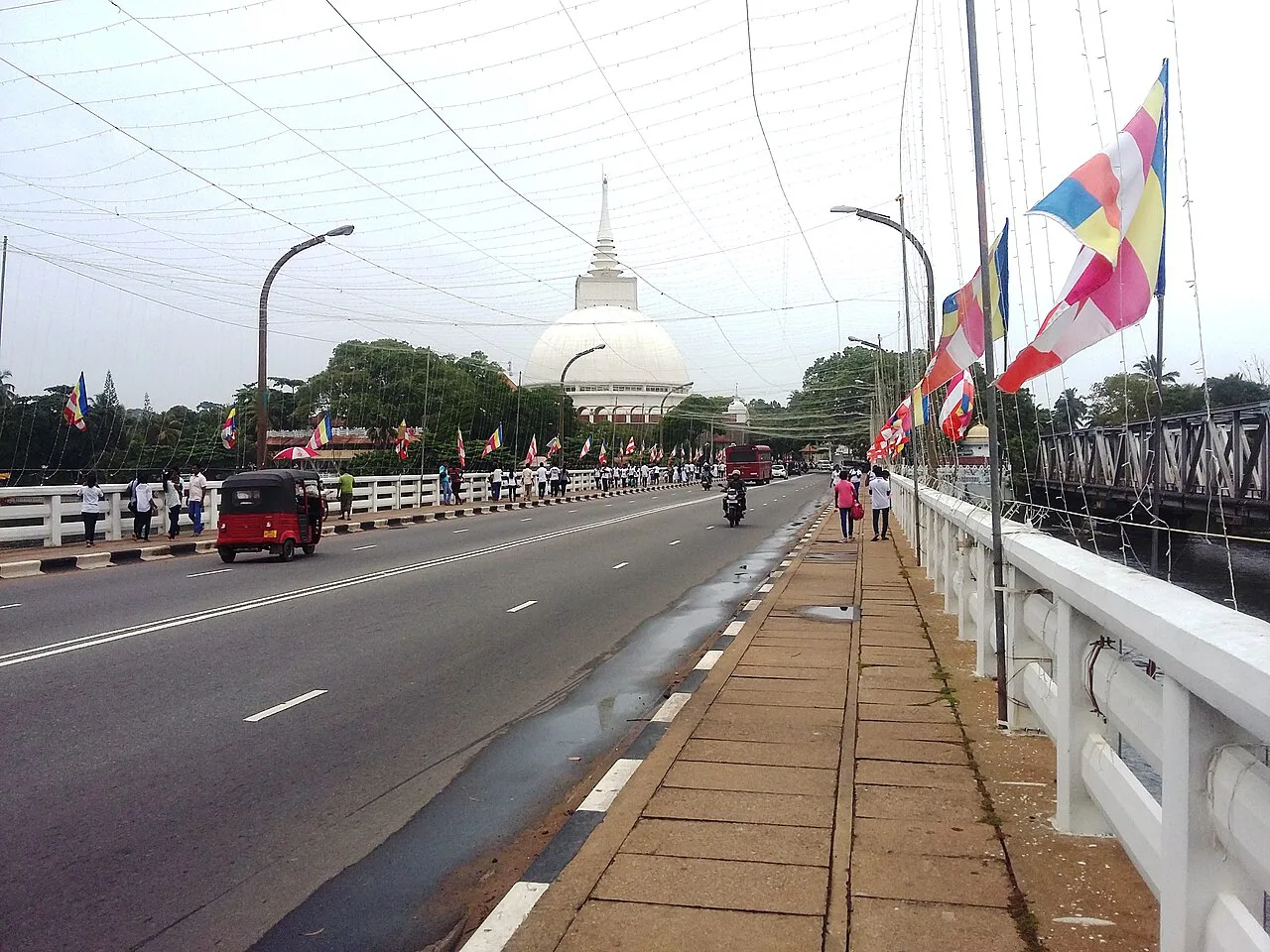
Kalutara, West Coast
Gangatilaka Vihara
Home to the Kalutara Chaitya, widely described as the only hollow Buddhist stupa in the world, its interior walls lined with murals telling the story of the Buddha’s life.
Most Buddhist stupas across Sri Lanka are solid domes, built purely to be venerated from the outside. Gangatilaka Vihara breaks that rule entirely, its Kalutara Chaitya designed with a walkable hollow interior, making it one of the more unusual religious structures anywhere in the Buddhist world.
Quick Facts
| Location | South of Kalutara Bridge, beside the Kalu Ganga River |
| Also known as | Kalutara Chaitya, Kalutara Bodhiya Chaitya |
| Construction began | Foundation laid 1964 |
| Completed | Pinnacle completed January 1974 |
| Distinction | One of the very few, and most often cited as the only, hollow Buddhist stupas in the world |
| Interior feature | Murals depicting the Buddha’s life and Jataka tales |
Commonly searched as: Gangatilaka Vihara · Kalutara Chaitya · hollow stupa Sri Lanka · Kalutara Bodhiya temple · things to do in Kalutara
Restoring a Site of Old Significance
The stupa’s origins are tied to the wider restoration of the Kalutara Bodhiya site during the 20th century. According to local accounts, Sir Cyril de Zoysa, a prominent philanthropist, successfully convinced the government to relocate a government agent’s residence and offices away from the site to land he owned in Nagoda, freeing up the Bodhi tree premises for proper restoration and development. That effort laid the groundwork for the modern stupa: its foundation was laid in 1964, and construction continued for a decade before the pinnacle was finally completed in January 1974.
Rather than replicate the solid, closed dome typical of Sri Lankan dagobas, the project’s designers made the deliberate choice to build the stupa hollow, a genuine architectural departure from centuries of tradition. That decision transformed the structure from something purely observed into something experienced, visitors don’t just circle the stupa, they walk inside it.
What’s Inside
Stepping through the entrance takes visitors into a circular interior chamber beneath the dome, its walls covered in murals depicting scenes from the Buddha’s life alongside Jataka tales, stories of the Buddha’s previous births. The combination of ancient religious storytelling rendered through mid-20th-century craftsmanship gives the interior a genuinely distinctive character, different from either a purely ancient monument or a purely modern building.
Climbing the stairs inside also offers a practical bonus: views out over the surrounding town and the Kalu Ganga River from openings partway up the structure, a perspective simply unavailable at any other stupa in the country.
Why It Matters Beyond the Novelty
It would be easy to treat the hollow stupa as a mere architectural curiosity, but for the Buddhist community it represents something more significant: a symbol of cultural and religious resilience following periods of colonial-era disruption to Buddhist institutions across Sri Lanka. Completing such an ambitious, unconventional structure in the mid-20th century, not long after independence, reflected a broader wave of religious and cultural revival taking place across the newly independent country.
Visiting Tips
- Remove your shoes before entering, as with any active Buddhist shrine.
- Combine with a visit to the adjacent sacred Bodhi tree and the wider Kalutara Bodhiya complex.
- Photography is generally permitted, though be respectful around worshippers and ritual activity.
- Visit at a quieter time of day for a more contemplative experience of the interior murals.
A Rare Case of Modern Innovation Within Ancient Tradition
Sri Lankan Buddhist architecture is generally conservative by design, dagobas across the island, from Anuradhapura‘s ancient giants to countless small village stupas, follow the same basic solid-dome form that has defined the tradition for over two thousand years. Gangatilaka Vihara’s decision to break with that convention in the mid-20th century was genuinely bold, and the fact that the design has not been widely replicated elsewhere suggests just how strong the pull of tradition remains even today. That makes a visit here doubly interesting: it’s both a place of active worship and a rare, tangible example of 20th-century Sri Lankan Buddhist architecture choosing innovation over strict adherence to ancient form, without abandoning the underlying religious purpose the structure was built to serve.
Where It Sits on the Map
Gangatilaka Vihara (Kalutara Chaitya), south of Kalutara Bridge Open in Google Maps ↗
Frequently Asked Questions
Why is the Kalutara Chaitya considered unique?
It’s widely described as the only hollow Buddhist stupa in the world, allowing visitors to walk inside a circular chamber beneath the dome rather than only viewing it from outside.
When was it built?
Its foundation was laid in 1964, with the pinnacle completed in January 1974.
What can visitors see inside?
Murals depicting scenes from the Buddha’s life and Jataka tales (stories of his previous births), covering the interior walls of the hollow chamber.
Is the stupa part of a larger temple complex?
Yes, it sits adjacent to the sacred Bodhi tree of the Kalutara Bodhiya, together forming the wider Gangatilaka Vihara temple complex.
← Sri Lanka: The Complete Guide — see all 258 places by region
Related News
A guide to Sri Lanka's West Coast region, from Kalpitiya to Hikkaduwa: beaches, history, wildlife and travel tips.

A complete guide to Negombo, Sri Lanka: history, the fish market, Dutch canal, churches, and visiting tips near the airport.

A guide to Sri Munneswaram Temple near Chilaw, Sri Lanka: history, the Ramayana legend, festivals, visiting tips and map.













