

Dsigngo is a Graphic Design and Digital Marketing Company.
Write what you are looking for and press enter to begin your search!

Polonnaruwa, Cultural Triangle
Demala Maha Seya
Intended to be the largest stupa in the world, built using Tamil prisoners of war captured during a Sri Lankan king’s invasion of South India, this colossal monument was never actually completed.
Demala Maha Seya’s name translates roughly to ‘Tamil Stupa,’ a direct reference to who actually built it: prisoners of war captured during King Parakramabahu I’s military campaign against the Pandya kingdom in South India, put to work constructing what was meant to be the largest stupa the kingdom had ever seen.
Quick Facts
| Location | Between Gal Vihara and the Tivanka Image House, Polonnaruwa |
| Commissioned by | King Parakramabahu I, following his Pandyan campaign |
| Built by | Tamil prisoners of war |
| Intended scale | 1,300 cubits in circumference, according to the Mahavamsa |
| Current dimensions | About 600 m perimeter, 25.65 m height |
| Status | Never completed; excavation and conservation ongoing since 2014 |
Commonly searched as: Demala Maha Seya · Tamil Stupa Polonnaruwa · Damila Maha Seya · unfinished stupa Sri Lanka · things to do in Polonnaruwa
Built by the Defeated
The Mahavamsa, Sri Lanka’s great chronicle, records that King Parakramabahu I, following a military campaign against the Pandya kingdom in South India, brought back Tamil prisoners of war and put them to work on major building projects, including restoring stupas damaged in earlier invasions and repairing the deteriorated Ruwanwelisaya dagoba at Anuradhapura. Among the projects assigned to this Tamil labour force was an entirely new, deliberately colossal stupa at Polonnaruwa, one the chronicle describes as measuring 1,300 cubits in circumference and intended to be second to none anywhere. That association with its Tamil builders gave the monument its lasting name, Demala Seya, or “Tamil Stupa.”
There’s a genuine historical irony worth noting here: a monument built through the forced labour of a defeated enemy’s soldiers has, over the centuries, come to be seen by some modern observers as an inadvertent symbol of coexistence between different religious and ethnic traditions on the island, even though its actual origins lay in conquest rather than cooperation.
A Monument That Was Never Finished
Despite the scale of ambition behind it, Demala Maha Seya was never completed. The stupa’s current dimensions, a perimeter of around 600 metres and a height of roughly 25.65 metres, represent only a fraction of the 1,300-cubit circumference described in the chronicles, leaving the monument permanently unfinished, whether due to the death of Parakramabahu I, shifting royal priorities, or logistical challenges in a project of this scale. That incomplete state gives Demala Maha Seya a genuinely different character from Polonnaruwa‘s other major stupas, a monument frozen mid-construction rather than a finished religious structure later left to decay.
Ongoing Archaeological Work
Sri Lanka’s Central Cultural Fund began an excavation and conservation project at Demala Maha Seya in 2014, and academic research into the stupa’s construction technology has continued more recently, examining the brickwork and building methods used by its original Tamil workforce nearly nine centuries ago. That ongoing archaeological attention means the site continues to reveal new details about how such an ambitious, ultimately unfinished project was actually carried out.
The stupa’s unfinished state also raises a quieter, harder question about the labour behind it. Chronicles record the achievement in terms of royal ambition, a king commissioning a colossal monument, but say comparatively little about the actual experience of the Tamil prisoners who did the physical work of building it, likely under compulsion rather than choice. Standing before the incomplete brickwork today offers a rare, tangible point of connection to that largely undocumented labour, a monument whose scale speaks to royal power, but whose unfinished state might equally reflect the limits of what forced, unwilling labour could sustain over time.
Visiting Tips
- Combine with a visit to the nearby Gal Vihara and Tivanka Image House, both within easy reach.
- Approach the site with its layered history in mind, a monument built by conquered labour that has since taken on a different, more symbolic meaning over time.
- Look for visible brickwork details that hint at the scale of the original, unrealised construction plan.
- Cycle between sites, the standard way to cover Polonnaruwa’s spread-out archaeological park efficiently.
Where It Sits on the Map
Demala Maha Seya, between Gal Vihara and Tivanka Image House, Polonnaruwa Open in Google Maps ↗
Frequently Asked Questions
Why is it called Demala Maha Seya?
It translates to ‘Tamil Stupa,’ referencing the Tamil prisoners of war captured during King Parakramabahu I’s campaign against the Pandya kingdom, who were put to work constructing it.
Was the stupa ever completed?
No, despite being intended as the largest stupa in the kingdom at 1,300 cubits in circumference according to the Mahavamsa, it was left unfinished at roughly 600 metres perimeter.
When did modern conservation work begin?
Sri Lanka’s Central Cultural Fund began an excavation and conservation project at the site in 2014.
Where is Demala Maha Seya located within Polonnaruwa?
Between Gal Vihara and the Tivanka Image House, within the main archaeological park.
← Sri Lanka: The Complete Guide — see all 258 places by region
Related News
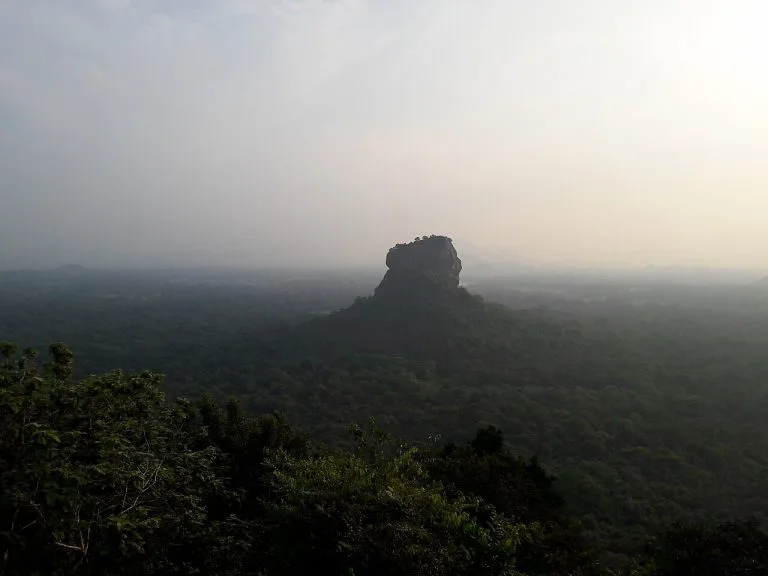
A guide to Sri Lanka's Cultural Triangle: Sigiriya, Polonnaruwa, Anuradhapura, Dambulla and Mihintale, with travel tips.

A complete guide to Sigiriya Rock Fortress: King Kashyapa's parricide, the water gardens, the famous frescoes, visiting tips and map.
A guide to the ancient city of Polonnaruwa: from Chola conquest to Parakramabahu the Great's garden-city, visiting tips and map.













