

Dsigngo is a Graphic Design and Digital Marketing Company.
Write what you are looking for and press enter to begin your search!

Polonnaruwa, Cultural Triangle
Buddha Seema Pasada
Where monks of the Alahana Pirivena monastery gathered to formally recite the codes of monastic discipline, a chapter house whose very name reflects its specific ceremonial function within Polonnaruwa’s Buddhist community.
Not every building at Polonnaruwa was designed to house a Buddha statue or enshrine a relic. Buddha Seema Pasada, also recorded as Baddhasima Prasada, served a specifically administrative and disciplinary function within the monastic community: a chapter house where monks formally gathered to recite the rules governing their conduct.
Quick Facts
| Location | Within the Alahana Pirivena monastic complex, Polonnaruwa |
| Also known as | Baddhasima Prasada |
| Sinhala/Pali function name | Pohoyageya or Uposathagharaya (Chapter House) |
| Purpose | Recitation of the Patimokkha, the code of monastic discipline |
| Era | 12th century, associated with Parakramabahu I’s monastic reforms |
| Context | Part of the wider Alahana Pirivena teaching and training complex |
Commonly searched as: Buddha Seema Pasada · Baddhasima Prasada Polonnaruwa · Alahana Pirivena chapter house · Polonnaruwa monastic buildings · things to do in Polonnaruwa
A Building for Monastic Discipline, Not Devotion
Most of Polonnaruwa‘s famous monuments, the Gal Vihara statues, the Rankoth stupa, Lankatilaka’s giant Buddha, served devotional purposes, places where worshippers came to venerate images and relics. Buddha Seema Pasada functioned differently: as the Uposathagharaya, or chapter house, of the monks attached to the Alahana Pirivena monastery, it existed specifically to host the Patimokkha, a formal, periodic recitation of the rules of monastic conduct that Buddhist monks are bound to follow. That distinction matters for understanding Polonnaruwa as more than a collection of religious monuments, the city also functioned as a genuine centre of organised monastic training and discipline, with buildings dedicated to the practical administration of religious life alongside its more visually spectacular devotional architecture.
Formal recitation of the Patimokkha was, and remains today in Theravada Buddhist practice, a genuinely important ritual obligation, typically held on full moon and new moon days, during which the assembled monastic community collectively reaffirms its commitment to the rules governing communal life. Having a purpose-built structure dedicated to this specific ceremony, rather than making do with a general-purpose hall, signals just how seriously the Alahana Pirivena community, and by extension King Parakramabahu’s broader religious reforms, took the formal discipline underpinning monastic life.
The chapter house’s construction is generally associated with the wider building and religious reform programme carried out under King Parakramabahu I in the 12th century, a period that saw the king actively work to unify Sri Lanka’s Buddhist monastic orders and restore stricter standards of discipline after a period of decline, making a dedicated space for formal disciplinary recitation a genuinely meaningful addition to his broader monastic infrastructure.
Part of a Working Monastic Campus
Buddha Seema Pasada sits within the Alahana Pirivena, a large monastic teaching complex that also includes Lankatilaka Vihara and Rankoth Vihara, together forming what functioned as a genuine campus for Buddhist education and monastic life during Polonnaruwa’s golden age, rather than a series of isolated, unrelated religious buildings.
That campus-like organisation, teaching halls, devotional shrines, and administrative chapter houses all sited within walking distance of one another, mirrors monastic university complexes found elsewhere in the medieval Buddhist world, from Nalanda in India to comparable institutions across Southeast Asia. Understanding Buddha Seema Pasada’s specific role within that broader layout helps explain why Alahana Pirivena functioned as such a significant centre of Buddhist learning during Parakramabahu’s reign, not merely a collection of impressive individual monuments but a genuinely integrated institution for training and disciplining Sri Lanka’s monastic community.
Visiting Tips
- Visit as part of a wider tour of the Alahana Pirivena complex, alongside Lankatilaka and Rankoth Vihara.
- Consider the building’s specific administrative and disciplinary function as a useful contrast to Polonnaruwa’s more devotionally focused monuments.
- Cycle between the complex’s various structures, the most efficient way to explore this section of the site.
- Bring sun protection, given the largely open, exposed nature of this part of the archaeological park.
Where It Sits on the Map
Buddha Seema Pasada, Alahana Pirivena, Polonnaruwa Open in Google Maps ↗
Frequently Asked Questions
What was Buddha Seema Pasada used for?
It served as the chapter house (Uposathagharaya) for monks of the Alahana Pirivena monastery, where they formally recited the Patimokkha, the code of monastic discipline.
How is it different from Polonnaruwa’s other major monuments?
Unlike devotional structures built to house Buddha statues or relics, it served an administrative and disciplinary function within the monastic community.
When was it built?
Associated with the 12th-century building and monastic reform programme carried out under King Parakramabahu I.
What complex is it part of?
The Alahana Pirivena, a large monastic teaching complex that also includes Lankatilaka Vihara and Rankoth Vihara.
← Sri Lanka: The Complete Guide — see all 258 places by region
Related News
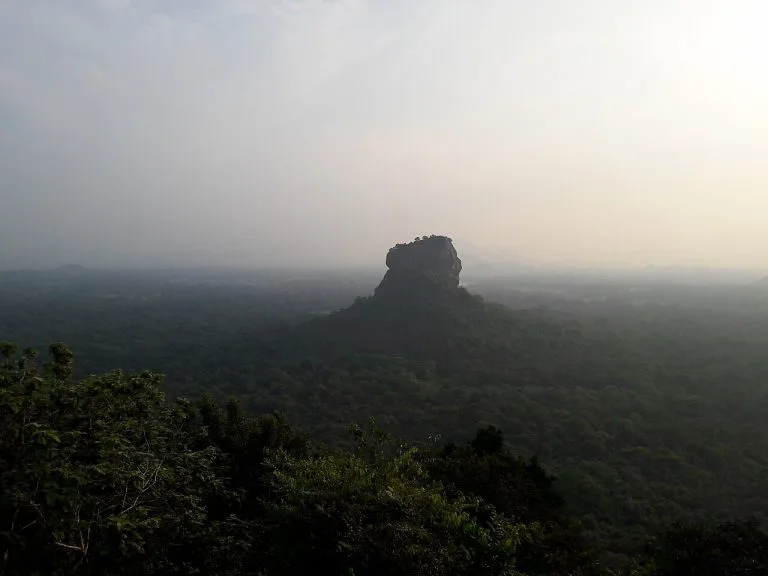
A guide to Sri Lanka's Cultural Triangle: Sigiriya, Polonnaruwa, Anuradhapura, Dambulla and Mihintale, with travel tips.

A complete guide to Sigiriya Rock Fortress: King Kashyapa's parricide, the water gardens, the famous frescoes, visiting tips and map.
A guide to the ancient city of Polonnaruwa: from Chola conquest to Parakramabahu the Great's garden-city, visiting tips and map.













