

Dsigngo is a Graphic Design and Digital Marketing Company.
Write what you are looking for and press enter to begin your search!

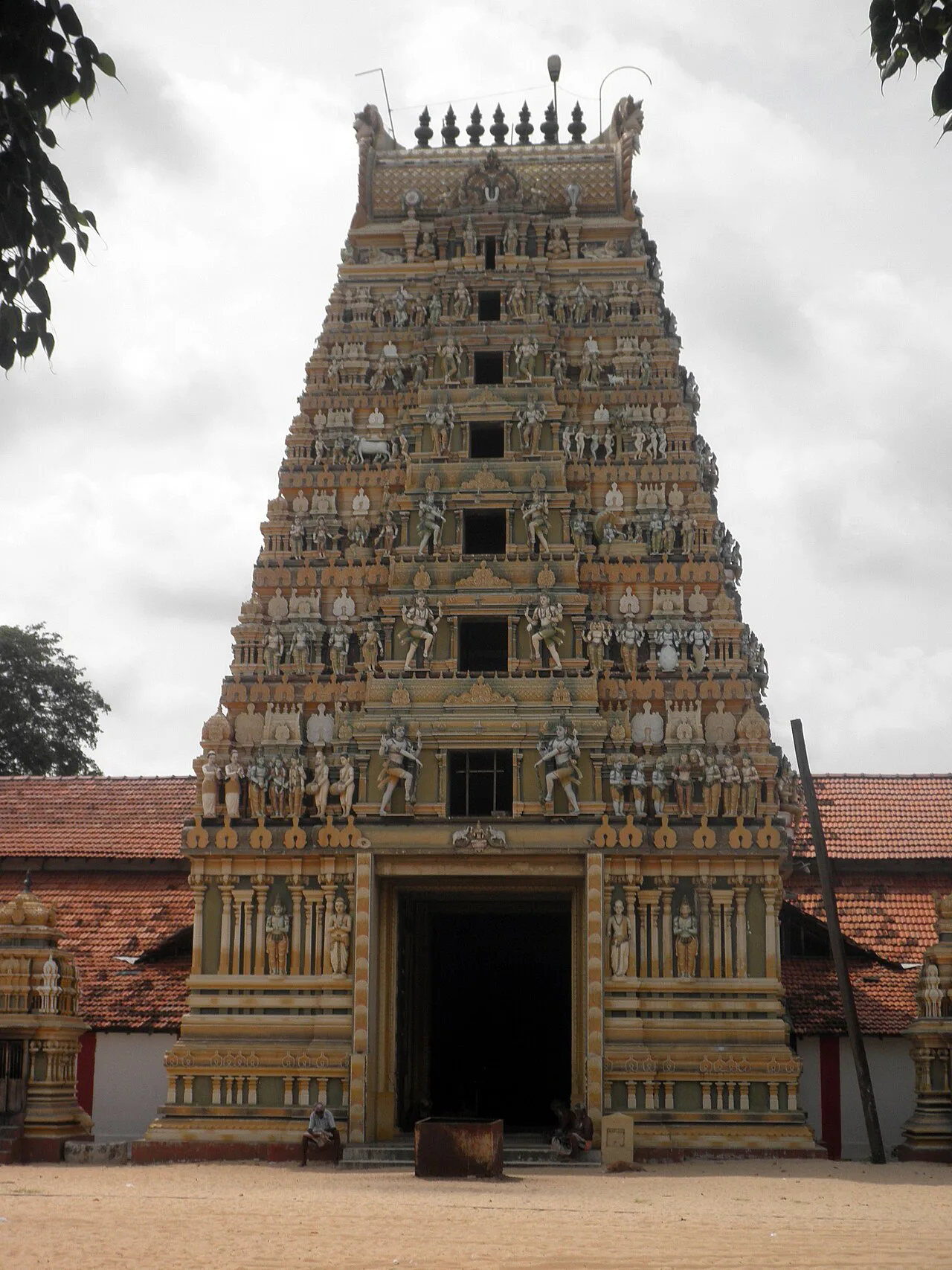
Jaffna Peninsula, The North
Vallipuram
A tiny gold plate, barely the size of a bookmark, unearthed beneath a Hindu temple’s foundation in 1936, became one of the most historically significant, and politically contested, artefacts ever found in northern Sri Lanka.
Vallipuram’s Tamil name means ‘Sandy City,’ a fitting description for a site now largely surrounded by dunes, yet whose modest ruins have yielded two of the most significant, and most debated, archaeological finds anywhere on the Jaffna Peninsula.
Quick Facts
| Location | Near Point Pedro, Vadamarachchi Division, Jaffna District |
| Name meaning | ‘Sandy City’ |
| Key find 1 | The Vallipuram Gold Plate, discovered 1936, dated to King Vasabha’s reign (c. 67-111 CE) |
| Key find 2 | An Amaravati-style limestone Buddha statue, unearthed 1902 |
| Buddha statue’s fate | Gifted by the British Governor to the King of Siam in 1906 |
| Earliest recorded ruler mentioned | A local ruler named Azhagiri/Isigirayan, per the gold inscription |
Commonly searched as: Vallipuram · Vallipuram Gold Plate · Vallipuram Buddha statue · ancient Jaffna archaeology · things to do in Jaffna
A Gold Plate Found Beneath a Temple Floor
In 1936, workers digging the foundation of an ancient structure adjacent to Vallipuram’s Vishnu Kovil unearthed a small gold sheet, roughly 3½ inches long, weighing just 69.5 grains, that would go on to become one of the most historically significant inscriptions ever found in Sri Lanka. Written in early Sinhala using Brahmi script, the inscription records the construction of a Buddhist vihara at a place called Badakara Atana, commissioned by a person named Piyaguka Tissa while the minister Isigirayan governed the region of Nagadipa, all dated to the reign of King Vasabha, who ruled from roughly 67 to 111 CE. The gold plate is now preserved in the Anuradhapura Gallery of the Colombo National Museum.
That inscription, along with a separately discovered Nelugala stone inscription referencing a local ruler named Azhagiri, has been cited by some historians as evidence that Sinhalese rule extended into the Jaffna region during the pre-Christian and early Common Era period, under the broader authority of Anuradhapura. That interpretation, and the scholarly translation work behind it led by archaeologist Senarath Paranavitana, has proven genuinely controversial, drawn directly into wider, unresolved debates about Sri Lanka’s ancient ethnic and political history, debates that remain sensitive and actively contested to this day.
A Buddha Statue’s Unlikely Journey to Thailand
Vallipuram’s second major find came decades earlier, in 1902, when a finely carved limestone Buddha statue in the Amaravati sculptural style, associated with ancient Andhra Pradesh in India, was unearthed roughly 50 yards northeast of the Vishnu Kovil. The statue sat largely forgotten in the temple’s storage room until 1902, when it was set up publicly under a Bo tree in Jaffna. Then, in a genuinely unusual turn, British Governor Sir Henry Blake presented the statue as a gift to the King of Siam in 1906, at the Siamese king’s own particular request, given the statue’s archaic, historically significant style. That gift effectively removed the statue from Sri Lanka entirely, and for close to 90 years afterward, it went largely unseen and unremarked upon by the Tamil and Sinhalese communities who might otherwise have claimed a connection to it, its whereabouts in Thailand only more recently rediscovered by researchers.
A Site of Genuine but Understated Ruins
Beyond its two headline discoveries, Vallipuram’s wider archaeological record includes funerary urns, ancient bricks, pottery, coins, and traces of what may once have been a fortress structure, physical evidence of a settlement with genuine antiquity, even though today the site sits quietly amid sand dunes, difficult to imagine as the once-significant settlement its finds suggest it was.
Visiting Tips
- Visit the adjacent Vishnu Kovil (Thunnalai Sri Vallipura Aalvar Kovil) to see the site’s active religious life alongside its archaeological history.
- Approach the site’s contested historical interpretations with genuine curiosity rather than assuming a single settled narrative.
- Combine with nearby Point Pedro and Manalkadu Desert, both a short distance away.
- Set modest expectations for visible ruins on-site, since the area’s most significant finds are now held in museums or, in the Buddha statue’s case, in Thailand.
Where It Sits on the Map
Vallipuram, Vadamarachchi Division, Jaffna District Open in Google Maps ↗
Frequently Asked Questions
What is the Vallipuram Gold Plate?
A small gold inscription discovered in 1936 near the Vishnu Kovil, dated to the reign of King Vasabha (c. 67-111 CE), recording the construction of a Buddhist vihara in the region.
Why is the gold plate historically significant and contested?
It has been cited as evidence of Sinhalese rule over the Jaffna region in antiquity, an interpretation that remains genuinely debated and sensitive within Sri Lanka’s wider historical and ethnic discourse.
What happened to the Vallipuram Buddha statue?
Discovered in 1902 near the Vishnu Kovil, it was gifted by British Governor Sir Henry Blake to the King of Siam in 1906 and remains in Thailand today.
What does the name Vallipuram mean?
‘Sandy City,’ reflecting the dune-covered landscape now surrounding the site.
← Sri Lanka: The Complete Guide — see all 258 places by region
Related News
A guide to Jaffna and Sri Lanka's Northern Province: a four-century Tamil kingdom, colonial layers, post-war recovery, visiting tips and map.
A guide to the Jaffna Peninsula: its temples, ancient sites, beaches and colonial heritage, spanning Jaffna city and its surrounding villages.
A guide to Jaffna city: capital of a 400-year Tamil kingdom, its library's destruction and rebirth, post-war recovery, visiting tips and map.













