

Dsigngo is a Graphic Design and Digital Marketing Company.
Write what you are looking for and press enter to begin your search!

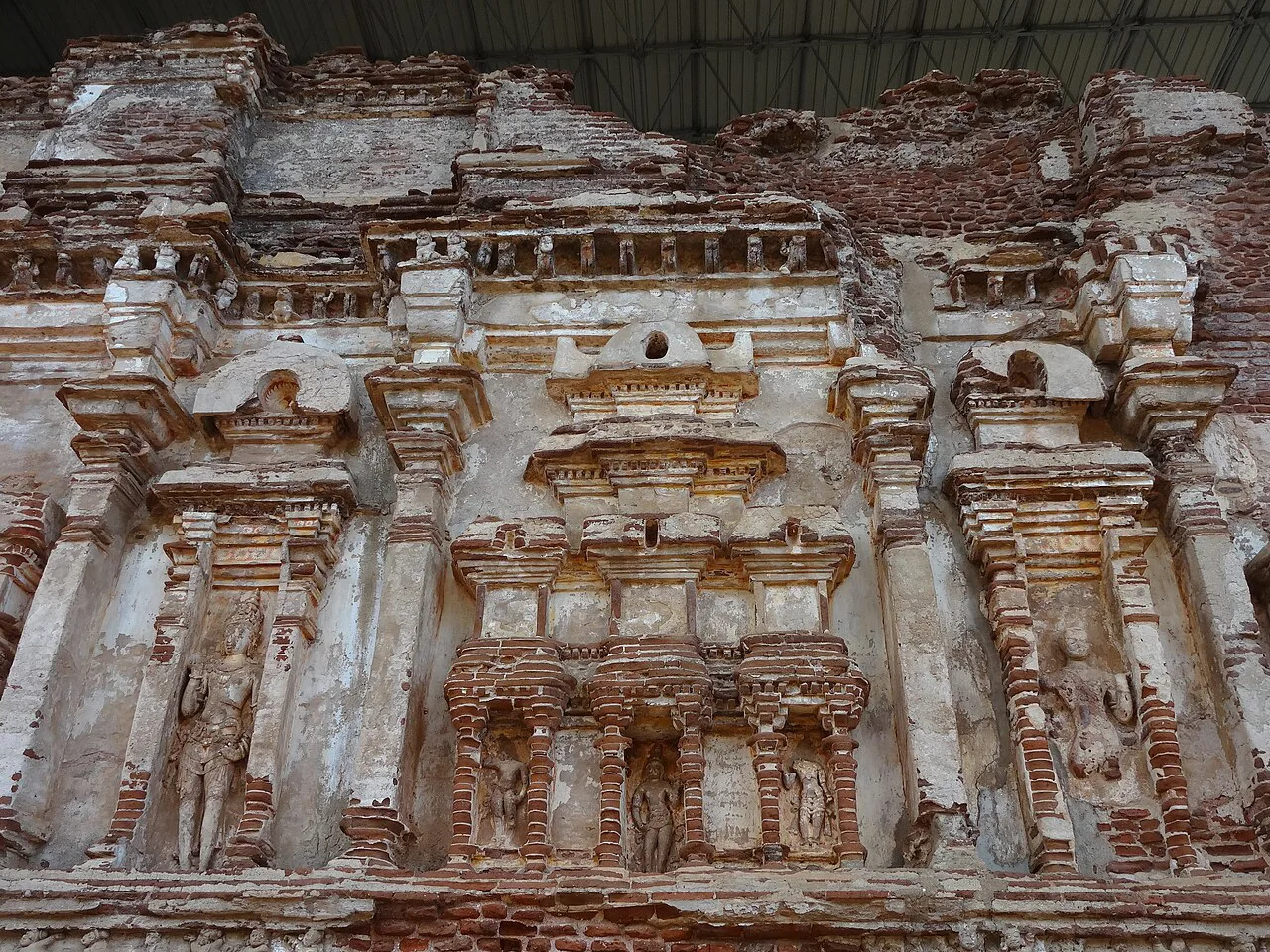
Polonnaruwa, Cultural Triangle
Tivanka Patamaghara
Of every structure within Polonnaruwa’s sprawling archaeological park, only this one still holds its original wall paintings in place, a genuinely rare survival from the 12th and 13th centuries.
Tivanka means ‘thrice bent,’ referring to the unusual, gently curved posture of the standing Buddha image once housed here, a pose bending at the neck, waist and knee simultaneously, more commonly reserved for female statues elsewhere in South Asian art.
Quick Facts
| Location | Northern end of Polonnaruwa’s main archaeological road, near the Lotus Pond |
| Also known as | Tivanka Pilimage, and, in colonial-era literature, the ‘Northern Temple’ |
| Style | Prasada-style brick shrine |
| Built | Polonnaruwa period, roughly 12th to 13th centuries CE |
| Attributed to | King Parakramabahu I or Parakramabahu III, according to different scholarly accounts |
| Significance | The only structure at Polonnaruwa retaining original wall paintings in situ |
Commonly searched as: Tivanka Image House · Thivanka Pilimage Polonnaruwa · Polonnaruwa murals · Polonnaruwa frescoes · things to do in Polonnaruwa
The Last Surviving Murals of Polonnaruwa
Nineteenth and early 20th-century archaeologists, including H.C.P. Bell, who referred to the building as the “Northern Temple,” documented Tivanka as functioning as the image house of the Jetavanaramaya Monastery, built during the reign of King Parakramabahu I, though some scholars attribute its construction, or at least a significant restoration, to the later King Parakramabahu III instead. Whichever king is ultimately responsible, what makes Tivanka genuinely irreplaceable among Polonnaruwa‘s many ruins is straightforward: it’s the only surviving structure in the entire archaeological park that still retains recognisable traces of its original interior wall paintings.
That distinction alone would justify the building’s fame, but the murals themselves are also artistically significant in their own right, depicting scenes from the Buddha’s past lives (Jataka tales), including illustrations of the Sasa, Temiya, Ummagga and Vidhura Jataka stories, alongside a striking depiction of “The Descent from Tusita Heaven,” showing the Buddha descending a staircase accompanied by the gods Brahma and Indra after preaching to his mother.
A Different Kind of Sacred Art
Beyond their formal religious subject matter, the Tivanka frescoes show a genuinely different artistic register from much of Polonnaruwa’s other surviving sculpture. Rather than focusing purely on celestial or idealised imagery, the paintings depict ordinary life and landscape alongside scenes of religious perfection, rendered in pale green, light yellow and dark red pigments across the plastered walls, with decorative flourishes including painted lions and dwarf figures. Some sections of paint date from a later restoration effort under Parakramabahu III, while other fragments are considerably older, meaning the murals visible today likely represent more than one distinct period of artistic work layered across the centuries.
The Thrice-Bent Buddha
The building’s name derives from the large standing Buddha image it once housed, depicted in the Tivanka, or “thrice-bent,” posture, curving gently at the neck, waist and knees simultaneously. That triple-flexed stance is a pose typically associated with depictions of female figures in South Asian sculptural tradition, making its application to a Buddha image here a notable and somewhat unusual artistic choice.
That stylistic choice speaks to the genuine artistic experimentation happening within Polonnaruwa’s religious art during this period, craftsmen and patrons willing to adapt conventions from elsewhere in the sculptural tradition to create something distinctive, rather than simply replicating established Buddha postures. Combined with the building’s unmatched mural survival, Tivanka offers a rare, layered window into both the formal religious iconography and the everyday visual culture of 12th and 13th-century Sri Lanka, information that has largely been lost everywhere else across the wider Polonnaruwa site.
Visiting Tips
- Photography is generally not permitted inside, given the fragility of the surviving original murals; respect this restriction.
- Never use flash photography near the paintings even where photography is otherwise allowed, since flash can accelerate pigment degradation over time.
- Combine with nearby Rankoth Vihara, Gal Vihara, and Kiri Vihara, all within easy cycling distance in Polonnaruwa’s northern precinct.
- Take time to look for the different painting styles and eras layered within the murals, a detail easy to miss without pausing.
Where It Sits on the Map
Tivanka Image House, northern Polonnaruwa archaeological park Open in Google Maps ↗
Frequently Asked Questions
Why is the Tivanka Image House significant?
It’s the only structure in Polonnaruwa’s archaeological park that retains original wall paintings in situ, making it a uniquely important survival of medieval Sri Lankan mural art.
What does ‘Tivanka’ mean?
‘Thrice bent,’ referring to the triple-flexed posture, at the neck, waist and knee, of the standing Buddha image once housed inside.
What do the surviving murals depict?
Scenes from the Buddha’s past lives (Jataka tales), including the Sasa, Temiya, Ummagga and Vidhura stories, alongside a depiction of the Buddha’s descent from Tusita Heaven.
Can visitors take photographs inside?
No, photography is generally not permitted, given the fragility of the surviving original wall paintings.
← Sri Lanka: The Complete Guide — see all 258 places by region
Related News
A guide to Sri Lanka's Cultural Triangle: Sigiriya, Polonnaruwa, Anuradhapura, Dambulla and Mihintale, with travel tips.

A complete guide to Sigiriya Rock Fortress: King Kashyapa's parricide, the water gardens, the famous frescoes, visiting tips and map.
A guide to the ancient city of Polonnaruwa: from Chola conquest to Parakramabahu the Great's garden-city, visiting tips and map.













