

Dsigngo is a Graphic Design and Digital Marketing Company.
Write what you are looking for and press enter to begin your search!

Matale, Cultural Triangle
Sri Muthumariamman Thevasthanam
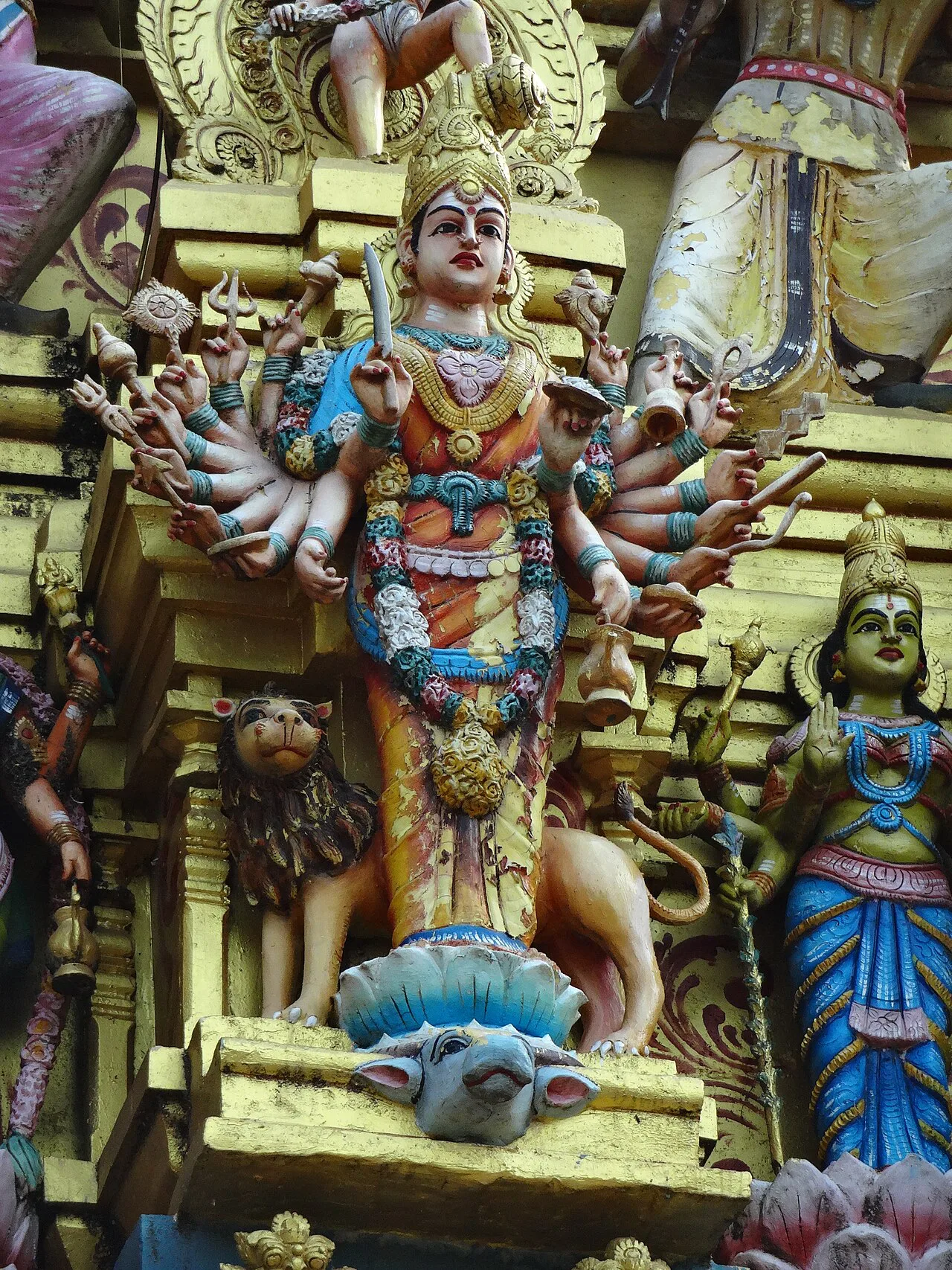
What began as a single small statue beneath a tree, prayed to by South Indian labourers who’d settled in Matale, has grown into a temple with one of Sri Lanka’s largest gopuram towers and 1,008 sculpted deities.
Sri Muthumariamman Thevasthanam’s name breaks down neatly into its meaning: ‘muthu’ for pearl, ‘mari’ for rain, and ‘amman’ for mother, a temple dedicated to the goddess of rain and fertility that has grown, over roughly 170 years, from a single roadside statue into one of Sri Lanka’s most visually striking Hindu shrines.
Quick Facts
| Location | Central Matale town |
| Deity | Mariamman, goddess of rain and fertility |
| Land gifted | 1852, originally part of a paddy field |
| Temple built | 1874, funded by the Nattukkottai Chettiar community |
| Gopuram height | About 108 ft (33 m), one of the largest in Sri Lanka, completed 2007 |
| Notable feature | 1,008 statues of Hindu deities |
Commonly searched as: Sri Muthumariamman Thevasthanam · Muthumariamman Temple Matale · Matale Hindu temple · Matale gopuram · things to do in Matale
From a Single Statue to a Landmark Temple
The site’s earliest history was genuinely humble: local tradition holds that a small statue stood beneath a tree on what was then paddy field land, visited informally by South Indian immigrant labourers who had settled in Matale in search of work, drawn to worship Mariamman as their community grew around the town’s spice trade and colonial-era economy. In 1852, the landowner formally gifted the site for religious use, and by 1874, with support from the Nattukkottai Chettiar merchant community and around 100 designers, painters and architects brought from Tamil Nadu, a proper temple structure had been built, led by sculptor Nagalingam and his son Ramanath.
That growth from an informal roadside shrine to a fully realised temple complex reflects the broader story of Tamil communities establishing permanent religious institutions across colonial Ceylon, often starting with modest devotional practices that only later, as communities stabilised and grew more prosperous, attracted the resources needed for grander architecture.
A Temple for Both Hindus and Buddhists
One of the temple’s more notable characteristics is its dual religious significance: while Hindus worship here as devotees of Mariamman, Buddhists in the area venerate the same site as sacred to Pattini, the patron deity of fertility and health within Sinhalese Buddhist tradition, a genuine example of shared devotional space between Sri Lanka’s two major religious communities rather than a site exclusive to one tradition.
Damaged in 1983, Rebuilt by the Community
The temple suffered serious damage during the anti-Tamil riots of July 1983, one of the darkest episodes in modern Sri Lankan history, known as Black July. Rather than remaining damaged, the temple was subsequently restored through community effort, and its most visually dominant feature today, the 108-foot Raja Koburum gopuram tower above the northern entrance, decorated with 1,008 sculpted Hindu deities, was completed as recently as 2007 at a cost of roughly Rs. 150 million, a genuinely significant investment reflecting the temple’s continued importance to Matale’s community.
Visiting Tips
- Visit during the annual Masi Mahotsava or chariot festival period (February/March) for the temple at its most vivid and active.
- Photograph the gopuram tower from the street for the best full view of its intricate carved figures.
- Dress modestly and remove shoes before entering the temple grounds.
- Combine with a visit to Matale’s central market and spice gardens, all within a short walk or drive.
Where It Sits on the Map
Sri Muthumariamman Thevasthanam, central Matale Open in Google Maps ↗
Frequently Asked Questions
What does the temple’s name mean?
‘Muthu’ means pearl, ‘mari’ means rain, and ‘amman’ means mother in Tamil, reflecting its dedication to Mariamman, goddess of rain and fertility.
How did the temple begin?
As a single small statue under a tree on paddy field land, worshipped informally by South Indian immigrant labourers, before the land was gifted in 1852 and a formal temple built in 1874.
Is the temple significant to Buddhists as well as Hindus?
Yes, Buddhists venerate the same site as sacred to Pattini, the patron deity of fertility and health in Sinhalese tradition, making it a shared devotional space.
What happened to the temple in 1983?
It suffered serious damage during the anti-Tamil riots of July 1983 (Black July), but was subsequently restored by the community, with its landmark gopuram tower completed in 2007.
← Sri Lanka: The Complete Guide — see all 258 places by region
Related News
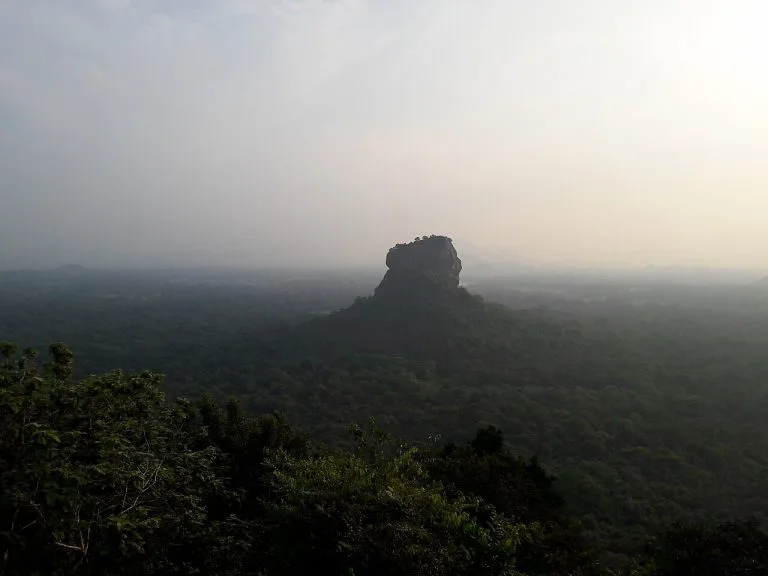
A guide to Sri Lanka's Cultural Triangle: Sigiriya, Polonnaruwa, Anuradhapura, Dambulla and Mihintale, with travel tips.

A complete guide to Sigiriya Rock Fortress: King Kashyapa's parricide, the water gardens, the famous frescoes, visiting tips and map.
A guide to the ancient city of Polonnaruwa: from Chola conquest to Parakramabahu the Great's garden-city, visiting tips and map.













