

Dsigngo is a Graphic Design and Digital Marketing Company.
Write what you are looking for and press enter to begin your search!

Anuradhapura, Cultural Triangle
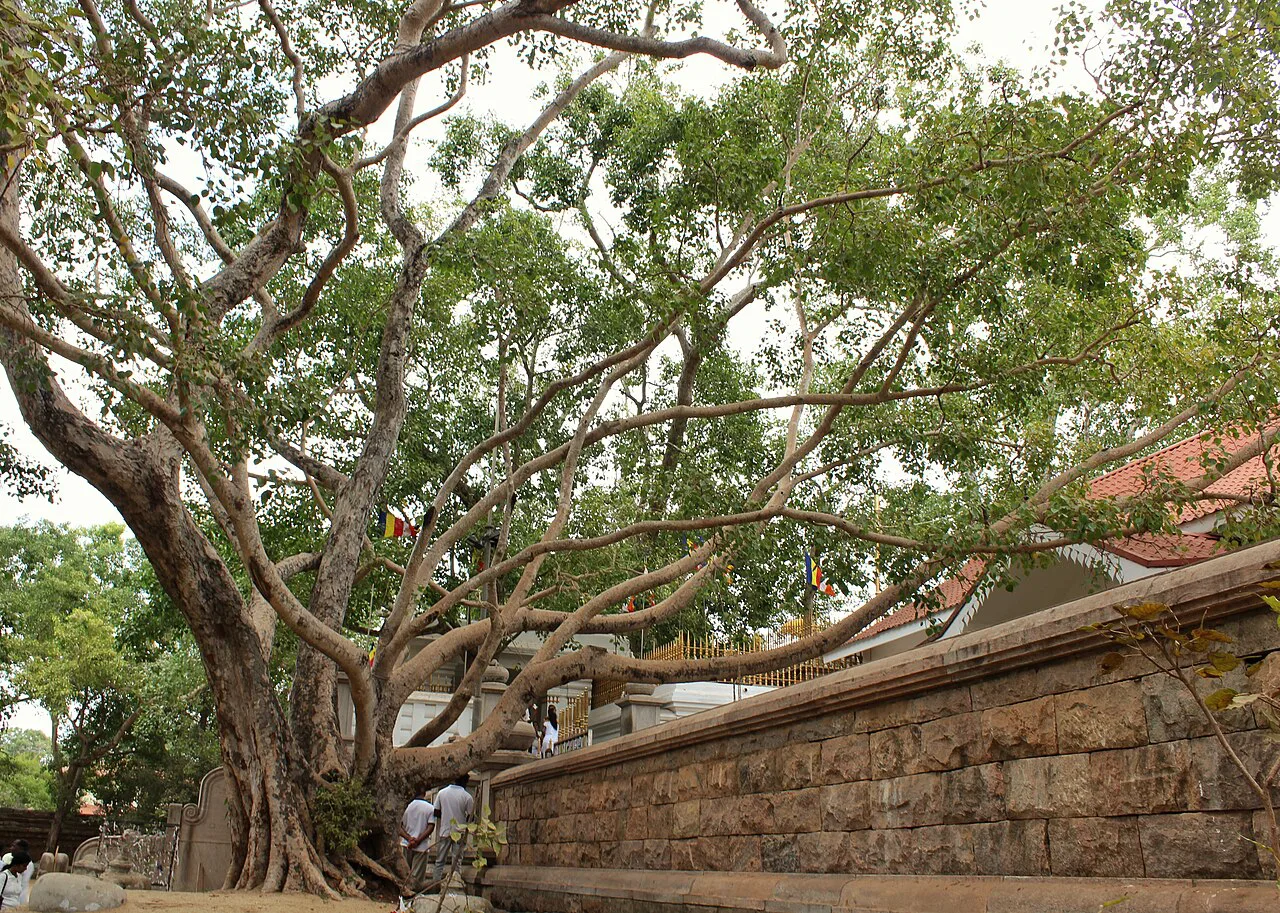
Sri Maha Bodhi
Planted in 288 BCE from a cutting of the very tree the Buddha sat beneath when he achieved enlightenment, this fig tree has been continuously tended by an unbroken line of guardians for well over two thousand years.
While the original Bodhi tree at Bodh Gaya, India, has been destroyed and replanted multiple times over the centuries, its cutting in Sri Lanka has survived, tended without interruption, making the Sri Maha Bodhi arguably the closest living, authenticated connection to the Buddha’s own enlightenment anywhere in the world.
Quick Facts
| Location | Mahamevnawa Park, Anuradhapura |
| Planted | 288 BCE, by King Devanampiya Tissa |
| Brought by | Princess Sangamitta, daughter of Emperor Ashoka |
| Origin | A cutting from the Bodhi tree at Bodh Gaya, India |
| Status | The oldest historically documented tree in the world |
| Best visiting time | Poya (full moon) days, or sunset |
Commonly searched as: Sri Maha Bodhi · Jaya Sri Maha Bodhi · oldest tree in the world · Anuradhapura sacred fig tree · things to do in Anuradhapura
A Direct Cutting From the Buddha’s Own Tree
According to Sri Lankan chronicle tradition, when the Buddha attained enlightenment at Bodh Gaya, India, seated beneath a fig tree (Ficus religiosa), that same tree eventually produced the sapling that made its way to Sri Lanka. In 288 BCE, Princess Sangamitta, daughter of the Indian emperor Ashoka and sister of Mahinda, the monk who had earlier brought Buddhism to the island, carried a cutting from the sacred tree across to Anuradhapura. King Devanampiya Tissa received it with what the chronicles describe as genuine astonishment and reverence, planting it in the Mahamegha Vana royal park on a specially prepared high terrace, where it has stood, continuously tended, ever since.
That continuity carries real historical weight given what happened to the original tree back in India. The Bodh Gaya tree was destroyed within half a century by King Pushyamitra Shunga during a period of Buddhist persecution, and a replacement, possibly itself a scion of the original, was destroyed again in the early 7th century CE by King Sassanka. The tree standing at Bodh Gaya today was planted only in 1881, by British archaeologist Alexander Cunningham, meaning its own lineage back to the Buddha’s original tree is genuinely uncertain. That uncertainty is precisely why the Anuradhapura tree, with its unbroken, well-documented history, has come to be regarded by many Buddhists as the most authentic living link to the Buddha’s enlightenment anywhere in the world.
Continuously Protected Across Two Millennia
Successive Sri Lankan kings invested in protecting and honouring the tree across the centuries. King Vasabha, in the 1st century CE, placed four Buddha statues around its base; King Voharika Tissa added metallic statues in the 3rd century; King Mahanaga constructed a protective water canal in the 6th century; and the wall still surrounding the tree today was built under the direction of a thero during King Kirti Sri Rajasinha’s reign in the 18th century. Historically, the tree was also protected by wild elephants and kept constantly watered, according to chronicle accounts.
Even with that sustained protection, the tree hasn’t been entirely immune to loss: it shed two branches to storms in 1907 and 1911, and one branch was stolen in 1929. During Sri Lanka’s civil war, in 1985, the site itself became a target when militants attacked the sacred city, underscoring just how significant a symbol the tree remains, for better and occasionally for worse, within Sri Lanka’s national and religious identity.
Eight Original Saplings
According to the Mahavamsa, when the original cutting was planted, it miraculously produced eight shoots that grew into young Bodhi trees in their own right. These saplings were distributed to other significant sites across the island, including Jambukola, the Thuparama, Issurumuniya, and several other locations, meaning the Sri Maha Bodhi’s lineage effectively seeded a wider network of sacred trees across ancient Sri Lanka.
Visiting Tips
- Visit at sunset for a particularly atmospheric experience, or on a Poya (full moon) day to see the site at its most devotionally active.
- Note that entry to Sri Maha Bodhi requires a separate ticket from the general Anuradhapura Cultural Heritage Ticket.
- Dress modestly, covering shoulders and knees, and remove shoes before entering the terrace area.
- Watch devotees waiting patiently for a leaf to fall, a small but genuinely moving detail of daily devotion at the site.
Where It Sits on the Map
Sri Maha Bodhi, Mahamevnawa Park, Anuradhapura Open in Google Maps ↗
Frequently Asked Questions
Why is Sri Maha Bodhi considered the oldest documented tree in the world?
It has a continuous, recorded history of care stretching back to its planting in 288 BCE, unlike the original tree at Bodh Gaya, India, which was destroyed and replanted multiple times over the centuries.
Who brought the tree to Sri Lanka?
Princess Sangamitta, daughter of the Indian emperor Ashoka, carried a cutting from the Buddha’s original enlightenment tree at Bodh Gaya to Anuradhapura in 288 BCE.
Is there a separate entry fee for Sri Maha Bodhi?
Yes, it requires a separate ticket from the main Anuradhapura Cultural Heritage Ticket, along with Issurumuniya.
What happened to the tree during Sri Lanka’s civil war?
In 1985, the sacred city, including the area around the tree, was targeted in an attack by militants, reflecting the site’s deep symbolic significance.
← Sri Lanka: The Complete Guide — see all 258 places by region
Related News
A guide to Sri Lanka's Cultural Triangle: Sigiriya, Polonnaruwa, Anuradhapura, Dambulla and Mihintale, with travel tips.

A complete guide to Sigiriya Rock Fortress: King Kashyapa's parricide, the water gardens, the famous frescoes, visiting tips and map.
A guide to the ancient city of Polonnaruwa: from Chola conquest to Parakramabahu the Great's garden-city, visiting tips and map.













