

Dsigngo is a Graphic Design and Digital Marketing Company.
Write what you are looking for and press enter to begin your search!

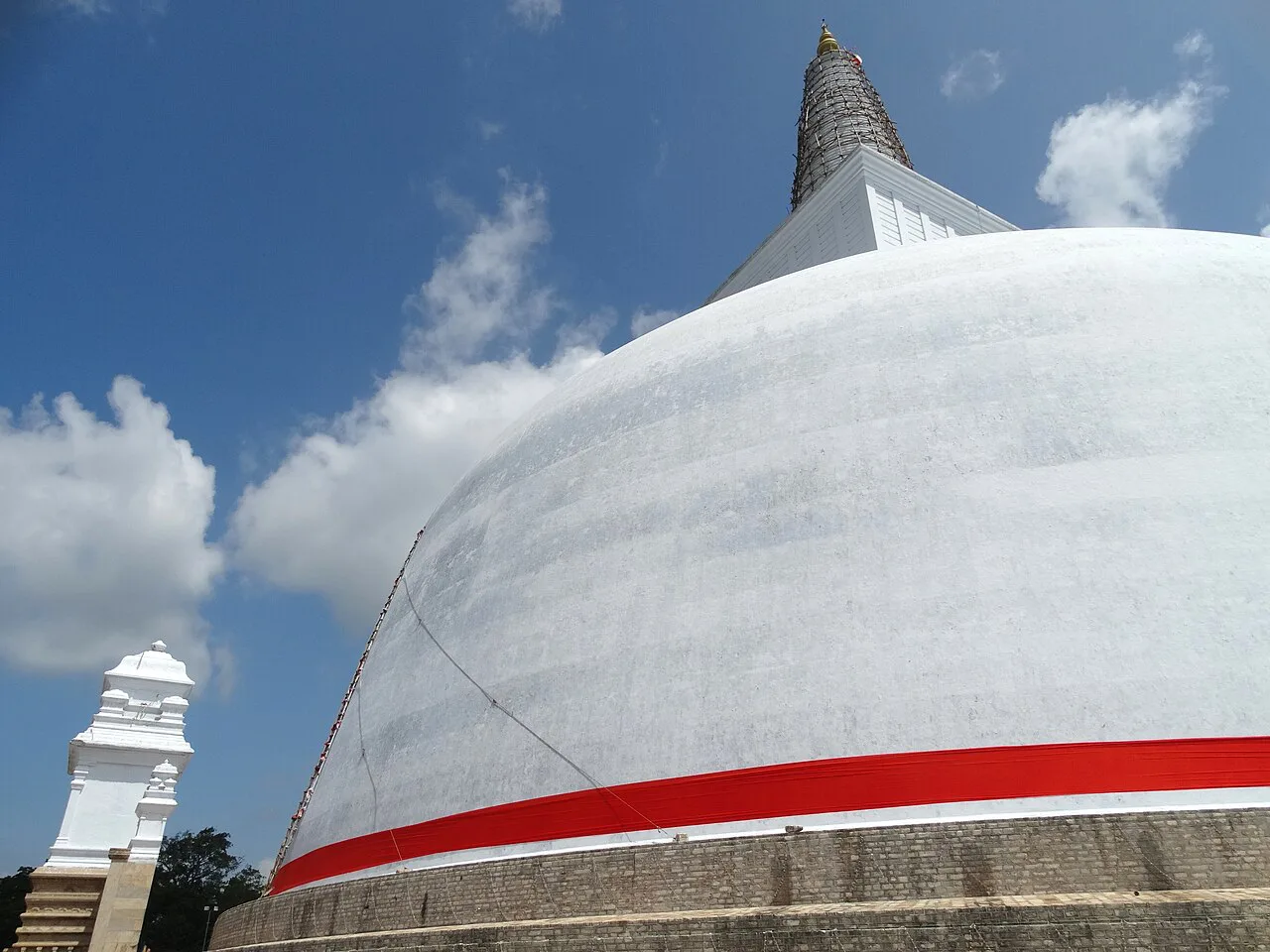
Anuradhapura, Cultural Triangle
Ruwanwelisaya Dagoba
King Dutugemunu fell ill before his great stupa was finished, so his brother draped white cloth over the unfinished dome and built a bamboo spire, letting the dying king believe his life’s work was complete.
After defeating the Tamil king Elara in single combat and unifying Sri Lanka under Sinhalese rule, King Dutugemunu turned his warrior’s energy toward a very different kind of conquest: building a stupa so ambitious it would take engineering techniques centuries ahead of their time to keep the structure from simply sinking into the ground.
Quick Facts
| Location | Central Anuradhapura |
| Also known as | Mahathupa (‘Great Stupa’) |
| Construction began | 140 BCE, under King Dutugemunu |
| Completed by | King Saddhatissa, Dutugemunu’s brother, after his death |
| Original height | About 180 feet (55 m) |
| Current height | 350 feet (107 m), diameter 300 feet, following later expansions |
Commonly searched as: Ruwanwelisaya Dagoba · Mahathupa Anuradhapura · King Dutugemunu stupa · Ruwanweli Seya · things to do in Anuradhapura
A Warrior King’s Act of Atonement
King Dutugemunu, who ruled the Anuradhapura Kingdom from 161 to 137 BCE, is remembered above all for defeating the Tamil ruler Elara and unifying Sri Lanka under Sinhalese rule. Following that victory, chronicles suggest his motivation for the Ruwanwelisaya was rooted in genuine religious devotion, an attempt to heal the wounds of war through an act of extraordinary Buddhist merit-making. According to the Mahavamsa, the project was structured as a genuinely national undertaking: rather than relying on forced labour, Dutugemunu paid every worker involved, from architects down to bricklayers, ensuring the spiritual merit of the construction was shared collectively among his subjects rather than accruing to the crown alone.
The engineering challenge was formidable. To prevent a structure of this scale from sinking into the ground, builders dug a foundation pit roughly seven cubits deep, filling it with round stones that elephants, their feet specially bound in leather to protect them, then compacted by walking over repeatedly. Layers of fine river clay, brick, and an iron mesh network were laid on top to create a genuinely stable platform, techniques that modern engineers have described as centuries ahead of their time.
A King Who Died Believing His Work Was Complete
The Ruwanwelisaya’s construction carries one of the most poignant stories in Sri Lankan royal history. King Dutugemunu fell seriously ill before the stupa could be finished, and desperate for the dying king to see his life’s great project completed, his brother Saddhatissa reportedly draped white cloth over the unfinished dome and erected a bamboo spire to simulate the stupa’s completed silhouette. Lying on his deathbed, Dutugemunu gazed upon what he believed was his finished masterpiece, finding peace in that final act of merit before passing away, leaving Saddhatissa to complete the actual construction after him.
The Elephant Wall and Stone Model
King Saddhatissa later added a decorative wall around the stupa featuring 400 sculpted elephants, 100 on each side, a portion of which survives today near the upper stone-paved terrace. Visitors also encounter a stone-carved replica of the entire stupa resting on a platform surrounded by elephants, carved from a single rock; legend holds this was Dutugemunu’s original preliminary design model, though many historians instead attribute it to a later offering by King Nissanka Malla during a pilgrimage documented in the Mahavamsa.
The stupa fell into ruin by the 18th and 19th centuries, its grounds overtaken by forest and shrubbery during the long centuries after Anuradhapura’s political decline. It was rediscovered and painstakingly restored in the early 20th century, largely through the fundraising efforts of a Sinhalese Buddhist monk supported by philanthropists including Hendrick Appuhamy, whose Ruwanweli Seya Restoration Society donated substantial funds toward the renovation. That restoration effort transformed a jungle-covered ruin back into the gleaming white monument, and major pilgrimage destination, that visitors encounter today.
Visiting Tips
- Enter from the western entrance, where a modern statue of Viharamahadevi, Dutugemunu’s mother, greets visitors.
- Look for the surviving section of the original elephant wall near the Salapathala Maluwa terrace.
- Dress modestly and remove shoes before approaching the stupa platform, as with any active Buddhist site.
- Visit as part of the wider Anuradhapura Sacred City circuit, given the stupa’s central, easily combined location.
Where It Sits on the Map
Ruwanwelisaya Dagoba, central Anuradhapura Open in Google Maps ↗
Frequently Asked Questions
Who built Ruwanwelisaya and why?
King Dutugemunu began construction in 140 BCE, following his unification of Sri Lanka after defeating King Elara, as an act of Buddhist devotion and national merit-making.
Did Dutugemunu see the stupa completed?
Not literally; he fell ill before construction finished, and his brother Saddhatissa covered the unfinished dome with white cloth and a bamboo spire so the dying king could believe the work was complete.
How tall is Ruwanwelisaya today?
About 350 feet (107 metres), following expansions and renovations well beyond its original 180-foot height.
What is the elephant wall?
A decorative wall built by King Saddhatissa featuring 400 sculpted elephants surrounding the stupa, a portion of which survives near the upper terrace today.
← Sri Lanka: The Complete Guide — see all 258 places by region
Related News
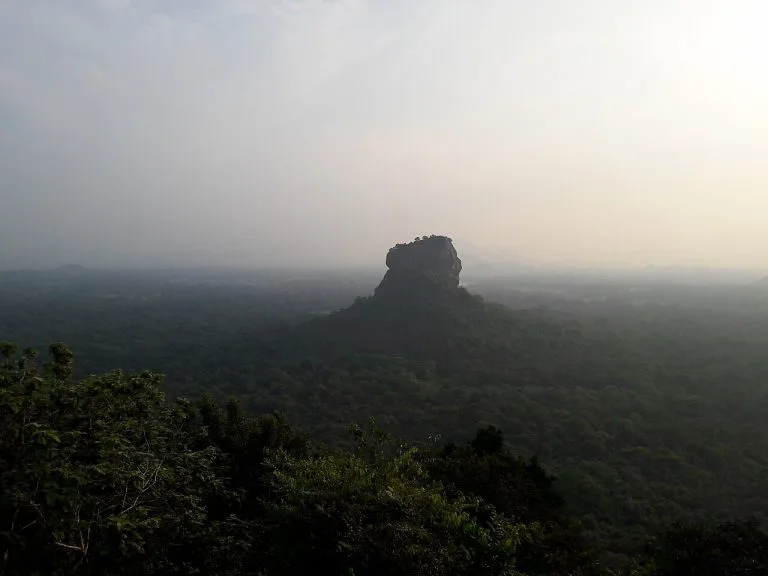
A guide to Sri Lanka's Cultural Triangle: Sigiriya, Polonnaruwa, Anuradhapura, Dambulla and Mihintale, with travel tips.

A complete guide to Sigiriya Rock Fortress: King Kashyapa's parricide, the water gardens, the famous frescoes, visiting tips and map.
A guide to the ancient city of Polonnaruwa: from Chola conquest to Parakramabahu the Great's garden-city, visiting tips and map.













