

Dsigngo is a Graphic Design and Digital Marketing Company.
Write what you are looking for and press enter to begin your search!

Near Tangalle, The South
Rekawa Beach
A wild, undeveloped two-kilometre beach where the very villagers who once collected turtle eggs for sale now patrol the sand around the clock to protect them.
Rekawa’s transformation is one of Sri Lanka’s genuinely encouraging conservation stories: a fishing village that once collected almost every turtle egg laid on its beach for sale now employs its own residents, many of them former egg collectors, as round-the-clock nest protectors.
Quick Facts
| Location | About 8 to 10 km east of Tangalle, Hambantota District |
| Beach length | About 2 km, largely undeveloped |
| Turtle species nesting | Green, loggerhead, olive ridley, leatherback, and hawksbill (5 of the world’s 7 species) |
| Conservation project | Turtle Conservation Project (TCP), established 1993, beach patrols from 1996 |
| Peak nesting season | April to July (though turtles nest here year-round) |
| Night watch hours | Roughly 8:30 pm to 11:30 pm |
Commonly searched as: Rekawa Beach turtle watching · Rekawa Turtle Conservation Project · Tangalle sea turtles · Sri Lanka turtle nesting beach · things to do near Tangalle
From Egg Poachers to Nest Protectors
For generations, Rekawa’s fishing community treated the turtle eggs laid on their beach as a straightforward resource, harvesting nearly all of them for sale or local consumption, a practice that, combined with adult turtle hunting for meat, pushed local populations toward serious decline. Research from the period noted that with marine turtles taking 30 to 50 years to reach sexual maturity, decades of heavy egg collection meant the beach’s nesting population risked collapsing entirely as older turtles died off without enough new recruits replacing them.
The Turtle Conservation Project (TCP), a Sri Lankan non-profit established in 1993, set out to change that trajectory, launching a community-based nest protection and research programme at Rekawa in 1996. Rather than treating local villagers as the problem, the project made them central to the solution: many former egg collectors were retrained and employed as nest protectors, patrolling the beach 24 hours a day, 365 days a year, funded by income from the very eco-tourism their new roles helped create. Over roughly four years, one funding period alone supported protection for 827 nesting female turtles and 3,328 nests, containing over 372,000 eggs, resulting in more than 305,000 hatchlings successfully released to the sea.
What a Night at Rekawa Looks Like
Rekawa’s two-kilometre stretch of beach remains genuinely wild and largely undeveloped, its clean sand and coastal vegetation providing exactly the undisturbed conditions turtles favour for nesting. Visitors typically arrive at an education centre for a briefing before being led out along the beach after dark, guided by trained nest protectors using only red light, which doesn’t disturb nesting turtles the way white light does. Silence and patience are part of the experience: turtles enter a trance-like state once they begin laying eggs, allowing visitors to approach quietly and observe closely without causing distress.
Managing Expectations
Sighting numbers vary considerably by season. Between April and July, five to fifteen turtles might come ashore on a good night, while the quieter months of October to January might yield only one or two sightings, or occasionally none at all. Because this is genuine wildlife behaviour rather than a scheduled show, patience and flexible expectations are essential.
Visiting Tips
- Book through the official Turtle Conservation Project or a reputable local guide rather than an unaffiliated operator, to ensure your visit genuinely supports conservation.
- Visit April to July for the best chance of multiple sightings in one night.
- Follow all guide instructions closely, including staying quiet and avoiding white light or flash photography near nesting turtles.
- Combine with nearby Kalametiya Bird Sanctuary and Ussangoda for a fuller day of southeastern coastal nature.
A Model Worth Understanding
What makes Rekawa worth highlighting beyond its wildlife is the conservation model itself. Rather than imposing outside enforcement against a local community’s traditional livelihood, an approach that often breeds resentment and continued poaching in secret, the project restructured the economic incentive entirely, making protected, living turtles more valuable to Rekawa’s residents than harvested eggs ever were. That shift, turning yesterday’s threat into today’s guardian, has become something of a reference case for community-based conservation more broadly, demonstrating that genuine, lasting protection of endangered species often depends less on policing outsiders and more on giving the people who live closest to the resource a direct stake in its survival.
Where It Sits on the Map
Rekawa Beach, near Tangalle, Hambantota District Open in Google Maps ↗
Frequently Asked Questions
Why is Rekawa Beach significant for turtles?
Five of the world’s seven sea turtle species nest on its roughly two-kilometre stretch, making it one of Sri Lanka’s most important turtle nesting beaches.
How did the community’s relationship with the turtles change?
Former egg poachers were retrained and employed as nest protectors by the Turtle Conservation Project, patrolling the beach around the clock, funded by eco-tourism income rather than continued egg collection.
When is the best time to see nesting turtles?
April to July offers the highest nightly sighting numbers, though turtles can be seen year-round with less frequency in other months.
What should visitors expect during a night watch?
A guided walk using only red light, with quiet observation of a nesting turtle from a respectful distance, typically between 8:30 pm and 11:30 pm.
← Sri Lanka: The Complete Guide — see all 258 places by region
Related News
A guide to Southern Sri Lanka, from Galle to Kataragama: beaches, wildlife safaris, colonial forts, and travel tips.

A complete guide to Galle Fort: history from Ptolemy to the Dutch, walking the ramparts, top sights, and visiting tips.
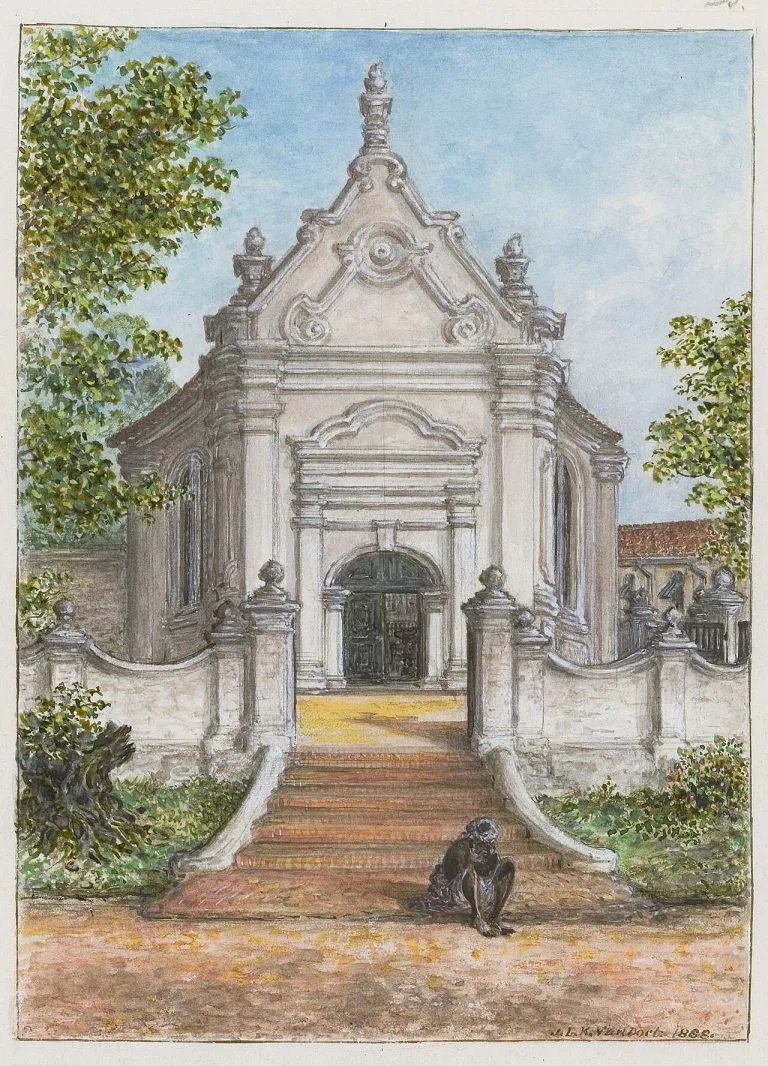
A guide to the Dutch Reformed Church in Galle Fort: the story behind its 1755 completion, the tombstone floor, visiting tips and map.













