

Dsigngo is a Graphic Design and Digital Marketing Company.
Write what you are looking for and press enter to begin your search!

Near Matara, The South
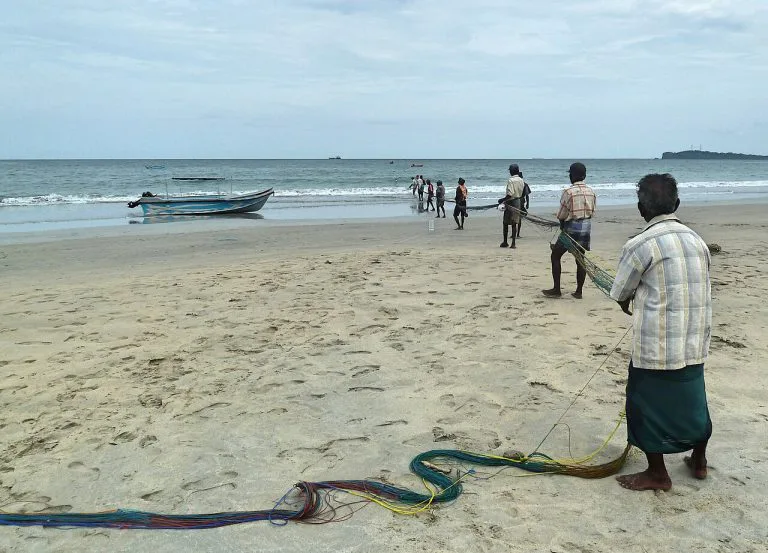
Polhena
A former village fishing beach near Matara, now known across Sri Lanka for the calm, shallow natural swimming pool its coral reef creates, and for sea turtles that swim close enough to touch.
Polhena’s reputation rests on a simple but genuinely rare feature: a coral reef positioned just offshore that breaks up incoming waves so effectively it creates something close to a natural swimming pool, calm enough for children and non-swimmers, yet close enough to open water for sea turtles to glide past regularly.
Quick Facts
| Location | About 2 to 4 km from central Matara |
| Key feature | A natural, reef-protected shallow lagoon |
| Popular activities | Swimming, snorkelling, sea turtle watching |
| Reputation | Often called one of the safest beaches on Sri Lanka’s south coast |
| Nearby sights | Matara Fort, Star Fort, Dondra Head, Weherahena Temple |
| Beach length | About 1 km, palm-fringed |
Commonly searched as: Polhena Beach Matara · Polhena natural pool · Polhena snorkelling sea turtles · safest beach South Coast Sri Lanka · things to do near Matara
From Village Beach to South Coast Favourite
Polhena began, by most accounts, as an unremarkable local beach used mainly by nearby villagers for fishing and swimming, its calm waters a practical, everyday resource rather than a tourist attraction. What set it apart from countless similar stretches of coast was its offshore coral reef, which happens to sit at just the right distance and depth to significantly dampen incoming waves, creating a shallow, current-protected lagoon that functions almost like a natural swimming pool. Over time, that quality earned Polhena a reputation as one of the safest and most family-friendly beaches on Sri Lanka’s entire south coast, drawing visitors well beyond the immediate area.
Snorkelling With Sea Turtles
Polhena’s coral reef doesn’t just calm the water, it also shelters a genuinely rich pocket of marine life within easy reach of the shore. Green sea turtles are regularly sighted close to the beach, sometimes within a short swim of the sand, making Polhena one of the more reliable spots on the south coast for casual, low-effort turtle encounters without needing a boat trip. Colourful reef fish and coral formations round out the snorkelling experience, and local vendors and the Polhena Snorkelling Centre rent equipment and arrange short guided reef swims for visitors without their own gear.
Safety Notes
While Polhena is widely regarded as safe, its reef-protected lagoon isn’t without hazards. Swimmers are generally advised to stay within marked or buoyed areas, since currents beyond the reef’s shelter can strengthen unpredictably, and sea urchins near exposed coral sections are worth watching for when wading or snorkelling. Lifeguards are typically present at the main beach area, adding a further layer of reassurance for families.
Beyond the Beach
Polhena’s easy proximity to Matara makes it simple to combine with the town’s Dutch-era Star Fort and Matara Fort, along with a visit to nearby Dondra Head and its lighthouse and ancient temple complex. Matara itself is also known regionally for its curd, traditionally ripened in clay pots, a worthwhile local specialty to try if visiting the area.
Visiting Tips
- Visit in the early morning for the best chance of spotting sea turtles and calmer water.
- Rent snorkelling gear locally rather than bringing your own, since equipment is widely and cheaply available.
- Stay within marked swimming areas and heed local guidance about currents beyond the reef.
- Combine with Matara’s forts and Dondra Head for a fuller day trip from the beach.
A Beach That Grew Without Losing Its Character
Unlike some of Sri Lanka’s more heavily developed beach towns, Polhena has retained much of the low-key, local character that defined it before wider recognition arrived. Guesthouses and small hotels line the approach rather than large resort complexes, and the beach still draws a genuine mix of local families and international visitors rather than skewing entirely toward one or the other. That balance, a genuinely excellent natural swimming and snorkelling spot that hasn’t been fully overtaken by mass tourism infrastructure, is a large part of why Polhena continues to be recommended as a highlight of the Matara area rather than simply a footnote on the way to more famous South Coast destinations.
Where It Sits on the Map
Polhena Beach, near Matara, Southern Province Open in Google Maps ↗
Frequently Asked Questions
What makes Polhena Beach unique?
An offshore coral reef creates a shallow, wave-protected natural swimming pool, making it one of the calmest and safest beaches on Sri Lanka’s south coast.
Can visitors see sea turtles at Polhena?
Yes, green sea turtles are regularly sighted close to shore, making it a popular spot for casual snorkelling encounters.
Is Polhena Beach safe for children and non-swimmers?
Generally yes, thanks to the reef’s wave protection, though visitors should stay within marked areas since currents beyond the reef can be stronger.
How far is Polhena from Matara town?
About 2 to 4 km, making it an easy and popular day-trip combination with Matara’s Star Fort and Matara Fort.
← Sri Lanka: The Complete Guide — see all 258 places by region
Related News
A guide to Southern Sri Lanka, from Galle to Kataragama: beaches, wildlife safaris, colonial forts, and travel tips.

A complete guide to Galle Fort: history from Ptolemy to the Dutch, walking the ramparts, top sights, and visiting tips.

A guide to the Dutch Reformed Church in Galle Fort: the story behind its 1755 completion, the tombstone floor, visiting tips and map.













