

Dsigngo is a Graphic Design and Digital Marketing Company.
Write what you are looking for and press enter to begin your search!

The South, Sri Lanka
Dondra
Sri Lanka’s southernmost settlement, once known as the ‘City of the Gods’ and home to a temple complex with a thousand statues, now marked by the country’s tallest lighthouse.
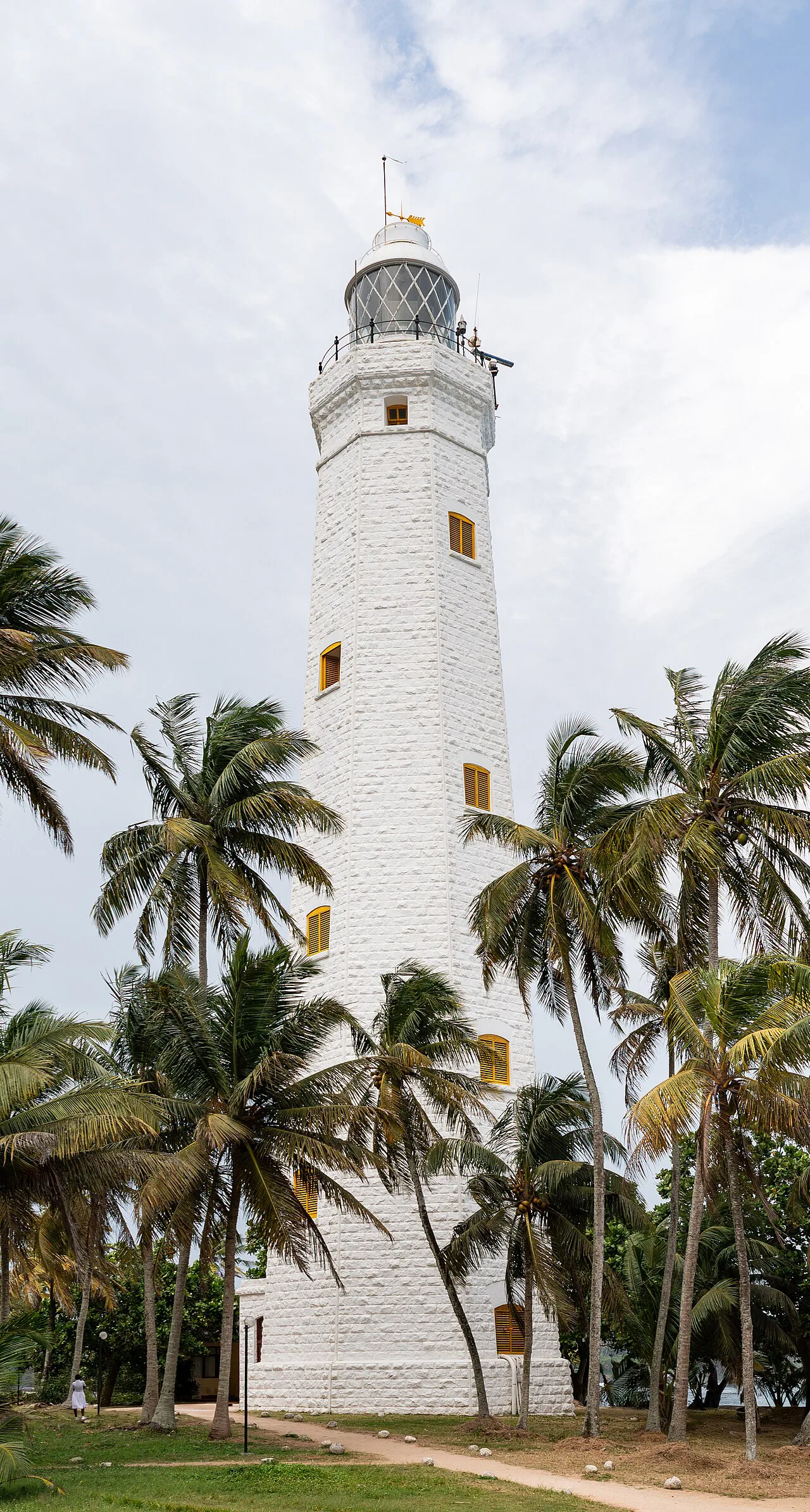
Stand at Dondra Head and you’re at the very bottom of Sri Lanka, the southernmost point on the island, marked today by the country’s tallest lighthouse. Long before that lighthouse existed, though, this headland was known as Devinuwara, the ‘City of the Gods,’ home to one of the most celebrated religious complexes anywhere in the ancient Sinhalese world.
Quick Facts
| Location | About 6 km southeast of Matara, Southern Province |
| Also known as | Devinuwara (City of the Gods), Devundara |
| Ancient significance | Temple complex dating to at least the 7th century CE |
| Primary deity | Upulvan, identified with Vishnu, also called Tenavarai Nayanar |
| Lighthouse built | 1890, designed by Sir James Nicholas Douglass |
| Lighthouse height | 49 metres (161 ft), Sri Lanka’s tallest lighthouse |
Commonly searched as: Dondra Sri Lanka · Dondra Head Lighthouse · Devinuwara temple · southernmost point Sri Lanka · things to do near Matara
The City of the Gods
Dondra’s Sinhala name, Devinuwara, translates directly to “City of the Gods,” a name that reflects just how significant this headland once was in the religious geography of ancient Sri Lanka. Documentary and archaeological evidence places a major temple complex here from at least the 7th century CE, during the reign of King Dappula I, and medieval chronicles describe Devinuwara as a thriving religious and commercial hub, its main temple containing what some historical accounts describe as a thousand statues representing various sects of both Hinduism and Buddhism, an almost unimaginable concentration of religious imagery in a single location.
The temple’s principal deity was Upulvan, a Buddhist guardian deity closely identified by Hindu devotees with Vishnu and known to them as Tenavarai Nayanar. The main shrine, built on vaulted arches as a three-storey structure on a promontory overlooking the Indian Ocean, was patronised across centuries by Sinhalese, Chinese and possibly Tamil royal dynasties, along with multi-ethnic pilgrims and merchant guilds who visited during Devinuwara’s era as a major trading port with contacts extending as far as Africa, Europe and the Malabar Coast.
Destroyed by the Portuguese, Rebuilt by the Faithful
Devinuwara’s grandeur came to an abrupt end in the 16th century, when Portuguese forces destroyed the great temple, along with its gleaming copper roof, as part of their broader campaign against Buddhist and Hindu religious sites along Sri Lanka’s coast. Around 200 granite columns associated with the original structure survive today as physical evidence of the temple’s former scale, alongside the Galge, a pre-Portuguese stone shrine chamber considered among the oldest intact religious structures at the site, and a Makara Thorana, an ornately carved stone gateway featuring the mythological makara motif typical of medieval Sri Lankan religious architecture.
Despite the destruction, the Devalaya (shrine) was rebuilt and remains an active place of devotion today, hosting the Devinuwara Esala Perahera, a major annual festival held during July or August that processes along a set route through the town, from the stone doorway of the devalaya along Hadagala Main Road, Sinhasana Road, Ampitiya Road and beyond.
Dondra Head Lighthouse
Marking the actual southernmost point of the island, Dondra Head Lighthouse was designed by Sir James Nicholas Douglass and built starting in November 1887 by the Imperial Lighthouse Service, with construction using Portland stone shipped from England. First lit on 8 February 1890, the octagonal brick tower stands 49 metres tall, making it Sri Lanka’s tallest lighthouse and one of the tallest in Southeast Asia, its light visible up to 28 nautical miles out to sea. The lighthouse remains operational today, maintained by the Sri Lanka Ports Authority.
Visiting Tips
- Visit the Devinuwara temple complex and the Galge shrine chamber alongside the lighthouse for a fuller sense of the site’s layered history.
- Time a visit to coincide with the Esala Perahera (July/August) for a considerably more vivid, festival atmosphere.
- The lighthouse offers panoramic ocean views and a genuine sense of standing at the edge of the island.
- Combine with a short trip from nearby Matara, only about 6 km away.
Where It Sits on the Map
Dondra (Devinuwara), southernmost point of Sri Lanka Open in Google Maps ↗
Frequently Asked Questions
Why is Dondra significant?
It marks the southernmost point of Sri Lanka and was historically known as Devinuwara, ‘City of the Gods,’ home to one of the most celebrated religious temple complexes in the ancient Sinhalese world.
What happened to the ancient Devinuwara temple?
It was destroyed by the Portuguese in the 16th century; the shrine (devalaya) was later rebuilt and remains an active place of worship today.
How tall is Dondra Head Lighthouse?
49 metres (161 feet), making it Sri Lanka’s tallest lighthouse; it was built by the British and first lit in 1890.
What festival is associated with Dondra?
The Devinuwara Esala Perahera, a major annual procession held in July or August.
← Sri Lanka: The Complete Guide — see all 258 places by region
Related News
A guide to Southern Sri Lanka, from Galle to Kataragama: beaches, wildlife safaris, colonial forts, and travel tips.

A complete guide to Galle Fort: history from Ptolemy to the Dutch, walking the ramparts, top sights, and visiting tips.
A guide to the Dutch Reformed Church in Galle Fort: the story behind its 1755 completion, the tombstone floor, visiting tips and map.













